- Company Articles
- Products and Technology
- Product knowledge
- Aluminum Workbench A Accessories: Essential Add-Ons for Maximum Functionality

Aluminum Workbench A Accessories: Essential Add-Ons for Maximum Functionality
Related Product
Aluminum Workbench A
Aluminum tube workbench is more flexible and durable, compared with traditional PE/ABS coated steel tube. It is easy to assemble, anti corrosion, rust protection, and recycle use after disassemble.
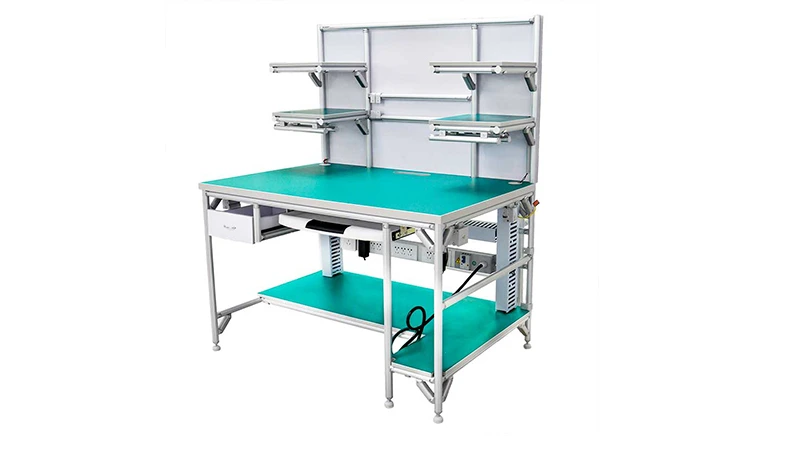
In the fast-paced world of manufacturing, warehousing, and workshops, having a workspace that adapts to your needs isn't just a luxury—it's a necessity. Enter Aluminum Workbench A: a versatile, durable, and lightweight solution designed to be the backbone of efficient operations. But what truly elevates its performance from "good" to "exceptional" are the accessories that complement it. These add-ons transform a basic workbench into a customized hub of productivity, addressing everything from mobility and material flow to organization and ergonomics. In this article, we'll dive deep into the essential accessories that unlock the full potential of Aluminum Workbench A, exploring how each piece contributes to smoother workflows, reduced downtime, and a workspace that works for you, not against you.
Why Aluminum Workbench A Stands Out
Before we jump into accessories, let's take a moment to appreciate why Aluminum Workbench A is a favorite among professionals. Unlike traditional wooden or steel workbenches, aluminum brings a unique set of advantages: it's lightweight yet surprisingly strong, resistant to rust and corrosion, and inherently flexible. Its modular design means it can be adjusted, extended, or reconfigured as your needs change—no need to replace the entire setup when your workflow evolves. The single-deck, without-caster design (as referenced in its specifications) provides a stable base, but it's the ability to pair it with the right accessories that turns this stability into adaptability. Whether you're assembling electronics, packing orders, or testing equipment, Aluminum Workbench A serves as a blank canvas—one that's ready to be tailored with accessories that match your specific tasks.
Essential Accessories for Enhanced Productivity
Think of Aluminum Workbench A as a smartphone: powerful on its own, but exponentially more useful with the right apps (or in this case, accessories). The following add-ons are the "must-haves" that professionals swear by, each solving a common pain point in the workplace.
Caster Wheels: Mobility Redefined
Let's start with a game-changer: caster wheels. The standard Aluminum Workbench A comes without casters, which is great for stability during precision work. But what if you need to move the workbench to a different station? Or rearrange your workspace to accommodate a new project? Lifting a heavy workbench isn't just time-consuming—it's a safety risk. Caster wheels eliminate this hassle, turning a stationary bench into a mobile workstation in minutes.
Not all caster wheels are created equal, though. When selecting casters for Aluminum Workbench A, look for options like swivel stem caster wheels with brakes . These offer 360-degree rotation, making it easy to maneuver tight corners or narrow aisles, while the brake feature ensures the workbench stays locked in place when you need stability. For workshops with uneven floors, consider heavy-duty casters with shock-absorbing capabilities to keep your tools and materials steady during movement. And if your workspace deals with sensitive equipment or electronics, ESD (Electrostatic Discharge) caster wheels are a smart choice—they prevent static buildup, protecting delicate components from damage.
The beauty of caster wheels lies in their simplicity. Most models are designed for easy installation: just attach them to the workbench's base using compatible mounting plates (often included with the casters or available as separate aluminum profile accessories). Once installed, you'll wonder how you ever worked without the flexibility to move your workspace where it's needed most. Imagine a warehouse where a single workbench can be wheeled from the packing area to the shipping dock during peak hours, or a workshop where a technician can roll their tools directly to a machine instead of carrying heavy parts back and forth. That's the power of mobility—and it all starts with the right caster wheels.
Roller Tracks: Streamlining Material Flow
Next up: roller tracks. In any workspace where materials, parts, or products need to be moved across the workbench (or between stations), manual lifting and sliding are major time drains. Roller tracks solve this by creating a smooth, low-friction surface that allows items to glide effortlessly. For Aluminum Workbench A, adding a roller track transforms it into a material-handling powerhouse, whether you're sorting inventory, assembling components, or transferring goods to the next step in your process.
Roller tracks come in various configurations, but two popular options for Aluminum Workbench A are plastic roller track guide rails (available in yellow or grey) and aluminum guide rails. Plastic rails are lightweight and cost-effective, ideal for lighter loads like small parts or packaging materials. Aluminum guide rails, on the other hand, are built for heavier duty—think metal components or bulkier items. Both types are designed to integrate seamlessly with Aluminum Workbench A's frame, using brackets and connectors that attach to the workbench's aluminum profiles (more on those later).
One of the most practical applications of roller tracks is in assembly lines. For example, a electronics manufacturer using Aluminum Workbench A can install a roller track along the length of the bench, allowing circuit boards or components to slide from one worker to the next without being picked up. This not only speeds up the process but also reduces the risk of dropping or damaging parts. In a warehouse setting, roller tracks on the workbench can connect to larger conveyor systems, creating a continuous flow from storage to packing to shipping. Even in smaller workshops, a roller track can simplify tasks like loading and unloading tools or moving finished products to a staging area—no more straining to push heavy boxes across a flat surface.
Installation is straightforward, thanks to accessories like roller track placon mounts. These small but crucial pieces attach the roller track to the workbench's aluminum profiles, ensuring a secure fit that won't shift under load. Some mounts are designed for flat profiles, others for high or angled surfaces, giving you flexibility in where you place the track. Whether you need a straight line, a curve, or a multi-directional setup (using swivel roller balls), there's a roller track configuration that fits your workflow.
Aluminum Profile Accessories: Customization at Its Best
If caster wheels add mobility and roller tracks enhance material flow, then aluminum profile accessories are the "building blocks" of customization. Aluminum Workbench A is constructed using aluminum extrusion profiles—hollow, T-slot structures that are designed to connect with a wide range of brackets, connectors, and add-ons. These accessories let you tailor the workbench to your exact needs, whether that means adding shelves, tool holders, lighting, or even a secondary work surface.
Let's break down some key aluminum profile accessories and how they boost functionality:
- Angle Brackets and Connectors: These small but mighty pieces allow you to attach additional aluminum profiles to the workbench, creating shelves, side extensions, or overhead racks. For example, a 90-degree aluminum profile connector can add a vertical shelf above the workbench, freeing up surface space for tools while keeping frequently used items within arm's reach.
- Panel Mounts: Need a flat surface for a monitor, whiteboard, or storage bin? Panel mounts attach to the aluminum profiles, letting you secure plywood, acrylic, or aluminum honeycomb panels. This is especially useful for adding a dedicated area for documentation or a secondary workspace for auxiliary tasks.
- Tool Hooks and Holders: Cluttered workbenches slow down productivity. Tool hooks and holders, which slide into the T-slots of the aluminum profiles, keep screwdrivers, pliers, wrenches, and other hand tools organized and visible. No more digging through drawers—your tools hang right where you need them.
- Cable Management Solutions: In today's tech-driven workspaces, cables for laptops, power tools, or testing equipment can quickly become a tangled mess. Cable clips, channels, and organizers (designed to fit into the T-slots) keep wires neat and out of the way, reducing tripping hazards and making it easier to identify which cable goes where.
What's impressive about these accessories is their modularity. You don't have to commit to a single configuration forever. If your workflow changes—say, you start handling larger parts and need more shelf space—you can simply add more brackets and profiles. If you switch to a new project that requires fewer tools, you can remove the hooks and free up space. This adaptability ensures Aluminum Workbench A grows with your business, eliminating the need to invest in a brand-new setup every time your needs evolve.
A Closer Look: Comparing Key Accessories
To help you visualize how these accessories stack up, let's compare their key features, benefits, and ideal use cases in the table below:
| Accessory Type | Core Features | Primary Benefit | Best For |
|---|---|---|---|
| Swivel Stem Caster Wheels with Brake | 360° rotation, brake lock, heavy-duty construction | Enables easy movement and secure positioning | Workshops, warehouses, or any space requiring flexible workspace placement |
| Plastic Roller Track Guide Rail (Yellow/Grey) | Low-friction plastic wheels, compatible with placon mounts, lightweight | Smooth material flow, reduces manual lifting | Assembly lines, packing stations, or material sorting areas |
| 90° Aluminum Profile Connector | Durable aluminum construction, T-slot compatible, easy to install | Enables custom shelving and extensions | Adding vertical storage, side tables, or overhead racks |
| Tool Hooks (T-Slot Compatible) | Slides into T-slots, adjustable position, rust-resistant | Organizes tools, reduces clutter | Workbenches used for assembly, repair, or maintenance tasks |
Real-World Applications: How These Accessories Make a Difference
It's one thing to talk about features and benefits, but nothing illustrates the impact of these accessories like real-world scenarios. Let's walk through a few examples of how businesses have transformed their operations by pairing Aluminum Workbench A with caster wheels, roller tracks, and aluminum profile accessories.
Case Study 1: Small Electronics Assembly Workshop
A local electronics shop specializing in custom circuit boards was struggling with limited space. Their Aluminum Workbench A was fixed in one corner, meaning technicians had to carry components back and forth from storage racks to the bench. By adding swivel stem caster wheels with brakes, they could now roll the workbench directly to the component shelves, cutting down on walking time by 40%. They also installed a roller track along the edge of the bench, allowing finished circuit boards to glide gently into a storage bin at the end of the assembly line—no more bending to place items on the floor. Finally, aluminum profile tool hooks kept soldering irons, wire strippers, and tweezers organized, reducing the time spent searching for tools from 15 minutes per hour to less than 5. The result? A 25% increase in daily output, all from a few strategic accessories.
Case Study 2: E-Commerce Fulfillment Center
A mid-sized e-commerce company was dealing with seasonal spikes in order volume. Their packing stations, built around Aluminum Workbench A, were static, making it hard to reconfigure the space during busy periods. Adding caster wheels let them rearrange 10 workbenches into a U-shape, creating a more efficient packing line where workers could pass orders from one station to the next without moving. They also added roller tracks between workbenches, so boxes glided from the "picking" station to "packing" to "labeling" seamlessly. To top it off, aluminum profile shelves above each bench held packing tape, bubble wrap, and labels, keeping supplies within reach. During the next holiday rush, order processing time dropped by 30%, and employee fatigue decreased (significantly)—proving that a flexible workspace is a productive workspace.
Choosing the Right Accessories for Your Needs
With so many accessories available, how do you decide which ones are right for your Aluminum Workbench A? Start by asking yourself three key questions:
- What are my biggest workflow pain points? Do you waste time moving the workbench? Struggle with cluttered surfaces? Find yourself lifting heavy materials? Let these frustrations guide your choices—e.g., caster wheels for mobility, tool hooks for organization, roller tracks for material flow.
- What tasks do I perform most often? A workshop focused on precision assembly might prioritize tool holders and panel mounts for monitors, while a warehouse might need roller tracks and heavy-duty casters. Tailor accessories to your daily tasks.
- How might my needs change in the future? Opt for modular accessories that can be added or removed later. Aluminum profile accessories are perfect for this, as they're designed to be reconfigured as your workflow evolves.
It's also worth consulting with a supplier who specializes in aluminum workbench systems. They can help you assess your space, recommend compatible accessories, and even provide samples or demos to ensure the add-ons work as expected. Remember: the goal is to create a workspace that grows with you, so investing in high-quality, durable accessories (like those made from aluminum or stainless steel) will pay off in the long run—they'll withstand daily wear and tear and keep your workbench functional for years to come.

Conclusion: Elevate Your Workspace with the Right Add-Ons
Aluminum Workbench A is more than just a work surface—it's a foundation for efficiency. But without the right accessories, it's like having a high-performance car with flat tires: it has potential, but it won't take you far. Caster wheels unlock mobility, letting you move your workspace where it's needed most. Roller tracks streamline material flow, reducing manual effort and speeding up tasks. Aluminum profile accessories turn a basic bench into a customized hub, with shelves, tool holders, and extensions that adapt to your workflow. Together, these add-ons transform Aluminum Workbench A into a workspace that's not just functional, but intelligent —one that anticipates your needs, reduces friction, and helps you focus on what matters: getting the job done better, faster, and with less stress.
So, whether you're outfitting a new workshop, upgrading an existing setup, or simply looking to squeeze more productivity out of your current space, don't overlook the power of accessories. They're the small investments that deliver big returns—proving that when it comes to workspace design, the right details make all the difference. After all, in a world where every second counts, why settle for a workbench that does just enough when you can have one that does it all?