- Company Articles
- Products and Technology
- Solution
- Aluminum Workbench A and Material Racks: Creating Integrated Storage Solutions

Aluminum Workbench A and Material Racks: Creating Integrated Storage Solutions
Related Product
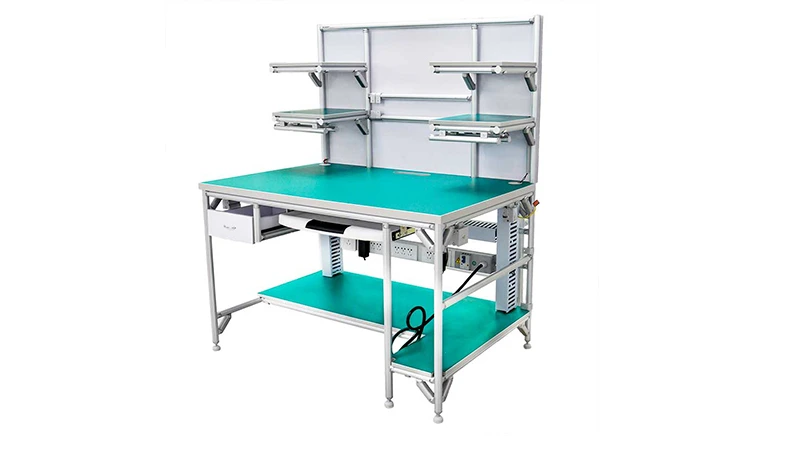
Aluminum Workbench A
Aluminum tube workbench is more flexible and durable, compared with traditional PE/ABS coated steel tube. It is easy to assemble, anti corrosion, rust protection, and recycle use after disassemble.
Walk into any busy manufacturing facility, warehouse, or small parts assembly shop, and you'll quickly spot a common enemy: inefficiency. Tools scattered across workbenches, parts stashed in mismatched bins, and workers trekking back and forth between storage areas and assembly lines—these are the silent productivity killers that drain time, increase errors, and stifle growth. In today's fast-paced operations, the need for integrated storage solutions isn't just a luxury; it's a necessity. That's where Aluminum Workbench A and Material Rack B (3 row and 3 floor) step in. More than just pieces of equipment, they're the building blocks of a streamlined workflow, designed to turn chaos into order and wasted minutes into meaningful productivity. Let's dive into how these two workhorses, paired with the versatility of aluminum extrusion profiles, are redefining what efficient storage looks like.
Aluminum Workbench A: The Heart of Your Workspace
At first glance, a workbench might seem like a simple piece of furniture—but Aluminum Workbench A is anything but. Engineered with the demands of modern workshops in mind, it's a purpose-built hub where tasks get done, parts stay organized, and efficiency thrives. Let's break down what makes it stand out.
Design That Puts Function First
Aluminum Workbench A is designed as a single-deck workbench without casters —a deliberate choice that prioritizes stability and focus. Unlike mobile workbenches that might shift mid-task, this fixed design ensures a rock-solid surface for precision work, whether you're assembling small electronics, sorting hardware, or labeling inventory. The single-deck layout is a study in minimalism: no cluttered shelves or unnecessary compartments, just a clean, expansive workspace that encourages organization. Think of it as a blank canvas—you decide what tools, bins, or equipment stay within arm's reach, and what gets stored nearby in your Material Rack B.
Aluminum Extrusion Profile: The Secret to Durability and Flexibility
What truly sets Aluminum Workbench A apart is its construction from high-quality aluminum extrusion profiles . If you're not familiar with extrusion profiles, imagine metal that's been shaped into precise, consistent cross-sections—think T-slots, grooves, and channels—during manufacturing. This process creates a material that's lightweight yet surprisingly strong, resistant to corrosion, and infinitely customizable. For a workbench, that means two key benefits: longevity and adaptability.
Aluminum doesn't rust, so even in humid workshops or garages, your bench will stay looking new for years. And those T-slots? They're like built-in connection points for accessories. Need a tool holder? Screw it into the T-slot. Want to add a small parts bin rail? Slide it into place and secure it with a bolt. Unlike wooden workbenches that warp or metal ones that dent, Aluminum Workbench A grows with your needs. It's not just a work surface; it's a modular platform ready to evolve as your tasks change.
More Than Just a Bench: A Storage Command Center
Here's where the magic happens: Aluminum Workbench A isn't meant to work alone. Its design is intentionally streamlined to pair seamlessly with storage solutions like Material Rack B, turning your workspace into a lean system where everything has a place. The flat, unobstructed deck leaves room for temporary storage bins during active tasks, while the open lower frame (no casters means more clearance!) can even accommodate small rolling carts or stackable bins for overflow. It's the kind of bench that doesn't just hold your tools—it coordinates with your storage, so you spend less time hunting for parts and more time getting work done.
Material Rack B (3 Row and 3 Floor): Your Parts, Right Where You Need Them
If Aluminum Workbench A is the heart of your workspace, Material Rack B is the circulatory system, ensuring parts and supplies flow smoothly to where they're needed most. Specifically designed as a 3 row and 3 floor unit, this rack is a masterclass in vertical storage, turning unused wall space into valuable real estate.
Structure That Maximizes Capacity, Minimizes Footprint
Let's start with the numbers: 3 rows and 3 floors. That's 9 separate storage zones, each dedicated to a specific type of part, tool, or material. Whether you're storing screws and washers, electronic components, or small mechanical parts, this tiered structure lets you categorize items by frequency of use, size, or project. The top floor? Perfect for rarely accessed supplies like backup inventory or seasonal parts. The middle floor? Your "daily use" zone, where the parts you reach for hourly live. The bottom floor? Ideal for heavier items or bulkier bins that are easier to lift from waist height. No more digging through overstuffed shelves or balancing precariously on ladders—every part has a designated spot, and you'll know exactly where to find it.
Built to Last, Designed to Adapt
Like Aluminum Workbench A, Material Rack B leverages the strength of aluminum extrusion profiles. This isn't your flimsy wire shelf from the hardware store; it's a rugged, industrial-grade unit built to handle the daily grind. Each shelf can support up to 50kg (depending on load distribution), so you can stack heavy bins without worrying about sagging or collapse. And because it's aluminum, it's lightweight enough to reposition if your workflow changes—no need for a forklift or team of people to rearrange your storage.
But what really makes Material Rack B shine is its compatibility with accessories . Add dividers to separate small parts, install label holders for quick identification, or even mount hooks on the side for tools like tape measures or scissors. It's a rack that grows with your inventory, ensuring you never outgrow your storage solution.

Integration in Action: Workbench A and Material Rack B as a Team
Individually, Aluminum Workbench A and Material Rack B are powerful tools. Together? They're a game-changer. The key to their success lies in integration —designing your workspace so that the bench and rack work in harmony, not isolation. Let's paint a picture of how this plays out in a real-world scenario.
The 3-Step Workflow Revolution
Imagine you're running a small electronics assembly line, where workers build circuit boards from dozens of tiny components. Before Aluminum Workbench A and Material Rack B, here's how the day might go: A worker starts at their bench, realizes they're out of resistor packs, walks 20 feet to the storage room, rummages through a bin, returns to the bench, and discovers they're also missing capacitors. Repeat. By lunch, they've spent 45 minutes just fetching parts.
Now, with the integrated setup: Material Rack B is positioned within arm's reach of Aluminum Workbench A. The top shelf holds bulk resistor packs (refilled weekly), the middle shelf has daily-use capacitors and diodes in labeled bins, and the bottom shelf stores empty boxes for finished boards. The worker starts at the bench, grabs a handful of resistors from the middle shelf, assembles 10 boards, then slides the finished boxes onto the bottom shelf of the rack. No walking, no searching, no wasted time. It's a workflow so smooth, it feels almost effortless.
Space-Saving Without Sacrifice
In many workshops, space is at a premium. Traditional storage solutions—think standalone racks and bulky workbenches—often compete for floor space, leaving little room for movement. Aluminum Workbench A and Material Rack B solve this by sharing the same footprint. Place the rack directly behind or beside the bench, and suddenly you've turned a 10-square-foot area into a combined work-and-storage zone. It's like adding a storage closet to your workspace without losing an inch of floor space.
| Feature | Aluminum Workbench A | Material Rack B (3 Row, 3 Floor) |
|---|---|---|
| Primary Function | Active work surface for assembly, sorting, and tasks | Organized storage for parts, tools, and supplies |
| Key Design Trait | Single-deck, no casters (stability-focused) | Vertical 3x3 structure (maximizes vertical space) |
| Material | Aluminum extrusion profile | Aluminum extrusion profile |
| Integration Benefit | Positions tools/parts for immediate use | Reduces travel time to storage areas |
| Ideal For | Precision tasks, small parts assembly, quality control | Small to medium parts, daily/weekly inventory items |

Why Aluminum Extrusion Profiles Make All the Difference
By now, you've heard a lot about aluminum extrusion profiles—and for good reason. They're the unsung heroes that make Aluminum Workbench A and Material Rack B so effective. Let's take a closer look at why this material is the backbone of integrated storage.
Lightweight Yet Strong: The Perfect Balance
Aluminum extrusion profiles are a marvel of engineering. By forcing molten aluminum through a die, manufacturers create shapes with consistent strength and minimal weight. For your workbench and rack, this means two critical advantages: ease of installation and long-term durability . Unlike steel, which requires heavy machinery to move and install, aluminum profiles can be handled by one or two people, making setup a breeze. And despite their light weight, they're tough enough to withstand years of heavy use—no bending, warping, or rusting, even in harsh environments.
Modularity: Build It Your Way
One of the biggest frustrations with traditional storage is its "one-size-fits-all" approach. A rack that works for a mechanic might be useless for a jewelry maker, and a workbench designed for woodworking won't cut it in an electronics shop. Aluminum extrusion profiles solve this with modularity . The T-slots and grooves in the profiles let you add, remove, or reposition accessories in minutes. Need a taller shelf on Material Rack B? Swap out the vertical posts. Want to add a tool rail to Aluminum Workbench A? Screw it into the T-slot. It's customization without the custom price tag, ensuring your storage solution fits your needs—not the other way around.
Cost-Effective in the Long Run
It's true: Aluminum extrusion profiles might cost a bit more upfront than particleboard or basic steel. But here's the secret: they last longer and adapt better, saving you money over time. A wooden workbench might need replacing in 2-3 years; Aluminum Workbench A will still be going strong in a decade. And when your business grows or your workflow changes, you won't need to buy a whole new setup—just add a few accessories or reconfigure the existing one. It's an investment that pays dividends in durability and flexibility.
Beyond Storage: Supporting Lean System Principles
At the core of Aluminum Workbench A and Material Rack B is a philosophy: lean system thinking. Lean manufacturing isn't just a buzzword; it's about eliminating waste—whether that's wasted time, wasted space, or wasted effort. These two tools embody that philosophy by:
- Reducing motion waste: No more walking to distant storage areas—parts are right where you need them.
- Minimizing inventory waste: With clear visibility in Material Rack B, you'll avoid overstocking parts you don't need.
- Eliminating defects: A clean, organized workspace (thanks to Aluminum Workbench A) reduces errors caused by clutter or misplaced tools.
- Optimizing space: Vertical storage in Material Rack B frees up floor space for other equipment or workflows.
In short, this integrated setup doesn't just store parts—it makes your entire operation more efficient, from the ground up.
Real-World Results: From Chaos to Order
Don't just take our word for it—let's hear from a small electronics manufacturer that switched to Aluminum Workbench A and Material Rack B. Before the upgrade, their assembly line had a 25% error rate due to misplaced parts, and workers spent 20% of their day fetching supplies. Within a month of installing the integrated setup, errors dropped to 5%, and productivity increased by 15%. "It's like night and day," said the plant manager. "Our workers aren't just faster—they're happier. No more frustration from searching for parts, no more rushing to meet deadlines. The bench and rack just… make sense."
Conclusion: Your Workspace, Reimagined
In a world where every minute counts, Aluminum Workbench A and Material Rack B (3 row and 3 floor) are more than just storage solutions—they're investments in your team's productivity, your product quality, and your bottom line. By combining the stability of a well-designed workbench, the vertical efficiency of a smartly structured rack, and the versatility of aluminum extrusion profiles, they transform cluttered, chaotic workspaces into hubs of efficiency. Whether you're running a small workshop or a large manufacturing plant, the message is clear: integrated storage isn't a luxury. It's the foundation of a successful operation.
So, take a look at your current workspace. Are your tools and parts working for you, or against you? It might be time to let Aluminum Workbench A and Material Rack B show you what efficiency truly feels like.