- Company Articles
- Products and Technology
- Procurement Guidelines
- Aluminum Workbench A Buying Guide: Factors to Consider Before Purchase

Aluminum Workbench A Buying Guide: Factors to Consider Before Purchase
Related Product
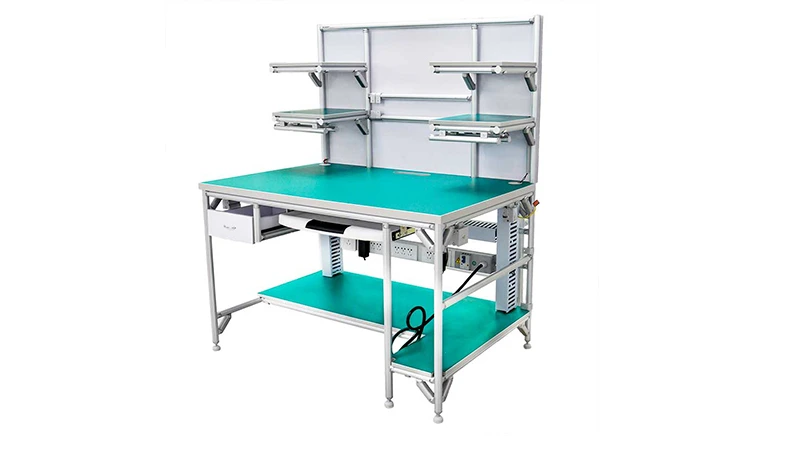
Aluminum Workbench A
Aluminum tube workbench is more flexible and durable, compared with traditional PE/ABS coated steel tube. It is easy to assemble, anti corrosion, rust protection, and recycle use after disassemble.
In the fast-paced world of manufacturing, production assemble, and lean system implementation, having the right workspace tools can make all the difference between smooth operations and frustrating inefficiencies. Among these tools, the aluminum workbench stands out as a staple—valued for its durability, versatility, and ability to adapt to various industrial needs. If you're in the market for an Aluminum Workbench A, you're likely looking for a solution that balances functionality, longevity, and cost-effectiveness. But with so many options available, how do you ensure you're making the right choice? This guide breaks down the critical factors to consider before purchasing, helping you select a workbench that aligns with your workflow, team needs, and long-term goals.
Understanding Aluminum Workbench A: What Sets It Apart?
Before diving into the buying process, let's clarify what an Aluminum Workbench A typically entails. Unlike generic workbenches, Aluminum Workbench A is often designed with specific industrial standards in mind, leveraging aluminum extrusion profile technology to deliver a lightweight yet robust structure. These workbenches are commonly used in settings like production lines, warehouses, and workshops where organization and efficiency are paramount—think lean system environments where every inch of space and every second of workflow counts.
Aluminum Workbench A may come in various configurations, but it generally features a flat work surface (often a single deck, though some models include shelves or drawers), sturdy legs, and compatibility with aluminum profile accessories. What makes it unique is its reliance on aluminum as the primary material, which offers benefits like corrosion resistance, low maintenance, and easy customization. For instance, unlike wooden workbenches that can warp or steel ones that rust, aluminum holds up well in diverse environments, from humid factories to cleanrooms.
Key Factors to Consider When Buying Aluminum Workbench A
1. Material Quality: The Foundation of Durability
At the core of any aluminum workbench is its material quality, and this starts with the aluminum extrusion profile used in its construction. Aluminum extrusion profile is created by forcing heated aluminum through a die to form specific cross-sectional shapes—like the 2020, 3030, or 4040 profiles common in industrial settings. The quality of this profile directly impacts the workbench's strength, weight, and longevity.
When evaluating material quality, pay attention to the thickness of the aluminum walls in the extrusion. Thicker walls (e.g., 1.5mm vs. 1.0mm) generally mean higher load capacity and better resistance to bending or warping under heavy use. You should also inquire about the alloy type—6061 and 6063 are popular choices for industrial workbenches due to their excellent strength-to-weight ratios and machinability. A reputable supplier will be transparent about these details, so don't hesitate to ask for specifications.
Another aspect of material quality is the finish of the aluminum. Most industrial workbenches feature an anodized finish, which adds a protective layer to the aluminum, enhancing corrosion resistance and giving it a sleek, professional look. Avoid workbenches with rough or uneven finishes, as these may indicate lower-quality manufacturing processes.
2. Workbench Dimensions: Fitting Your Space and Needs
Size matters when it comes to workbenches. A bench that's too small will cramp your workflow, while one that's too large will waste valuable floor space. Before purchasing, measure your available area carefully, considering not just the footprint of the workbench itself but also the clearance needed around it for movement, tool storage, and team collaboration.
Aluminum Workbench A typically comes in standard lengths (e.g., 1200mm, 1500mm, 1800mm) and widths (e.g., 600mm, 800mm), but many suppliers offer custom sizes. Think about how you'll use the bench: Will it be for individual tasks, like assembling small parts, or for team-based activities that require more surface area? For example, a workbench used in production assemble might need to accommodate multiple workers or large components, calling for a longer length.
Height is another critical dimension. The workbench should align with the average height of the users to prevent strain on the back, shoulders, and neck. Standard workbench heights range from 750mm to 900mm, but adjustable models (or those with anti-slip adjustable leveling feet) can offer flexibility if your team includes members of varying heights. For instance, a workbench with adjustable feet allows you to fine-tune the height by a few centimeters, ensuring ergonomic comfort during long shifts.
3. Load Capacity: Ensuring It Can Handle Your Workload
One of the biggest mistakes buyers make is underestimating the load capacity they need. Aluminum Workbench A is designed to support specific weights, and exceeding this limit can lead to structural damage, wobbling, or even collapse—posing safety risks and disrupting operations.
Load capacity is typically listed as a maximum weight the workbench can hold, but it's important to distinguish between distributed and concentrated loads. A distributed load refers to weight spread evenly across the work surface (e.g., multiple small parts), while a concentrated load is a heavy item placed in one spot (e.g., a large machine tool). Most manufacturers specify distributed load capacity, so if your workflow involves concentrated weights, you may need to opt for a sturdier model or reinforce the surface with additional supports.
For reference, a standard Aluminum Workbench A might handle 200-300 kg of distributed weight, but heavy-duty models can go up to 500 kg or more. To determine your needs, list out the heaviest items you'll place on the bench, including tools, materials, and any equipment that might rest there temporarily. Add a 20% buffer to this total to account for unexpected loads—better safe than sorry.
4. Ergonomics: Prioritizing Worker Comfort
In any industrial setting, worker comfort directly impacts productivity and safety. An ergonomically designed Aluminum Workbench A reduces fatigue, minimizes the risk of repetitive strain injuries, and keeps your team focused. So, what should you look for in terms of ergonomics?
First, height adjustability, as mentioned earlier. If the workbench isn't adjustable, ensure its fixed height aligns with the average elbow height of your users—when seated or standing, the elbows should rest at a 90-degree angle while working., the work surface itself: is it smooth enough to prevent snags on materials, but not so slippery that tools slide around? Some models feature a textured surface or rubber mats for grip, which can be especially useful in production assemble where small parts might otherwise roll off.
Another ergonomic consideration is legroom. The space under the workbench should be clear and spacious enough for users to stretch their legs, even when seated. Avoid workbenches with crossbars or supports that restrict movement. Additionally, if the workbench includes accessories like tool racks or shelves, they should be positioned within easy reach—typically between shoulder and waist height—to avoid excessive bending or reaching.
5. Accessories Compatibility: Customizing for Your Workflow
One of the greatest advantages of aluminum workbenches is their customizability, thanks to aluminum profile accessories. Aluminum Workbench A is often designed to work seamlessly with a range of add-ons, from shelves and drawers to tool hooks and monitor mounts. Before purchasing, consider which accessories you might need now or in the future, and ensure the workbench is compatible with them.
For example, if you're using the workbench in a lean system environment, you might want to add flow racks or conveyor attachments to streamline material movement. Or, if tools are frequently used, a pegboard or tool rail with aluminum pipe clamp holders could keep essentials organized. The key here is to check the workbench's frame for T-slots or pre-drilled holes—standard features in aluminum extrusion profile designs that allow easy attachment of accessories. A workbench without these features will limit your ability to customize later, potentially making it obsolete as your needs change.
Don't forget to inquire about the availability of accessories from the supplier. A reliable aluminum profile supplier will offer a range of compatible parts, from joints and connectors to lighting fixtures, ensuring you can expand or modify the workbench without having to source components from multiple vendors.
6. Mobility vs. Stability: Choosing the Right Base
Aluminum Workbench A may come with or without mobility features, and the choice depends on your workflow. Fixed workbenches (often with anti-slip adjustable leveling feet) are ideal for permanent workstations where stability is critical—for example, in precision assembly tasks where even slight movement could affect accuracy. On the other hand, workbenches with caster wheels offer flexibility, allowing you to reposition the bench as needed for tasks like loading/unloading materials or reorganizing the production floor.
If mobility is important, look for models with high-quality caster wheels—preferably ones with brakes to lock the bench in place during use. Consider the floor surface, too: soft rubber casters work well on concrete, while harder wheels may be better for smooth floors. Keep in mind that adding casters can slightly reduce stability, so if you need both mobility and heavy load capacity, opt for a model with larger, reinforced casters and a sturdy base.
7. Cost vs. Value: Balancing Budget and Longevity
Budget is always a consideration, but when it comes to industrial equipment like aluminum workbenches, focusing solely on the lowest price can be a costly mistake. A cheaply made workbench might save you money upfront, but it could fail prematurely, requiring replacement in a year or two. Instead, aim for a balance between cost and value—investing in a higher-quality model that will last longer and perform better over time.
To assess value, compare the workbench's features (material thickness, load capacity, accessories) against its price. A workbench with a slightly higher price tag but thicker aluminum extrusion profile, higher load capacity, and better warranty coverage may offer better long-term value than a cheaper, flimsier alternative. Additionally, consider the total cost of ownership: maintenance expenses (aluminum requires little, which saves money), customization costs (compatibility with accessories), and downtime if the bench fails.
Don't hesitate to ask suppliers about bulk pricing or discounts for multiple units, especially if you're outfitting an entire production line. Many aluminum profile suppliers offer wholesale options, which can lower the per-unit cost significantly.
8. Supplier Reliability: Ensuring Support Beyond the Sale
Finally, the supplier you choose matters as much as the workbench itself. A reputable aluminum profile supplier will not only provide a quality product but also offer support, warranty coverage, and after-sales service. Before purchasing, research the supplier's reputation: read customer reviews, check if they have certifications (e.g., ISO standards for manufacturing), and ask about their warranty policy.
A reliable supplier should be able to answer technical questions about the workbench, provide detailed specifications, and offer guidance on customization. They should also have a track record of delivering orders on time—a delayed workbench delivery could disrupt your production schedule. If possible, ask for references or case studies from other customers in similar industries (e.g., production assemble or lean system implementation) to gauge their reliability.

A Closer Look: Comparing Aluminum Workbench A Models
To put these factors into perspective, let's compare three hypothetical Aluminum Workbench A models based on key criteria. This table will help you visualize how different options stack up:
| Feature | Model X (Entry-Level) | Model Y (Mid-Range) | Model Z (Heavy-Duty) |
|---|---|---|---|
| Aluminum Extrusion Profile | 2020 profile, 1.0mm wall thickness | 3030 profile, 1.5mm wall thickness | 4040 profile, 2.0mm wall thickness |
| Load Capacity (Distributed) | 200 kg | 350 kg | 500 kg |
| Dimensions (LxWxH) | 1200x600x800mm | 1500x800x850mm | 1800x800x900mm |
| Accessories Compatibility | Basic (shelves, tool hooks) | Moderate (flow racks, monitor mounts) | Full (conveyor attachments, custom drawers) |
| Mobility | Fixed (adjustable feet) | Optional casters | Heavy-duty casters with brakes |
| Price Range | $200-$300 | $400-$600 | $800-$1,200 |
As you can see, Model X is suitable for light tasks like small-part assembly, while Model Z is better for heavy machinery or high-capacity storage. Model Y strikes a balance for most mid-sized operations. Your choice depends on your specific needs—don't overspend on features you won't use, but don't skimp on essentials like load capacity or material quality.

Common Mistakes to Avoid
Even with careful planning, it's easy to overlook details when buying an Aluminum Workbench A. Here are some common pitfalls to steer clear of:
- Ignoring future needs: Buying a workbench that fits today's workflow but can't adapt to tomorrow's growth. For example, if you plan to expand production assemble lines, choose a model that can be extended or paired with additional units.
- Overlooking assembly complexity: Some workbenches require extensive assembly, which can be time-consuming and error-prone. Look for models with clear instructions and pre-drilled holes to simplify setup.
- Forgetting about maintenance: While aluminum is low-maintenance, the workbench's moving parts (e.g., casters, adjustable feet) may need occasional lubrication or tightening. Check if replacement parts are readily available from the supplier.
- Disregarding safety standards: Ensure the workbench meets industry safety standards, especially if you're using it in regulated environments (e.g., OSHA guidelines for ergonomics or ESD protection for electronics).
Final Thoughts: Investing in the Right Workbench for Your Team
Purchasing an Aluminum Workbench A is more than just buying a piece of furniture—it's investing in your team's productivity, safety, and the efficiency of your operations. By prioritizing factors like material quality (aluminum extrusion profile), load capacity, ergonomics, and supplier reliability, you can select a workbench that not only meets your current needs but also grows with your business.
Remember, the best Aluminum Workbench A is one that feels like a natural extension of your workflow—sturdy enough to handle the daily grind, flexible enough to adapt to new tasks, and comfortable enough to keep your team working efficiently. Take the time to evaluate your options, ask questions, and compare models. With the right approach, you'll find a workbench that becomes an indispensable part of your lean system, production assemble line, or workshop for years to come.