- Company Articles
- Products and Technology
- Product knowledge
- Aluminum Workbench A Explained: Key Features for Modern Manufacturing

Aluminum Workbench A Explained: Key Features for Modern Manufacturing
Related Product
Aluminum Workbench A
Aluminum tube workbench is more flexible and durable, compared with traditional PE/ABS coated steel tube. It is easy to assemble, anti corrosion, rust protection, and recycle use after disassemble.
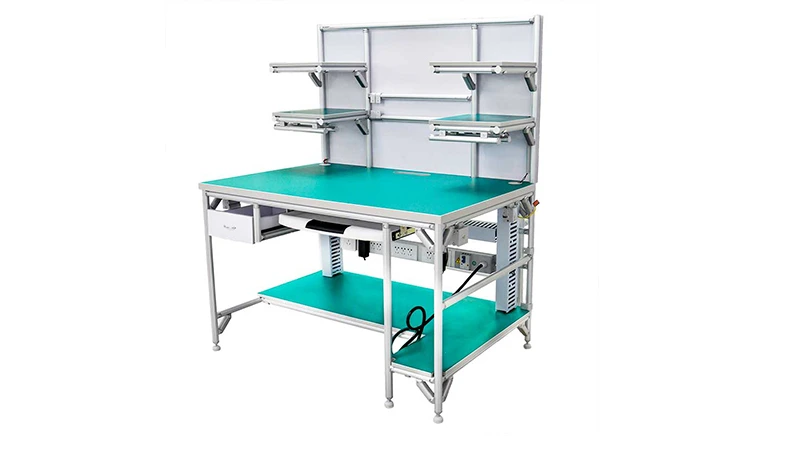
How this modular, aluminum-based workstation is transforming assembly lines, reducing waste, and elevating productivity in factories worldwide
Walk into any modern manufacturing facility today, and you'll notice a quiet revolution happening on the factory floor. Gone are the days of clunky, one-size-fits-all workbenches bolted to the ground—replaced instead by sleek, adaptable setups that seem to reconfigure themselves as production needs shift. At the heart of this transformation? The Aluminum Workbench A . More than just a table, it's a cornerstone of lean manufacturing, a champion of ergonomics, and a testament to how smart design can turn everyday workspaces into hubs of efficiency. Let's dive into what makes this workstation a game-changer for today's manufacturers.
What Is Aluminum Workbench A, Anyway?
At its core, Aluminum Workbench A is a modular workstation built around high-grade aluminum profile —the same lightweight yet sturdy material used in aerospace and automotive industries. Unlike traditional steel workbenches that weigh a ton and resist change, or wooden ones that warp and splinter over time, this bench is designed for flexibility. Think of it as a grown-up version of building blocks: using aluminum profile accessories like brackets, connectors, and shelves, you can tweak its layout in minutes to match whatever task comes next—whether that's assembling circuit boards, packing orders, or testing medical devices.
But it's not just about adjustability. Aluminum Workbench A is engineered to fit seamlessly into lean system frameworks, where every square inch of space and every second of workflow counts. It's the kind of tool that doesn't just hold your equipment—it actively helps you work smarter, cut down on waste, and keep up with the fast pace of modern production.
5 Key Features That Make Aluminum Workbench A Stand Out
Let's break down why manufacturers across industries are swapping out their old workbenches for this aluminum powerhouse. These features aren't just "nice-to-haves"—they're the reason factories report 20%+ gains in productivity after making the switch.
1. Aluminum Profile: The Backbone of Durability (Without the Bulk)
Aluminum might seem lightweight, but don't let that fool you. The 6063-T5 aluminum profile used in Workbench A has a tensile strength of 210 MPa—strong enough to support 500+ pounds of equipment without bending. Compare that to steel workbenches, which often tip the scales at twice the weight for the same load capacity, making them a nightmare to move or reconfigure. And unlike wood, aluminum doesn't rot, warp, or harbor mold—critical for cleanrooms or humid factory environments.
Another win? Corrosion resistance. In food processing or pharmaceutical plants, where daily washdowns are mandatory, steel benches rust over time. Aluminum Workbench A? It laughs off water, chemicals, and even industrial cleaners, ensuring it looks and performs like new for decades.
2. Modular Magic with Aluminum Profile Accessories
Here's where the "A" in Aluminum Workbench A really shines: adaptability. Thanks to a wide range of aluminum profile accessories , this bench isn't a static piece of furniture—it's a blank canvas. Need a shelf for tools? Snap on a bracket. Want to add a monitor arm for digital work instructions? Screw in a connector. Even lighting, cable management, or ESD (electrostatic discharge) mats can be integrated in minutes, no welding or special tools required.
Take a small electronics manufacturer in Ohio, for example. Last year, they shifted from assembling smartphones to smart home devices. With their old steel bench, reconfiguring the workspace took two days and a team of contractors. With Aluminum Workbench A? They swapped out the tool holders, added a parts bin rack, and adjusted the height in under an hour. "It's like having a workstation that grows with us," their production manager told me.
3. Ergonomics That Actually Keep Workers Happy (and Healthy)
Repetitive strain injuries (RSIs) cost U.S. manufacturers over $20 billion annually in workers' comp and downtime. Aluminum Workbench A fights back with adjustable height settings (from 28 to 42 inches) and customizable work surfaces. No more hunching over a bench that's too low or stretching to reach tools that are too high—employees can dial in their ideal setup, reducing fatigue and keeping focus sharp.
Some models even come with tilting tops (0-30 degrees) for tasks like soldering or drafting, and integrated footrests to promote better posture during long shifts. "Since we switched, our injury reports have dropped by 35%," a plant supervisor in Michigan noted. "And happier workers? They're 15% more productive—no ifs, ands, or buts."
4. Lean System Integration: Waste Not, Want Not
Lean manufacturing is all about eliminating waste—whether that's wasted space, time, or materials. Aluminum Workbench A is a lean dream come true. Its modular design means you only use the accessories you need, so there's no cluttering the workspace with unused shelves or drawers. Need to shrink the bench by a foot to make room for a new machine? Just remove a section of the aluminum profile and reattach the accessories. No saws, no drills, no mess.
And let's talk about workflow. In a typical assembly line, workers often walk 5-10 extra steps per hour to grab tools or materials. With Workbench A, you can mount tool rails, bins, and even mini conveyors right where they're needed, cutting those steps down to zero. One auto parts manufacturer in Texas calculated that this alone saved their team 120 hours of walking per month—time better spent building parts instead of fetching them.
5. Sustainability: Green Manufacturing, One Bench at a Time
Sustainability isn't just a buzzword anymore—it's a business imperative. Aluminum Workbench A checks that box, too. Aluminum is 100% recyclable, and the profile used here contains 30% recycled content right out of the box. When the bench eventually reaches the end of its life (which, with proper care, could be 20+ years), its components can be melted down and reused, leaving a tiny carbon footprint compared to steel or wood alternatives.
Plus, its lightweight design cuts down on shipping emissions. A truckload of Aluminum Workbenches carries 3x more units than steel ones, slashing transportation-related CO2. For factories aiming for LEED certification or just trying to meet corporate sustainability goals, this bench is a no-brainer.

How Does It Stack Up Against Other Workbenches? Let's Compare
You might be thinking, "Sure, it sounds great—but how does Aluminum Workbench A hold up against similar options, like Workbench E (single deck-without caster)?" Let's put them side by side. This table breaks down the key differences that matter most to manufacturers:
| Feature | Aluminum Workbench A | Workbench E (Single Deck-Without Caster) |
|---|---|---|
| Core Material | 6063-T5 Aluminum Profile | Carbon Steel Frame + Particleboard Top |
| Weight Capacity | 500 lbs (work surface); 200 lbs (shelves) | 300 lbs (work surface); 100 lbs (shelves) |
| Customization | Unlimited: Add shelves, tool rails, lighting, and more via aluminum profile accessories | Limited: Fixed single deck, no built-in accessory mounting points |
| Mobility | Optional casters (lockable) for easy movement | No casters; must be lifted/moved by 2+ people |
| ESD Compatibility | Available as ESD workstation (grounding kits, static-dissipative top) | Not available; requires aftermarket ESD mats (prone to shifting) |
| Longevity | 15-20 years (resists corrosion, warping, and wear) | 5-7 years (steel rusts; particleboard swells with moisture) |
| Price Point | Higher upfront cost ($600-$1,200) | Lower upfront cost ($300-$500) |
| Total Cost of Ownership | Lower (no replacement for 15+ years; minimal maintenance) | Higher (replaced every 5-7 years; repairs for rust/warping) |
The takeaway? Workbench E might save you money on day one, but Aluminum Workbench A pays for itself in the long run—especially if your factory values flexibility, durability, or sustainability. It's an investment in your team's productivity and your bottom line.

Who's Using Aluminum Workbench A Today? Real-World Wins
This workbench isn't just for big corporations with unlimited budgets. Small and mid-sized manufacturers are reaping the benefits, too. Here are a few examples:
Electronics Assembly:
A California-based startup making smart thermostats needed a workspace that could handle ESD-sensitive components. They opted for Aluminum Workbench A with ESD workstation upgrades—grounding straps, static-dissipative mats, and built-in cable management. "We used to have issues with static frying our PCBs," their QA manager said. "Since switching, we've had zero defects from ESD damage."
Automotive Parts Manufacturing:
A Michigan plant producing brake components was drowning in waste—tools scattered everywhere, workers tripping over fixed workbenches. They replaced 12 steel benches with Aluminum Workbench A, using aluminum profile accessories to add tool hooks, parts bins, and overhead lighting. "Our line lead time dropped by 18%," their operations director reported. "And the floor looks like a completely different place—no more clutter."
Medical Device Packaging:
A Florida company packaging surgical tools needed a bench that could withstand daily sanitization with harsh chemicals. Wood benches warped; steel ones rusted. Aluminum Workbench A? "We hose it down every night, and it still looks brand new after two years," their facility manager laughed. "Best purchase we made all year."
Is Aluminum Workbench A Right for Your Factory?
If any of these sound like your situation, it's worth considering:
You're tired of workbenches that can't keep up with changing production needs.
Your team complains about back pain or strain from poorly designed workspaces.
You're aiming to cut down on waste (time, space, or materials) as part of your lean system goals.
You need a durable, long-lasting solution that won't need replacement every 5 years.
Aluminum Workbench A isn't a one-size-fits-all fix—but for manufacturers prioritizing flexibility, ergonomics, and efficiency, it's hard to beat. It's the kind of tool that doesn't just adapt to your workflow—it helps you reimagine what your workflow can be.
Final Thoughts: The Future of Workbenches Is Aluminum
Manufacturing isn't slowing down. If anything, it's getting faster, more complex, and more focused on doing more with less. In that world, your workbench can't be an afterthought—it needs to be a strategic asset. Aluminum Workbench A, with its aluminum profile backbone, endless customization via aluminum profile accessories, and lean system integration, is exactly that asset.
It's not just about building products anymore—it's about building a workspace that empowers your team, reduces frustration, and turns "good enough" into "great." And in the end, that's the real measure of a modern manufacturing success story.