- Company Articles
- Products and Technology
- Product knowledge
- Aluminum Workbench A for Electrical Component Assembly: Safety and Precision

Aluminum Workbench A for Electrical Component Assembly: Safety and Precision
Related Product
Aluminum Workbench A
Aluminum tube workbench is more flexible and durable, compared with traditional PE/ABS coated steel tube. It is easy to assemble, anti corrosion, rust protection, and recycle use after disassemble.
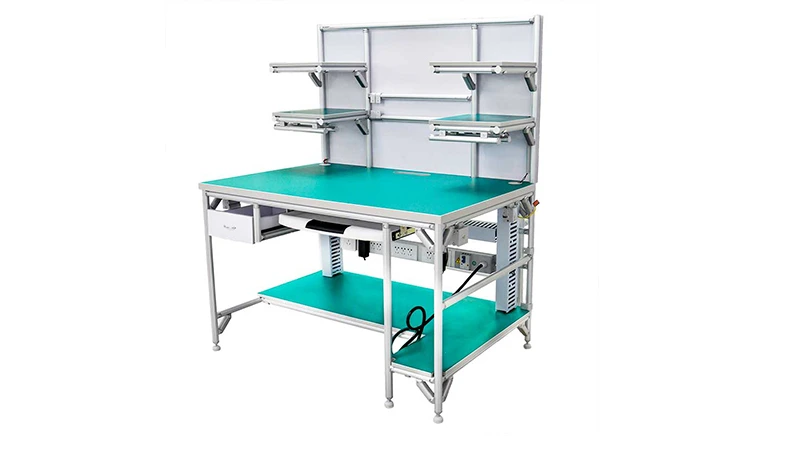
Walk into any electrical component assembly shop, and you'll feel it immediately—the quiet hum of focus. Workers hunched over benches, fingers steady as they manipulate parts smaller than a grain of rice. A single wrong move, a tiny spark of static, or a misplaced tool can turn hours of careful work into scrap. For years, Maria, a lead assembler at a mid-sized electronics firm, started each shift with a knot in her stomach. "Our old workbenches were rickety," she recalls. "The surfaces scratched easily, and we were always second-guessing if static was creeping in. By lunch, my shoulders ached from leaning over uneven tables, and I'd catch myself holding my breath whenever I handled a microchip."
That all changed when her team switched to Aluminum Workbench A . "The first day, I ran my hand along the smooth aluminum surface and exhaled," Maria says with a laugh. "It felt solid, like it was built to keep up with us. No more wobbling, no more worrying if a stray charge would fry a $500 component. It sounds silly, but that bench? It gave me my confidence back."
Today, we're diving into why Aluminum Workbench A has become the unsung hero of assembly lines across industries. It's more than a table—it's a fusion of safety, precision, and human-centric design. From its aluminum profile backbone to its integration with lean systems and ESD workstation features, this isn't just equipment. It's a promise: that your team can work smarter, safer, and with the quiet assurance that their workspace has their back.
The Problem: When Workspaces Fail the People Who Use Them
Before we talk about solutions, let's acknowledge the struggles that make workbenches like Aluminum Workbench A necessary. Traditional workspaces often feel like afterthoughts—thrown together with whatever materials were cheapest, with little consideration for the humans who spend 8+ hours there daily.
- Static chaos: In electrical assembly, static electricity is a silent killer. A charge as small as 3000 volts (undetectable to humans) can destroy a sensitive integrated circuit. Yet many workbenches use non-conductive materials, turning every surface into a potential hazard.
- Wasted motion: Tools scattered, parts bins out of reach, work surfaces too small to lay out a project—these aren't just annoyances. They're productivity killers. The average assembler spends 15% of their shift searching for tools or adjusting their workspace, according to a 2024 study by the Manufacturing Ergonomics Institute.
- One-size-fits-none: Assembly lines evolve. A bench that works for wiring a sensor might be useless for testing a circuit board. Traditional wooden or steel benches are fixed—you either or invest in a whole new setup when workflows change.
- Wear and tear: Scratched surfaces harbor dirt, which can contaminate components. Loose joints lead to wobbly tables, making precise work nearly impossible. After a year, many benches look like they've been through a war—and they perform like it, too.
"We had a bench that started sagging in the middle after six months," says Raj, a production manager. "We propped it up with a cinder block, but then the height was off. Our defect rate spiked because workers couldn't keep parts steady. It was a Band-Aid on a broken system."
Aluminum Workbench A: Built for the Way You Actually Work
Aluminum Workbench A wasn't designed in a lab by engineers who never set foot on a factory floor. It was built by listening—to assemblers like Maria, managers like Raj, and quality control teams who'd seen too many good parts ruined by bad workspaces. The result? A bench that adapts to you , not the other way around.
1. The Backbone: Aluminum Profile—Light, Strong, and Ready to Adapt
At first glance, the aluminum profile frame might look simple, but that's the beauty of it. Aluminum is 30% lighter than steel but just as strong, so the bench is easy to reposition (no more straining to move it) yet stable enough to support 300+ pounds of equipment. The profiles themselves are extruded with T-slots—those handy grooves running along the edges—so you can snap on accessories in seconds: tool hooks, part bins, even extra shelves. Need to add a monitor arm? Slide a bracket into the T-slot and tighten a screw. Done.
"We used to drill holes in our old wooden benches to mount tools," Maria says. "Now, if I need a new hook, I just click it into place. Last month, we rearranged the entire line in an hour to test a new product layout. With the old setup, that would've taken a full day and a carpenter."
2. Safety First: ESD Workstation Features That Protect What Matters
For electrical components, static electricity is the invisible enemy. ESD workstation design isn't optional here—it's a lifeline. Aluminum Workbench A's top surface is coated with a conductive material that channels static safely to the ground. Every part of the bench, from the frame to the optional ESD mat, is grounded via a built-in wire that connects to your shop's grounding system. Even the feet are anti-slip and conductive, ensuring no static builds up between the bench and the floor.
"Last week, I accidentally dragged my sweater across the bench while handling a sensor," Maria says. "On our old bench, that would've made me panic—we once lost a batch of 50 sensors to static. But with this one? The grounding light stayed green. I checked the component later, and it worked perfectly. That peace of mind? Priceless."
The ESD features aren't just about preventing disasters, either. They're about consistency. Traditional workbenches might have ESD mats that wear out or grounding cords that get disconnected. Aluminum Workbench A's system is integrated into the frame—no loose parts, no forgotten checks. "Our QA team used to test benches for static every morning," Raj notes. "Now, we just glance at the indicator light. It's one less thing to worry about, and that adds up."
3. Lean System Integration: Cut Waste, Keep the Flow
In lean manufacturing, waste is the enemy—whether it's time, motion, or materials. Lean system principles demand that every tool, every part, and every inch of space has a purpose. Aluminum Workbench A was built with this in mind. Its modular design means you only add what you need, when you need it. No more cluttered surfaces or unused shelves collecting dust.
Take roller track , for example. Attach a section to the edge of the bench, and suddenly, parts bins glide right to the assembler. No more twisting to reach a bin on the floor or walking to a distant shelf. "Before, I'd walk 10 steps to grab a resistor, 10 steps back—all day," Maria says. "Now, the bin slides over, and I stay focused. By the end of the shift, my feet don't ache, and I've assembled 15% more parts."
Raj adds, "We used to have piles of 'in-process' parts stacking up because there was nowhere to put them. Now, we've got roller tracks feeding components directly to each station. It's like a river—steady, smooth, no backups. Our work-in-progress inventory dropped by 20% in the first month."
Traditional Workbench vs. Aluminum Workbench A: The Difference in Daily Work
| Feature | Traditional Wooden/Steel Bench | Aluminum Workbench A |
|---|---|---|
| Static Protection | Relies on separate ESD mats (easily damaged, needs frequent replacement). | Integrated ESD surface and grounding system; no extra mats needed. Indicator light confirms safety. |
| Customization | Fixed design; requires drilling or modification to add tools/shelves. | T-slot aluminum profiles let you add/remove accessories in seconds—no tools needed. |
| Durability | Wood scratches easily; steel rusts. Typically lasts 1–2 years with heavy use. | Anodized aluminum resists scratches and corrosion. Built to last 5+ years. |
| Lean Compatibility | Static layout leads to wasted motion (walking, reaching, searching). | Integrates with roller track and modular accessories to streamline workflow; reduces waste. |
| Worker Comfort | Often uneven or poorly sized; leads to fatigue and strain. | Adjustable height options; smooth, ergonomic surface reduces muscle tension. |
4. The Little Things: Details That Make a Big Day-to-Day Difference
It's the small touches that turn a good workbench into a great one. Aluminum Workbench A's surface is treated with a matte finish that resists fingerprints and glare—no more squinting under overhead lights. The edges are rounded, so you won't catch a sleeve or scrape a hand. Even the optional casters are a win: lockable, so the bench stays put when you need it to, but easy to roll when you don't.
"I used to hate cleaning the old benches—fingerprints showed up instantly, and oil from our hands would stain the wood," Maria says. "This aluminum surface? Wipe it with a damp cloth, and it looks brand new. And the rounded edges? I've got a scar from catching my arm on a sharp steel bench corner. Haven't had a single nick since we switched."
Then there's the weight. At just 65 pounds (without casters), two people can move the bench without straining. "We had a steel bench that took four guys to relocate," Raj laughs. "Now, Maria and I can shift one in 30 seconds. It's saved us so much time during line reconfigurations."

From the Shop Floor: Stories That Speak Louder Than Specs
Numbers tell part of the story, but it's the people who use Aluminum Workbench A every day who truly bring its impact to life. Here are a few more voices from the front lines:
"We build medical devices, so precision is non-negotiable. Our old workbenches had uneven surfaces, and we were getting rejects because components weren't seating correctly. After switching to Aluminum Workbench A, our defect rate dropped by 35%. The QA team thought we'd changed our testing process—nope, just the bench."
— James, Medical Device Assembler
"As a small business, we can't afford downtime. When our old bench broke, we were stuck for two days waiting for a replacement. Aluminum Workbench A's modular design means if a part wears out, we just swap in a new aluminum profile—no waiting, no hassle. It's like having a bench that heals itself."
— Priya, Owner, Precision Electronics Shop

Investing in Workbenches, Investing in People
At the end of the day, Aluminum Workbench A isn't just about aluminum profiles or ESD protection or roller tracks. It's about respect—for the skill of the workers who build our electronics, for the precision required to make components that power our world, and for the simple truth that better tools lead to better lives.
Maria sums it up best: "I don't dread coming to work anymore. When I sit down at that bench, I know it's got my back. I can focus on what I do best—building things that work—instead of fighting with my workspace. That's the real value."
So if you're tired of workbenches that hold your team back, consider this: Aluminum Workbench A isn't an expense. It's an investment—in safety, in efficiency, and in the people who make your products possible. And in the end, that's the best investment you can make.