- Company Articles
- Products and Technology
- Product knowledge
- Aluminum Workbench A for Mobile Workstations: Flexibility on the Factory Floor

Aluminum Workbench A for Mobile Workstations: Flexibility on the Factory Floor
Related Product
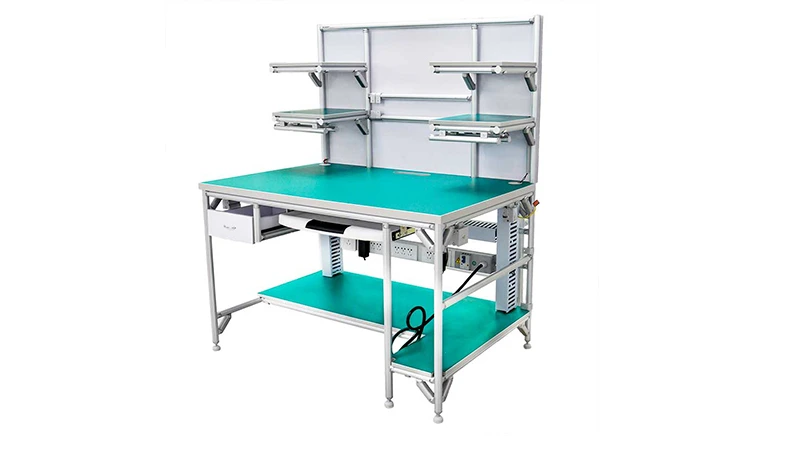
Aluminum Workbench A
Aluminum tube workbench is more flexible and durable, compared with traditional PE/ABS coated steel tube. It is easy to assemble, anti corrosion, rust protection, and recycle use after disassemble.
Walk into any modern factory, and you'll quickly realize one thing: the floor isn't just a space—it's a living, breathing ecosystem. Assembly lines hum with activity, workers dart between stations with tools in hand, and materials flow like water from one step to the next. But amid all this motion, there's a silent challenge that many facilities grapple with: rigidity. Fixed workbenches bolted to the floor, bulky storage units that block pathways, and workstations that can't adapt to shifting production needs. These are the invisible bottlenecks that slow down workflows, waste valuable time, and turn even the most well-intentioned teams into creatures of habit, stuck in inefficient routines.
Enter the Aluminum Workbench A—a mobile workstation designed not just to keep up with the chaos of the factory floor, but to thrive in it. More than just a table with wheels, this workbench is a testament to the power of thoughtful design, combining lightweight durability with unmatched mobility to redefine how work gets done. Whether you're running a small electronics assembly shop or a large-scale automotive plant, the Aluminum Workbench A isn't just a piece of equipment; it's a partner in flexibility, turning static spaces into dynamic hubs where productivity and adaptability go hand in hand.
The Backbone of Flexibility: Why Aluminum Profile Matters
At first glance, you might wonder: why aluminum? Why not stick with the tried-and-true wood or steel workbenches of the past? The answer lies in the unique properties of aluminum profile—a material that's quietly revolutionizing industrial design. Unlike heavy steel, which weighs down mobility, or wood, which warps and splinters over time, aluminum profile strikes the perfect balance between strength and lightness. It's the reason the Aluminum Workbench A can support heavy tools, stacks of components, and even small machinery without feeling like a chore to move.
But aluminum profile isn't just about weight. Its real magic lies in its versatility. Thanks to the extrusion process, aluminum can be shaped into precise, custom profiles—think T-slots, grooves, and channels—that act like a blank canvas for customization. This means the Aluminum Workbench A isn't a one-size-fits-all solution. Need to add a tool rack on the side? Drill a hole, slide in a bracket, and you're done. Want to attach a monitor arm for digital work instructions? The T-slots along the edges make it effortless. Even the work surface itself can be swapped out—from a smooth aluminum plate for electronics assembly to a rubberized mat for heavy-duty tasks—all because the aluminum profile frame is built to adapt.
Durability is another feather in aluminum's cap. Factory floors are tough environments: spills, scratches, and the occasional bump from a forklift are par for the course. Aluminum profile laughs in the face of these challenges. It's naturally resistant to corrosion, so oil, coolant, or cleaning chemicals won't leave unsightly stains or weaken the structure over time. Unlike wood, it won't rot or attract pests, and unlike steel, it won't rust if left damp. This longevity isn't just about saving money on replacements; it's about reliability. When you're in the middle of a tight production run, the last thing you need is a workbench that gives out. Aluminum profile ensures the Aluminum Workbench A is there, day in and day out, without complaint.
Mobility Redefined: The Role of Caster Wheels in Workflow Freedom
If aluminum profile is the backbone of the Aluminum Workbench A, then the caster wheels are its legs—strong, nimble, and ready to go wherever the work takes them. But not all caster wheels are created equal. The ones fitted to this workbench are a study in precision engineering, designed to turn "good mobility" into "effortless mobility." Let's break it down: each wheel is made from a high-density polyurethane that glides smoothly over concrete, tile, or even uneven factory floors without leaving marks. The swivel joints are sealed to keep out dust and debris, ensuring that even after months of use, the wheels turn as freely as the day they were installed.
But mobility isn't just about moving easily—it's about moving safely. That's why the Aluminum Workbench A comes with locking brakes on each caster wheel. Imagine this scenario: you've wheeled the workbench up to an assembly line, loaded it with a batch of circuit boards, and now you need to focus on soldering. A quick tap on the brake pedal, and the workbench stays firmly in place, no sliding or shifting. When the task is done, release the brakes, and it's off to the next station. It's a small detail, but it makes a world of difference for workers who need to trust their tools to stay put when precision matters most.
The impact of this mobility can't be overstated. Consider a typical day on a factory floor before the Aluminum Workbench A. A worker needs to assemble a product that requires tools from three different stations: a drill press, a soldering iron, and a parts bin. Without a mobile workstation, they're stuck making multiple trips—walking back and forth, wasting minutes that add up to hours by the end of the week. With the Aluminum Workbench A? They load the necessary tools onto the workbench, roll it to the assembly point, and have everything they need within arm's reach. It's like bringing the workshop to the work, not the other way around.

Aligning with Lean System Principles: Less Waste, More Value
In the world of manufacturing, "lean" isn't just a buzzword—it's a philosophy. At its core, lean system thinking is about eliminating waste: waste of time, waste of space, waste of effort. And the Aluminum Workbench A was practically born to embody this philosophy. Let's start with space waste. Traditional fixed workbenches take up permanent real estate, even when they're not in use. The Aluminum Workbench A? When it's not needed, you roll it into a corner, tuck it under a shelf, or line it up with others to create temporary storage. It's like having a workstation that knows how to stay out of the way when it's off the clock.
Then there's the waste of motion—the bane of lean practitioners everywhere. In a study by the Society of Manufacturing Engineers, it was found that workers spend up to 25% of their day just moving materials and tools between workstations. The Aluminum Workbench A cuts that number dramatically by acting as a mobile tool chest, parts carrier, and work surface all in one. Need to switch from assembling Product A to Product B? Instead of reorganizing a fixed bench, you roll the Aluminum Workbench A to the new area, where it's already loaded with the right tools and components. No more hunting for missing parts or reconfiguring setups—just seamless transitions that keep the workflow moving.
But lean isn't just about cutting waste; it's about adding value. The Aluminum Workbench A does this by putting control back in the hands of workers. In many factories, the layout is decided by managers or engineers who may not be on the floor day-to-day. With a mobile workstation, the people doing the work can rearrange their space to fit their needs. Maybe the morning shift prefers the workbench by the window for better light, while the afternoon shift moves it closer to the flow rack for faster material access. These small adjustments might seem trivial, but they add up to a more engaged, empowered team—one that feels ownership over their workspace and, in turn, takes more pride in their output.

Beyond the Basics: Features That Make the Aluminum Workbench A Stand Out
So far, we've talked about the "why" behind the Aluminum Workbench A—its material, mobility, and alignment with lean principles. But what about the "how"? Let's dive into the features that make this workstation more than just a pretty face. Start with the work surface: a 1.5-inch thick aluminum honeycomb panel that's both lightweight and shock-resistant. drop a heavy wrench on it? No problem. Spill a bottle of cleaning solvent? Wipe it off, and it's good as new. The panel is also heat-resistant, so you can set down a hot soldering iron without worrying about scorch marks—something anyone who's ruined a wooden bench can appreciate.
Then there are the little touches that show someone really thought about the user experience. Take the cable management system, for example. Tired of tripping over cords or dealing with a tangled mess under the bench? The Aluminum Workbench A has built-in cable channels along the back and sides, with clips to keep wires organized and out of the way. There's even a small power strip holder integrated into the frame, so you can plug in tools without running extension cords across the floor. It's the kind of detail that turns a "good" workstation into a "why didn't we think of this sooner?" workstation.
Customization doesn't stop at the surface, either. The Aluminum Workbench A is designed to grow with your needs, thanks to a wide range of compatible accessories. Need extra storage? Add a set of drawers that slide into the T-slots on the side. Working with small parts? Attach a pegboard for hanging bins. Even the height is adjustable, with telescoping legs that can be raised or lowered by up to 6 inches—perfect for workers of different heights or tasks that require sitting vs. standing. It's this modularity that ensures the workbench never becomes obsolete, even as your production needs change.
Aluminum Workbench A vs. Traditional Workbenches: A Clear Winner
Still on the fence? Let's put the Aluminum Workbench A head-to-head with the competition. The table below compares it to three common alternatives: wooden workbenches, steel workbenches, and plastic folding tables. You'll quickly see why aluminum is the material of choice for modern factories.
| Feature | Aluminum Workbench A | Traditional Wooden Workbench | Steel Workbench (Fixed) | Plastic Folding Table |
|---|---|---|---|---|
| Weight (Empty) | 45 lbs | 80-100 lbs | 150+ lbs | 25 lbs |
| Mobility | Yes (caster wheels with brakes) | No (fixed or requires 2+ people to move) | No (bolted to floor) | Yes (but flimsy when moving with load) |
| Load Capacity | 500 lbs | 300-400 lbs (varies by wood type) | 1000+ lbs | 150-200 lbs |
| Durability | Excellent (corrosion-resistant, scratch-proof) | Poor (warps, splinters, stains) | Good (but prone to rust if not painted) | Poor (cracks under heavy loads, fades in sunlight) |
| Customization | High (T-slots, compatible with accessories) | Low (limited to drilling holes) | Medium (welding required for modifications) | None |
| Long-Term Cost | Low (no replacement needed for 10+ years) | High (needs replacement every 2-3 years) | Medium (lasts 5-7 years but costly to install/move) | High (replaced yearly in industrial settings) |
As the table shows, the Aluminum Workbench A outperforms traditional options in nearly every category. It's lighter than steel but stronger than wood, more customizable than plastic, and built to last longer than any of them. For factories looking to invest in equipment that pays dividends over time, this isn't just a purchase—it's a smart business decision.
Real-World Impact: How One Factory Transformed Its Floor with Aluminum Workbench A
Talk is cheap, so let's look at a real example of the Aluminum Workbench A in action. Take ABC Electronics, a mid-sized manufacturer of circuit boards for medical devices. Before adopting mobile workstations, their assembly line was a study in frustration. Fixed wooden workbenches lined the floor, each dedicated to a single step: soldering, testing, packaging. The problem? If one station fell behind, the entire line slowed down. Workers spent 20 minutes each hour walking to the stockroom for parts, and reconfiguring the line for a new product took an entire day—time that could have been spent making boards.
Then they switched to 10 Aluminum Workbench A units. The transformation was almost immediate. First, they rearranged the floor into "cells"—small clusters of workbenches where 2-3 workers could handle multiple steps of the process. If soldering was backed up, a worker could roll their bench over to help, instead of waiting for the bottleneck to clear. Parts were stored in flow racks positioned between cells, so materials were always within arm's reach. Best of all, when a new product came in, the team could reconfigure the cells in under an hour, simply by moving the workbenches into new layouts.
The results? ABC Electronics saw a 25% increase in daily output within the first month. Worker satisfaction scores jumped by 40%, and the number of defects dropped by 15%—likely because workers had more control over their environment and fewer distractions. "It's like night and day," said Maria, a lead assembler with 10 years at the company. "Before, I felt like the bench was in charge of me. Now, I'm in charge of the bench. If I need to move, I move. If I need more space, I make it. It sounds simple, but it's changed everything."
Sustainability: Doing More with Less (and Helping the Planet Along the Way)
In today's world, efficiency isn't just about productivity—it's about responsibility. The Aluminum Workbench A checks this box, too, thanks to its focus on sustainability. Aluminum is one of the most recyclable materials on the planet, with nearly 75% of all aluminum ever produced still in use today. When the day finally comes that your workbench reaches the end of its life (which, with proper care, could be decades from now), the aluminum profile can be melted down and repurposed into new products—no waste, no guilt.
But sustainability isn't just about end-of-life recycling. It's about reducing waste in the here and now. The Aluminum Workbench A's modular design means you won't need to replace the entire unit if one part breaks. Bent a caster wheel? Swap it out. Scratched the work surface? replace just the panel. This "repair, don't replace" approach cuts down on the raw materials and energy needed to manufacture new workbenches, making it a greener choice than disposable plastic tables or even steel benches that often end up in landfills when they rust.
There's also the energy savings from reduced transportation. Because aluminum profile is lightweight, shipping the Aluminum Workbench A requires less fuel than shipping a steel alternative. For companies with multiple facilities, this can add up to significant carbon footprint reductions over time. And let's not forget the energy saved on the factory floor itself: a more efficient workflow means less time running equipment, fewer lights left on in unused areas, and a smaller overall energy bill. It's a win-win-win—for your team, your bottom line, and the planet.
Conclusion: Flexibility Isn't Just a Feature—It's the Future
The factory floor of tomorrow won't be defined by rigidity. It will be defined by adaptability—by workspaces that can pivot at a moment's notice, by tools that empower rather than restrict, and by teams that aren't just workers, but problem-solvers. The Aluminum Workbench A is a step toward that future. It's a reminder that sometimes, the biggest innovations aren't the flashy new machines or the high-tech software, but the simple, thoughtful tools that make the daily grind a little easier, a little faster, and a lot more human.
So if you're tired of watching your team struggle with fixed workbenches, if you're ready to turn your factory floor into a space that works for you, and if you believe that flexibility is the key to staying competitive in a fast-changing world, it's time to consider the Aluminum Workbench A. It's not just a workstation—it's a revolution in motion. And in the world of manufacturing, motion is everything.