- Company Articles
- Products and Technology
- Solution
- Aluminum Workbench A for Startups: Affordable, Scalable Solutions

Aluminum Workbench A for Startups: Affordable, Scalable Solutions
Related Product
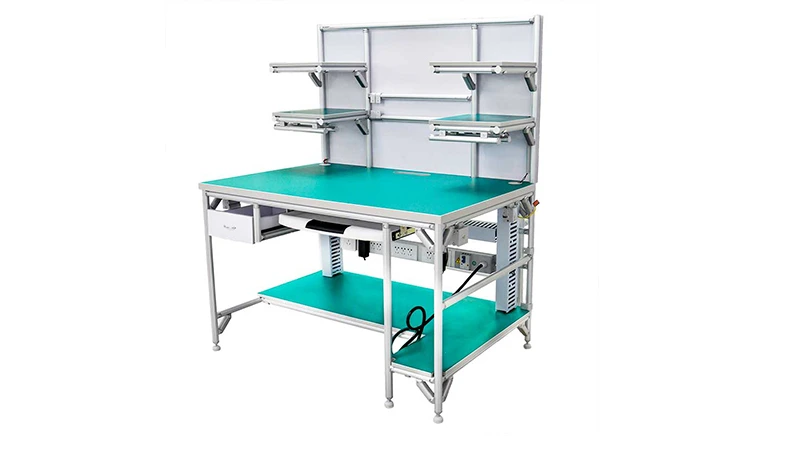
Aluminum Workbench A
Aluminum tube workbench is more flexible and durable, compared with traditional PE/ABS coated steel tube. It is easy to assemble, anti corrosion, rust protection, and recycle use after disassemble.
Let's face it—startups are built on hustle. You're balancing tight budgets, limited space, and a team that's always wearing multiple hats. The last thing you need is equipment that holds you back. Whether you're assembling prototypes in a garage, kitting out a small warehouse, or scaling up production, the tools you choose today will shape how efficiently you grow tomorrow. And at the heart of any workspace? The workbench. It's where ideas turn into prototypes, where small batches become big orders, and where your team spends hours problem-solving, creating, and building. So why settle for a workbench that's rigid, expensive, or impossible to adapt as your needs change? Enter Aluminum Workbench A—a solution designed with startups in mind: affordable, scalable, and ready to grow with you.
Why Startups Can't Afford "One-Size-Fits-All" Workspaces
Here's the thing about startups: your journey isn't linear. One month, you're hand-assembling 10 units of your product; the next, a big client order hits, and suddenly you need to triple output. Or maybe you pivot—shifting from software to hardware, or from consumer goods to B2B tools. Rigid workspaces, built with fixed furniture and custom-built stations, become anchors, not assets. Wooden workbenches warp. Steel tables rust and are impossible to move. And custom cabinetry? Forget about it—once you outgrow it, it's just expensive scrap taking up space.
Startups need flexibility, but flexibility often gets mistaken for "temporary." You might think, "We'll just use folding tables until we can afford something better." But temporary solutions cost you in hidden ways: wasted time adjusting wobbly surfaces, lost productivity when tools aren't within reach, and the mental drain of working in a space that doesn't feel intentional. Your workspace should fuel your momentum, not slow it down. That's where Aluminum Workbench A comes in.
Aluminum Workbench A: Built for the Startup Grind
Aluminum Workbench A isn't just a table. It's a modular system built around aluminum profile —lightweight, durable metal frames that snap together with simple accessories, no welding or fancy tools required. Think of it as building blocks for your workspace: start small, add on as you grow, and reconfigure whenever your needs shift. Let's break down why this matters for startups.
Affordable: Start Small, Pay As You Go
Cash flow is king for startups. You can't drop $5,000 on a custom steel workbench when you're still waiting on your first round of funding. Aluminum Workbench A solves this with a "pay-as-you-grow" model. The base unit—Workbench E (single deck, without casters, as listed in your keywords)—starts at a fraction of the cost of traditional wood or steel benches. Why? Because aluminum profile is inherently cost-effective: it's lighter to ship, requires no custom fabrication, and the accessories (like joints, clamps, and end caps) are mass-produced, keeping prices low.
But affordability isn't just about upfront costs. It's about long-term value. Unlike a wooden bench that might crack after a year or a steel table that rusts in a humid garage, aluminum profile is built to last. It resists corrosion, won't warp under heavy tools, and can handle the daily wear and tear of a busy startup. And when you outgrow it? You don't throw it away. Disassemble the aluminum profile, swap out a few parts, and rebuild it into something new—a longer bench, a shelving unit, or even a material rack. That's reuse, not waste—and for startups watching every dollar, that's a game-changer.
Scalable: Grow Without Starting Over
Let's say you start with one Aluminum Workbench A in your garage. It's perfect for your team of two, with enough space to lay out circuit boards or package orders. Six months later, you hire two more people. Do you buy a second, identical bench? Sure—but you can also expand the first one. Add a few extra aluminum profile sections, some aluminum pipe accessories like extendable joints, and suddenly your 4-foot bench becomes 8 feet. No need to match sizes or styles—aluminum profiles are standardized, so every piece works with the next.
Or maybe your product line expands. Now you need more than just a flat surface—you need shelves for tools, bins for parts, or a way to feed materials directly to the bench. Aluminum Workbench A plays well with others. Attach a flow rack (those sloped racks that let parts glide down to you, reducing bending and reaching) to one side, and suddenly your bench becomes part of a mini production line. Add casters (wheels) to the base, and you can roll the entire setup across the workshop to make space for a new machine. Scalability isn't just about getting bigger—it's about getting smarter with what you have.
Lean by Design: Align with Your "Do More with Less" Mindset
Startups thrive on lean principles: eliminate waste, optimize flow, and focus on value. Aluminum Workbench A fits this philosophy like a glove. Unlike traditional workbenches that force you to adapt your workflow to their fixed shape, this system lets you design the bench around how you work. Need a shelf above for frequently used tools? Screw in aluminum profile brackets. Want a bin rail on the side for small parts? Clip on some plastic roller track (yes, even that's compatible). Everything has a place, and nothing is wasted—whether it's time spent searching for tools or space taken up by unused storage.
And when paired with other lean tools—like flow racks for material handling or turnover trolleys for moving goods—Aluminum Workbench A becomes the center of a streamlined workspace. Imagine this: parts arrive on a flow rack, slide down to the bench via roller tracks, get assembled, and then move to packaging on a trolley—all without anyone taking extra steps. That's the power of a lean system built on flexible, modular components. For startups, where every minute counts, that efficiency translates directly to faster growth.

Aluminum Workbench A vs. Traditional Workbenches: The Startup Showdown
Still on the fence? Let's put Aluminum Workbench A head-to-head with the options most startups consider first: wooden workbenches, steel tables, and generic "utility benches" from big-box stores. The difference isn't just in price—it's in how they'll support (or hinder) your growth.
| Feature | Aluminum Workbench A | Wooden Workbench | Steel Utility Table | Big-Box "Utility Bench" |
|---|---|---|---|---|
| Upfront Cost | $$ (Moderate, with room to save by starting small) | $$$ (Custom builds are pricey; pre-made options lack durability) | $$$ (Heavy, expensive to ship; rust-resistant versions cost more) | $ (Cheap, but low quality) |
| Setup Time | 1–2 hours (no tools needed—just snap-together joints) | 8+ hours (requires assembly, sanding, sealing) | 3–4 hours (heavy, requires bolts and a second person to lift) | 30 minutes (but wobbly—parts often loosen over time) |
| Scalability | Excellent (add sections, shelves, or accessories anytime) | Poor (fixed size; can't extend without rebuilding) | Limited (can add shelves, but frame can't be extended) | None (one-size-fits-all; throw away when too small) |
| Durability | High (resists rust, scratches, and warping; 10+ year lifespan) | Low (warps in humidity; scratches easily; 2–3 year lifespan) | High (but heavy; rusts without proper coating; 5–7 year lifespan) | Very Low (particleboard top; plastic legs; 6–12 month lifespan) |
| Portability | Lightweight (easily moved by 1–2 people; add casters for mobility) | Heavy (often 100+ lbs; hard to reposition) | Very Heavy (200+ lbs; requires a dolly to move) | Light but flimsy (tips over easily when moved) |
| Waste Factor | Low (reuse parts for new projects; fully recyclable) | High (ends up in a landfill when worn out) | Medium (recyclable, but hard to disassemble; often scrapped) | Very High (cheap materials; not recyclable; immediate landfill bound) |
The verdict? Aluminum Workbench A isn't just a middle ground—it's the only option that grows with you, saves you money long-term, and aligns with the "do more with less" startup mindset. It's not just a workbench; it's an investment in your ability to adapt, scale, and thrive.

Real Startups, Real Results: How Aluminum Workbench A Delivered
Don't just take our word for it. Let's look at how two startups used Aluminum Workbench A to overcome common growing pains.
Case Study 1: EcoTech Gadgets—From Garage to Small Batch Production
EcoTech Gadgets started in a Brooklyn garage, building solar-powered phone chargers. Founder Maya and her co-founder, Raj, began with a secondhand wooden workbench they found on Craigslist. It was cheap, but after three months, the top was covered in tool marks, and the legs wobbled so badly they had to prop it up with a brick. "We were spending more time fixing the bench than building chargers," Maya laughs. "And when we got our first big order—50 units—we realized we needed more space. The wooden bench was only 4 feet long, and there was no way to extend it."
They switched to Aluminum Workbench A. "We started with the basic model—Workbench E, single deck, no casters—for $350. It took Raj and me 45 minutes to assemble, and it was rock solid. We could clamp tools to it, set up a small soldering station, and even stack bins of parts on the shelf underneath. A month later, when we hired a third team member, we added two more aluminum profile sections and some aluminum pipe accessories to extend it to 8 feet. Total cost for the expansion? $120. No new bench, no waste—just growth."
Today, EcoTech has a 500 sq ft workshop with four Aluminum Workbench A stations, each connected to a flow rack for parts. "We even took the original 4-foot bench and turned it into a packing station," Maya says. "It's still going strong. That's the beauty of it—we're not throwing money away on equipment that becomes obsolete. We're investing in something that grows with us."
Case Study 2: Swift Robotics—Adapting to a Pivot
Swift Robotics started by building educational robots for kids. Their workspace was centered around two large steel workbenches, perfect for assembling the bulky robot frames. But six months in, they pivoted: instead of toys, they began developing small, lightweight drones for agriculture. Suddenly, their steel benches felt like overkill. "The drones are tiny—we needed more surface area for laying out circuit boards, not a huge, heavy table that took up half the workshop," says CEO Alex. "And the steel benches were so heavy, we couldn't rearrange the space to set up a testing area."
They replaced the steel benches with Aluminum Workbench A. "We went with the aluminum profile because it's lightweight—one person can move a bench across the room. We added casters to the base, so we can roll the benches into a U-shape for team assembly days or line them up for solo work. And when we need to test drones, we just roll the benches out of the way. The aluminum surface is also easier to clean than steel—no rust, no paint chipping, and it doesn't conduct electricity, which is safer for our electronics work."
The pivot paid off, and Swift now sells drones to farms across the Midwest. "We've tripled our team size in a year, and the Aluminum Workbench A system has kept up," Alex says. "We've added shelves, tool hooks, even a small conveyor belt attachment for moving parts between stations. It's not just a workbench—it's the backbone of our workspace. And because it's so adaptable, we never feel stuck. If we pivot again? We'll just reconfigure the benches. Simple as that."
Beyond the Bench: Building a Lean System That Grows with You
Aluminum Workbench A isn't just a standalone tool—it's part of a larger ecosystem of lean manufacturing tools designed for flexibility. Startups often think "lean" is just for big factories, but it's actually the perfect mindset for small teams. Lean is about eliminating waste, and nothing wastes time or money like a workspace that doesn't flow.
Pair your Aluminum Workbench A with a flow rack to keep parts organized and within arm's reach. Flow racks use gravity to feed parts down to you, so you're not bending over to dig through bins or walking across the room for supplies. Add a few roller tracks (those grooved rails that let boxes glide smoothly) between benches, and suddenly you've got a mini assembly line—no conveyor belt required. And when you need to move materials around the workshop? Use a turnover trolley built from the same aluminum profile as your bench. It's all modular, all compatible, and all designed to work together.
This isn't just about efficiency—it's about culture. When your team isn't fighting with clunky equipment or wasting time searching for tools, they're focused on what matters: building a great product. A lean system reduces frustration, speeds up production, and gives your team the confidence that you're set up for success. And for startups, confidence is everything.
Ready to Build a Workspace That Grows with You?
Startups don't have the luxury of waiting for "someday when we're bigger." You need tools that work now and scale later . Aluminum Workbench A isn't just a workbench—it's a statement: that you're focused on growth, that you value efficiency, and that you're not willing to waste money on equipment that holds you back. It's affordable enough for your current budget, scalable enough for your future goals, and durable enough to keep up with your hustle.
So why settle for a workbench that's stuck in the present? Choose one that's ready for your future. Choose Aluminum Workbench A.