- Company Articles
- Products and Technology
- Application Cases
- Aluminum Workbench A in Aerospace Manufacturing: Precision You Can Trust

Aluminum Workbench A in Aerospace Manufacturing: Precision You Can Trust
Related Product
Aluminum Workbench A
Aluminum tube workbench is more flexible and durable, compared with traditional PE/ABS coated steel tube. It is easy to assemble, anti corrosion, rust protection, and recycle use after disassemble.
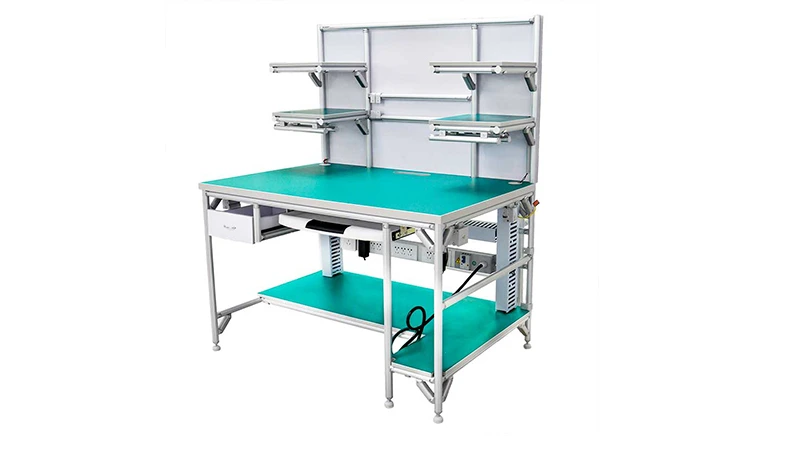
In the high-stakes world of aerospace manufacturing, where a single misplaced millimeter can compromise the safety of thousands, precision isn't just a goal—it's a non-negotiable mandate. Every component, from the turbine blades that power jet engines to the microchips that control avionics systems, is born from a symphony of exacting processes. Yet, behind these technological marvels lies an often-overlooked hero: the workbench. It's where engineers assemble delicate circuit boards, where technicians inspect turbine casings under magnification, and where quality control experts verify tolerances down to the micrometer. For aerospace facilities, choosing the right workbench isn't just about functionality—it's about investing in the foundation of reliability. Enter Aluminum Workbench A —a solution engineered to meet the industry's most rigorous demands, built on the strength of aluminum extrusion profile and designed to integrate seamlessly with lean systems . In this article, we'll explore why this workbench has become the trusted choice for aerospace manufacturers, how its design elevates precision, and why it's more than just a surface—it's a partner in perfection.
The Cost of Imperfection: Why Precision Matters in Aerospace
To understand the critical role of a workbench in aerospace manufacturing, consider the stakes. A jet engine operates at temperatures exceeding 2,000°F, with parts spinning at 10,000 RPM—failures here are catastrophic. The Federal Aviation Administration (FAA) and European union Aviation Safety Agency (EASA) enforce standards so strict that even minor deviations can ground an entire fleet. For example, in 2016, a major airline faced a $1.2 million fine after discovering a supplier had used improperly torqued bolts in engine assemblies—a mistake traced back to an unstable work surface that caused inconsistent tool alignment during installation.
Aerospace components also demand extreme stability during assembly. When building a satellite's communication antenna, for instance, technicians must align parabolic reflectors with an error margin of less than 0.01mm to ensure signal integrity. A wobbly workbench or a surface prone to vibration could render the antenna useless, costing millions in rework and delayed launches. Similarly, ESD (Electrostatic Discharge) sensitivity is paramount: avionics circuit boards, with their microscopic semiconductors, can be permanently damaged by static charges as small as 250 volts—less than the static generated by walking across a carpet. Here, a workbench that fails to dissipate static isn't just a tool; it's a liability.
Against this backdrop, the workbench emerges as a silent guardian. It must be rigid enough to resist deflection under heavy loads, stable enough to eliminate vibration, durable enough to withstand 24/7 use, and specialized enough to protect sensitive components. For decades, manufacturers relied on steel workbenches—sturdy but cumbersome—or wooden surfaces that warped with humidity. Today, however, a new standard has emerged: Aluminum Workbench A , crafted from high-grade aluminum extrusion profile and engineered to address the unique challenges of aerospace manufacturing.
Meet Aluminum Workbench A: Designed for the Demands of Aerospace
At first glance, Aluminum Workbench A may seem unassuming—a clean, uncluttered surface with a minimalist design. But beneath its simplicity lies a wealth of engineering thought. Unlike generic workbenches, this model is purpose-built for precision work, starting with its core design: a single-deck structure without casters, prioritizing stability over mobility. While casters offer convenience in warehouse settings, aerospace assembly demands a stationary base that won't shift during delicate tasks. The absence of wheels eliminates even the smallest movements, ensuring that when a technician is aligning a fuel injector component, the workbench stays exactly where it's placed.
But stability is just the beginning. The real innovation lies in its construction material: aluminum extrusion profile . Aluminum, long favored in aerospace for its strength-to-weight ratio, brings unique advantages to workbench design. Unlike steel, which adds unnecessary weight and risks corrosion in humid factory environments, aluminum is lightweight yet remarkably rigid. This means the workbench can support heavy loads—up to 500 kg in some configurations—without sagging, even over extended periods. For reference, that's enough to hold a fully assembled aircraft landing gear component or a stack of titanium engine parts without compromising structural integrity.
The extrusion process itself is a marvel of precision. Aluminum extrusion involves forcing heated aluminum through a die to create custom cross-sectional shapes—think of it as "drawing" metal into complex profiles with exacting tolerances. For Aluminum Workbench A, the extrusion profile is engineered with internal reinforcing ribs, which distribute weight evenly across the surface. This design minimizes flex, ensuring that the worktop remains flat within ±0.5mm over its entire length. Why does flatness matter? When inspecting a turbine blade's aerodynamic contour with a coordinate measuring machine (CMM), even a slight dip in the workbench surface can throw off measurements, leading to incorrect assessments of part geometry.
Another key feature is customization. Aerospace manufacturing lines rarely follow a one-size-fits-all approach, and neither should workbenches. Aluminum Workbench A can be tailored to specific needs: adding tool rails for hanging torque wrenches and calipers, integrating ESD-safe mats for electronics assembly, or mounting adjustable shelving for component storage. This flexibility ensures that whether the bench is used for inspecting composite materials or assembling navigation systems, it adapts to the task—not the other way around.

Aluminum Extrusion Profile: The Backbone of Reliability
To truly appreciate Aluminum Workbench A, it's essential to dive deeper into aluminum extrusion profile —the material that makes it all possible. Aluminum's popularity in aerospace isn't accidental; it's the result of decades of material science advancements. Let's break down its advantages:
1. Strength Without the Weight : Aluminum has a tensile strength of 400-500 MPa (megapascals), comparable to some steels, but at just one-third the weight. This makes the workbench easy to install and reconfigure (when needed) without sacrificing durability. For aerospace facilities, where floor space is often at a premium, a lighter workbench also reduces stress on factory floors, allowing for placement without structural concerns.
2. Corrosion Resistance : Aluminum naturally forms a thin oxide layer when exposed to air, protecting it from rust and corrosion. This is critical in manufacturing environments where cleaning agents, coolants, or humidity could degrade other materials. A steel workbench, by contrast, requires regular painting or coating to prevent rust—maintenance that adds downtime and cost. With aluminum, the workbench retains its integrity even in harsh conditions, ensuring a longer service life.
3. Thermal Stability : Aerospace manufacturing often involves temperature-sensitive processes, from curing composite materials to testing electronics. Aluminum's high thermal conductivity helps dissipate heat evenly across the workbench surface, preventing hotspots that could warp delicate parts. For example, when soldering avionics circuit boards, the bench acts as a heat sink, keeping the PCB (printed circuit board) at a stable temperature and reducing the risk of component damage from thermal shock.
4. Precision Machinability : After extrusion, the aluminum profile undergoes precision machining to ensure flatness and squareness. The workbench's edges are deburred, and mounting holes are drilled with ±0.1mm accuracy, allowing for seamless integration with accessories like tool holders or ESD grounding kits. This level of precision ensures that when a technician clamps a part to the bench, it aligns exactly with the specifications in the engineering drawing.
To put this in perspective, consider a traditional wooden workbench. Wood expands and contracts with humidity, leading to warping over time. A steel bench, while strong, can develop surface rust if not maintained, which could contaminate sensitive aerospace parts. Aluminum Workbench A, with its extrusion profile, avoids these pitfalls, offering a consistent, reliable surface that stands up to the rigors of daily use.

ESD Workstation Capabilities: Protecting Sensitive Electronics
Aerospace manufacturing isn't just about heavy metal components; it's also about the intricate electronics that power modern aircraft. From flight control systems to in-flight entertainment, these devices rely on semiconductors and microchips that are highly susceptible to electrostatic discharge (ESD). A static charge of just 100 volts can damage a MOSFET transistor, while a human body can accumulate up to 35,000 volts of static electricity through simple movements like walking across a floor. For this reason, ESD workstation features are non-negotiable in aerospace electronics assembly—and Aluminum Workbench A delivers.
The bench's ESD protection starts with its surface. Many configurations include an ESD-safe mat, which is bonded to the aluminum worktop. These mats are made from conductive materials that dissipate static charges, directing them to ground through the workbench's aluminum frame. The aluminum itself, being a conductor, acts as a secondary grounding path, ensuring that any static buildup on the technician's body or tools is safely discharged before reaching sensitive components. This dual-layer protection is critical for tasks like assembling navigation system circuit boards, where a single ESD event could render a $10,000 component useless.
But ESD safety isn't just about the surface. Aluminum Workbench A can be equipped with additional features like grounding wrist strap connectors, which attach directly to the bench frame. Technicians wear these straps to maintain a constant ground potential, eliminating the risk of static discharge during handling. For added peace of mind, some models include built-in ESD monitoring systems that alert operators if the grounding path is interrupted—an extra layer of protection in high-precision environments.
Consider a scenario: a technician is assembling a radar system module for a commercial airliner. The module contains a microprocessor with nanoscale transistors, sensitive to even the smallest static charge. Without ESD protection, the technician could unknowingly damage the processor while handling it, leading to system failures during flight. With Aluminum Workbench A's ESD features, the risk is mitigated, ensuring that the module meets the strict reliability standards set by aerospace regulators.
Integrating with Lean Systems: Streamlining Aerospace Workflows
Aerospace manufacturing isn't just about precision—it's also about efficiency. With production cycles that can span months or even years, minimizing waste and maximizing productivity is key to staying competitive. This is where lean systems come into play, focusing on eliminating non-value-added activities and optimizing workflow. Aluminum Workbench A isn't just a standalone tool; it's designed to integrate seamlessly into lean manufacturing environments, enhancing productivity without compromising precision.
One of the core principles of lean manufacturing is "5S"—Sort, Set in Order, Shine, Standardize, Sustain. Aluminum Workbench A supports each of these steps. "Set in Order," for example, emphasizes organizing tools and materials for easy access. The bench's customizable design allows for tool rails, pegboards, and modular storage bins, ensuring that every torque wrench, gauge, and component has a designated place. This reduces time spent searching for tools, cutting down on idle time during assembly.
Another lean principle is continuous flow, which aims to move parts through the production line with minimal delays. Aluminum Workbench A can be paired with flow racks and conveyor systems, creating a smooth transition from component storage to assembly. For instance, a workbench used in engine assembly might be positioned adjacent to a flow rack holding pre-inspected bolts and gaskets, allowing technicians to grab parts without leaving their station. This integration reduces motion waste—another lean target—and keeps the production line moving efficiently.
Standardization is also simplified with Aluminum Workbench A. Because the benches are built to uniform specifications, every workstation on the assembly line operates the same way. Technicians don't have to adjust to varying work surface heights or tool placements, reducing training time and human error. This consistency is especially valuable in aerospace, where standardized processes are required to meet regulatory compliance.
Perhaps most importantly, the bench's durability supports the "Sustain" phase of 5S. A workbench that lasts for years without degradation ensures that the lean systems put in place remain effective over time. Unlike cheaper alternatives that warp or corrode, Aluminum Workbench A maintains its functionality, ensuring that the workflows built around it stay optimized for the long haul.
Comparing Workbench Materials: Why Aluminum Stands Above the Rest
To fully grasp the value of Aluminum Workbench A, it's helpful to compare it to other common workbench materials. Below is a breakdown of how aluminum stacks up against steel, wood, and plastic in key areas relevant to aerospace manufacturing:
| Feature | Aluminum Workbench A (Aluminum Extrusion Profile) | Steel Workbench | Wooden Workbench | Plastic Workbench |
|---|---|---|---|---|
| Strength-to-Weight Ratio | High: Strong yet lightweight (ideal for heavy loads without bulk) | High strength, but heavy (difficult to reposition; risks floor damage) | Moderate strength; prone to warping under heavy loads | Low strength; unsuitable for heavy aerospace components |
| Corrosion Resistance | Excellent: Natural oxide layer prevents rust | Poor: Requires painting/coating; prone to rust in humid environments | Poor: Absorbs moisture, leading to warping and mold | Good, but prone to cracking under UV exposure |
| ESD Compatibility | Excellent: Conductive frame and optional ESD mats | Good if grounded, but heavy and less customizable | Poor: Insulative; cannot dissipate static | Poor: Insulative; high risk of static buildup |
| Flatness Tolerance | ±0.5mm over entire surface (critical for precision measurements) | ±1.0mm (prone to minor warping over time) | ±2.0mm+ (varies with humidity and temperature) | ±1.5mm (prone to flexing under load) |
| Customization | High: Extrusion profiles allow for tool rails, shelving, and accessories | Moderate: Limited by weight and welding requirements | Low: Difficult to modify without damaging the wood | Low: Molding process restricts design changes |
| Longevity | 10+ years with minimal maintenance | 5–8 years (requires repainting; rust weakens structure) | 3–5 years (warping and wear reduce usability) | 2–3 years (prone to cracking and discoloration) |
The table tells a clear story: aluminum outperforms other materials in nearly every category that matters for aerospace manufacturing. Its combination of strength, precision, and ESD safety makes it the ideal choice for workbenches where reliability is non-negotiable.
Real-World Impact: How Aluminum Workbench A Transforms Aerospace Lines
To understand the practical benefits of Aluminum Workbench A, look no further than a leading aerospace manufacturer based in Seattle, which recently upgraded its engine component assembly line with 20 units of the bench. Prior to the upgrade, the facility used steel workbenches that were prone to rust and required frequent repainting. Technicians reported frustration with uneven surfaces, which made aligning turbine blade roots difficult. After switching to Aluminum Workbench A, the results were striking:
- Reduced Rework: CMM measurements showed a 40% decrease in part alignment errors, as the bench's flat surface eliminated measurement inconsistencies.
- Lower Maintenance Costs: The facility saved $15,000 annually on repainting and rust removal, while the aluminum benches required only occasional cleaning.
- Improved Ergonomics: The lighter weight of the aluminum benches allowed for easier reconfiguration of the assembly line, reducing technician fatigue during layout changes.
- Enhanced ESD Safety: Electronics assembly defects dropped by 25% after implementing the bench's ESD features, protecting expensive avionics components.
Another example comes from a European aerospace supplier specializing in composite materials. The company needed a workbench that could withstand the harsh chemicals used in composite curing while maintaining precision for layup operations. Aluminum Workbench A's corrosion resistance and flat surface proved ideal, allowing technicians to lay up carbon fiber sheets with consistent pressure, resulting in stronger, more uniform composite parts.
Choosing the Right Supplier: Why Expertise Matters
While Aluminum Workbench A's design is impressive, its performance ultimately depends on the quality of its manufacturing. For aerospace facilities, partnering with a trusted aluminum profile supplier is critical. A reputable supplier will ensure that the aluminum extrusion profiles meet strict aerospace-grade standards, with certifications like ISO 9001 and AS9100 (the aerospace-specific quality management standard). They'll also offer engineering support, helping customize the bench to specific workflows—whether that means adding tool rails for torque wrenches or integrating cooling channels for temperature-sensitive tasks.
When evaluating suppliers, look for those with a track record in aerospace. Ask about material traceability: can they provide certificates of compliance for the aluminum used in the extrusion profiles? Do they conduct rigorous testing, like load testing and flatness inspections, before shipping? These details matter, as they ensure that the workbench you receive meets the same standards as the aerospace components it will help build.
Conclusion: Precision That Soars
In aerospace manufacturing, every detail counts. From the alloys used in engine parts to the software that controls assembly robots, excellence is the only acceptable standard. Aluminum Workbench A, built on the strength of aluminum extrusion profile and designed with ESD workstation capabilities, embodies this pursuit of excellence. It's more than a workbench; it's a commitment to precision, a tool that empowers technicians to do their best work, and a foundation for the safe, reliable aircraft that connect our world.
As aerospace technology continues to advance—with electric aircraft, hypersonic travel, and reusable rockets on the horizon—the demand for precision will only grow. Aluminum Workbench A, with its adaptability, durability, and unwavering focus on accuracy, is ready to meet that challenge. For manufacturers who refuse to compromise on quality, it's not just a purchase—it's an investment in the future of flight. After all, when it comes to aerospace, precision isn't just about building better machines; it's about building trust—trust that every flight, every journey, is backed by the best tools on the ground.