- Company Articles
- Products and Technology
- Application Cases
- Aluminum Workbench A in Automotive Production: Boosting Assembly Line Efficiency

Aluminum Workbench A in Automotive Production: Boosting Assembly Line Efficiency
Related Product
Aluminum Workbench A
Aluminum tube workbench is more flexible and durable, compared with traditional PE/ABS coated steel tube. It is easy to assemble, anti corrosion, rust protection, and recycle use after disassemble.
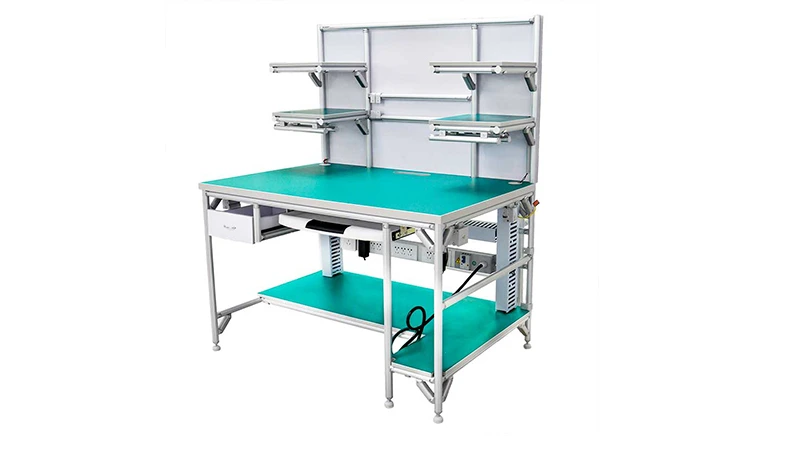
In the fast-paced world of automotive manufacturing, every second counts. Assembly lines hum with the rhythm of precision, where workers, robots, and tools converge to turn raw materials into finished vehicles. Yet, even in this high-tech ecosystem, one often-overlooked element can make or break productivity: the workbench. It's the silent partner in every production step—holding tools, organizing parts, and providing the stable foundation where skilled hands bring components to life. For years, many plants relied on rigid, one-size-fits-all workbenches that barely kept up with evolving needs. But today, a new player is changing the game: Aluminum Workbench A. Designed with the demands of modern automotive production in mind, this workbench isn't just a piece of equipment—it's a catalyst for efficiency, flexibility, and lean system integration. Let's dive into how Aluminum Workbench A is transforming assembly lines, one well-organized workspace at a time.
The Hidden Cost of Outdated Workspaces in Automotive Assembly
Before we explore the solutions, let's talk about the problem. Traditional workbenches in automotive plants often fall into one of two categories: heavy steel behemoths that are durable but immovable, or flimsy wooden setups that wear out quickly. Both share a critical flaw: they resist change. In an industry where production lines retool for new models every few years (or even months), a static workbench becomes a bottleneck. Imagine a team tasked with assembling dashboard modules for a new electric vehicle. The old steel bench, bolted to the floor, is too low for taller workers, forcing them to hunch over. Tools are scattered in drawers, requiring extra seconds to find. Parts arrive in bins that don't fit the bench's surface, leading to clutter and misplaced components. Over a shift, those extra seconds add up—to hours of lost productivity, increased worker fatigue, and even higher error rates.
Then there's the issue of compatibility. Modern automotive production relies on lean system principles—streamlining processes, eliminating waste, and continuously improving workflows. But a rigid workbench can't adapt to lean initiatives like 5S (Sort, Set in Order, Shine, Standardize, Sustain) or just-in-time (JIT) production. When parts arrive exactly when needed, the workspace must flex to accommodate varying batch sizes, tool requirements, and worker preferences. A traditional bench, with fixed shelves and no modularity, becomes a barrier to these goals. It's not just about having a place to work; it's about having a workspace that works with the team, not against them.
Aluminum Workbench A: Designed for the Way You Work Now
Enter Aluminum Workbench A. At first glance, it might look like just another workbench, but its design tells a different story. Built from high-grade aluminum profile—lightweight yet surprisingly strong—this bench is a masterclass in modularity. Unlike steel or wood, aluminum profile allows for easy customization: add a shelf here, a tool rail there, or adjust the height to fit a worker's ergonomic needs. It's not just a bench; it's a blank canvas for productivity. Let's break down the features that make it a standout in automotive production assemble:
1. Lightweight Durability: The Aluminum Profile Advantage
Aluminum profile is the backbone of Aluminum Workbench A, and for good reason. Automotive plants need workbenches that can handle the daily grind—heavy tools, constant movement of parts, and the occasional bump from a forklift. Aluminum delivers on durability: it's resistant to rust, corrosion, and dents, even in the oily, humid environments common on assembly lines. But what really sets it apart is its weight. Compared to steel, aluminum is significantly lighter, making the bench easy to reposition when production lines reconfigure. Need to shift the workbench 10 feet to the left for a new assembly process? Two workers can move it without a forklift, minimizing downtime. This flexibility is a game-changer for plants that frequently adjust layouts to meet changing model demands.
2. Modular Design: Build the Bench You Need, When You Need It
One size fits none in automotive production. A workbench for assembling engine components needs deep shelves for heavy parts, while one for wiring harnesses requires tool hooks and small-part bins. Aluminum Workbench A adapts with ease, thanks to its T-slot aluminum profile design. T-slots are grooves running along the length of the aluminum extrusions, allowing accessories like shelves, hooks, and bins to be attached (and reattached) without drilling or welding. Need to add a flow rack attachment for parts delivery? Slide a bracket into the T-slot and tighten a screw. Want to lower the work surface by 6 inches for a shorter worker? Adjust the legs using the built-in height markers. This modularity means the bench grows with your needs, eliminating the need to replace entire workstations every time production requirements change.
3. Ergonomics: Putting Worker Comfort First
Fatigue is the silent productivity killer. When workers strain to reach tools, hunch over a low bench, or twist awkwardly to grab parts, their speed and accuracy suffer. Aluminum Workbench A prioritizes ergonomics with adjustable height settings (from 30 to 42 inches, typical for automotive tasks) and a smooth, non-slip work surface that reduces wrist strain. Some models even include optional anti-fatigue mats beneath the bench, cushioning feet during long shifts. These small adjustments add up: studies show that ergonomic workspaces can reduce worker fatigue by up to 30%, leading to fewer errors and higher output. It's not just about efficiency—it's about respecting the people who power the assembly line.
4. Compatibility with Lean Systems: Waste Not, Want Not
Lean system principles are all about eliminating waste—whether it's time, motion, or materials. Aluminum Workbench A aligns perfectly with this mindset. Its modular design supports 5S practices by keeping tools and parts "set in order" (the second S) with designated spots for every item. No more hunting for a wrench in a jumbled drawer; hooks and bins attach directly to the bench, keeping essentials at arm's length. The bench also integrates seamlessly with JIT production: when parts arrive in small batches, the work surface can be cleared quickly to make space, and flow racks (another key lean tool) can be attached to the bench to deliver parts directly to the worker. This reduces "motion waste"—the time spent walking to fetch parts—and keeps the assembly line moving at a steady pace.

How Aluminum Workbench A Stacks Up Against the Competition
To truly appreciate Aluminum Workbench A, it helps to see how it compares to traditional options. Below is a breakdown of key criteria automotive plants care about most:
| Criteria | Aluminum Workbench A | Traditional Steel Workbench | Wooden Workbench |
|---|---|---|---|
| Material | High-grade aluminum profile | Heavy steel | Plywood or solid wood |
| Weight | Lightweight (easily repositioned by 2 workers) | Heavy (requires forklift for movement) | Moderate, but prone to warping over time |
| Customization | High (modular T-slot accessories, adjustable height) | Low (fixed shelves, no easy adjustments) | Limited (requires drilling, prone to damage) |
| Durability | High (rust-resistant, scratch-resistant surface) | High (but prone to rust if not painted) | Low (dents, water damage, warping) |
| Ergonomics | Excellent (adjustable height, anti-fatigue options) | Poor (fixed height, hard surface) | Fair (may splinter, no height adjustment) |
| Lean System Integration | Seamless (5S, JIT, flow rack compatibility) | Limited (static design resists workflow changes) | Minimal (lacks organization features) |
The table tells a clear story: Aluminum Workbench A outperforms traditional options in flexibility, ergonomics, and lean compatibility—key factors for modern automotive production. While steel workbenches may still have a place in heavy-duty applications, their lack of adaptability makes them a poor fit for dynamic assembly lines. Wooden workbenches, meanwhile, simply can't keep up with the demands of daily use in a manufacturing environment.

Real-World Impact: A Day in the Life with Aluminum Workbench A
Let's step into a hypothetical automotive plant to see Aluminum Workbench A in action. Meet Maria, a veteran assembly line worker tasked with installing door handles on a new SUV model. Before the plant switched to Aluminum Workbench A, her workstation was a cluttered steel bench. Tools were scattered in a drawer, parts arrived in large bins that took up half the work surface, and the bench was so low she often left work with a sore back. Her average cycle time for one door handle was 4 minutes—and that was on a good day. When parts were misplaced, it could jump to 6 minutes or more.
Then the plant introduced Aluminum Workbench A. The first change Maria noticed was the height: she adjusted it to 38 inches, aligning perfectly with her waist, so she no longer had to hunch. Next, her team added tool hooks to the side of the bench, so her screwdrivers and pliers hung within easy reach. A small flow rack was attached to the bench, delivering door handles in batches of 10 (JIT style), so the work surface stayed clear. Bins for screws and washers snapped into the T-slots, with labels matching the 5S system—no more digging for the right size.
The results? Maria's cycle time dropped to 3 minutes per door handle—a 25% improvement. Over an 8-hour shift, that meant assembling 160 handles instead of 120. Her back pain vanished, and she reported feeling more energized at the end of the day. Multiply that across an entire assembly line, and the impact is staggering: higher output, happier workers, and fewer errors. It's not magic—it's good design solving real problems.
Beyond the Bench: Accessories That Extend Productivity
Aluminum Workbench A is powerful on its own, but its true potential shines when paired with compatible accessories—many of which are designed specifically for automotive production. Here are a few standouts:
- Flow Racks: These tilted racks use gravity to feed parts to the worker, eliminating the need to bend or reach. Attached to the side of Aluminum Workbench A, they keep parts moving smoothly through the assembly process.
- Aluminum Profile Accessories: From LED task lights (reducing eye strain) to cable management clips (keeping cords organized), these add-ons turn the bench into a fully optimized workstation.
- Casters (Optional): For workbenches that need to move frequently, locking casters can be added, allowing the bench to roll with the assembly line as tasks shift.
- Tool Balancers: These spring-loaded devices suspend heavy tools (like power drills) from the bench, reducing arm fatigue and keeping tools within easy reach.
These accessories aren't just "nice-to-haves"—they're part of the lean system ecosystem, working together to create a workspace that's greater than the sum of its parts. When the bench, flow rack, and tools all align, the assembly line becomes a well-oiled machine.
Why Aluminum Workbench A is the Right Choice for Your Plant
At the end of the day, automotive production is about balancing speed, quality, and cost. Aluminum Workbench A delivers on all three. Its modular design reduces the need to buy new workbenches every time production changes, saving money in the long run. Its ergonomic features reduce worker fatigue and turnover, which are costly to address. And its integration with lean systems cuts waste, boosting output without sacrificing quality.
But perhaps the biggest reason to choose Aluminum Workbench A is its focus on the future. Automotive manufacturing is evolving—with electric vehicles, autonomous systems, and new materials changing the game. A rigid workbench can't keep up, but a modular, adaptable one can. Aluminum Workbench A isn't just a tool for today; it's an investment in the flexibility your plant will need tomorrow.
Conclusion: The Workbench That Drives Progress
In the grand scheme of automotive production, a workbench might seem like a small detail. But as any assembly line worker will tell you, the right tools make all the difference. Aluminum Workbench A is more than just a place to set tools—it's a partner in productivity, a champion of lean system principles, and a testament to the power of thoughtful design. By prioritizing flexibility, ergonomics, and durability, it transforms ordinary workspaces into hubs of efficiency, where workers can do their best work and plants can meet the demands of a fast-changing industry.
So, if your automotive plant is struggling with outdated workbenches that slow down production assemble, it might be time to make a change. Aluminum Workbench A isn't just a upgrade—it's a step forward, toward a more efficient, more adaptable, and more human-centered assembly line. After all, in the race to build better vehicles, every second, every tool, and every workspace counts.