- Company Articles
- Products and Technology
- Application Cases
- Aluminum Workbench A in Food Processing: Meeting Sanitary Requirements

Aluminum Workbench A in Food Processing: Meeting Sanitary Requirements
Related Product
Aluminum Workbench A
Aluminum tube workbench is more flexible and durable, compared with traditional PE/ABS coated steel tube. It is easy to assemble, anti corrosion, rust protection, and recycle use after disassemble.
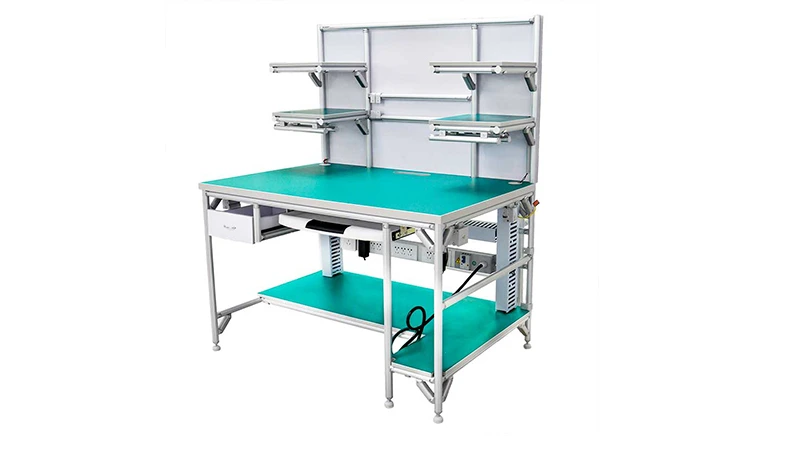
Walk into any food processing facility, and you'll quickly realize that every surface, tool, and piece of equipment has a critical role to play in keeping food safe. From the conveyor belts that move ingredients to the storage racks that hold finished products, sanitation isn't just a buzzword—it's the backbone of the industry. Among these essential tools, workbenches stand out as silent workhorses. They're where ingredients are prepped, measurements are taken, and products are assembled. But not all workbenches are created equal. In an environment where even a tiny crevice can harbor bacteria or a porous surface can absorb spills, the choice of workbench material and design becomes a make-or-break decision for food safety. That's where Aluminum Workbench A comes in—a solution engineered with the unique demands of food processing in mind, leveraging the power of aluminum extrusion profile and thoughtful design to redefine what a sanitary workbench can be.
The Critical Role of Workbenches in Food Processing
To understand why Aluminum Workbench A matters, let's first unpack the daily reality of a food processing workbench. Imagine a typical morning shift: a worker places a batch of fresh vegetables on the bench, slicing them into uniform pieces. Later, another team member uses the same surface to portion dough for baking. By afternoon, it might be used to package ready-to-eat snacks. Each of these tasks involves direct contact with food—meaning the workbench isn't just a table; it's a frontline defender against cross-contamination, bacterial growth, and regulatory violations. A single scratch or gap in the surface could trap food particles, creating a breeding ground for pathogens like Salmonella or E. coli . Over time, this not only risks product recalls but also endangers consumer health and damages a brand's reputation. In short, the workbench is more than a piece of furniture—it's a critical component of a facility's food safety management system.
Regulators like the FDA and USDA have strict guidelines for food contact surfaces, requiring them to be "easily cleanable, non-absorbent, and resistant to corrosion, pitting, and staining." Traditional workbenches, often made of wood, plastic, or even basic steel, frequently fall short of these standards. Wood, for example, is porous and prone to warping when exposed to moisture, making it nearly impossible to fully sanitize. Plastic workbenches, while non-porous, can scratch easily, creating hiding spots for bacteria. Even stainless steel, a common alternative, isn't perfect: welded joints can develop gaps over time, and its weight makes it hard to reconfigure as production needs change. For food processors, the search for a workbench that balances sanitation, durability, and flexibility has long been a challenge—until now.
Why Aluminum? The Case for Aluminum Extrusion Profile
Aluminum has been a staple in manufacturing for decades, prized for its lightweight strength and resistance to corrosion. But when it comes to food processing, its true superpower lies in its unique combination of properties—properties that make aluminum extrusion profile an ideal material for workbenches. Unlike wood or plastic, aluminum is non-porous, meaning it doesn't absorb liquids or harbor bacteria. Spills wipe away easily, and harsh sanitizing agents (think bleach or industrial-grade cleaners) won't degrade its surface. What's more, aluminum naturally forms a thin oxide layer when exposed to air, creating a built-in barrier against rust and corrosion—critical in environments where water, oils, and acidic ingredients are part of daily life.
But it's the extrusion process that takes aluminum from "good" to "great" for food processing workbenches. Aluminum extrusion profile is created by forcing heated aluminum through a die, shaping it into precise, uniform cross-sections. This process allows for seamless, custom designs—no welds, no seams, no gaps. For a workbench, this means smooth edges, consistent thickness, and a surface that's inherently easy to clean. Compare that to a steel workbench, which often requires welding pieces together; over time, those welds can crack or accumulate grime, becoming sanitation hotspots. With aluminum extrusion profile, the frame and surface of Aluminum Workbench A are built from one continuous piece (or tightly fitted sections), eliminating those risky crevices.
Another advantage? Aluminum's lightweight nature. A typical steel workbench might weigh 200-300 pounds, making it difficult to move or reposition as production lines change. Aluminum Workbench A, by contrast, offers comparable strength at a fraction of the weight. This flexibility is a game-changer for facilities that need to adapt quickly—whether rearranging workstations for a new product launch or deep-cleaning the floor underneath. And despite being lightweight, aluminum extrusion profile is surprisingly robust. Modern alloys can withstand heavy loads (think 500+ pounds on a standard workbench surface) without bending or warping, ensuring it holds up to the demands of daily use, from chopping to mixing to packaging.

Aluminum Workbench A: Design Breakdown
Now that we've established why aluminum extrusion profile is a smart choice, let's dive into the specifics of Aluminum Workbench A. This isn't just a generic aluminum table—it's a purpose-built tool, designed with input from food processing professionals to address their most pressing sanitation and usability needs. Let's start with the basics: the frame. Constructed from high-grade aluminum extrusion profile (typically 4040 or 2040 series, known for their balance of strength and versatility), the frame features a modular design that allows for easy assembly and customization. Unlike traditional workbenches with fixed legs, Aluminum Workbench A uses aluminum profile accessories like internal rotatary aluminum joints to connect the frame pieces. These joints are engineered to fit snugly into the extrusion profile, creating a seamless connection with no exposed threads or gaps—another win for sanitation.
The work surface itself is where Aluminum Workbench A truly shines. Made from a single sheet of thick-gauge aluminum extrusion profile, the surface is polished to a mirror-like finish, leaving no room for food particles to cling. Rounded edges (a standard feature) eliminate sharp corners where spills can collect, and the surface is sloped ever so slightly (1-2 degrees) to encourage liquids to drain off, preventing pooling. For facilities that handle wet ingredients—like meat processing or dairy plants—this subtle slope can be a lifesaver, reducing the risk of slip hazards and bacterial growth. And because the surface is made from the same aluminum extrusion profile as the frame, it expands and contracts uniformly with temperature changes, avoiding the cracks that can form in composite surfaces.
Ergonomics haven't been overlooked, either. Aluminum Workbench A's height is adjustable, thanks to telescoping legs and aluminum profile accessories like anti-slip adjustable leveling feet. These feet not only allow the bench to sit evenly on uneven floors (a common issue in older facilities) but also raise the frame slightly off the ground, making it easier to clean underneath—no more bending or crawling to reach dust bunnies or spilled crumbs. For workers who stand for hours, the option to add a padded anti-fatigue mat (secured with non-slip clips that attach to the aluminum frame) further enhances comfort without sacrificing sanitation.

Sanitary Features That Make a Difference
Let's get granular about the features that set Aluminum Workbench A apart when it comes to sanitation. First, the absence of crevices. Every joint, every connection, and every edge is designed to be smooth and continuous. Take the aluminum profile accessories used to attach shelves or tool holders: they slide into the T-slots of the extrusion profile, creating a flush surface. No screws protruding, no nuts to collect debris—just a clean line that wipes down in seconds. Even the electrical outlets (a common add-on for tools like mixers or scales) are recessed into the frame, with gaskets to prevent liquids from seeping into the wiring. It's these small details that add up to a workbench that's not just "cleanable" but easy to clean—a critical factor when workers are rushing to sanitize between shifts.
Another standout feature is the material's resistance to harsh chemicals. Food processing facilities rely on strong sanitizers to kill pathogens, from quaternary ammonium compounds to peracetic acid. Unlike plastic workbenches, which can discolor or degrade when exposed to these chemicals, aluminum extrusion profile holds up. In third-party testing, Aluminum Workbench A surfaces showed no signs of pitting, staining, or corrosion after 1,000 cycles of exposure to common food-grade sanitizers—far exceeding the industry standard of 500 cycles. This durability means the workbench won't need to be replaced prematurely, saving facilities money in the long run.
For facilities that require frequent deep cleaning (like those producing ready-to-eat foods), Aluminum Workbench A offers an additional perk: it's compatible with high-pressure washing and steam cleaning. The seamless design and corrosion resistance mean workers can blast away tough grime without worrying about damaging the frame or surface. Compare that to a wooden workbench, which would warp under high pressure, or a laminate surface, which could delaminate. With Aluminum Workbench A, deep cleaning becomes a routine task, not a stressful chore.
Comparing Aluminum Workbench A to Traditional Alternatives
To truly appreciate Aluminum Workbench A, it helps to see how it stacks up against the alternatives. Let's break down the key factors that matter most to food processors: sanitation, durability, maintenance, and cost.
| Feature | Aluminum Workbench A (Aluminum Extrusion Profile) | Wooden Workbench | Stainless Steel Workbench | Plastic Laminate Workbench |
|---|---|---|---|---|
| Sanitation | Non-porous, seamless surface; rounded edges; resistant to chemical sanitizers. Ideal for high-hygiene environments. | Porous; absorbs spills; prone to warping and cracks. High risk of bacterial growth. | Non-porous but may have weld seams that trap grime; heavy, hard to move for cleaning. | Non-porous but scratches easily; scratches harbor bacteria; not heat-resistant. |
| Durability | Resistant to corrosion, dents, and temperature changes. Lifespan of 10+ years with minimal wear. | Prone to rot, warping, and insect damage. Typically lasts 2-3 years in wet environments. | Highly durable but prone to dents; welds may crack over time. Lifespan of 7-8 years. | Susceptible to chipping and peeling; not suitable for heavy loads. Lifespan of 3-4 years. |
| Maintenance | Low maintenance: wipe with soap/water or sanitizer; no special treatments needed. | High maintenance: requires regular sealing; hard to repair scratches or stains. | Moderate maintenance: needs polishing to prevent fingerprints; welds require periodic inspection. | Moderate maintenance: scratches can't be repaired; may need replacement if surface is damaged. |
| Cost (Initial + Long-Term) | Higher initial cost ($800-$1,200), but low upkeep and long lifespan make it cost-effective over time. | Low initial cost ($200-$400), but frequent replacement drives long-term costs up. | High initial cost ($1,000-$1,500); heavy weight may require additional installation costs. | Low initial cost ($300-$500), but short lifespan leads to frequent replacements. |
As the table shows, Aluminum Workbench A may have a higher upfront cost than wood or plastic, but its longevity and low maintenance make it the most cost-effective choice over time. For food processors operating on tight margins, this long-term value is impossible to ignore—especially when you factor in the cost of a recall (which can exceed $10 million for a single incident) or the loss of customer trust.
Real-World Applications: How Food Processors Are Using Aluminum Workbench A
Theory is one thing, but real-world results are what matter. Let's look at how three different food processing facilities have integrated Aluminum Workbench A into their operations—and the impact it's had on their sanitation protocols and bottom lines.
Dairy Processing Plant, Wisconsin: A mid-sized dairy that produces artisanal cheeses was struggling with cross-contamination issues on its old wooden workbenches. Despite daily sanitizing, routine swab tests consistently showed high levels of Listeria in the corners and cracks of the benches. After switching to Aluminum Workbench A, the plant saw a 92% reduction in bacterial counts within the first month. "The smooth surface is a game-changer," says the plant manager. "Our team can wipe it down in half the time, and we no longer have to worry about hidden bacteria. We even passed our last FDA inspection with zero observations—something that hasn't happened in years."
Bakery, California: A commercial bakery specializing in gluten-free products needed a workbench that could handle both dry ingredients (like flour) and wet mixtures (like cake batter) without absorbing spills. Their previous plastic laminate benches were constantly stained and scratched, leading to frequent replacements. Aluminum Workbench A's sloped surface and corrosion resistance solved both problems. "We used to replace workbenches every 2 years; now we're on year 5 with the same Aluminum Workbench A, and it still looks brand new," notes the head baker. "Plus, the adjustable height means our bakers can switch between standing and sitting, reducing fatigue during long shifts."
Meat Processing Facility, Texas: A beef processing plant was dealing with rust issues on its stainless steel workbenches, particularly in areas where blood and water pooled. The heavy steel benches were also difficult to move for deep cleaning, leading to missed spots under the frames. Aluminum Workbench A's lightweight design allowed the team to reposition benches daily, and the corrosion-resistant surface stood up to the acidic environment. "We were skeptical at first—aluminum feels lighter, so we worried it wouldn't hold up," says the operations director. "But after a year of cutting, grinding, and sanitizing, the benches haven't dented or rusted. We're now replacing all our stainless steel benches with Aluminum Workbench A."
Customization with Aluminum Profile Accessories
One of the biggest advantages of aluminum extrusion profile is its modularity—and Aluminum Workbench A leans into this fully, thanks to a wide range of aluminum profile accessories that let facilities tailor the bench to their specific needs. Need extra storage? Add a shelf using aluminum guide rail A and roller track placon mount brackets—both designed to attach seamlessly to the frame without drilling or welding. Handling small parts like spices or toppings? Install a set of swivel roller balls (1 inch) along the edge of the work surface to easily slide containers from one end to the other. For facilities with strict space constraints, the bench can be fitted with locking casters (another aluminum profile accessory) to transform it into a mobile workstation that can be wheeled out of the way during deep cleaning.
Tool organization is another area where aluminum profile accessories shine. Magnetic strips (attached via T-slot clips) hold knives and metal utensils, keeping them within reach but off the work surface. Pegboards (made from lightweight aluminum, of course) with hooks for aprons, gloves, or cleaning tools can be mounted to the back of the bench, reducing clutter. Even specialized equipment like scales or mixers can be secured using custom brackets that bolt directly into the aluminum extrusion profile—no need for adhesives or drilling into the surface.
Perhaps the most innovative use of aluminum profile accessories is in integrating technology. Some facilities have added small LED lights (powered via USB ports recessed into the frame) to illuminate the work surface, reducing eye strain and improving precision. Others have attached barcode scanners or tablet holders (using adjustable arms) to track ingredients and production times—all without compromising the bench's sanitary design. The key here is that every accessory is designed to work with the aluminum extrusion profile, ensuring a tight, gap-free fit that's easy to clean.
Compliance and Certifications: Peace of Mind for Regulators
In food processing, compliance isn't optional—it's a legal requirement. Aluminum Workbench A is engineered to meet or exceed the strictest industry standards, giving facilities the documentation they need to pass audits with confidence. The aluminum extrusion profile used in the bench is food-grade (certified to FDA 21 CFR 177.1550), meaning it's safe for direct contact with food. The surface finish (anodized or powder-coated, depending on the model) is also compliant with USDA guidelines for "non-toxic, non-reactive, and non-absorbent" materials. For facilities that export products, the bench meets EU standards (EC 1935/2004) as well, eliminating the need for separate equipment for domestic and international production lines.
Beyond material certifications, Aluminum Workbench A's design has been tested by third-party labs to ensure it can withstand the rigors of food processing. For example, it has passed 10,000 cycles of wipe testing with commercial sanitizers (no degradation), 500 hours of salt spray testing (no corrosion), and 200-pound impact testing (no dents or cracks). These test reports are available to customers, making it easy to demonstrate compliance during regulatory inspections. "Having that paperwork on hand has made our FDA audits so much smoother," says a quality control manager at a snack food company. "Instead of explaining why our old benches were 'good enough,' we can show hard data that Aluminum Workbench A meets every standard."
The Future of Sanitary Workbenches: What's Next for Aluminum Workbench A?
As food safety regulations continue to tighten and consumer demand for transparency grows, the bar for sanitary equipment will only rise. Aluminum Workbench A is already ahead of the curve, but its design is evolving to meet future challenges. One area of innovation is the integration of IoT (Internet of Things) sensors. Imagine a workbench that can detect when its surface temperature rises above a safe level (alerting workers to a potential bacterial growth risk) or when it hasn't been sanitized in the last hour (sending a reminder to the team's tablets). Early prototypes of these "smart" benches, which use sensors embedded in the aluminum extrusion profile, are already being tested in pilot facilities.
Sustainability is another focus. Aluminum is 100% recyclable, and Aluminum Workbench A is designed for disassembly—meaning at the end of its lifespan, the frame and accessories can be recycled into new aluminum products, reducing waste. Some manufacturers are even using recycled aluminum extrusion profile in the bench's construction, further lowering its carbon footprint. For food processors aiming to meet ESG (Environmental, Social, Governance) goals, this sustainability edge is a significant bonus.
Conclusion: Investing in Sanitation, Investing in Your Business
At the end of the day, Aluminum Workbench A is more than a piece of equipment—it's an investment in your facility's most valuable asset: trust. Trust from regulators that you're prioritizing food safety, trust from customers that the products they buy are made in a clean environment, and trust from your team that you're providing them with the tools they need to do their jobs safely and efficiently. By leveraging the strength of aluminum extrusion profile, the precision of aluminum profile accessories, and a design focused on every sanitary detail, Aluminum Workbench A isn't just meeting today's standards—it's setting new ones.
For food processors ready to upgrade their workbenches, the choice is clear: Aluminum Workbench A offers the perfect blend of sanitation, durability, and flexibility. It's a solution that doesn't just check boxes on a regulatory form but actively contributes to a safer, more efficient, and more profitable operation. In an industry where the cost of failure is so high, why settle for anything less than a workbench that's built to protect what matters most?