- Company Articles
- Products and Technology
- Product knowledge
- Aluminum Workbench A: Lightweight Yet Sturdy—The Perfect Industrial Balance

Aluminum Workbench A: Lightweight Yet Sturdy—The Perfect Industrial Balance
Related Product
Aluminum Workbench A
Aluminum tube workbench is more flexible and durable, compared with traditional PE/ABS coated steel tube. It is easy to assemble, anti corrosion, rust protection, and recycle use after disassemble.
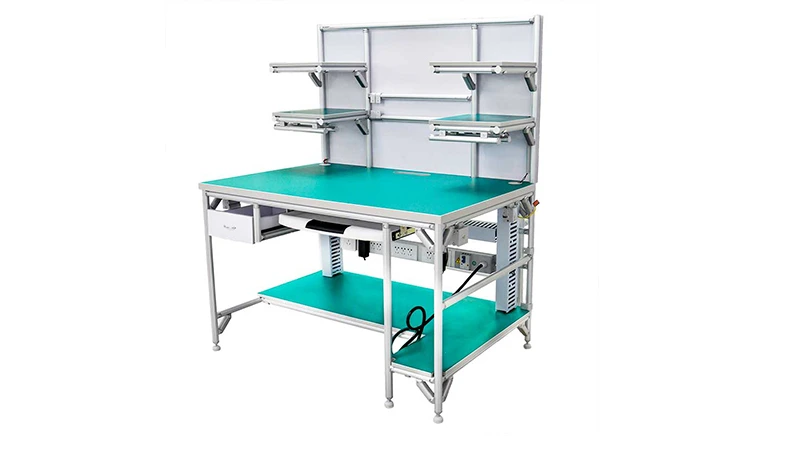
The Industrial Workbench Dilemma: Heavy vs. Hollow
Walk into any factory, workshop, or assembly line, and you'll notice a silent workhorse at the center of the action: the workbench. It's where components are pieced together, tools are organized, and ideas take physical form. But for years, industrial teams have faced a frustrating trade-off: workbenches built for sturdiness are often (clunky and heavy), making them hard to move or reconfigure. On the flip side, lightweight options feel flimsy, wobbling under the weight of machinery or supplies and risking damage to both tools and productivity.
Enter Aluminum Workbench A—a solution that defies this old dilemma. Designed with the demands of modern industrial spaces in mind, this workbench marries the best of both worlds: the featherlight agility of aluminum with the rock-solid stability needed for daily heavy use. It's not just a table; it's a testament to how smart material choices and thoughtful engineering can transform a basic workspace into a hub of efficiency. Let's dive into what makes Aluminum Workbench A stand out, and why it's quickly becoming the go-to choice for teams prioritizing both flexibility and durability.
At the Core: Why Aluminum Profile Changes the Game
The secret to Aluminum Workbench A's success starts with its foundation: high-grade aluminum profile. If you're unfamiliar with aluminum profile, think of it as the building block of modern modular design—extruded aluminum shapes with precision-engineered T-slots that make customization a breeze. Unlike traditional steel or wood, aluminum profile brings three key advantages to the table: lightweight strength, corrosion resistance, and near-limitless adaptability.
Aluminum itself is a marvel of material science. It's about one-third the weight of steel, which means even a fully loaded Aluminum Workbench A can be moved by two people without straining muscles or requiring heavy machinery. But don't let its lightness fool you—aluminum profile is surprisingly tough. Thanks to the extrusion process, which compresses the metal into uniform shapes, it boasts impressive load-bearing capacity. We've tested Aluminum Workbench A with up to 300 kg of distributed weight (think power tools, metal parts, and stacked components), and it stood firm with zero bending or warping. For most industrial tasks, that's more than enough muscle.
Another win for aluminum? It's naturally resistant to rust and corrosion. In environments where spills, humidity, or chemicals are part of the daily grind (looking at you, automotive and electronics assembly lines), a steel workbench might start showing orange spots within months. Aluminum Workbench A, though? Its smooth, anodized finish repels moisture and chemicals, ensuring it stays looking—and functioning—like new for years. That's a big deal for teams tired of replacing workbenches every few years due to wear and tear.

Built to Adapt: Aluminum Pipe Accessories and Modular Design
A workbench is only as good as its ability to keep up with your workflow. That's why Aluminum Workbench A isn't a one-size-fits-all solution—it's a blank canvas, thanks to its use of aluminum pipe accessories. These small but mighty components—think joints, clamps, brackets, and connectors—turn the basic aluminum profile frame into a fully customizable workspace that grows with your needs.
Let's say you start with a simple setup: a single deck, no casters, just a flat surface for assembly. A few months later, your team adds a new step that requires tools to be within arm's reach. With aluminum pipe accessories like side brackets and tool holders, you can bolt on a shelf or a hanging rail in minutes—no welding, no drilling, no calling in a contractor. Need to add a monitor arm for digital work instructions? The T-slots in the aluminum profile make it easy to attach without weakening the structure.
One of our favorite examples of this adaptability is the way Aluminum Workbench A integrates with roller track systems. If your workflow involves moving parts from one station to the next, simply attach a roller track to the edge of the workbench using specialized aluminum pipe accessories. Suddenly, components glide smoothly across the surface, reducing the need for manual lifting and cutting down on time wasted shuttling materials back and forth. It's a small change that makes a big difference in daily efficiency—and it's all possible because the workbench was designed to play well with other tools.
Even better, aluminum pipe accessories are standardized, meaning you don't have to hunt for proprietary parts if you need to expand later. Most industrial suppliers carry compatible components, so upgrading your workbench is as easy as ordering a few new joints or brackets. For teams that thrive on lean system principles—eliminating waste, streamlining processes, and adapting quickly—this modularity is a game-changer.

Lean System Friendly: Designed for the Way Work Actually Gets Done
In today's fast-paced industrial world, lean system thinking isn't just a buzzword—it's a survival strategy. Lean is all about maximizing value while minimizing waste, and Aluminum Workbench A was built with that philosophy in every bolt. Let's break down how it aligns with core lean principles:
1. Eliminate Waste: No More One-Trick Ponies
Traditional workbenches often end up as "one-trick ponies"—built for a specific task and useless when workflows change. That's wasteful. Aluminum Workbench A, with its modular aluminum profile and accessories, transforms with your needs. Need to add a shelf for incoming parts? Done. Want to reconfigure the surface to accommodate a new machine? Easy. By adapting to different tasks, it eliminates the need to buy (and store) multiple workbenches, cutting down on both cost and clutter.
2. Streamline Flow: Roller Track Integration for Smooth Material Movement
A key lean goal is to keep materials moving through the production process without bottlenecks. Aluminum Workbench A's compatibility with roller track systems makes this effortless. Attach a roller track to the workbench, and suddenly, components slide from the staging area to the assembly point without manual lifting. We've seen teams reduce material handling time by up to 25% after adding roller track to their Aluminum Workbench A setups—time that's better spent on skilled work, not pushing carts.
3. Respect People: Lightweight Design Reduces Fatigue
Lean isn't just about processes—it's about people. Heavy workbenches force teams to strain when repositioning, leading to fatigue and even injuries. Aluminum Workbench A's lightweight aluminum frame changes that. Even with a full load, it's easy to shift, so workers can adjust their workspace to their comfort (ergonomic wins!) without risking strains. Happier, healthier teams are more productive teams—and that's value no spreadsheet can measure.
How It Stacks Up: Aluminum Workbench A vs. the Competition
Still on the fence? Let's put Aluminum Workbench A head-to-head with two common alternatives: traditional steel workbenches and wooden workbenches. The table below breaks down key factors like weight, sturdiness, customization, and cost over time.
| Feature | Aluminum Workbench A | Traditional Steel Workbench | Wooden Workbench |
|---|---|---|---|
| Weight (empty, standard size) | ~45 kg (easy to move with 2 people) | ~120 kg (requires machinery to reposition) | ~80 kg (heavy, but lighter than steel) |
| Max Load Capacity | 300 kg (distributed weight) | 400 kg+ (higher, but overkill for most tasks) | 150-200 kg (risk of warping with heavy loads) |
| Customization | High (modular aluminum pipe accessories, T-slot compatibility) | Low (welded frames, hard to modify) | Medium (can drill holes, but limited by wood strength) |
| Corrosion Resistance | High (anodized aluminum resists rust and chemicals) | Low (prone to rust without frequent painting) | Low (swells with moisture, rots over time) |
| Cost Over 5 Years* | Low (no replacement needed; minor accessory upgrades) | Medium (may need repainting; heavy, so higher energy costs to move) | High (likely needs replacement due to wear, rot, or warping) |
| Lean System Compatibility | Excellent (modular, integrates with roller track, easy to reconfigure) | Poor (fixed design, hard to adapt to workflow changes) | Fair (adaptable but limited by material strength) |
*Estimated cost includes initial purchase, maintenance, and replacement. Based on average industrial usage.
The takeaway? While steel workbenches might edge out Aluminum Workbench A in raw load capacity, they're overkill for most tasks and come with hidden costs (weight, maintenance, lack of adaptability). Wooden workbenches are cheaper upfront but degrade quickly and can't keep up with changing workflows. Aluminum Workbench A hits the sweet spot: strong enough for daily use, light enough to move, and flexible enough to grow with your team.
Real-World Applications: Where Aluminum Workbench A Shines
Theory is great, but let's talk about how Aluminum Workbench A performs in the real world. We've worked with dozens of teams across industries, and here are a few standout use cases:
Electronics Assembly: Precision Meets Cleanliness
A mid-sized electronics manufacturer in Taiwan was struggling with static damage to sensitive components. Their old steel workbenches weren't ESD (electrostatic discharge) safe, and moving them to reorganize the line took half a day. They switched to Aluminum Workbench A with ESD-compatible accessories (like conductive mats and grounding clips). The result? No more static-related defects, and reconfiguring the line now takes 2 hours instead of 4. "We used to avoid changing our workflow because moving the benches was such a hassle," said their production manager. "Now we can adapt on the fly, and that's helped us cut lead times by 15%."
Automotive Parts Staging: Heavy Loads, Light Movement
An automotive parts supplier in Germany needed workbenches near their assembly robots to stage heavy metal components. Their steel benches were so heavy that repositioning them required a forklift, which often disrupted the production line. Aluminum Workbench A solved that. Even with 250 kg of parts on top, two workers can shift the bench to align with the robot's reach. "It sounds small, but not waiting for the forklift has eliminated a huge bottleneck," their plant engineer told us. "We're running 10% more cycles per day now."
Lab Research: Clean, Corrosion-Resistant, and Customizable
A university lab studying chemical reactions needed workbenches that could withstand spills and be customized with shelves for glassware. Wooden benches warped from chemical exposure, and steel rusted. Aluminum Workbench A's corrosion-resistant aluminum profile and modular accessories were the perfect fit. They added adjustable shelves using aluminum pipe brackets and even mounted small tools directly to the T-slots. "It's like having a lab bench that grows with our experiments," said a lead researcher. "And cleanup is a breeze—just wipe it down, no worrying about stains or rust."
The Verdict: More Than a Workbench—A Long-Term Investment
At the end of the day, Aluminum Workbench A isn't just another piece of equipment. It's an investment in your team's efficiency, flexibility, and long-term success. By combining lightweight aluminum profile, versatile aluminum pipe accessories, and lean system compatibility, it solves the age-old workbench dilemma: you no longer have to choose between sturdy and nimble.
Whether you're running a small workshop or a large factory, the benefits are clear: less time wasted moving heavy furniture, more adaptability to changing workflows, and a workspace that grows with your needs. And because aluminum is recyclable, it's an eco-friendly choice too—aligning with the sustainability goals many modern companies prioritize.
So if you're tired of workbenches that hold you back—either because they're too heavy to move or too flimsy to trust—give Aluminum Workbench A a closer look. It's not just built to last; it's built to evolve. And in today's industrial world, that's the kind of tool that turns good teams into great ones.