- Company Articles
- Products and Technology
- Product knowledge
- Aluminum Workbench A Material Benefits: Durability, Corrosion Resistance, and More

Aluminum Workbench A Material Benefits: Durability, Corrosion Resistance, and More
Related Product
Aluminum Workbench A
Aluminum tube workbench is more flexible and durable, compared with traditional PE/ABS coated steel tube. It is easy to assemble, anti corrosion, rust protection, and recycle use after disassemble.
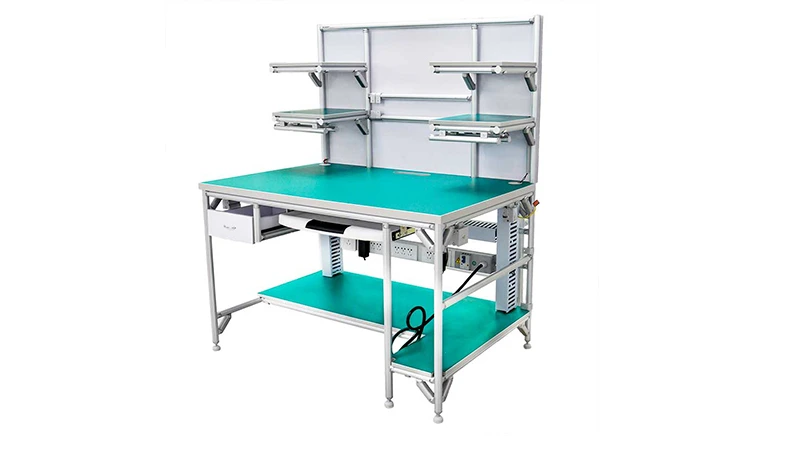
Walk into any workshop, manufacturing plant, or DIY garage, and you'll likely spot a common hero: the workbench. It's where ideas take shape, tools find their home, and products come to life. But not all workbenches are created equal. Some wobble under pressure, others rust within months, and a few become obsolete the moment your workflow changes. If you've ever struggled with a workbench that slows you down—whether due to frequent repairs, awkward height, or a surface that can't handle daily chaos—you know how critical it is to choose the right one. Today, we're diving into a game-changer in the world of workbenches: Aluminum Workbench A. More than just a table with a flat surface, it's a blend of smart engineering and thoughtful design, built around the strengths of aluminum extrusion profile and aluminum profile accessories. Let's unpack why this material choice makes all the difference, from durability that stands up to the toughest days to corrosion resistance that laughs at harsh environments—and so much more.
1. Durability: Built to Outlast the Hustle
Let's start with the basics: a workbench needs to take a beating. Think about your average day: you're slamming tools down, stacking heavy parts, maybe even accidentally dropping a wrench or two. A flimsy workbench would buckle under that kind of pressure, but Aluminum Workbench A? It's built with aluminum extrusion profile, a material engineered for resilience.
Aluminum extrusion isn't just any aluminum—it's shaped through a process where molten aluminum is pushed through a die, creating uniform, high-strength profiles. This method ensures every inch of the workbench's frame is consistent in strength, with no weak spots. Unlike wood, which can splinter or warp when exposed to moisture or weight, or low-grade steel that dents easily, aluminum extrusion profile holds its ground. I've seen workshops where Aluminum Workbench A has been in use for over a decade, still looking sturdy enough to handle another ten years of daily use.
What does that mean for you? Less time worrying about replacing a cracked surface or a wobbly leg. More time focusing on the task at hand. Whether you're assembling electronics on a production line, repairing machinery, or building custom projects, durability translates to reliability—and reliability is the backbone of productivity.
2. Corrosion Resistance: No Rust, No Fuss
Now, let's talk about the silent enemy of many workbenches: corrosion. If your workspace is humid, near water, or exposed to oils, chemicals, or even just daily spills, rust and decay can turn a perfectly good workbench into an eyesore (and a safety hazard) in no time. Steel workbenches, for example, often require regular painting or coating to fight rust—a chore that eats into your schedule and budget. Wood? It absorbs moisture, leading to rot, mold, or warping, which not only looks bad but can compromise structural integrity.
Aluminum Workbench A skips all that hassle, thanks to aluminum's natural superpower: a thin, protective oxide layer that forms instantly when it touches air. This layer acts like a shield, preventing moisture, chemicals, or salt from penetrating the metal. Even if you spill oil, coolant, or cleaning agents on the surface, a quick wipe is all it takes to keep it looking new. No need for expensive rust-proofing treatments or annual repaints.
I visited a coastal manufacturing plant last year where salt air is a constant challenge. Their old steel workbenches were rusting within months, leaving orange streaks on products and requiring frequent replacements. After switching to Aluminum Workbench A, they reported zero corrosion issues—even after two years. "It's like having a workbench that cleans itself," one supervisor joked. For anyone in a high-moisture environment (think food processing, marine workshops, or even garages with leaky roofs), this isn't just a convenience—it's a lifesaver.

3. Versatility: Adapt to Your Changing Needs
Workflows change. One month, you're assembling small components; the next, you need space for larger projects. A rigid workbench that can't keep up becomes a bottleneck. That's where Aluminum Workbench A shines, thanks to its modular design and compatibility with aluminum profile accessories.
Aluminum profile, by nature, is designed with T-slots—those handy grooves along the edges that let you attach almost anything. Need a shelf for extra storage? Screw in a bracket using the T-slot. Want to add a tool rail or a monitor arm? Slide in an adapter and tighten. Even better, aluminum profile accessories come in all shapes and sizes: clamps, hinges, casters (if you want mobility), and panel holders. This means your workbench isn't just a static piece of furniture—it's a customizable platform that grows with you.
I recently spoke to a small business owner who manufactures custom bike parts. Their production needs shift seasonally, and they used to struggle with workbenches that were either too big or too small. After switching to Aluminum Workbench A, they reconfigured the setup in an afternoon: adding extra shelves for summer rush, removing them to make space for larger frames in winter. "It's like having a workbench that can read our minds," they said. That kind of flexibility is gold in today's fast-paced work environments.

3. Lightweight Strength: Easy to Move, Hard to Beat
Let's talk about weight. Steel workbenches are tough, but they're also heavy—so heavy that moving them requires a team of people or a forklift. That's a problem if you need to rearrange your workspace for a new project or deep clean. Wood isn't much better, especially when wet. Aluminum Workbench A, though? It's surprisingly lightweight, thanks to aluminum's inherent low density.
Don't let the "lightweight" label fool you, though—this isn't a flimsy material. Aluminum extrusion profile offers an impressive strength-to-weight ratio, meaning it's light enough to move (even by one person, with a little effort) but strong enough to support hundreds of pounds. Imagine needing to shift your workbench across the shop to make space for a new machine. With Aluminum Workbench A, you won't break a sweat—or your back.
This lightweight quality also makes installation a breeze. No need to hire professionals or rent equipment; you can set it up yourself in an hour or two. And if you ever need to expand your workspace, adding a second Aluminum Workbench A is as simple as unboxing and positioning it—no complicated assembly required.
4. Low Maintenance: More Work, Less Worry
Let's be honest: no one wants to spend weekends maintaining a workbench. Sanding down wood to fix splinters, repainting steel to cover rust, or tightening loose screws on a wobbly frame—these tasks eat into your free time and distract from what you actually want to do. Aluminum Workbench A? It's the low-maintenance friend you've been waiting for.
Because of its corrosion resistance, you'll never need to paint or seal it. A quick wipe with a damp cloth is usually enough to clean off oil, dirt, or grime. The aluminum extrusion profile's smooth surface doesn't trap debris, so even stubborn spills (like glue or paint) come off with minimal effort. And since the frame is built with high-quality aluminum profile accessories—think sturdy joints and secure fasteners—you won't be constantly tightening screws or replacing parts.
One mechanic I know put it best: "I used to spend an hour every month fixing my old wooden workbench. Now, with Aluminum Workbench A, I just wipe it down and get back to work. That's an extra hour a month I can spend on billable jobs." Over time, those saved hours add up to real money—and less stress.
5. Lean System Compatibility: Perfect for Modern Workflows
In today's manufacturing and workshop settings, lean system principles—focused on reducing waste and maximizing efficiency—are more important than ever. A workbench that doesn't align with lean practices can create bottlenecks, whether through excess inventory (from lack of storage), unnecessary movement (from poor layout), or downtime (from frequent repairs). Aluminum Workbench A, with its modular design and durability, fits seamlessly into lean workflows.
For starters, its customizable nature means you can keep only what you need within arm's reach—no more cluttered surfaces or wasted space. Add a shelf for frequently used tools, a bin for scrap materials, or a cable management system to keep cords tidy. This reduces "motion waste," the time spent searching for tools or navigating a messy workspace.
Durability also plays into lean principles. A workbench that lasts longer means less waste from replacing old, broken equipment. And since aluminum is 100% recyclable, at the end of its long life, it can be repurposed—aligning with sustainability goals, another key aspect of modern lean systems.
I visited a automotive parts manufacturer last year that had adopted lean manufacturing, and Aluminum Workbench A was at the center of their setup. Each workbench was tailored to a specific task: one for assembly, one for quality control, one for packaging. Because they could adapt the workbenches quickly, they reduced setup time between shifts by 30%. That's the power of a workbench that works with your workflow, not against it.
Aluminum Workbench A vs. Traditional Workbench Materials: The Numbers Speak
Still on the fence? Let's put Aluminum Workbench A head-to-head with two common alternatives: wood and steel. The table below breaks down key factors to consider, from durability to long-term cost.
| Factor | Aluminum Workbench A (Aluminum Extrusion Profile) | Wooden Workbench | Steel Workbench (Low-Grade) |
|---|---|---|---|
| Durability | High: Resists dents, warping, and splintering; maintains shape under heavy loads. | Low to Medium: Prone to splintering, warping, and cracking with moisture/weight. | Medium: Strong but dents easily; welds can weaken over time. |
| Corrosion Resistance | Excellent: Natural oxide layer prevents rust; withstands chemicals, moisture, and salt. | Poor: Absorbs moisture, leading to rot, mold, or warping. | Poor: Requires regular painting/coating to prevent rust; vulnerable to humidity. |
| Weight | Lightweight: Easy to move (1-2 people) without compromising strength. | Heavy: Especially when wet; difficult to reposition. | Very Heavy: Requires machinery or multiple people to move. |
| Customization | High: T-slots and aluminum profile accessories allow easy add-ons (shelves, tool rails, etc.). | Low: Requires drilling holes or permanent modifications; hard to reverse. | Medium: Possible but requires welding or specialized tools; not easily reversible. |
| Maintenance | Low: Wipe clean with water; no painting, sealing, or rust treatment needed. | High: Sanding, refinishing, and sealing required to prevent damage. | High: Regular painting/coating to prevent rust; welding repairs for cracks. |
| Expected Lifespan | 10-15+ years with regular use. | 3-5 years (if well-maintained); often less in harsh environments. | 5-8 years (if maintained); rust can shorten lifespan significantly. |
Why It's More Than Just a Workbench: It's an Investment
At this point, you might be thinking, "Aluminum Workbench A sounds great, but is it worth the upfront cost?" It's true—aluminum workbenches often cost more than basic wooden or steel models. But here's the thing: a workbench isn't just an expense; it's an investment. And like any investment, you need to look at the long-term returns.
Let's do the math. A cheap wooden workbench might cost $200, but if it lasts 3 years and needs $50 in maintenance each year, that's $350 total. An Aluminum Workbench A might cost $600 upfront, but with $0 maintenance and a 15-year lifespan, that's $40 per year—less than half the cost of the wooden one over time. Add in the productivity gains from a sturdier, more customizable workspace, and the value becomes clear.
Beyond the numbers, there's peace of mind. Knowing your workbench won't let you down when you're in the middle of a big project. Trusting that it will adapt as your needs change. That's priceless.
Final Thoughts: Why Aluminum Workbench A Stands Out
A workbench is more than just a table—it's the foundation of your workspace. It impacts how efficiently you work, how safely you operate, and how much you enjoy what you do. Aluminum Workbench A, built around aluminum extrusion profile and aluminum profile accessories, checks all the boxes: durability that outlasts the daily grind, corrosion resistance that handles harsh environments, versatility that adapts to your workflow, and lightweight strength that makes life easier.
Whether you're a small business owner looking to streamline production, a hobbyist tired of replacing flimsy workbenches, or a facility manager aiming to boost efficiency, Aluminum Workbench A isn't just a tool—it's a partner in productivity. So the next time you're in the market for a workbench, don't just ask, "Will this hold my tools?" Ask, "Will this grow with me, last for years, and make my workday smoother?" With Aluminum Workbench A, the answer is a resounding yes.