- Company Articles
- Products and Technology
- Product knowledge
- Aluminum Workbench A Material Thickness: Impact on Strength and Performance

Aluminum Workbench A Material Thickness: Impact on Strength and Performance
Related Product
Aluminum Workbench A
Aluminum tube workbench is more flexible and durable, compared with traditional PE/ABS coated steel tube. It is easy to assemble, anti corrosion, rust protection, and recycle use after disassemble.
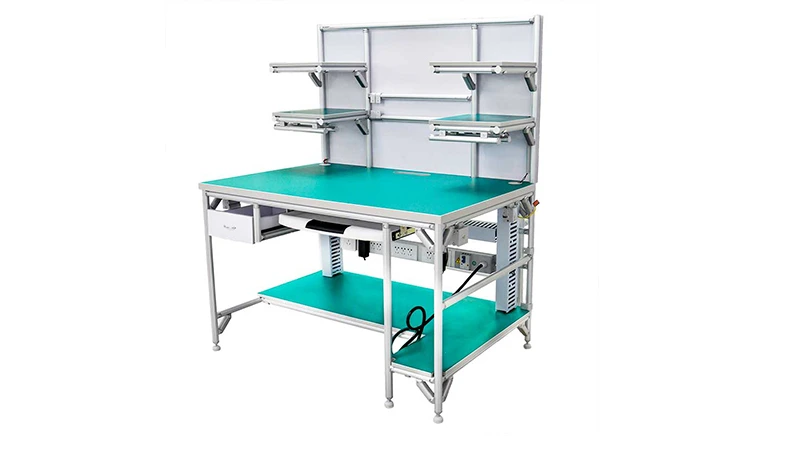
In the bustling world of manufacturing, workshops, and industrial settings, the tools and equipment we rely on can make or break productivity. Among these, the workbench stands as a silent workhorse—supporting everything from delicate electronics assembly to heavy-duty mechanical repairs. But not all workbenches are created equal. When it comes to durability, versatility, and long-term performance, few materials rival aluminum. Today, we're diving deep into a specific star of the aluminum workbench family: Aluminum Workbench A. More importantly, we'll explore a critical factor that often goes overlooked but plays a defining role in its functionality: material thickness. How does the thickness of the aluminum used in Aluminum Workbench A impact its strength? And what does that mean for your day-to-day operations, whether you're running a small garage or a large-scale production line?
Understanding Aluminum: The Material Behind the Workbench
Before we zoom in on Aluminum Workbench A, let's take a moment to appreciate why aluminum has become a go-to material for industrial workbenches. Unlike steel, which is heavy and prone to rust, or wood, which can warp and degrade over time, aluminum brings a unique set of advantages to the table. It's lightweight, making it easier to move and reconfigure (even without casters, depending on the design). It's naturally resistant to corrosion, thanks to a thin oxide layer that forms on its surface, protecting it from moisture and chemicals—a must in environments where spills or humidity are common. And perhaps most importantly, aluminum is highly malleable, allowing it to be shaped into precise forms through processes like extrusion. This is where aluminum extrusion profile comes into play: by forcing heated aluminum through a die, manufacturers can create complex cross-sectional shapes with consistent dimensions, perfect for building sturdy, modular workbenches.
But aluminum's benefits don't end there. It's also recyclable, aligning with modern sustainability goals, and offers an excellent strength-to-weight ratio. That means an aluminum workbench can be just as strong as a steel one but significantly lighter, reducing strain on floors and making installation a breeze. However, none of these benefits matter if the material thickness isn't optimized. Thickness directly influences how much weight the workbench can support, how well it resists bending or warping, and how long it will last under daily use. So, when it comes to Aluminum Workbench A, getting the thickness right isn't just a detail—it's the foundation of its performance.
What is Aluminum Workbench A?
If you're familiar with industrial workbenches, you've likely seen a range of models, each designed for specific tasks. Aluminum Workbench A is a standout in this lineup, known for its modular design, clean aesthetics, and adaptability. Unlike generic workbenches, it's engineered with precision, often using aluminum profile as its primary structural component. These profiles—hollow, rectangular, or square tubes—form the frame, while a flat work surface (typically made of aluminum composite, plywood, or a durable plastic laminate) sits on top. Some versions include additional features like built-in shelves, tool rails, or cable management systems, but at its core, Aluminum Workbench A is all about balance: strength without excess weight, simplicity without sacrificing functionality.
What sets Aluminum Workbench A apart from other aluminum workbenches? It's often the attention to detail in its construction. Manufacturers design it to be compatible with a wide range of aluminum pipe accessories, from clamps and brackets to casters (though some models, like "Workbench E (single deck-without caster)" from our keyword list, are fixed). This modularity means you can customize it to fit your needs—adding a shelf here, a tool holder there—without having to replace the entire bench. But none of this modularity would matter if the base structure wasn't solid, and that's where material thickness steps in. The thickness of the aluminum profile used in the frame and the work surface determines just how much customization and heavy use the bench can handle.

Material Thickness: The Basics
Material thickness, in the context of Aluminum Workbench A, refers to the distance between the outer and inner surfaces of the aluminum profile and the work surface. It's measured in millimeters (mm), with common thicknesses ranging from 1.0mm to 3.0mm for the frame and 1.5mm to 5.0mm for the work surface itself. At first glance, a difference of 0.5mm might seem negligible—after all, it's thinner than a sheet of paper. But in structural engineering, even small changes in thickness can have a dramatic impact on performance. Think of it like a soda can: a thin aluminum can crumples easily in your hand, but if you double its thickness, it becomes significantly stiffer and harder to deform. The same principle applies to Aluminum Workbench A.
Why does thickness matter so much? It all comes down to stress and strain. When you place a heavy object on the workbench, the aluminum profile bends slightly under the load (this is strain). The thicker the material, the more resistance it has to this bending (this is stress). A thicker profile can distribute the load more evenly across its surface, reducing the risk of permanent deformation or failure. Additionally, thickness affects the workbench's natural frequency—how much it vibrates when tools are used on it. A thicker, stiffer bench vibrates less, which is crucial for precision tasks like electronics assembly, where even small vibrations can throw off measurements.

Impact of Material Thickness on Strength
Strength is the most obvious area where material thickness plays a role, and it's critical for any workbench. Let's break down how thickness affects different types of strength in Aluminum Workbench A.
Tensile Strength: Resisting Pulling Forces
Tensile strength is the ability of a material to resist being pulled apart. In Aluminum Workbench A, this comes into play when the bench is loaded unevenly—for example, if a heavy machine is placed near the edge of the work surface, pulling downward on the frame. Thicker aluminum profiles have more material to withstand this tension. A 1.2mm profile might start to stretch or warp under extreme tension, while a 2.0mm profile would remain rigid. This is because the cross-sectional area (which increases with thickness) directly contributes to tensile strength: more area means more molecules holding the material together, making it harder to pull apart.
Compressive Strength: Supporting Heavy Loads
Compressive strength is the opposite of tensile strength—it's the ability to resist being crushed under pressure. When you place a heavy load directly on top of Aluminum Workbench A, the vertical supports (the legs and frame rails) experience compression. Thicker aluminum profiles excel here because they can distribute the load over a larger area, reducing the stress per unit of material. For example, a 1.5mm thick leg might buckle under a 200kg load, while a 2.5mm thick leg could support 350kg or more without issue. This is why manufacturers often specify "maximum load capacity" for workbenches, and that number is directly tied to material thickness.
Bending Strength: Stiffness and Resistance to Warping
Bending strength is perhaps the most critical factor for a workbench, as most loads aren't perfectly centered. When you lean on the edge of the bench, place a heavy box on one corner, or use a clamp to hold a workpiece, the frame and work surface bend slightly. The thicker the material, the stiffer it is, meaning less bending and more resistance to warping over time. Engineers measure this using the "modulus of elasticity," which quantifies how much a material deforms under stress. Aluminum has a modulus of about 69 GPa (gigapascals), which is lower than steel (200 GPa), but by increasing thickness, we can compensate for this. A thicker aluminum profile will have a higher "section modulus," a measure of its resistance to bending, making it just as stiff as a thinner steel profile—without the added weight.
| Aluminum Profile Thickness (mm) | Approximate Tensile Strength (MPa) | Approximate Compressive Strength (MPa) | Recommended Maximum Load (kg) | Best For |
|---|---|---|---|---|
| 1.0mm | 90-110 | 80-100 | 50-100 | Light tasks: electronics assembly, small parts sorting |
| 1.5mm | 110-130 | 100-120 | 150-250 | Medium tasks: tool storage, light machinery repair |
| 2.0mm | 130-150 | 120-140 | 250-400 | Heavy tasks: automotive parts assembly, bench tools |
| 2.5mm | 150-170 | 140-160 | 400-600 | Industrial tasks: heavy machinery repair, material testing |
| 3.0mm | 170-190 | 160-180 | 600+ | Specialized tasks: aerospace component assembly, load testing |
Note: Values are approximate and vary by aluminum alloy and profile design. Always consult the manufacturer's specifications for exact load capacities.
Impact of Material Thickness on Performance
Strength is important, but performance is about more than just how much weight a workbench can hold. It's about how it behaves in real-world conditions—how durable it is, how stable it feels, and how well it adapts to your workflow. Let's explore how material thickness influences these factors in Aluminum Workbench A.
Load Capacity: More Than Just Weight
We've touched on load capacity, but it's worth diving deeper. A workbench's "maximum load" isn't just a random number—it's based on how the material thickness distributes weight. A thinner bench might handle 100kg if the weight is evenly spread, but if you place a 50kg tool on one corner, the stress concentration could cause the frame to bend. Thicker aluminum profiles reduce this risk by increasing the "moment of inertia," a physics term that describes how resistant an object is to rotational acceleration (like bending at the corners). This means a 2.0mm thick Aluminum Workbench A can handle uneven loads better than a 1.0mm thick one, making it more versatile for tasks where weight isn't always perfectly distributed.
Durability: Standing the Test of Time
Industrial workbenches take a beating. Spills, impacts from tools, and constant loading/unloading can wear down even the toughest materials. Thicker aluminum profiles are more resistant to dents and scratches because there's more material to absorb the impact. A 1.5mm profile might dent if a heavy wrench is dropped on it, but a 2.5mm profile would likely shrug it off. Additionally, thicker material is less prone to fatigue failure—the gradual weakening of a material due to repeated stress. In a busy workshop, where the bench is loaded and unloaded dozens of times a day, fatigue can lead to cracks over time. Thicker aluminum reduces stress per cycle, extending the bench's lifespan from a few years to a decade or more.
Stability: No More Wobbles
There's nothing more frustrating than a wobbly workbench, especially when you're trying to perform precision tasks. Stability is closely linked to stiffness, which, as we discussed, increases with material thickness. A thicker frame resists lateral (side-to-side) movement, so even if you lean on the bench or bump into it, it won't sway. This is critical for tasks like soldering, where a steady hand is essential, or for using power tools that generate vibrations. A stable bench also reduces the risk of accidents—tools are less likely to slide off, and materials won't shift unexpectedly.
Ergonomics: Weight vs. Maneuverability
Aluminum is prized for being lightweight, but thicker material does add weight. A 1.0mm thick Aluminum Workbench A might weigh 20kg, while a 3.0mm thick one could weigh 50kg or more. This is a trade-off: heavier benches are more stable but harder to move. However, many Aluminum Workbench A models are designed to be fixed (like the "Workbench E" without casters), so weight is less of an issue once installed. For mobile benches, manufacturers often balance thickness with hollow profiles—using thicker walls but keeping the interior hollow—to maintain strength without adding excess weight. The result is a bench that's heavy enough to stay put during use but light enough to reposition with a helper if needed.
Real-World Applications: How Thickness Makes a Difference
To truly understand the impact of material thickness, let's look at real-world scenarios where Aluminum Workbench A is put to the test.
Electronics Assembly Line
In an electronics factory, workers assemble circuit boards, smartphones, and other delicate components. Here, precision is key, and the workbench needs to be stable but not overly heavy (since lines are often reconfigured). A 1.2mm to 1.5mm thick Aluminum Workbench A is ideal: it's light enough to move during line changes, stiff enough to prevent vibrations from affecting soldering work, and durable enough to resist scratches from tools. The thin profile also keeps the bench low-cost, which is important for factories that need dozens of benches.
Automotive Repair Shop
Automotive technicians work with heavy parts—engines, transmissions, suspension components—that can weigh 100kg or more. A thin workbench would buckle under this load, but a 2.5mm to 3.0mm thick Aluminum Workbench A can handle it. The thicker profile resists bending when a transmission is placed on the edge, and the added durability ensures the bench doesn't dent when tools are dropped. Plus, aluminum's corrosion resistance means oil and grease spills won't cause rust, keeping the bench looking clean and functional for years.
Laboratory Setting
Laboratories require workbenches that are stable, easy to clean, and resistant to chemicals. A 1.5mm to 2.0mm thick Aluminum Workbench A fits the bill. The thickness provides enough stability for sensitive equipment like microscopes or balances, while the smooth aluminum surface is easy to wipe down and won't react with acids or solvents. The modular design also allows for custom additions, like built-in sinks or storage cabinets, without compromising the bench's strength.
Choosing the Right Thickness for Your Needs
Now that we understand how material thickness impacts Aluminum Workbench A's strength and performance, how do you choose the right one for your workspace? Start by asking yourself these questions:
- What's the heaviest item you'll place on the bench? If it's under 100kg, 1.0mm-1.5mm is sufficient. If it's over 400kg, opt for 2.5mm-3.0mm.
- Will the load be evenly distributed or concentrated? Uneven loads require thicker profiles (2.0mm+).
- How often will the bench be moved? If mobility is key, stick to 1.0mm-1.5mm to keep weight down. If it's fixed, 2.0mm+ offers better durability.
- What's your budget? Thicker aluminum costs more, so balance need with cost. A 1.5mm bench might be cheaper upfront, but a 2.0mm bench could save money in the long run by lasting longer.
It's also worth consulting the manufacturer's specifications. Reputable suppliers will provide detailed load charts and material thickness options, and they can often customize the bench to fit your needs. Don't forget to consider future needs, too—if your business grows and you start handling heavier materials, a thicker bench will save you from having to replace it later.
Aluminum vs. Other Materials: Why Thickness Still Matters
You might be wondering: why not just use steel instead of worrying about aluminum thickness? Steel is stronger, right? It's true that steel has a higher tensile strength per unit thickness, but aluminum's strength-to-weight ratio is superior. A steel workbench with a 1.5mm thick frame might weigh twice as much as an aluminum one with a 2.0mm frame, but the aluminum bench would still handle the same load. For applications where weight is a concern—like in cleanrooms or upper-floor workshops—aluminum is the better choice. Plus, aluminum doesn't rust, so it's ideal for humid or wet environments where steel would corrode without constant maintenance.
Wooden workbenches are another option, but they're prone to warping, splitting, and absorbing moisture. A thick wooden top might be strong, but the frame (often made of softwood) can still fail under heavy loads. Aluminum Workbench A, with its thick, extruded profiles, offers consistent strength across the entire bench, without the weaknesses of wood.
Maintenance Tips for Aluminum Workbench A
Even the thickest aluminum workbench needs proper care to maximize its lifespan. Here are a few tips:
- Clean regularly: Wipe down the surface with a mild detergent and water to remove grease, oil, and chemicals. Avoid abrasive cleaners that can scratch the aluminum.
- Check for loose fasteners: Aluminum pipe accessories like bolts and brackets can loosen over time, especially on benches that see heavy use. Tighten them periodically to maintain stability.
- Address dents promptly: While thick aluminum is dent-resistant, deep dents can weaken the structure. Use a rubber mallet to gently tap out small dents from the inside (if the profile is hollow).
- Protect from extreme heat: Aluminum has a high melting point (660°C), but prolonged exposure to high heat (like from welding sparks) can discolor or weaken it. Use heat-resistant pads for hot tools.
Conclusion: Thickness as the Foundation of Performance
Aluminum Workbench A is more than just a piece of furniture—it's a critical tool that supports your team's productivity, safety, and precision. And at the heart of its performance lies material thickness. From tensile strength to durability, from load capacity to stability, thickness influences every aspect of how the bench functions. Whether you're assembling electronics on a 1.5mm thick bench or repairing engines on a 3.0mm thick one, choosing the right thickness ensures your workbench will keep up with your needs for years to come.
So, the next time you're in the market for an industrial workbench, don't just focus on features like shelves or color—ask about material thickness. It's the unsung hero that turns a good workbench into a great one. And when you choose Aluminum Workbench A with the right thickness, you're not just buying a bench—you're investing in a tool that will grow with your business, stand up to daily use, and make every task a little easier. After all, in the world of manufacturing, the right foundation makes all the difference.