- Company Articles
- Products and Technology
- Product knowledge
- Aluminum Workbench A's Compatibility with Lean Management Accessories

Aluminum Workbench A's Compatibility with Lean Management Accessories
Related Product
Aluminum Workbench A
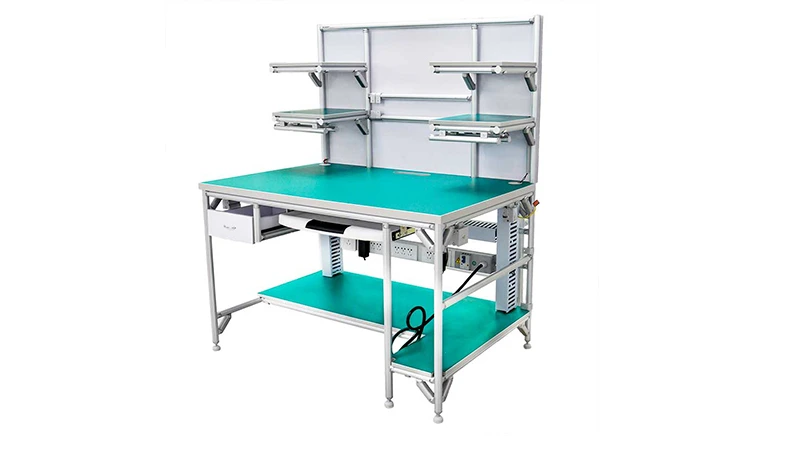
Aluminum tube workbench is more flexible and durable, compared with traditional PE/ABS coated steel tube. It is easy to assemble, anti corrosion, rust protection, and recycle use after disassemble.
The Heart of Lean: Why Workbench Compatibility Matters
In the world of manufacturing and production, lean management isn't just a buzzword—it's a way of life. At its core, lean is about stripping away waste, streamlining processes, and creating systems that adapt as quickly as your business needs. But here's the thing: even the best lean strategies fall flat if your tools don't play well together. That's where Aluminum Workbench A comes in. More than just a sturdy surface to work on, it's a foundation for lean excellence, designed from the ground up to integrate seamlessly with the accessories that make lean possible. Today, we're diving into how this workbench becomes the backbone of your production line by pairing with key lean management accessories—from aluminum profile components to caster wheel systems, roller track setups, and beyond.
Imagine walking into a factory where every workstation feels like it was custom-built for the task at hand. Parts glide smoothly from one station to the next, tools are within arm's reach, and reconfiguring the line for a new product takes minutes, not days. That's the vision lean management promises, and it starts with a workbench that doesn't fight against your accessories—its them. Aluminum Workbench A isn't just compatible with these tools; it's engineered to amplify their impact, turning a basic workstation into a lean powerhouse.
Aluminum Workbench A: Built for Flexibility
Before we jump into accessories, let's get to know the star of the show: Aluminum Workbench A. What makes it different from the generic workbenches gathering dust in warehouses? For starters, it's crafted from high-grade aluminum profile —lightweight yet surprisingly tough, resistant to corrosion, and designed with modularity in mind. Unlike wooden or steel workbenches that are fixed in shape and hard to modify, Aluminum Workbench A is a blank canvas. Its frame features T-slot channels (a hallmark of quality aluminum profiles) that let you attach, adjust, and remove accessories without drilling, welding, or specialized tools. This isn't just convenience—it's the secret to lean adaptability.
Let's break down the basics. Aluminum Workbench A typically comes as a single-deck unit (though double-deck options are available) with a solid work surface—often made of aluminum honeycomb or plywood with a protective coating. The legs are reinforced aluminum profiles, and here's where the magic happens: every part of the frame is designed to accept accessories. Whether you need to add a shelf above, a roller track to the side, or caster wheels for mobility, the workbench's T-slot channels and pre-drilled mounting points make it possible. And because it's aluminum, it's lightweight enough to move (with the right casters) but sturdy enough to handle heavy loads—we're talking up to 500 kg on some models. That balance of strength and flexibility is why it's become a favorite in industries from electronics assembly to automotive manufacturing.
Key Features of Aluminum Workbench A:
- Modular Aluminum Profile Frame: T-slot channels allow for tool-free accessory attachment and reconfiguration.
- Durable Work Surface: Resistant to scratches, chemicals, and heavy impacts—ideal for repetitive tasks.
- Weight Optimization: Aluminum construction keeps the base light (around 40-60 kg for a standard size) while maintaining structural integrity.
- Pre-Engineered Mounting Points: No guesswork when adding accessories; holes and slots align with industry-standard components.
- ESD-Ready Options: Available with electrostatic discharge (ESD) protection for sensitive electronics work.

The Perfect Partners: Lean Accessories That Play Well with Aluminum Workbench A
Now, let's talk about the accessories that turn Aluminum Workbench A from a great workbench into a lean machine. We'll focus on four critical categories: aluminum profile add-ons, caster wheel systems, roller track setups, and lean pipe joint connections. Each plays a unique role in waste reduction and efficiency, and each is designed to work seamlessly with the workbench's aluminum frame.
1. Aluminum Profile Accessories: Building Up, Not Out
Aluminum profiles are the building blocks of modular lean systems, and Aluminum Workbench A is practically made for them. These profiles—think of them as lightweight, strong rails with T-slot channels—let you add shelves, tool holders, lighting, or even overhead racks without modifying the workbench itself. For example, a 40x40mm aluminum profile can be attached to the workbench's rear leg using simple T-slot nuts and bolts, creating an instant shelf for parts bins. Need to adjust the height? Loosen the bolts, slide the profile up or down, and tighten—done. It's that easy.
Common aluminum profile accessories include end caps (to smooth rough edges and prevent snags), rubber strips (for non-slip shelving), and angle brackets (to reinforce connections). Even better, these profiles are compatible with a wide range of third-party components, so you're not locked into a single brand. Whether you need a small parts organizer or a full overhead gantry for heavy tools, the workbench's frame provides the anchor points to make it happen.
2. Caster Wheel Systems: Mobility Without Compromise
In lean management, stagnation is the enemy. A workstation that's stuck in one spot can't adapt when your production line shifts, leading to wasted time and motion. That's where caster wheel systems come in—and Aluminum Workbench A is ready to roll. Most models are designed to accept bolt-on caster wheels, turning a stationary bench into a mobile workstation in minutes.
But not all casters are created equal. For lean environments, you need wheels that can handle the weight of the workbench plus tools and materials (often 300-500 kg total), roll smoothly over factory floors, and lock securely when in use. Aluminum Workbench A pairs best with heavy-duty swivel casters with brake mechanisms—typically 4-5 inches in diameter for stability. The workbench's legs have pre-drilled holes that align with caster mounting plates, so installation is as simple as bolting them on with a wrench. Once attached, you can move the workbench to where it's needed most—whether that's beside a conveyor line for assembly or into a testing area for quality checks—then lock the brakes to keep it steady during use.
Pro tip: For extra stability, opt for casters with dual-wheel designs or polyurethane treads, which absorb shock and reduce noise—important for maintaining a calm, focused workspace.
3. Roller Track: Let Gravity Do the Work
One of the biggest sources of waste in production is manual material handling. Carrying parts from one station to the next, stacking bins, or pushing heavy trays—these tasks eat up time and energy. Enter roller track : a simple system of rollers or balls that lets materials glide across surfaces with minimal effort. And Aluminum Workbench A is engineered to integrate roller track systems seamlessly.
Here's how it works: Most roller tracks are mounted to the side or front of the workbench using brackets that attach to the aluminum profile frame. For example, a plastic or aluminum roller track guide rail (yellow or grey, depending on your preference) can be bolted to the workbench's edge, creating a chute for parts to slide from a higher station to yours. Or, if you need a flat surface for trays, you can install swivel roller balls (1 inch or 0.5 inch) on the workbench top, turning it into a mini conveyor for small components.
The key here is compatibility. Aluminum Workbench A's T-slot channels accept standard roller track mounting brackets, like the "roller track placon mount for aluminum profile flat" or "roller track placon mount center support bracket" from most suppliers. This means you don't have to jury-rig a solution—just pick the roller track length and type you need, attach the brackets to the workbench, and you're ready to let gravity streamline your workflow.
4. Lean Pipe Joints: Connecting the Dots
Lean pipe (also called "flexible pipe" or "kitchen pipe") is another staple of lean systems, used to build everything from material racks to flow racks. And while Aluminum Workbench A is made of aluminum profiles, it plays nicely with lean pipe joint systems too. Thanks to adapter brackets and T-slot connectors, you can attach lean pipes directly to the workbench's frame, creating custom structures that extend its functionality.
For example, suppose you need a small parts rack above the workbench. Using 28mm lean pipes and 90° fixed lean pipe joints, you can build a three-tier shelf that bolts to the workbench's rear legs. The joints clamp securely to the aluminum profile, and the pipes are adjustable, so you can tweak the height or width as needed. It's a cost-effective way to add storage without investing in a separate rack—and because it's attached to the workbench, everything stays within arm's reach, reducing wasted motion.
Lean pipe joints also shine when creating flow paths. By attaching a lean pipe frame to the side of the workbench and adding roller track, you can build a mini assembly line that feeds parts directly to the work surface. The possibilities are endless, and the workbench's sturdy frame ensures these add-ons stay stable even with constant use.

Real-World Integration: How a Electronics Plant Uses Aluminum Workbench A
Let's put this all together with a real-world example. Imagine a mid-sized electronics manufacturer that assembles circuit boards for smartphones. Their biggest challenges? Frequent product changes (new phone models every 6-12 months), tight space constraints, and the need to minimize static damage to sensitive components. Enter Aluminum Workbench A, paired with the accessories we've discussed. Here's how it transformed their line:
Step 1: The Base Workbench They started with Aluminum Workbench A (single deck, ESD-safe surface) to protect circuit boards from static. The workbench's aluminum profile frame was powder-coated grey to match their factory aesthetic, and the surface was covered in a conductive mat grounded to the floor.
Step 2: Adding Mobility To adapt to changing production layouts, they bolted on 5-inch swivel caster wheels with brakes. Now, each workbench can be moved to a new position in under 5 minutes, and the brakes ensure it stays put during assembly.
Step 3: Roller Track for Parts Delivery On the left side of the workbench, they installed a plastic roller track guide rail (yellow, for visibility) using "roller track placon mount for aluminum profile flat" brackets. This track connects to a material rack across the aisle, letting parts trays slide directly to the operator—no more walking to fetch components.
Step 4: Aluminum Profile Shelving Above the workbench, they added two levels of 40x40mm aluminum profile shelving using T-slot connectors. The top shelf holds tools (screwdrivers, tweezers) in labeled bins, while the lower shelf holds completed boards waiting for testing.
Step 5: Lean Pipe Quality Check Station On the right side, they attached a lean pipe frame using 45° lean pipe joints, creating a small platform for quality inspectors to check boards before they move to the next station. The frame is adjustable, so it can be raised or lowered depending on the inspector's height.
The result? A workstation that adapts when new phone models require different tools or parts, reduces walking time by 40%, and cuts reconfiguration time from 8 hours to 1 hour. That's lean in action—and it all starts with a workbench designed to play well with others.
The Compatibility Advantage: Why It Matters for Your Bottom Line
You might be thinking, "Can't I just use a cheaper workbench and jury-rig the accessories?" Maybe—but the cost of incompatibility adds up fast. Here's why Aluminum Workbench A's compatibility with lean accessories is worth the investment:
1. Reduced Downtime
When accessories bolt on easily (no drilling, welding, or custom fabrication), reconfiguring your line takes hours instead of days. For example, switching from assembling Product A to Product B might require adding a new shelf and adjusting the roller track—tasks that take 2-3 hours with Aluminum Workbench A, versus 2-3 days with a non-modular bench.
2. Lower Long-Term Costs
Modular accessories mean you don't have to replace the entire workbench when your needs change. A $50 roller track upgrade is far cheaper than buying a new $500 workbench. Plus, aluminum's durability means the workbench itself will last 10+ years, even with heavy use.
3. Improved Ergonomics
Incompatible accessories often force workers into awkward positions—reaching too high for tools, bending to grab parts. With Aluminum Workbench A, you can adjust shelves, roller tracks, and lean pipe structures to fit your team's height and workflow, reducing strain and injury risk.
4. Scalability
As your business grows, you can add more accessories to the same workbench. Start with a basic setup, then add casters, roller track, and shelving as needed. No need to overbuy upfront—build your system as you go.
Aluminum Workbench A: Accessory Compatibility Chart
| Accessory Type | Key Benefits | Installation Difficulty | Max Load Capacity | Typical Use Case |
|---|---|---|---|---|
| Aluminum Profile Shelving | Modular, height-adjustable storage | Easy (T-slot nuts/bolts, 10-15 mins) | 100-150 kg per shelf | Tool storage, completed parts |
| Caster Wheel Systems | Mobility, quick repositioning | Moderate (requires wrench, 20-30 mins) | 500 kg total (bench + load) | Mobile workstations, temporary lines |
| Roller Track | Material flow, reduced manual handling | Easy (brackets bolt to frame, 15-20 mins) | 50-75 kg per linear meter | Parts delivery, tray sliding |
| Lean Pipe Joint Structures | Custom racks, flow paths | Moderate (clamps and brackets, 30-45 mins) | 75-100 kg per structure | Small parts racks, quality check stations |
The Bottom Line: Aluminum Workbench A is More Than a Workbench—It's a Lean Partner
In the end, lean management is about creating systems that work for you, not against you. Aluminum Workbench A embodies this philosophy by serving as a flexible, compatible foundation for the accessories that make lean possible. Whether you're adding aluminum profile shelving for tools, caster wheel systems for mobility, roller track for material flow, or lean pipe joint structures for custom racks, this workbench doesn't just tolerate these accessories—it elevates them.
So, if you're ready to take your lean management efforts to the next level, don't overlook the importance of a compatible workbench. Aluminum Workbench A isn't just a place to work—it's a partner in efficiency, adaptability, and success. After all, in lean, every detail counts—and the right workbench is one detail that pays dividends for years to come.