- Company Articles
- Products and Technology
- Product knowledge
- Aluminum Workbench A's Ergonomic Design: Reducing Worker Fatigue

Aluminum Workbench A's Ergonomic Design: Reducing Worker Fatigue
Related Product
Aluminum Workbench A
Aluminum tube workbench is more flexible and durable, compared with traditional PE/ABS coated steel tube. It is easy to assemble, anti corrosion, rust protection, and recycle use after disassemble.
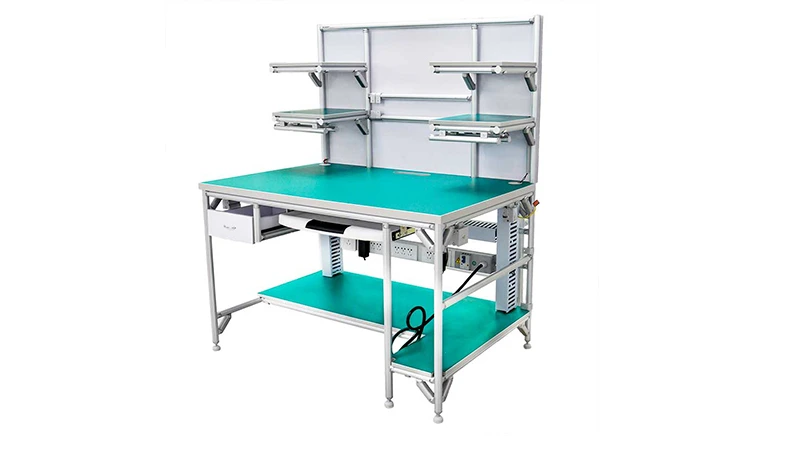
Every day, millions of workers around the world spend hours at their workstations—assembling products, packing orders, or troubleshooting machinery. For many, this routine comes with a hidden cost: fatigue. It starts as a dull ache in the lower back after a long shift, progresses to strained shoulders from reaching too far, or even headaches from hunching over a surface that's not quite the right height. Over time, this fatigue doesn't just affect comfort; it chips away at productivity, increases the risk of injuries, and erodes job satisfaction. The good news? The right tools can make a world of difference. Enter Aluminum Workbench A—a workstation designed not just for tasks, but for the people performing them. In this article, we'll explore how its ergonomic design directly targets worker fatigue, why materials like aluminum profile matter, and how features like adjustable leveling feet and caster wheels transform daily work from a chore into a seamless, sustainable experience.
The Science of Fatigue: Why One Size Doesn't Fit All
Before diving into the specifics of Aluminum Workbench A, let's unpack why fatigue is such a persistent issue in workplaces. Fatigue isn't just "being tired"—it's a physical response to prolonged stress on the body. When a workstation is poorly designed, every movement becomes a micro-strain: a worker might twist their torso to grab a tool, lean forward to reach a component, or stand on uneven ground for hours, forcing muscles to overcompensate. Over weeks and months, these small strains add up to chronic pain, reduced focus, and even repetitive strain injuries (RSIs) like carpal tunnel syndrome.
Ergonomics—the study of designing tools and environments to fit the human body—addresses this by prioritizing alignment, comfort, and efficiency. An ergonomic workstation adapts to the worker, not the other way around. It considers variables like height, reach, posture, and movement to minimize unnecessary effort. For example, a workbench that sits at elbow height reduces shoulder strain; a stable surface prevents wobbling that forces muscles to tense; and mobility features let workers reposition their workspace instead of their bodies. Aluminum Workbench A takes this science and turns it into tangible, everyday solutions.
Aluminum Workbench A: A Closer Look at Its Ergonomic Core
At first glance, Aluminum Workbench A might look like any other workstation—but its design tells a different story. Built with lean system principles in mind (a methodology focused on minimizing waste and maximizing value), it's engineered to support workers through every task, from morning setup to evening cleanup. Let's break down its key ergonomic features and how they combat fatigue.
1. Aluminum Profile: Lightweight Strength That Reduces Physical Strain
The foundation of Aluminum Workbench A is its aluminum profile—a material chosen for its unique blend of lightness and durability. Unlike traditional steel workbenches, which can be heavy and cumbersome, aluminum profile cuts down on weight without sacrificing strength. This matters because even small movements, like adjusting the workbench's position or reconfiguring its layout, become easier. For a worker who needs to shift the bench to access different tools or collaborate with a teammate, the reduced weight means less effort, fewer strained muscles, and more energy conserved throughout the day.
Aluminum profile also offers flexibility in design. Its modular nature allows for easy customization—adding shelves, tool holders, or side extensions—so the workbench grows with the task. This adaptability means workers don't have to stretch or bend to reach items stored awkwardly; everything stays within arm's reach, reducing the "micro-movements" that contribute to cumulative fatigue.
2. Adjustable Leveling Feet: Stability That Supports Natural Posture
A wobbly workbench isn't just annoying—it's a silent fatigue inducer. When a surface isn't level, workers unconsciously tense their muscles to steady themselves or their tools. Over time, this constant readjustment leads to soreness in the legs, lower back, and shoulders. Aluminum Workbench A solves this with adjustable leveling feet—small, threaded components at the base that can be twisted to raise or lower individual corners. Whether the floor is uneven (a common issue in older factories or warehouses) or the workbench needs to align with other equipment, these feet ensure a perfectly stable surface.
The result? Workers can stand or sit with confidence, their weight evenly distributed, and their focus on the task rather than balancing. For example, a packaging operator no longer has to lean to one side to keep a box from sliding off a tilted bench; a mechanic can apply force to a tool without worrying the bench will shift. Stability equals less physical stress, and less stress equals less fatigue.
3. Caster Wheels: Mobility That Minimizes Unnecessary Movement
Mobility might not seem like an ergonomic feature at first, but consider this: if a worker needs to access materials stored 10 feet away, they'll either walk back and forth dozens of times a day or stretch awkwardly to reach—both recipes for fatigue. Aluminum Workbench A addresses this with optional caster wheels, which let workers roll the entire workstation to where it's needed. Lockable and smooth-rolling, these wheels turn a static bench into a dynamic tool that adapts to the workflow.
Imagine a production line where components arrive at one end. With caster wheels, a worker can position Aluminum Workbench A next to the delivery point, assemble the product, then roll the bench to the next station—all without taking a single step. This reduces foot and leg fatigue, cuts down on time wasted moving between spots, and keeps the worker in a comfortable, consistent posture.
4. Height Customization: Fitting Every Body Type
One of the biggest flaws in traditional workbenches is their "one-height-fits-all" approach. A bench that's perfect for a 6-foot-tall worker is far too high for someone 5 feet tall, forcing them to hunch or stand on tiptoes. Aluminum Workbench A avoids this with height-adjustable legs (often paired with adjustable leveling feet for fine-tuning), allowing it to range from 30 to 40 inches in height. This ensures that whether a worker is sitting or standing, their elbows rest at a 90-degree angle—a neutral position that reduces strain on the shoulders and neck.
For example, a seated assembly worker might set the bench at 30 inches, aligning the work surface with their lap, while a standing inspector could raise it to 36 inches, keeping their back straight and arms relaxed. This customization means no more "making do" with a workstation that doesn't fit—just a surface that works with the body, not against it.

From Design to Impact: How Aluminum Workbench A Changes the Workday
To truly understand the difference Aluminum Workbench A makes, let's step into the shoes of a few workers who use it daily.
Maria's Story: Reducing Back Pain on the Assembly Line
Maria has worked on an electronics assembly line for five years. For most of that time, she used a steel workbench that was fixed at 34 inches—too low for her 5'8" frame. By mid-afternoon, her lower back would ache from hunching over tiny components, and her shoulders felt tight from reaching across the bench to grab tools. "I'd go home and ice my back every night," she says. "Some days, I even considered quitting."
When her factory switched to Aluminum Workbench A, Maria was skeptical—until she adjusted the height to 38 inches. "Suddenly, I could sit up straight. My arms rested naturally on the surface, and I didn't have to stretch to reach my tools," she recalls. The aluminum profile felt sturdy but light, so when she needed to shift the bench closer to the conveyor belt, she could do it alone, no help needed. After two weeks, her back pain was gone. "Now, I leave work feeling tired from the day, not from fighting my workstation," she says.
Javier's Experience: Mobility and the End of "The Walk"
Javier works in a warehouse, packing orders for shipping. His old routine involved a fixed wooden workbench at one end of the aisle and a material rack 20 feet away. "I must have walked back and forth 50 times a day," he estimates. "By 3 p.m., my feet hurt so bad I could barely stand. I'd rush through orders just to sit down during breaks."
Then his team got Aluminum Workbench A with caster wheels. Now, Javier rolls the bench right next to the material rack, packs the order, then rolls it to the shipping cart. "I walk maybe 10 steps total per order now," he says. "My feet don't ache, and I'm actually faster—no more rushing, just steady work." The adjustable leveling feet also came in handy: the warehouse floor slopes slightly, but a quick twist of the feet kept the bench stable, so boxes didn't slide around. "It's like the bench was made for this job," he adds.

Comparing Workstations: Traditional vs. Aluminum Workbench A
Still wondering how Aluminum Workbench A stacks up against traditional options? The table below breaks down key features and their impact on worker fatigue:
| Feature | Traditional Workbench | Aluminum Workbench A | Impact on Worker Fatigue |
|---|---|---|---|
| Material | Heavy steel or wood; hard to move | Lightweight aluminum profile; easy to reposition | Reduces effort to adjust layout; less strain on muscles |
| Height Adjustment | Fixed height; "one size fits all" | Adjustable legs (30–40 inches); pairs with adjustable leveling feet | Neutral posture for all body types; reduces hunching or stretching |
| Stability | Often wobbly on uneven floors; no leveling options | Adjustable leveling feet for perfect balance | Less muscle tension from steadying tools; reduced back/shoulder strain |
| Mobility | Static; requires lifting or dragging to move | Optional caster wheels; lockable for safety | Fewer steps and stretches; less foot/leg fatigue |
| Customization | Limited; fixed shelves or no add-ons | Modular aluminum profile; add tool holders, bins, or extensions | Tools/materials within arm's reach; reduces unnecessary movement |
Beyond Fatigue: The Ripple Effects of a Better Workstation
Reducing worker fatigue is just the beginning. When workers are more comfortable, they're more focused, productive, and engaged. Factories and warehouses using Aluminum Workbench A report lower absenteeism, fewer on-the-job injuries, and higher quality output. Why? Because a worker who isn't fighting fatigue can pay closer attention to detail, spot errors faster, and stay motivated throughout the shift.
From a business perspective, this translates to real value. Lower injury rates mean fewer workers' compensation claims and less downtime. Higher productivity means more orders fulfilled on time. And happier employees mean lower turnover—a critical factor in industries struggling with labor shortages. It's no wonder that companies embracing lean system principles are turning to tools like Aluminum Workbench A: they don't just improve workstations; they improve workplaces.
Conclusion: Investing in Workers, Investing in Success
Worker fatigue is often dismissed as an unavoidable part of the job—but it doesn't have to be. Aluminum Workbench A proves that with thoughtful design, ergonomic features, and quality materials like aluminum profile, we can create workstations that support the human body, not exhaust it. From adjustable leveling feet that stabilize uneven floors to caster wheels that cut down on unnecessary movement, every detail is built with the worker in mind.
At the end of the day, a workstation is more than just a piece of equipment. It's a partner in productivity, a guardian of health, and a reflection of how much a company values its team. Aluminum Workbench A isn't just about reducing fatigue—it's about reimagining what work can feel like: comfortable, efficient, and sustainable. For workers like Maria and Javier, that's life-changing. For businesses, it's a smart investment in the people who power their success.