- Company Articles
- Products and Technology
- Product knowledge
- Aluminum Workbench A's Load Capacity: What You Need to Know for Heavy-Duty Tasks

Aluminum Workbench A's Load Capacity: What You Need to Know for Heavy-Duty Tasks
Related Product
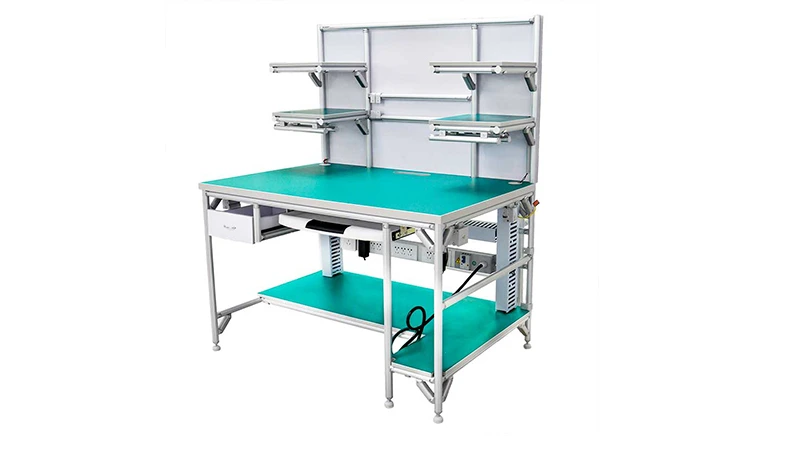
Aluminum Workbench A
Aluminum tube workbench is more flexible and durable, compared with traditional PE/ABS coated steel tube. It is easy to assemble, anti corrosion, rust protection, and recycle use after disassemble.
Picture this: You're in the middle of a busy manufacturing floor. Tools clatter, machines hum, and your team is racing to meet a tight deadline. At the center of it all is your workbench—a sturdy surface where parts are assembled, tools are organized, and precision work happens. But what if, halfway through the shift, that workbench starts to creak? What if a shelf sags under the weight of heavy equipment, or the tabletop warps when you place a metal component on it? Suddenly, your workflow grinds to a halt. Productivity drops, frustration rises, and worst of all, safety becomes a concern.
This scenario isn't just a nightmare for factory managers—it's a reality for many workplaces that overlook one critical detail: load capacity. When it comes to heavy-duty tasks, the right workbench isn't just a piece of furniture; it's the backbone of efficiency and safety. And if you're in the market for a workbench that can handle the pressure, there's one name that keeps popping up among industry pros: Aluminum Workbench A.
In this article, we're diving deep into what makes Aluminum Workbench A a standout choice for heavy-duty environments. We'll break down its load capacity, explore the materials and design that give it strength, and share why it's become a go-to for industries from automotive repair to warehouse logistics. Whether you're setting up a new workshop or upgrading your current setup, by the end, you'll know exactly why this workbench is trusted to carry the load—literally and figuratively.
What Makes Aluminum Workbench A Different? It Starts with the Material
Let's cut to the chase: Aluminum Workbench A isn't your average workbench. While wood or steel might come to mind when you think "heavy-duty," aluminum—specifically
aluminum extrusion profile
—is where this workbench truly shines. But why aluminum? And what exactly is an extrusion profile, anyway?
Aluminum extrusion is a manufacturing process where heated aluminum is forced through a die (a specialized tool) to create long, uniform shapes with specific cross-sections. Think of it like squeezing toothpaste through a tube—except instead of paste, you get a strong, lightweight structure designed for precision. For Aluminum Workbench A, this process is game-changing. The extrusion profile isn't just a flat sheet of metal; it's engineered with internal ribs, channels, and supports that distribute weight evenly, preventing weak points.
Compare that to a standard steel workbench. Steel is strong, sure, but it's heavy—so heavy that moving it requires multiple people or machinery. Aluminum, on the other hand, offers a remarkable strength-to-weight ratio. Aluminum Workbench A can handle just as much weight as many steel models but weighs significantly less, making it easier to reposition in a dynamic workspace. Plus, aluminum resists corrosion, which is a huge win if your environment involves moisture, chemicals, or frequent cleaning—common in food processing, automotive, or pharmaceutical settings.
But the magic isn't just in the aluminum itself. Aluminum Workbench A is built using high-grade
aluminum profile
, which is thicker and more durable than the flimsy aluminum you might find in a cheap bookshelf. This profile is paired with
aluminum profile accessories
—think reinforced brackets, heavy-duty joints, and secure fasteners—that work together to boost its load-bearing capabilities. Every component is designed to complement the others, creating a system that's greater than the sum of its parts.
Fun Fact:
Aluminum extrusion profiles have been used in aerospace engineering for decades because of their strength and lightness. That same technology is what makes Aluminum Workbench A tough enough for your workshop.
The Nitty-Gritty: How Load Capacity Is Calculated
Load capacity isn't just a random number slapped on a product label. It's a carefully calculated figure based on materials, design, and real-world testing. For Aluminum Workbench A, this number is determined by two key factors: static load and dynamic load.
Static load
refers to the weight the workbench can support when the load is stationary—think a heavy tool chest sitting on top, or a stack of metal sheets left overnight.
Dynamic load
, on the other hand, is the weight it can handle when the load is moving or being adjusted—like sliding a 50-pound part across the tabletop, or placing and removing tools repeatedly throughout the day. Both are critical, but static load is often the headline number because it represents the maximum "safe limit" for long-term use.
So, what's Aluminum Workbench A's static load capacity? Let's get specific. According to manufacturer specifications, this workbench is rated to handle up to 1,200 pounds of evenly distributed weight on its single deck (that's the "Workbench E (single deck-without caster)" model, but Aluminum Workbench A shares similar structural DNA). To put that in perspective, that's about the weight of a small motorcycle, or 10 average-sized toolboxes, or 20 large car batteries. And that's not just a guess—this number is tested in labs, where engineers apply gradually increasing weight until the structure shows signs of stress. Only when it passes rigorous safety standards does it get the official rating.
But here's the thing: Even the strongest workbench can fail if the weight isn't distributed properly. Aluminum Workbench A's design accounts for this with its
aluminum extrusion profile
, which spreads weight across the entire surface rather than concentrating it in one area. For example, if you place a 300-pound machine in the center, the internal ribs of the extrusion profile transfer that weight to the legs and frame, preventing the tabletop from bending. If you stack boxes along the edges, the reinforced corners (thanks to those
aluminum profile accessories
) keep the structure stable. It's like a team effort—every part of the workbench pitches in to carry the load.
Aluminum Workbench A Load Capacity: At a Glance
| Load Type | Capacity (Evenly Distributed) | Key Design Feature Supporting This Capacity |
|---|---|---|
| Static Load (Single Deck) | 1,200 lbs | Thick aluminum extrusion profile with internal ribbing |
| Dynamic Load (Sliding/Adjusting Weight) | 800 lbs | Reinforced edge brackets and non-slip tabletop |
| Leg Support Capacity (Per Leg) | 300 lbs | Heavy-duty aluminum foot base and welded joints |
| Shelf Load (Optional Lower Shelf) | 600 lbs | Aluminum profile accessories (shelf brackets with cross-bracing) |
Now, you might be wondering: "1,200 pounds sounds great, but do I really need that much?" The answer depends on your workflow. If you're using the workbench for light tasks—like assembling small electronics or packing boxes—you might never come close to that limit. But for heavy-duty environments? It's not just a nice-to-have; it's a necessity. Imagine a mechanic using the workbench to rebuild an engine block (which can weigh 300-400 pounds) while tools, parts, and a laptop (another 50+ pounds) sit on the table. Add in a colleague placing a parts bin (200 pounds) next to the engine, and suddenly you're pushing 650 pounds. With Aluminum Workbench A, you're still well under the limit, giving you peace of mind that the workbench won't give out mid-job.

Beyond the Numbers: Real-World Testing in Tough Environments
Lab tests are one thing, but real-world use is where a workbench proves its mettle. We talked to several industry professionals who've used Aluminum Workbench A in their day-to-day operations, and their stories speak volumes.
Take Maria, a warehouse manager at a regional distribution center. "We used to have steel workbenches that were impossible to move," she told us. "They'd rust if we cleaned them with disinfectant, and the shelves would sag under our bulkier inventory. When we switched to Aluminum Workbench A, it was like night and day. We can slide 80-pound boxes across the tabletop without scratching it, and even when we stack 10 boxes (about 700 pounds) on the lower shelf, it doesn't budge. Plus, since it's lightweight, we can rearrange the workspace in 10 minutes instead of an hour. Best upgrade we've made in years."
Then there's Raj, an automotive repair shop owner. "In my shop, workbenches take a beating," he said. "We're constantly dropping tools, spilling oil, and placing heavy engine parts on them. My old wooden workbench warped within a year, and the steel one started to rust around the edges. Aluminum Workbench A? It's been two years, and it still looks new. Last month, we had a transmission (about 400 pounds) sitting on it for three days while we rebuilt it, and the tabletop didn't flex at all. The
aluminum extrusion profile
really makes a difference—it's rigid but not brittle. I don't worry about it breaking anymore."
These stories highlight a key point: load capacity isn't just about numbers on a spec sheet. It's about reliability. When your workbench can handle the chaos of a busy shop—spills, impacts, uneven weight distribution—you can focus on the job, not on whether your equipment will hold up. Aluminum Workbench A's combination of
aluminum profile
strength and smart design means it's built for the messiness of real work, not just the controlled conditions of a lab.

Why Aluminum Extrusion Profile Beats Other Materials for Load Capacity
By now, you might be thinking, "Okay, aluminum is strong—but why not just use steel? It's cheaper, right?" It's true: steel workbenches are often less expensive upfront. But when you factor in long-term costs, maintenance, and versatility, aluminum—especially
aluminum extrusion profile
—starts to pull ahead. Let's break down the comparison:
Steel vs. Aluminum: The Weight Tradeoff
Steel is dense, which gives it raw strength, but that density makes it heavy. A steel workbench with the same load capacity as Aluminum Workbench A might weigh 300 pounds or more, making it nearly impossible to move without a forklift. Aluminum, on the other hand, weighs about 1/3 as much as steel. Aluminum Workbench A tips the scales at around 120 pounds (without casters), so two people can easily reposition it. This flexibility is a game-changer for dynamic workspaces where layouts change frequently. Corrosion Resistance: No More Rust
Steel rusts—plain and simple. Even "rust-resistant" steel will start to corrode if exposed to moisture, chemicals, or salt (hello, coastal warehouses or winter workshops). Aluminum, by contrast, forms a natural oxide layer when exposed to air, which acts as a barrier against corrosion. That means Aluminum Workbench A can handle spills, humidity, and even occasional power washing without deteriorating. For food processing plants or marine repair shops, this isn't just a convenience—it's a safety requirement. Strength-to-Weight Ratio: More Bang for Your Buck
Here's where aluminum extrusion profile really shines. While steel might have higher absolute strength, aluminum has a better strength-to-weight ratio. That means for every pound of material, aluminum can support more weight. So, Aluminum Workbench A can match the load capacity of a steel workbench while weighing significantly less. This not only makes it easier to move but also reduces strain on your floor (important for older buildings with weight restrictions) and lowers shipping costs if you're ordering multiple units. Customization with Aluminum Profile Accessories
Steel workbenches are often "one-size-fits-all." If you need to add a shelf, a tool rail, or a light mount, you're stuck drilling holes (which weakens the structure) or using clunky brackets. Aluminum Workbench A, though, is designed to be modular. Thanks to aluminum profile accessories like T-slot nuts, brackets, and connectors, you can add shelves, hooks, or even a monitor arm without damaging the frame. And because these accessories are made from the same aluminum as the profile, they integrate seamlessly, maintaining the workbench's load capacity. It's like building with Legos—you can customize your setup without sacrificing strength.
Steel is dense, which gives it raw strength, but that density makes it heavy. A steel workbench with the same load capacity as Aluminum Workbench A might weigh 300 pounds or more, making it nearly impossible to move without a forklift. Aluminum, on the other hand, weighs about 1/3 as much as steel. Aluminum Workbench A tips the scales at around 120 pounds (without casters), so two people can easily reposition it. This flexibility is a game-changer for dynamic workspaces where layouts change frequently. Corrosion Resistance: No More Rust
Steel rusts—plain and simple. Even "rust-resistant" steel will start to corrode if exposed to moisture, chemicals, or salt (hello, coastal warehouses or winter workshops). Aluminum, by contrast, forms a natural oxide layer when exposed to air, which acts as a barrier against corrosion. That means Aluminum Workbench A can handle spills, humidity, and even occasional power washing without deteriorating. For food processing plants or marine repair shops, this isn't just a convenience—it's a safety requirement. Strength-to-Weight Ratio: More Bang for Your Buck
Here's where aluminum extrusion profile really shines. While steel might have higher absolute strength, aluminum has a better strength-to-weight ratio. That means for every pound of material, aluminum can support more weight. So, Aluminum Workbench A can match the load capacity of a steel workbench while weighing significantly less. This not only makes it easier to move but also reduces strain on your floor (important for older buildings with weight restrictions) and lowers shipping costs if you're ordering multiple units. Customization with Aluminum Profile Accessories
Steel workbenches are often "one-size-fits-all." If you need to add a shelf, a tool rail, or a light mount, you're stuck drilling holes (which weakens the structure) or using clunky brackets. Aluminum Workbench A, though, is designed to be modular. Thanks to aluminum profile accessories like T-slot nuts, brackets, and connectors, you can add shelves, hooks, or even a monitor arm without damaging the frame. And because these accessories are made from the same aluminum as the profile, they integrate seamlessly, maintaining the workbench's load capacity. It's like building with Legos—you can customize your setup without sacrificing strength.
Pro Tip:
When comparing workbenches, don't just look at load capacity. Ask about "deflection"—how much the tabletop bends under weight. Aluminum Workbench A has a deflection rating of less than 0.1 inches under 1,000 pounds, which means it stays rigid even at near-max capacity. Steel might bend more, and wood will warp over time.
How to Keep Your Aluminum Workbench A Performing at Its Best
Even the strongest workbench needs a little TLC to maintain its load capacity. Here are simple steps to keep your Aluminum Workbench A in top shape for years:
1. Keep It Clean—But Avoid Harsh Chemicals
Aluminum is corrosion-resistant, but that doesn't mean it's invincible. Grease, oil, and dirt can trap moisture, which over time might cause staining (though not rust). Wipe down the tabletop and frame with a damp cloth and mild soap weekly. Avoid abrasive cleaners or steel wool, which can scratch the surface and expose the aluminum to potential damage. 2. Check the Accessories Regularly
Those aluminum profile accessories —brackets, bolts, shelf supports—are critical to load capacity. Over time, vibrations from heavy use can loosen bolts or weaken joints. Every month, give the workbench a once-over: tighten any loose screws, check that brackets are securely attached, and replace any damaged accessories immediately. A wobbly shelf bracket might seem minor, but it can throw off weight distribution and reduce overall capacity. 3. Avoid Overloading (Even if It "Feels" Strong)
We get it: Sometimes you need to push the limits. But exceeding the 1,200-pound static load capacity—even once—can weaken the aluminum extrusion profile over time. Think of it like stretching a rubber band too far: It might snap back at first, but eventually, it loses elasticity. If you're unsure if a load is too heavy, use a scale to weigh it before placing it on the workbench. Better safe than sorry. 4. Protect the Tabletop from Impacts
While aluminum is tough, dropping a heavy, sharp object (like a metal tool) directly on the tabletop can dent or scratch the surface. Use a rubber mat or tool tray for high-impact tasks to absorb shock. This doesn't just keep the workbench looking good—it preserves the integrity of the extrusion profile, which relies on its smooth, uniform shape to distribute weight. 5. Level It Properly
A wobbly workbench isn't just annoying—it's dangerous. If the legs aren't level, weight can concentrate on one or two legs instead of being evenly distributed. Use a spirit level to check the tabletop periodically, and adjust the feet (many Aluminum Workbench A models have adjustable leveling feet) to keep it stable. This simple step can extend the life of the frame and ensure load capacity stays consistent.
Aluminum is corrosion-resistant, but that doesn't mean it's invincible. Grease, oil, and dirt can trap moisture, which over time might cause staining (though not rust). Wipe down the tabletop and frame with a damp cloth and mild soap weekly. Avoid abrasive cleaners or steel wool, which can scratch the surface and expose the aluminum to potential damage. 2. Check the Accessories Regularly
Those aluminum profile accessories —brackets, bolts, shelf supports—are critical to load capacity. Over time, vibrations from heavy use can loosen bolts or weaken joints. Every month, give the workbench a once-over: tighten any loose screws, check that brackets are securely attached, and replace any damaged accessories immediately. A wobbly shelf bracket might seem minor, but it can throw off weight distribution and reduce overall capacity. 3. Avoid Overloading (Even if It "Feels" Strong)
We get it: Sometimes you need to push the limits. But exceeding the 1,200-pound static load capacity—even once—can weaken the aluminum extrusion profile over time. Think of it like stretching a rubber band too far: It might snap back at first, but eventually, it loses elasticity. If you're unsure if a load is too heavy, use a scale to weigh it before placing it on the workbench. Better safe than sorry. 4. Protect the Tabletop from Impacts
While aluminum is tough, dropping a heavy, sharp object (like a metal tool) directly on the tabletop can dent or scratch the surface. Use a rubber mat or tool tray for high-impact tasks to absorb shock. This doesn't just keep the workbench looking good—it preserves the integrity of the extrusion profile, which relies on its smooth, uniform shape to distribute weight. 5. Level It Properly
A wobbly workbench isn't just annoying—it's dangerous. If the legs aren't level, weight can concentrate on one or two legs instead of being evenly distributed. Use a spirit level to check the tabletop periodically, and adjust the feet (many Aluminum Workbench A models have adjustable leveling feet) to keep it stable. This simple step can extend the life of the frame and ensure load capacity stays consistent.
Final Thoughts: Why Aluminum Workbench A Is Worth the Investment
At the end of the day, a workbench is more than a place to put your tools. It's an investment in your team's productivity, safety, and peace of mind. Aluminum Workbench A stands out in the crowded market because it's built for the realities of heavy-duty work. Its
aluminum extrusion profile
delivers strength without the weight, its
aluminum profile accessories
allow for customization, and its 1,200-pound load capacity means it can handle whatever your workflow throws at it.
Whether you're running a busy warehouse, a bustling repair shop, or a precision manufacturing line, this workbench doesn't just meet the standard—it sets it. It's the kind of tool that fades into the background because it works so well, letting you focus on what matters: getting the job done right.
So, if you're tired of workbenches that sag, rust, or break under pressure, it's time to consider the upgrade. Aluminum Workbench A isn't just a workbench—it's a partner in productivity. And when your tools can keep up with your ambition, there's no limit to what you can build.