- Company Articles
- Products and Technology
- Product knowledge
- Aluminum Workbench A's Surface Finish: Options for Different Applications

Aluminum Workbench A's Surface Finish: Options for Different Applications
Related Product
Aluminum Workbench A
Aluminum tube workbench is more flexible and durable, compared with traditional PE/ABS coated steel tube. It is easy to assemble, anti corrosion, rust protection, and recycle use after disassemble.
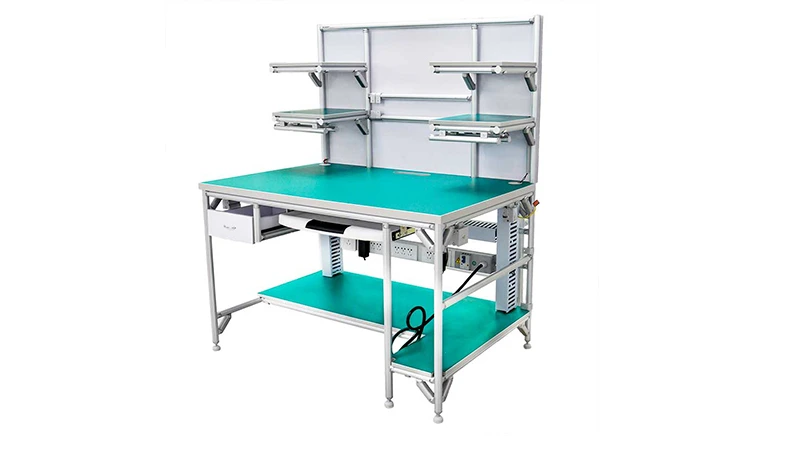
In the bustling world of manufacturing, assembly lines, and workshops, the workbench is more than just a piece of furniture—it's the silent backbone of productivity. Every nut tightened, every component inspected, every prototype assembled relies on a surface that can keep up with the demands of the job. Among the many workbenches available today, Aluminum Workbench A stands out for its lightweight durability, modular design, and adaptability. But what truly sets it apart is the versatility of its surface finishes, each tailored to meet specific industry needs. Whether you're running a high-precision electronics lab, a greasy automotive shop, or a sterile food processing plant, the right surface finish on your Aluminum Workbench A can make all the difference in efficiency, safety, and longevity.
At its core, Aluminum Workbench A is built from high-quality aluminum extrusion profile—a material prized for its strength-to-weight ratio, corrosion resistance, and malleability. But raw aluminum alone isn't enough. The surface finish is the final layer that transforms this sturdy base into a tool that works for you, not against you. It's the difference between a workbench that chips and stains after a month and one that stays functional and professional-looking for years. It's the barrier that protects sensitive electronics from static discharge, or keeps bacteria from lingering in a medical lab. In short, surface finish isn't an afterthought—it's a critical design choice that directly impacts how well your workbench serves your team.
Why Surface Finish Matters: Beyond Just Looks
Before diving into the specific finishes available for Aluminum Workbench A, let's take a moment to understand why surface finish is so important. Think of it as the workbench's "outer armor" and "functional interface." It has to do more than just look good—it has to perform under pressure. Here are the key reasons finish matters:
Durability First: In any busy workspace, workbenches take a beating. Tools get dropped, parts are slid across the surface, chemicals might spill, and heavy objects are set down with a thud. A robust surface finish acts as a shield, preventing scratches, dents, and corrosion that could compromise the aluminum extrusion profile underneath. Over time, a poor finish will wear away, exposing the raw aluminum to damage and reducing the workbench's lifespan.
Hygiene and Cleanliness: In industries like food processing, pharmaceuticals, or healthcare, even the smallest crevice or rough patch on a workbench surface can harbor bacteria, dust, or contaminants. A smooth, non-porous finish makes cleaning a breeze—wiping down with disinfectant or soap and water becomes effective, not a frustrating game of "missed spots." This isn't just about compliance with health regulations; it's about keeping products safe and workers healthy.
Functional Grip and Traction: Ever tried to assemble a small part on a surface so slippery that it slides around? Or struggled to keep a tool from slipping off a glossy bench? The right finish can provide just the right amount of traction—enough to keep parts stable during assembly, but not so much that it damages delicate components. This balance is key in precision work, where a single slip can ruin hours of effort.
Static Control (ESD Protection): In electronics manufacturing, static electricity is a silent killer. A tiny static discharge can fry sensitive microchips, circuit boards, or semiconductors, costing companies thousands of dollars in wasted products. An ESD-safe surface finish on Aluminum Workbench A dissipates static charges, protecting these valuable components and ensuring consistent product quality.
Aesthetics and Branding: Let's not overlook the psychological impact. A clean, well-finished workbench sends a message to your team and visitors: "We care about quality." It creates a more professional, organized workspace that can boost morale and even impress clients. In retail or showroom settings, where workbenches might be on display, a polished or color-coordinated finish can align with your brand's visual identity.
Exploring Aluminum Workbench A's Surface Finish Options
Now that we understand why surface finish matters, let's explore the most common options for Aluminum Workbench A. Each finish has its own unique process, benefits, and ideal applications. By the end, you'll have a clear picture of which one aligns with your workspace's needs.
1. Anodized Finish: The Industrial Workhorse
If there's a "default" finish for Aluminum Workbench A, it's likely anodized. Anodizing is an electrochemical process that grows a thick, protective oxide layer on the surface of the aluminum extrusion profile. Unlike painting or plating, which adds a layer on top of the aluminum, anodizing transforms the outer layer of the metal itself. This makes it incredibly durable—think of it as armor that's fused to the aluminum, not just glued on.
How It's Made: The process starts with cleaning the aluminum extrusion profile to remove any oils, dirt, or impurities. Then, the aluminum is submerged in an electrolytic solution (usually sulfuric acid) and acts as the anode in an electrical circuit. When an electric current is applied, oxygen ions from the solution bond with the aluminum, forming a hard, porous oxide layer (aluminum oxide, Al₂O₃). The thickness of this layer can be controlled—typically between 5 and 25 microns for industrial applications. After anodizing, the surface is often sealed (with hot water or a chemical sealant) to close the pores, enhancing corrosion resistance and creating a smooth finish.
Key Benefits:
- Unbeatable Corrosion Resistance: The anodized layer acts as a barrier, preventing moisture, chemicals, and salt from reaching the underlying aluminum. This makes it ideal for humid environments, outdoor use (under a covered area), or settings where spills of mild acids or alkalis are common.
- Scratch and Wear Resistance: Anodized aluminum is significantly harder than raw aluminum—hard enough to resist everyday scratches from tools, parts, or even metal-to-metal contact. It won't chip or peel like paint, even with heavy use.
- Color Variety: While clear anodizing (which leaves a natural, silvery finish) is popular, the porous oxide layer can also absorb dyes. This means you can get anodized Aluminum Workbench A in colors like black, gold, blue, or red—great for color-coding workstations (e.g., "red for assembly, blue for testing") or matching brand colors.
- Easy to Clean: The sealed anodized surface is non-porous, so dirt, oil, and grime wipe off easily with a damp cloth and mild detergent. No need for harsh chemicals that might damage the finish.
Ideal Applications:
Anodized finish is a workhorse, so it's at home in a wide range of settings:
Industrial Manufacturing:
Factories producing machinery, automotive parts, or heavy equipment—where the workbench sees daily abuse from tools and metal components.
Laboratories:
Research labs, testing facilities, or quality control departments—where corrosion resistance and easy cleaning are priorities.
Outdoor or Humid Environments:
Greenhouses, marine workshops, or coastal facilities—where moisture is a constant threat.
Electronics Assembly (Non-ESD):
For general electronics work (not ultra-sensitive components), anodized finish provides a durable, clean surface that resists static buildup better than raw aluminum.
Considerations: While anodized finish is tough, it's not indestructible. Extremely harsh chemicals (like strong acids or alkalis) can etch the surface over time. Also, colored anodizing may fade slightly if exposed to direct sunlight for years, though modern dyes are more UV-stable than older versions. Finally, while it resists static better than raw aluminum, it's not inherently ESD-safe—for that, you'll need a specialized ESD finish (more on that later).
2. Powder-Coated Finish: Colorful, Customizable, and Tough
If you're looking for color, texture, or a finish that stands out, powder coating is the way to go. Unlike liquid paint, which is applied as a wet solution, powder coating uses fine particles of pigment and resin that are electrostatically charged and sprayed onto the aluminum extrusion profile. The coated aluminum is then baked in an oven (typically at 180–200°C), melting the powder into a smooth, hard film that adheres tightly to the surface.
How It's Made: The process starts with preparing the aluminum extrusion profile—cleaning it to remove oils, rust, or oxides (often via sandblasting or chemical etching). Then, the powder (a mix of polyester, epoxy, or hybrid resins plus pigments) is loaded into a spray gun. The gun applies a negative charge to the powder particles, while the aluminum workbench is grounded (positive charge), creating an electrostatic attraction that pulls the powder onto the surface. Once evenly coated, the workbench is baked in an oven, where the powder melts, flows, and cures into a continuous film. The result is a thick (usually 50–150 microns), durable finish with endless color and texture options.
Key Benefits:
- Vibrant, Custom Colors: Powder coating offers access to thousands of colors (via RAL or Pantone color codes), from bold primaries to subtle pastels. You can even match corporate colors or create custom shades for branding.
- Texture Options: Beyond color, powder coating comes in textures: glossy, matte, satin, hammered, or even "wrinkle" finishes. A textured finish can hide fingerprints, minor scratches, or imperfections in the aluminum extrusion profile, making maintenance easier.
- Impact and Chip Resistance: The thick, flexible powder coat film resists chipping, cracking, and peeling—even when hit with tools or heavy objects. This makes it great for high-traffic areas where the workbench is used by multiple people daily.
- UV and Weather Resistance: Quality powder coats (especially polyester-based ones) are highly resistant to fading from sunlight, making them suitable for indoor or covered outdoor use (e.g., loading docks, garages with open doors).
- Eco-Friendly: Unlike liquid paint, powder coating produces little to no volatile organic compounds (VOCs), and overspray can be recycled. It's a greener choice for companies prioritizing sustainability.
Ideal Applications:
Powder coating shines in settings where aesthetics and customization matter, alongside durability:
Workshops and Garages:
Automotive repair shops, woodworking studios, or DIY spaces—where a pop of color can brighten the workspace and hide everyday wear.
Retail and Showrooms:
In stores or showrooms where workbenches are part of the display (e.g., electronics stores with demo stations, craft shops with assembly tables), a color-coordinated powder coat can enhance the visual appeal.
Educational Facilities:
Schools, trade schools, or maker spaces—where durability is key (kids and students can be tough on equipment!) and color-coding workstations helps with organization.
Food Service Prep Areas (Non-Industrial):
For back-of-house prep tables in cafes or bakeries (not high-heat industrial kitchens), a food-safe powder coat (look for FDA-compliant resins) provides a colorful, easy-to-clean surface.
Considerations: Powder coating is thick, so it can smooth out fine details in the aluminum extrusion profile (though this is rarely an issue for workbenches). It's also not as heat-resistant as anodizing—prolonged exposure to temperatures above 200°C (392°F) can cause discoloration or softening. Finally, while it resists scratches, deep gouges can chip the finish, and touching up powder coating is harder than touching up paint (it often requires recoating the entire surface).
3. Brushed Finish: The Industrial-Chic Workhorse
For a finish that says "no-nonsense durability" with a touch of understated style, brushed finish is hard to beat. Also known as "satin" finish, it features fine, parallel lines (grain) created by mechanically abrading the aluminum extrusion profile's surface with a belt or pad. The result is a matte, textured look that hides fingerprints, minor scratches, and wear—perfect for busy workspaces where appearance matters, but functionality comes first.
How It's Made: Brushing starts with a clean aluminum surface. A abrasive belt or pad (usually made of nylon, sandpaper, or steel wool) is run over the surface in a single direction, creating uniform, parallel scratches. The grit of the abrasive determines the "coarseness" of the grain—finer grits (like 320 or 400) create a smoother, more subtle grain, while coarser grits (like 120 or 180) leave deeper, more visible lines. After brushing, the surface is often sealed with a clear lacquer or anodized to protect the grain and prevent corrosion. This sealing step is crucial—unsealed brushed aluminum will oxidize over time, developing a dull, grayish patina.
Key Benefits:
- Conceals Wear and Tear: The biggest advantage of brushed finish is its ability to hide fingerprints, smudges, and minor scratches. In a busy workshop, where the workbench is used from dawn till dusk, this means the surface stays looking clean and professional longer—no constant wiping to remove marks.
- Industrial Aesthetic: Brushed aluminum has a timeless, utilitarian look that fits perfectly in modern, industrial, or minimalist workspaces. It's understated but not boring, adding a touch of sophistication without being flashy.
- Low Maintenance: Unlike polished finish (which shows every smudge), brushed finish requires minimal upkeep. A quick wipe with a dry cloth removes dust, and occasional cleaning with mild soap and water keeps it looking fresh.
- Versatile: Brushed finish pairs well with other materials—wood, steel, or plastic—making it easy to integrate into existing workspace designs. It also works with aluminum profile accessories like clamps or tool holders, which need a secure grip; the subtle texture of brushed finish can prevent slipping.
Ideal Applications:
Brushed finish is a favorite in settings where durability and a clean, industrial look are priorities:
Manufacturing Assembly Lines:
High-volume production lines (e.g., appliance manufacturing, toy assembly) where workbenches are used continuously and need to look presentable without constant polishing.
Design Studios and Creative Workspaces:
Architecture firms, graphic design offices, or product design labs—where the industrial-chic aesthetic aligns with creative vibes, and the finish hides the inevitable coffee spills or marker smudges.
Commercial Kitchens (Back of House):
For prep tables in restaurants or catering kitchens, brushed finish resists scratches from knives and utensils, hides food residue, and is easy to sanitize.
Medical and Dental Clinics:
In exam rooms or labs, brushed finish provides a sterile, professional look that's easy to clean and resists the harsh disinfectants used in healthcare settings.
Considerations: The grain direction matters—scratches parallel to the grain are less visible than those across it. If you choose brushed finish, try to align the grain with the direction you'll be sliding parts or tools (e.g., along the length of the workbench). Also, while it hides minor scratches, deep gouges will still show, and repairing brushed finish requires reabrading the area (which can be tricky to match perfectly).
4. Polished Finish: The Mirror-Like Performer for Cleanrooms
For applications where "clean" isn't just a goal but a requirement, polished finish delivers. As the name suggests, this finish involves buffing the aluminum extrusion profile to a high shine, creating a mirror-like surface that reflects light. It's the most visually striking finish, but it also demands the most maintenance—making it ideal for specialized settings where perfection is non-negotiable.
How It's Made: Polishing aluminum is a multi-step process. First, the aluminum extrusion profile is sanded with progressively finer grits (from coarse to ultra-fine) to remove any imperfections, scratches, or tool marks. Then, a buffing wheel (often with a polishing compound like rouge or tripoli) is used to create a high gloss. For a "mirror polish," the final step may involve chemical polishing (using acids to dissolve a thin layer of aluminum, smoothing the surface) or electrolytic polishing (an electrochemical process that enhances shine and removes microscopic burrs). The result is a surface so smooth it reflects images clearly.
Key Benefits:
- Ultimate Cleanliness: The ultra-smooth surface of polished finish leaves nowhere for bacteria, dust, or contaminants to hide. This is critical in cleanrooms, pharmaceutical manufacturing, or semiconductor labs, where even a single particle can ruin a batch or damage a component.
- Reflective Aesthetics: Polished aluminum has a luxurious, high-end look that elevates any workspace. It's perfect for showrooms, executive labs, or settings where presentation matters as much as function.
- Easy to Sanitize: Like anodized finish, polished aluminum is non-porous, but its mirror-like smoothness makes it even easier to wipe down with disinfectants or sterilizing agents. No crevices for germs to linger.
- Corrosion Resistance: While not as corrosion-resistant as anodized finish (the polish itself doesn't add a protective layer), polished aluminum can be sealed with a clear coat (like lacquer or wax) to enhance resistance to moisture and chemicals.
Ideal Applications:
Polished finish is reserved for specialized, high-precision settings where cleanliness and appearance are paramount:
Cleanrooms and Semiconductor Manufacturing:
In Class 100 or Class 10 cleanrooms, where even a speck of dust can destroy a microchip, polished workbenches are essential for maintaining sterility.
Pharmaceutical and Medical Device Production:
Facilities manufacturing pills, vaccines, or surgical tools—where compliance with FDA or ISO standards requires ultra-clean surfaces.
High-End Showrooms and Luxury Retail:
Jewelry stores, watch boutiques, or luxury car dealerships—where workbenches are part of the customer experience and need to exude elegance.
Aerospace and Defense Labs:
For assembling or testing precision components (e.g., satellite parts, missile guidance systems), polished finish ensures no contaminants interfere with sensitive equipment.
Considerations: Polished finish is high-maintenance. Fingerprints, smudges, and water spots show instantly, requiring frequent cleaning with a soft, lint-free cloth and metal polish. It's also prone to scratches—even a light brush with a rough cloth can leave marks. Finally, it's more expensive than anodized or brushed finish due to the labor-intensive polishing process.
5. ESD-Safe Finish: Protecting Sensitive Electronics
Last but certainly not least, we have ESD-safe finish—a specialized option designed to protect sensitive electronic components from electrostatic discharge (ESD). In electronics manufacturing, static electricity is a constant threat: a worker walking across a carpet can generate up to 35,000 volts of static, which, when discharged, can damage microchips, integrated circuits (ICs), or printed circuit boards (PCBs). An ESD-safe surface finish on Aluminum Workbench A prevents this by dissipating static charges safely to ground, rather than letting them build up and discharge suddenly.
How It's Made: ESD-safe finish isn't a single process—it's a property added to other finishes like anodizing or powder coating. For anodized ESD finish, conductive additives (like carbon or metal particles) are mixed into the anodizing solution or dye, creating a surface that conducts electricity (but not enough to be dangerous). For powder-coated ESD finish, conductive pigments (like nickel or graphite) are blended into the powder, allowing static charges to flow through the finish and into the aluminum extrusion profile (which is grounded via the workbench's frame). The result is a surface with a surface resistance between 10⁶ and 10¹¹ ohms—low enough to dissipate static, but high enough to prevent electric shock.
Key Benefits:
- Static Charge Dissipation: The primary benefit is obvious: ESD-safe finish prevents static buildup, protecting sensitive electronics from damage. This reduces product waste, improves yield, and saves money on replacement components.
- Compliance with Industry Standards: Most electronics manufacturers must comply with standards like ANSI/ESD S20.20 or IPC-A-610, which require ESD-protected work areas. An ESD-safe Aluminum Workbench A helps meet these requirements.
- Durable and Functional: ESD-safe finishes are typically built on top of anodized or powder-coated finishes, so they retain the durability, easy cleaning, and scratch resistance of those base finishes. You don't have to sacrifice function for static protection.
- Consistent Performance: High-quality ESD-safe finishes maintain their conductive properties over time, even with regular cleaning and wear. They don't "wear off" like temporary anti-static sprays.
Ideal Applications:
ESD-safe finish is non-negotiable in any workspace handling sensitive electronics:
Electronics Manufacturing:
PCB assembly lines, smartphone production, or laptop manufacturing—where every component is vulnerable to static damage.
Semiconductor and Microchip Fabrication:
Facilities producing CPUs, memory chips, or sensors—where a single static discharge can ruin a batch of multi-million-dollar components.
Medical Electronics Repair:
For repairing devices like pacemakers, MRI machines, or ultrasound probes—where static can damage delicate internal electronics.
Research and Development Labs:
In universities or corporate R&D labs working on next-gen electronics (e.g., quantum computing, flexible displays), ESD-safe workbenches protect prototypes and experiments.
Considerations: ESD-safe finish is specialized, so it's more expensive than standard finishes. It also requires proper grounding of the workbench (via a ground wire connected to the building's earth ground) to function—without grounding, the finish can't dissipate charges. Finally, not all "anti-static" finishes are created equal—look for finishes tested to ANSI/ESD S20.20 standards to ensure reliability.

Comparing Aluminum Workbench A's Surface Finishes: A Quick Reference Table
| Finish Type | Process Overview | Key Benefits | Best For | Maintenance Needs | Cost (Relative) |
|---|---|---|---|---|---|
| Anodized | Electrochemical oxidation to grow a protective oxide layer; sealed for durability. | Corrosion-resistant, scratch-resistant, color options, easy to clean. | Industrial manufacturing, labs, humid environments. | Low: Wipe with damp cloth; avoid harsh chemicals. | Moderate |
| Powder-Coated | Electrostatic application of dry powder; baked to form a hard film. | Colorful, customizable textures, impact-resistant, eco-friendly. | Workshops, retail, educational facilities, food service (non-industrial). | Low to Moderate: Wipe clean; touch-ups difficult. | Moderate |
| Brushed | Mechanical abrasion with belts/pads to create parallel grain lines. | Hides scratches/fingerprints, industrial aesthetic, low maintenance. | Assembly lines, design studios, commercial kitchens, medical clinics. | Low: Dry wipe or mild soap; avoid cross-grain scratching. | Moderate |
| Polished | Mechanical buffing (and optional chemical/electrolytic polishing) for mirror-like shine. | Ultra-clean, high-end appearance, easy to sanitize. | Cleanrooms, pharmaceuticals, luxury showrooms. | High: Frequent polishing; prone to fingerprints/scratches. | High |
| ESD-Safe | Anodized or powder-coated finish with conductive additives; grounded to dissipate static. | Protects sensitive electronics, compliant with ESD standards. | Electronics manufacturing, semiconductor labs, medical device production. | Moderate: Regular cleaning; ensure proper grounding. | High |

Choosing the Right Finish: A Step-by-Step Guide
With so many options, how do you pick the right surface finish for your Aluminum Workbench A? Here's a simple step-by-step process to narrow it down:
Step 1: Identify Your Industry and Workbench Use
Start by asking: What will the workbench be used for? What kind of materials or components will be placed on it? For example:
– If you're assembling circuit boards: ESD-safe finish is a must.
– If you're working in a food processing plant: Polished or anodized finish for easy sanitizing.
– If you're in a busy workshop with lots of tool use: Brushed or anodized for durability.
Step 2: Consider Your Environment
Think about the conditions the workbench will face:
–
Moisture/Humidity:
High humidity? Go with anodized (best corrosion resistance).
–
Chemicals:
Will you use harsh cleaners or solvents? Anodized or powder-coated (avoid polished, which can etch).
–
Sunlight:
Outdoor or sunny location? Anodized or UV-stable powder coat (colored anodizing may fade).
–
Static Risks:
Electronics work? ESD-safe finish is non-negotiable.
Step 3: Evaluate Aesthetics and Branding
Does the workbench need to match your brand colors? Powder coating offers the most color options. Want an industrial look? Brushed finish. High-end showroom? Polished or colored anodized.
Step 4: Set a Budget
Polished and ESD-safe finishes are the most expensive; anodized, powder-coated, and brushed are mid-range. Balance cost with your must-have features—don't skimp on ESD protection if you need it, even if it costs more upfront.
Step 5: Test if Possible
If you're unsure, ask your supplier for samples of Aluminum Workbench A with different finishes. Rub them with a tool, spill some water or oil, and see how they hold up. This hands-on test can clarify which finish feels right for your workspace.
Conclusion: The Right Finish Makes All the Difference
Aluminum Workbench A is a versatile, durable tool—but its true potential is unlocked by choosing the right surface finish. Whether you need the corrosion resistance of anodized, the color of powder-coated, the industrial charm of brushed, the sterility of polished, or the static protection of ESD-safe, there's a finish tailored to your needs. Remember, surface finish isn't just about looks—it's about protecting your equipment, ensuring safety, complying with regulations, and creating a workspace that works for your team.
So, take the time to assess your industry, environment, and budget. Talk to your supplier about Aluminum Workbench A's finish options, and don't be afraid to ask for samples. With the right finish, your workbench won't just be a surface to work on—it'll be a partner in productivity, durability, and success.
After all, in the world of manufacturing and production, the details matter. And when it comes to Aluminum Workbench A, the surface finish is one detail that can't be overlooked.