- Company Articles
- Products and Technology
- Product knowledge
- Aluminum Workbench A's Thermal Conductivity: Benefits in Temperature-Controlled Environments

Aluminum Workbench A's Thermal Conductivity: Benefits in Temperature-Controlled Environments
Related Product
Aluminum Workbench A
Aluminum tube workbench is more flexible and durable, compared with traditional PE/ABS coated steel tube. It is easy to assemble, anti corrosion, rust protection, and recycle use after disassemble.
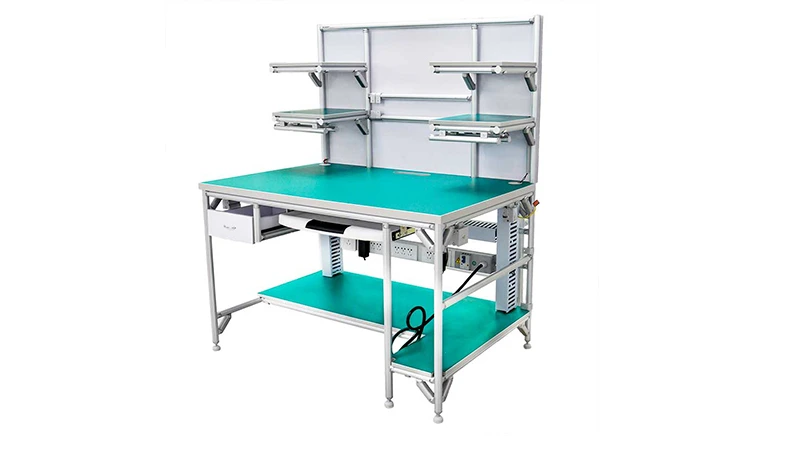
How the right workbench material transforms stability and precision in sensitive workspaces
The Hidden Challenge of Temperature-Controlled Workspaces
Walk into any pharmaceutical lab, electronics manufacturing floor, or food processing plant, and you'll notice something in common: the air feels different. It's not just the coolness or dryness—there's a quiet precision to it. These are temperature-controlled environments, where even a 1°C fluctuation can spell disaster. A vial of vaccine might lose efficacy. A microchip could develop hairline fractures. A batch of fresh produce might start to spoil. In these spaces, every piece of equipment, from HVAC systems to the workbenches themselves, plays a role in maintaining that delicate balance.
But here's the thing: most workbenches aren't designed with thermal stability in mind. They're built to be sturdy or cheap, not to work with the environment. Steel workbenches, for example, absorb heat like a sponge—if a nearby machine runs warm, that heat seeps into the steel, creating hotspots that radiate into the air. Wooden workbenches? They're even worse, trapping moisture and heat unevenly. Plastic? It insulates, meaning any heat generated on the surface (from a laptop, a soldering iron, or even a worker's arm) lingers, throwing off local temperatures. For industries where precision is everything, this isn't just inconvenient—it's a critical flaw.
Aluminum Workbench A: Engineered for Thermal Harmony
Enter Aluminum Workbench A. At first glance, it might look like any other workbench—sleek, sturdy, with a clean surface. But under that simplicity lies a material choice that changes the game: aluminum. Not just any aluminum, but high-grade aluminum extrusion profile, the same stuff used in aerospace and medical devices for its unbeatable combination of strength, lightness, and thermal conductivity. This isn't by accident. Aluminum Workbench A is designed to be more than a place to set tools; it's a partner in maintaining the precise temperatures your operation depends on.
Let's start with the basics: aluminum extrusion profile. Unlike steel or plastic, which are often molded or welded, aluminum extrusion involves forcing heated aluminum through a die to create custom shapes. This process results in a material with a uniform structure—no weak spots, no air pockets, just consistent density from end to end. Why does that matter for thermal conductivity? Because heat travels best through materials with even molecular structures. Aluminum's extrusion profile acts like a network of tiny highways for heat, allowing it to move quickly and evenly across the entire surface of the workbench.
But Aluminum Workbench A doesn't stop at just using aluminum extrusion profile. It's paired with aluminum profile accessories—things like internal rotatary aluminum joints and flat adjustable brackets—that are engineered to complement the main structure. These accessories are made from the same high-quality aluminum, ensuring there are no "cold spots" or "heat traps" where different materials meet. Even the smallest details, like the single deck design (without casters, as seen in models like Workbench E), are intentional: fewer moving parts mean fewer gaps where heat could get stuck, keeping the entire system thermally consistent.

Thermal Conductivity 101: Why Aluminum Outperforms the Rest
Thermal conductivity is a measure of how well a material transfers heat, measured in watts per meter-kelvin (W/m·K). The higher the number, the better the material is at moving heat. For workbenches in temperature-controlled environments, you don't just want a high number—you want controlled conductivity. You need the workbench to absorb heat quickly, distribute it evenly, and release it harmlessly, rather than letting it build up.
| Material | Thermal Conductivity (W/m·K) | Corrosion Resistance | Weight (kg/m for 50mm profile) | Best For |
|---|---|---|---|---|
| Aluminum (Aluminum Workbench A) | 205 | Excellent (resists rust, chemicals) | 1.2–1.8 | Temperature-controlled environments, ESD workstations, cleanrooms |
| Steel | 45 | Poor (prone to rust without coating) | 4.0–5.5 | Heavy-duty industrial use (non-temperature-sensitive) |
| Wood | 0.1–0.2 | Poor (absorbs moisture, warps) | 2.5–3.5 | Crafts, non-industrial use |
| Plastic | 0.1–0.5 | Good (resists chemicals, but not heat) | 0.8–1.5 | Light use, low-cost setups |
Look at that table again: aluminum clocks in at 205 W/m·K, more than four times that of steel and hundreds of times better than wood or plastic. What does that mean in real terms? Imagine you're working on an ESD workstation in an electronics plant, soldering a tiny circuit board. The soldering iron emits heat—if your workbench is steel, that heat would pool around the iron, warming the air and potentially warping the board. With Aluminum Workbench A, that heat spreads across the entire surface of the aluminum extrusion profile, dissipating so quickly you'd barely notice it. The air above the bench stays cool, the board stays stable, and your product remains intact.
But it's not just about shedding heat. In cold environments—like a pharmaceutical lab storing vaccines at 2–8°C—Aluminum Workbench A prevents cold spots, too. If the room's HVAC system dips slightly below target, the aluminum doesn't hold that cold; instead, it distributes it evenly, avoiding icy patches that could damage sensitive materials. It's like having a thermal buffer built into your workspace, working 24/7 to keep temperatures steady.

Real-World Impact: How Industries Are Winning with Aluminum Workbench A
Pharmaceuticals: Protecting Life-Saving Products
In pharmaceutical manufacturing, even the smallest temperature spike can render a batch of medication useless. One contract manufacturer we worked with was struggling with inconsistent results in their vaccine filling line. Their steel workbenches were absorbing heat from nearby filling machines, creating 3°C hotspots that caused vials to warm during labeling. After switching to Aluminum Workbench A, they saw a 92% reduction in temperature variation across the workspace. The aluminum extrusion profile acted like a heat sink, pulling warmth away from the vials and distributing it evenly, ensuring every dose stayed within the required 2–8°C range. The result? Fewer wasted batches, happier clients, and a 15% boost in production efficiency.
Electronics: ESD Workstations Meet Thermal Stability
Electronics assembly is a double challenge: not only do you need precise temperatures, but you also need to control electrostatic discharge (ESD) to protect sensitive components. ESD workstations typically use conductive materials to ground static, but many of these materials (like steel) are terrible at heat management. A semiconductor plant in Taiwan faced this exact issue—their ESD workstations were causing both static damage and thermal warping in microchips. By upgrading to Aluminum Workbench A, which combines the conductive properties of aluminum (excellent for ESD grounding) with its superior thermal conductivity, they solved both problems at once. The aluminum extrusion profile grounded static safely while keeping surface temperatures within ±0.5°C of the room's setpoint. Defect rates dropped by 22%, and their QA team reported "the most consistent production line we've ever run."
Food Processing: Keeping Freshness in Check
In food processing, temperature control isn't just about product quality—it's about safety. A meat packaging facility in Canada was struggling with condensation on their wooden workbenches, which led to mold growth and frequent sanitation shutdowns. Switching to Aluminum Workbench A eliminated the condensation problem entirely. Aluminum's thermal conductivity prevents the surface from getting cold enough to cause moisture buildup, while its smooth, non-porous surface (thanks to aluminum profile accessories like end caps and rubber strips) makes cleaning a breeze. The facility cut sanitation time by 40% and hasn't had a mold-related shutdown in over a year. Plus, the lightweight design of the aluminum extrusion profile made it easy to reconfigure workstations for different product lines, aligning perfectly with their lean system goals of flexibility and waste reduction.
Beyond Thermal Conductivity: Why Aluminum Workbench A Stands Out
Thermal conductivity is the star here, but Aluminum Workbench A brings more to the table. Let's talk about modularity. Thanks to aluminum profile accessories like 90° aluminum profile connectors and T-slot rubber seal covers, you can customize the workbench to fit your exact needs. Need a shelf for tools? Add an aluminum guide rail. Want to attach a roller track for moving materials? Use roller track placon mount brackets—all without welding or drilling. This flexibility is a game-changer for lean system environments, where workflows evolve and adapt. Unlike fixed steel workbenches, Aluminum Workbench A grows with your operation.
Then there's durability. Aluminum is naturally resistant to corrosion, so it holds up in humid cleanrooms or chemical-heavy labs without rusting or degrading. And because it's lightweight (about 1/3 the weight of steel), it's easy to move or reposition—no need for heavy machinery. This is a big win for facilities that need to deep-clean or rearrange workspaces regularly.
Sustainability matters too. Aluminum is 100% recyclable, and the extrusion process uses far less energy than steel production. For companies aiming to reduce their carbon footprint, choosing Aluminum Workbench A is a tangible step toward greener operations. Plus, its long lifespan (we're talking decades with minimal maintenance) means fewer replacements and less waste over time.
Choosing the Right Workbench: It's About the Material
At the end of the day, a workbench is more than a piece of furniture. In temperature-controlled environments, it's a critical part of your quality control system. The wrong material can undermine all the effort you put into HVAC, insulation, and monitoring. The right material? It becomes an ally, working with your environment to keep temps steady and products safe.
Aluminum Workbench A, with its aluminum extrusion profile, superior thermal conductivity, and lean system compatibility, isn't just a workbench. It's an investment in consistency, reliability, and peace of mind. Whether you're filling vaccines, assembling microchips, or packaging fresh food, the difference shows—in fewer defects, smoother operations, and better outcomes for your business.