- Company Articles
- Products and Technology
- Solution
- Aluminum Workbench A: Sustainable and Reusable—Eco-Friendly Manufacturing Solutions

Aluminum Workbench A: Sustainable and Reusable—Eco-Friendly Manufacturing Solutions
Related Product
Aluminum Workbench A
Aluminum tube workbench is more flexible and durable, compared with traditional PE/ABS coated steel tube. It is easy to assemble, anti corrosion, rust protection, and recycle use after disassemble.
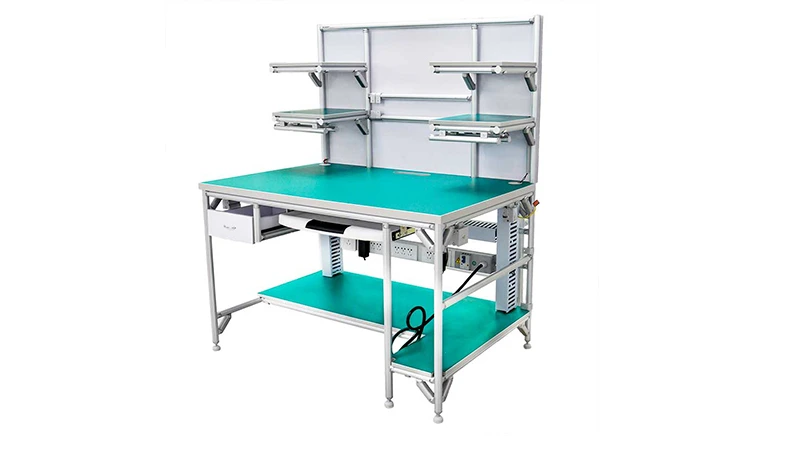
In today's manufacturing landscape, the pressure to balance productivity with environmental responsibility has never been greater. Consumers, regulators, and even employees are increasingly demanding that businesses prioritize sustainability—not as a buzzword, but as a core operational principle. From reducing carbon footprints to minimizing waste, the shift toward eco-friendly practices is reshaping how factories, warehouses, and production lines are designed. At the heart of this transformation lies a simple yet powerful tool: the workbench. Often overlooked, workbenches are the backbone of manufacturing, supporting everything from assembly to quality control. But not all workbenches are created equal. Enter Aluminum Workbench A—a game-changer that marries durability, flexibility, and sustainability in a way that traditional workbenches simply cannot match.
The Shift to Sustainable Manufacturing: Why It Matters
Before diving into the specifics of Aluminum Workbench A, it's worth understanding why sustainability has become such a critical focus for manufacturers. The numbers speak for themselves: the manufacturing sector accounts for approximately 20% of global carbon emissions, with a significant portion tied to resource extraction, production processes, and waste generation. Traditional manufacturing setups often rely on materials like solid wood, steel, or plastic composites—materials that come with high environmental costs. Wood harvesting contributes to deforestation, steel production is energy-intensive, and plastic workbenches, while cheap, are rarely recyclable and often end up in landfills after a short lifespan.
Beyond environmental impact, sustainability makes business sense. Companies that adopt eco-friendly practices report lower long-term costs, improved brand reputation, and better employee retention. A 2023 study by the Manufacturing Sustainability Council found that manufacturers using reusable, modular equipment reduced their operational costs by an average of 18% over five years, thanks to fewer replacements and less waste. For small and medium-sized enterprises (SMEs), in particular, sustainable tools like Aluminum Workbench A offer a path to competitiveness—allowing them to meet green certifications, bid on eco-conscious contracts, and appeal to a growing base of environmentally aware customers.
Introducing Aluminum Workbench A: More Than Just a Workbench
Aluminum Workbench A isn't just another piece of factory equipment; it's a statement of intent. Designed with the circular economy in mind, this workbench is built to last, adapt, and eventually be recycled—without losing its value along the way. Crafted from high-grade aluminum extrusion profile, it combines the best of strength and lightness, making it ideal for everything from electronics assembly to heavy-duty manufacturing tasks. What truly sets it apart, though, is its commitment to reusability. Unlike wooden workbenches that warp or steel ones that rust, Aluminum Workbench A is engineered to evolve with your needs, reducing the need for constant replacements and the waste that comes with them.
But don't just take our word for it. Let's break down what makes Aluminum Workbench A a sustainability standout. From its material composition to its modular design, every aspect is intentional. It starts with the aluminum itself—a metal renowned for its low environmental impact. Aluminum is 100% recyclable, and recycling it requires just 5% of the energy needed to produce new aluminum from raw ore. That means even at the end of its long lifespan, Aluminum Workbench A can be melted down and repurposed into new products, closing the loop on waste. Compare that to a traditional wooden workbench, which, once damaged, often ends up as landfill or low-grade fuel, releasing methane—a potent greenhouse gas—as it decomposes.

The Power of Aluminum Profile: Strength, Lightness, and Sustainability
At the core of Aluminum Workbench A is its use of aluminum extrusion profile—a manufacturing process that transforms raw aluminum into complex, custom shapes with minimal waste. Extrusion works by forcing heated aluminum through a die, creating profiles with precise cross-sections. This method is not only efficient but also inherently sustainable: it produces little to no scrap, and any excess material can be immediately recycled back into the production process. For Aluminum Workbench A, this means the frame, supports, and even accessories are made from extruded aluminum, ensuring consistency in quality and reducing the need for additional materials like adhesives or fasteners that can complicate recycling.
Aluminum extrusion profile also offers unmatched versatility. The t-slot design of many aluminum profiles—including those used in Aluminum Workbench A—allows for easy customization. Need to add a shelf? Simply slide a bracket into the t-slot and secure it with a bolt. Want to attach a tool holder or a lighting fixture? The same principle applies. This flexibility is key to sustainability because it extends the workbench's lifespan. As manufacturing needs change—whether due to new product lines, updated safety standards, or shifts in workflow—Aluminum Workbench A can adapt without requiring a complete overhaul. A traditional steel workbench, by contrast, is often welded together, making modifications difficult or impossible. When needs change, the entire bench is replaced, creating unnecessary waste.
But aluminum's benefits don't stop at recyclability and flexibility. It's also incredibly durable. Aluminum naturally forms a protective oxide layer, making it resistant to corrosion, rust, and wear—even in harsh manufacturing environments. This means Aluminum Workbench A can withstand spills, humidity, and heavy use without degrading, reducing the need for repairs or replacements. For manufacturers in industries like automotive or electronics, where precision and cleanliness are critical, this durability is a game-changer. A rust-free, stable work surface ensures that products aren't contaminated, and tools remain within easy reach, boosting both quality and efficiency.

Design for Reusability: Modular Components and Longevity
Sustainability isn't just about the materials used—it's about how those materials are put together. Aluminum Workbench A takes this to heart with its modular design, which prioritizes reusability at every step. Unlike monolithic workbenches that are built as single, fixed units, Aluminum Workbench A is assembled from individual components: legs, shelves, tabletop, and accessories, all connected via aluminum profile accessories like brackets, joints, and end caps. This modularity means that if one part is damaged—say, a shelf gets bent or a leg is scratched—you can replace just that component instead of the entire bench. It's a simple idea, but it has a profound impact on waste reduction.
Consider a scenario: a small electronics manufacturer using Aluminum Workbench A expands its production line and needs to add more workspace. Instead of buying a brand-new bench, they can purchase additional aluminum profile sections and reconfigure their existing workbench to double its length. The same goes for downsizing: if a department is restructured, components from one workbench can be repurposed to build smaller workstations elsewhere in the facility. This "build, adapt, repurpose" cycle is at the heart of the circular economy, and it's exactly what Aluminum Workbench A enables. Traditional workbenches, with their fixed designs, offer no such flexibility. A bench that's too big or too small for a new task becomes obsolete, contributing to the 12.8 million tons of furniture waste generated annually in the U.S. alone.
Even the accessories that come with Aluminum Workbench A are designed for reusability. From caster wheels to tool hooks, every add-on is made to be compatible with standard aluminum profiles, meaning they can be moved between workbenches or repurposed for other projects. For example, a set of caster wheels used to make a workbench mobile can later be attached to a material trolley, extending their lifespan even further. This compatibility reduces the need for specialized, single-use accessories, which often end up in landfills when their original workbench is retired.
Integrating with Lean Systems: Minimizing Waste, Maximizing Efficiency
Sustainability and lean manufacturing go hand in hand. Lean systems focus on eliminating waste—whether it's time, materials, or energy—while maximizing value. Aluminum Workbench A aligns perfectly with this philosophy, making it an ideal choice for manufacturers adopting lean principles. Let's take a closer look at how:
First, Aluminum Workbench A supports the "Sort" and "Set in Order" stages of 5S—a cornerstone of lean methodology. Its modular design allows for customized storage solutions, from built-in drawers to overhead racks, ensuring that tools, parts, and documentation are always within arm's reach. No more wasted time searching for a missing screwdriver or a misplaced blueprint. Everything has a designated place, reducing motion waste and improving productivity. The t-slot aluminum profile even makes it easy to label storage areas, reinforcing organizational habits among workers.
Second, Aluminum Workbench A minimizes inventory waste. Traditional workbenches often require businesses to stock replacement parts or even entire spare benches, just in case. With Aluminum Workbench A, the modular components are standardized, meaning a small inventory of universal aluminum profile accessories (like joints, brackets, and end caps) can cover most repair or modification needs. This reduces the need for excessive stockpiling, freeing up warehouse space and capital that can be invested elsewhere in the business.
Third, the workbench's durability and adaptability support the "Sustain" stage of 5S, which focuses on maintaining improvements over time. A workbench that stays clean, organized, and functional encourages workers to uphold lean practices. When tools are easy to access, and the workspace is free of clutter, employees are more likely to follow standardized procedures, reducing errors and rework. In this way, Aluminum Workbench A doesn't just support sustainability—it strengthens the entire lean system, creating a culture of continuous improvement.
Aluminum Workbench A vs. Traditional Workbenches: A Comparative Look
To truly appreciate the sustainability benefits of Aluminum Workbench A, it helps to see how it stacks up against traditional alternatives. The table below compares Aluminum Workbench A with wooden, steel, and plastic workbenches across key sustainability metrics:
| Metric | Aluminum Workbench A | Wooden Workbench | Steel Workbench | Plastic Workbench |
|---|---|---|---|---|
| Material | Aluminum extrusion profile (100% recyclable) | Solid wood (often from non-sustainable sources) | Carbon steel (high energy to produce; prone to rust) | Plastic composite (non-biodegradable; hard to recycle) |
| Carbon Footprint | Low (recycling uses 5% of energy for new production) | High (deforestation, transportation, and processing) | Very high (steel production emits CO2; heavy transportation) | High (fossil fuel-based production; non-recyclable waste) |
| Reusability | High (modular components; easy to repair/modify) | Low (fixed design; damaged parts often require full replacement) | Low (welded construction; difficult to modify) | Very low (prone to cracking; no modular components) |
| Lifespan | 15–20+ years | 3–5 years (prone to warping, rot, and pest damage) | 7–10 years (rust and corrosion reduce lifespan) | 2–3 years (plastic degrades under heat/UV light) |
| End-of-Life Impact | Recyclable (can be repurposed into new aluminum products) | Often landfilled or incinerated (releases methane/CO2) | Recyclable but energy-intensive (high emissions during recycling) | Landfilled (persists for centuries; microplastic pollution) |
The data is clear: Aluminum Workbench A outperforms traditional workbenches in nearly every sustainability category. Its long lifespan, recyclability, and modular design make it a far more eco-friendly choice, while its durability and flexibility ensure it delivers value for years to come. For manufacturers looking to reduce their environmental impact without sacrificing productivity, the choice is obvious.
Real-World Impact: How One Manufacturer Embraced Sustainability with Aluminum Workbench A
To put these benefits into context, let's consider a hypothetical but realistic case study. Imagine a mid-sized electronics manufacturer based in the Midwest, producing circuit boards for consumer devices. Five years ago, the company relied on a mix of wooden and steel workbenches. The wooden benches were cheap but warped easily in the humid production environment, leading to frequent replacements. The steel benches were sturdier but heavy, difficult to move, and began rusting after just a few years, contaminating sensitive circuit boards. Waste was a constant issue: old workbenches piled up in the back lot, and the company was spending thousands annually on replacements.
In 2020, the company decided to prioritize sustainability as part of its corporate social responsibility goals. After researching options, they replaced all 20 of their old workbenches with Aluminum Workbench A. The results were immediate. Within the first year, they noticed a 30% reduction in workspace clutter, thanks to the workbenches' customizable storage solutions. Employees reported fewer back injuries from moving heavy equipment, as Aluminum Workbench A—despite its strength—is significantly lighter than steel. By year three, the company had saved over $15,000 in replacement costs alone, as none of the aluminum workbenches required repairs or replacement. When the company expanded its production line in 2023, instead of buying new workbenches, they reconfigured existing ones using aluminum profile accessories, saving an additional $8,000.
But the impact went beyond cost savings. The company's sustainability report now highlights Aluminum Workbench A as a key initiative, helping them secure a major contract with a European client that required strict environmental certifications. Employees also took pride in working with eco-friendly tools, leading to a 12% improvement in retention rates. For this manufacturer, Aluminum Workbench A wasn't just a workbench—it was a catalyst for positive change, proving that sustainability and profitability can go hand in hand.
The Future of Eco-Friendly Manufacturing: Where Aluminum Workbench A Fits In
As the manufacturing industry continues to evolve, sustainability will only become more central to success. Innovations in materials science, circular economy models, and green technology are driving a new era of "clean manufacturing," where waste is minimized, resources are conserved, and products are designed with their entire lifecycle in mind. Aluminum Workbench A is perfectly positioned to be part of this future—not just as a product, but as a symbol of what's possible when sustainability is prioritized from the start.
Looking ahead, we can expect to see even more advancements in aluminum extrusion profile technology, making Aluminum Workbench A and similar products even more efficient and versatile. For example, new alloy blends could further reduce weight without compromising strength, while improved extrusion dies could create profiles with even more complex, functional designs—think integrated cable management or built-in ESD (electrostatic discharge) protection for sensitive electronics. These innovations will only enhance the workbench's sustainability, making it an even more attractive option for forward-thinking manufacturers.
Perhaps most exciting is the potential for Aluminum Workbench A to inspire broader change. As more manufacturers adopt modular, reusable tools, the demand for sustainable materials and practices will grow, driving innovation across the industry. Suppliers will develop new aluminum profile accessories, governments may offer incentives for circular economy adoption, and competitors will be forced to raise their sustainability game. In this way, Aluminum Workbench A is more than a workbench—it's a stepping stone toward a more sustainable manufacturing future.
Conclusion: Building a Greener Tomorrow, One Workbench at a Time
Aluminum Workbench A represents a shift in how we think about manufacturing tools. It's a reminder that sustainability isn't about sacrifice—it's about innovation. By choosing materials like aluminum extrusion profile, prioritizing modular design, and integrating with lean systems, Aluminum Workbench A proves that eco-friendly solutions can be durable, efficient, and cost-effective. It's a workbench that doesn't just support production—it supports a better future for our planet, our businesses, and the people who power them.
For manufacturers ready to embrace sustainability, the message is clear: the tools you choose matter. Whether you're a small startup or a global enterprise, investing in reusable, recyclable equipment like Aluminum Workbench A is an investment in long-term success. It's time to move beyond the "take-make-waste" model of the past and build a manufacturing ecosystem that's as resilient as it is productive. With Aluminum Workbench A, that future is already within reach.