- Company Articles
- Products and Technology
- Product knowledge
- Aluminum Workbench A: The Go-To for Rapid Prototyping in Mechanical Engineering

Aluminum Workbench A: The Go-To for Rapid Prototyping in Mechanical Engineering
Related Product
Aluminum Workbench A
Aluminum tube workbench is more flexible and durable, compared with traditional PE/ABS coated steel tube. It is easy to assemble, anti corrosion, rust protection, and recycle use after disassemble.
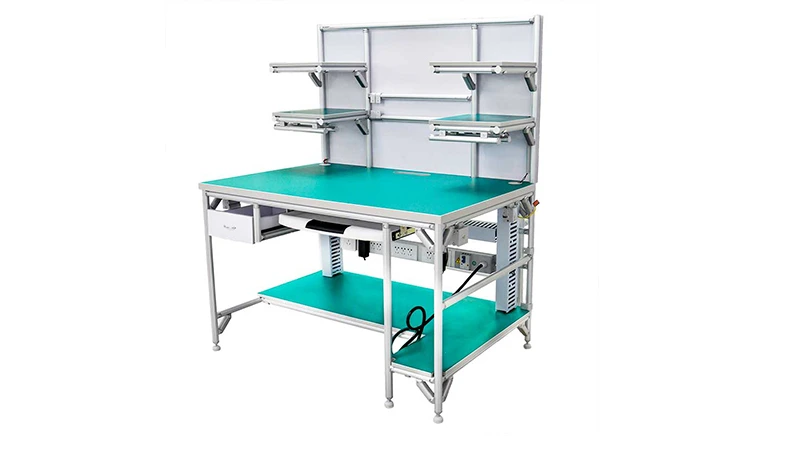
Rapid prototyping isn't just a buzzword in mechanical engineering—it's the lifeblood of innovation. Every day, engineers and designers race to turn ideas into tangible prototypes, test them, and iterate faster than the competition. But here's the thing: the tools they use can either fuel that momentum or slow it to a crawl. That's where Aluminum Workbench A comes in. More than just a table with a flat surface, it's a partner in the prototyping process, built to adapt, collaborate, and keep up with the chaos of bringing new machines, parts, and systems to life.
In this article, we're diving into why Aluminum Workbench A has become the unsung hero of engineering labs, workshops, and design studios. We'll explore how its aluminum extrusion profile construction makes it lightweight yet durable, how it integrates seamlessly with lean systems to cut waste and boost efficiency, and why its array of aluminum profile accessories turns "I need to reconfigure this" from a day-long project into a 15-minute task. Whether you're prototyping a small gear mechanism or a full-scale industrial component, this workbench isn't just keeping up—it's changing the game.
What Even Is Aluminum Workbench A, Anyway?
Let's start with the basics. Aluminum Workbench A isn't your grandpa's workbench. You know the type: heavy, wooden, bolted to the floor, with a surface that's seen better days and zero flexibility. This is different. At its core, it's a modular workstation built around aluminum extrusion profiles —those sleek, T-slot aluminum rails you've probably seen in modern factories or tech labs. These profiles aren't just strong; they're designed to be connected, modified, and expanded with ease.
The "A" in Aluminum Workbench A? That's the model designation, but it might as well stand for "Adaptable." Unlike fixed workbenches, this one starts as a blank canvas. Need a shelf for your calipers and micrometers? Snap on a bracket. Want to add a pegboard for hanging tools? Slide in a mounting rail. Have a prototype that's too big for the surface? Extend the workbench by adding another aluminum profile section. It's like building with advanced Legos—but for engineers.
And let's talk about the surface itself. It's smooth, flat, and resistant to scratches, dents, and the occasional spill of lubricant or coolant. No more worrying about ruining the bench when you clamp down a rough prototype or accidentally drop a wrench. This thing is built to take a beating and keep going—because in prototyping, "oops" happens. A lot.
Why Aluminum Extrusion Profile? Spoiler: It's Not Just About Being Lightweight
You might be thinking, "Aluminum? Isn't that softer than steel?" Sure, pure aluminum is, but the aluminum extrusion profiles used in Workbench A are alloyed and engineered for strength. They're lightweight enough that two people can move the bench (with casters, more on that later) but rigid enough to support heavy prototypes—we're talking hundreds of pounds without so much as a wobble.
But the real magic of aluminum extrusion profiles isn't just strength. It's the T-slots. Those grooves running along the length of the profiles? They're the secret to the bench's modularity. Almost any accessory—shelves, clamps, tool holders, even monitors or LED task lights—can slide into those slots and be secured with a simple bolt or knob. No drilling, no welding, no begging the maintenance guy for help. Just you, a hex key, and 10 minutes to transform your workspace.
Compare that to a steel workbench. Steel is strong, sure, but it's heavy. Try moving a steel bench across the shop to collaborate with a teammate on a prototype—good luck. Or a wooden bench? It absorbs moisture, warps over time, and if you want to add a shelf, you're looking at screws, brackets, and possibly a trip to the hardware store. Aluminum extrusion profiles? They solve all that. Lightweight, rust-resistant, and ready to adapt at a moment's notice.

When Lean Systems Meet a Workbench That Gets It
If you've spent any time in manufacturing or engineering, you've heard of lean systems . The philosophy of "less waste, more value" isn't just a buzzword—it's how successful teams deliver better products faster. But here's the problem: most workbenches actively fight lean principles. They're cluttered, hard to clean, and impossible to reconfigure when workflows change. Aluminum Workbench A? It's basically a lean system in workstation form.
Let's break down the 5S principles of lean—Sort, Set in Order, Shine, Standardize, Sustain—and see how this workbench checks every box:
- Sort (Seiri): Clutter is the enemy of prototyping. Aluminum Workbench A's accessories—like tool hooks, bin holders, and magnetic strips (all aluminum profile accessories )—let you sort tools and materials right at the bench. No more hunting for that missing wrench in a drawer; it's hanging where you can see it.
- Set in Order (Seiton): Everything has a place, and everything in its place. The T-slots let you position accessories exactly where you need them—so your calipers are by your dominant hand, your laptop stand is at eye level, and your prototype storage bins are within arm's reach. No more wasted motion.
- Shine (Seiso): Aluminum is easy to wipe down. Spilled oil? Grab a rag. Metal shavings? Sweep them off. Unlike wood, it doesn't absorb stains, and unlike painted steel, it won't chip and rust if you miss a spot. A clean bench isn't just nicer to work at—it's safer and more efficient.
- Standardize (Seiketsu): Ever walked into a shared workspace and thought, "Who rearranged everything?" With Aluminum Workbench A, teams can standardize setups. Save a "prototyping configuration" with specific shelf heights and tool positions, and anyone can replicate it in minutes. Consistency = less confusion, more focus.
- Sustain (Shitsuke): Lean isn't a one-time project; it's a habit. The workbench makes it easy to sustain order because reconfiguring or cleaning takes so little effort. When maintaining a lean workspace isn't a chore, people keep doing it.
The result? Less time wasted on hunting tools, cleaning up messes, or adjusting to a poorly laid-out workspace. More time spent designing, testing, and iterating—the stuff that actually moves the needle on prototyping.

The Secret Sauce: Aluminum Profile Accessories That Make It All Click
A workbench is only as good as its accessories, and Aluminum Workbench A doesn't skimp here. The aluminum profile accessories ecosystem is like a Swiss Army knife for engineers—there's a tool for every need, and they all work together seamlessly. Let's take a look at some of the most game-changing ones:
| Accessory | What It Does | Why It Matters for Prototyping |
|---|---|---|
| Adjustable Joints | Connect aluminum profiles at 30°, 45°, 90°, or custom angles without drilling. | Need to angle your prototype for better access? No problem. These joints let you tilt or rotate sections in seconds. |
| Quick-Release Clamps | Secure prototypes, tools, or materials to the bench with a simple lever squeeze. | Clamping and unclamping prototypes used to take minutes with bolts. Now it's a one-handed job—critical for rapid testing. |
| Modular Shelving Brackets | Add shelves, drawers, or bins at any height along the aluminum profiles. | Store extra prototype parts, blueprints, or testing equipment right at the bench—no more trips to the storage room. |
| ESD-Protective Mats | Anti-static mats that snap into the T-slots, protecting sensitive electronic prototypes. | Ever fried a circuit board with static electricity? These mats prevent that disaster, saving time and money. |
| Locking Casters | Wheels that attach to the base, letting you move the bench or lock it in place. | Need to collaborate with a teammate across the shop? Roll the bench over. Testing a prototype on the floor? Lock the casters and lean in. |
The best part? These accessories aren't proprietary. They're designed to work with standard aluminum extrusion profiles, so you can mix and match from different suppliers if needed. It's flexibility without the vendor lock-in—a win for any engineering team.
A Day in the Life: How Aluminum Workbench A Solved Our Prototyping Nightmare
Let's paint a picture. Imagine (oops, scratch that— think about ) a small engineering team at a startup working on a new electric vehicle motor. They're on a tight deadline: the investor demo is in two weeks, and the current prototype vibrates too much at high speeds. They need to test three new bearing designs, each requiring different mounting setups, and they're sharing a single, ancient wooden workbench.
Day 1: They start with Bearing Design A. The workbench is cluttered with parts from the last project, so they spend an hour clearing it off. They need to mount the motor at a 45° angle to measure vibration, but the bench has no way to tilt. They rig up a jerry-rigged solution with wood blocks and clamps—jury-rigged, unstable, and time-consuming.
Day 2: Bearing Design A fails. Now they need to test Design B, which is larger. The workbench is too short, so they have to set part of the prototype on the floor, leading to awkward measurements and a near-miss when someone trips over the cord. By the end of the day, they've barely run two tests.
Then they switch to Aluminum Workbench A. Day 3: They roll the bench into the center of the lab (casters, remember?), clear off the surface in 2 minutes (no old parts cluttering it, thanks to the modular shelves), and use adjustable joints to mount the motor at a perfect 45° angle. Quick-release clamps secure it in seconds. They run three tests before lunch.
Day 4: Bearing Design B also fails, but they're unfazed. They swap out the mounting brackets for a wider setup (using aluminum profile accessories), add a second shelf for the new sensors, and start testing Design C by mid-morning. By the end of the week, they've iterated five times, fixed the vibration issue, and are ready for the demo. The old workbench would have taken twice as long—if they'd made it at all.
This isn't a hypothetical. It's the reality for teams that switch to a workbench built for the way modern prototyping actually happens—fast, flexible, and full of unexpected twists.
Why It's Better Than Traditional Workbenches (Spoiler: It's Not Even Close)
Let's get real: there are plenty of workbenches out there. So why is Aluminum Workbench A worth the investment? Let's stack it up against the competition:
| Feature | Aluminum Workbench A | Traditional Wooden Workbench | Standard Steel Workbench |
|---|---|---|---|
| Weight | Lightweight (movable with casters) | Heavy (often bolted down) | Extremely heavy (difficult to move) |
| Customization | Unlimited—reconfigure in minutes with accessories | Fixed—modifications require tools and time | Limited—holes pre-drilled, hard to add new features |
| Setup Time | 30 minutes (unbox, connect profiles, add accessories) | 2+ hours (unbox, assemble, bolt down) | 1+ hour (unbox, assemble, secure to floor) |
| Lean System Compatibility | Built for 5S—easy to sort, set in order, and sustain | Poor—hard to clean, cluttered easily | Okay, but customization limits lean adoption |
| Longevity | 10+ years (replace individual parts as needed) | 5-7 years (wood warps, surface deteriorates) | 10+ years (but heavy, hard to replace if damaged) |
The verdict? Aluminum Workbench A isn't just better—it's in a league of its own. It's an investment that pays off in faster prototyping cycles, less frustration, and more time spent on innovation, not logistics.
Maintenance? It's So Easy, Even the Intern Can Do It
Let's talk about the elephant in the room: maintenance. Engineering teams don't have time to baby their equipment. They need tools that work hard and ask for little in return. Aluminum Workbench A delivers here, too.
Aluminum extrusion profiles are resistant to rust and corrosion, so even in humid workshops or labs with coolant mist, they'll hold up. The accessories—joints, clamps, brackets—are either aluminum or coated steel, so they're tough too. And if something does wear out? No problem. Most accessories cost less than $20, and replacing them takes 5 minutes with a hex key. No need to call a repair service or wait for a custom part.
Cleaning? As we mentioned earlier, a damp rag is usually all it takes. For tougher grime, mild soap and water work—no harsh chemicals required. And because the bench is modular, you can even remove sections for deep cleaning if needed (though we've never heard of anyone needing to go that far).
The result? A workbench that lasts for years, requires minimal upkeep, and adapts as your team's needs change. It's not just a tool—it's a long-term partner.
Who's Actually Using This Thing? (Spoiler: Everyone Who Prototypes)
Aluminum Workbench A isn't niche—it's for anyone who builds, tests, or iterates on physical prototypes. Here are just a few industries where it's making waves:
- Automotive: From electric vehicle startups to legacy manufacturers, teams use it to prototype everything from transmission components to battery housings. The ability to quickly reconfigure for different part sizes is a game-changer.
- Aerospace: When you're prototyping parts that need to meet strict weight and strength specs, precision matters. The stable, customizable surface ensures measurements are accurate, and the ESD mats protect sensitive avionics components.
- Consumer Electronics: Prototyping small, delicate parts? The workbench's fine-adjustment accessories let teams mount tiny components with pinpoint accuracy, speeding up testing for things like camera modules or sensor arrays.
- Industrial Machinery: Heavy prototypes need sturdy support, and Aluminum Workbench A's aluminum extrusion profiles handle the weight without flexing. Teams can even mount directly to the bench to test integration with larger systems.
The common thread? These industries all rely on rapid iteration, and they can't afford to waste time on subpar tools. Aluminum Workbench A fits the bill because it's built by engineers, for engineers—people who know that in prototyping, time is the most valuable resource.
So, Is It Worth the Investment? Let's Do the Math
We get it: New equipment is an investment. But let's break down the costs—both financial and in time. A traditional wooden workbench might cost $200-$500, and a steel one $500-$1,000. Aluminum Workbench A? You're looking at $800-$1,500, depending on accessories. At first glance, it's pricier. But here's the kicker: the ROI comes fast.
Consider this: If your team spends just 2 hours less per week on setup, cleaning, or reconfiguration (a conservative estimate), and the average engineer's hourly rate is $50, that's $5,200 saved per year. Multiply that by a team of five, and you're looking at $26,000 in time savings—way more than the initial cost of the workbench.
Then there's the cost of prototype delays. If a delayed prototype costs your company $10,000 in missed opportunities or rushed testing, the workbench pays for itself the first time it helps you meet a deadline. And because it's modular, you won't need to buy a new workbench when your projects grow—just add more profiles and accessories.
In short: It's not an expense. It's an investment in faster innovation, happier teams, and better prototypes.
Final Thoughts: Why Aluminum Workbench A Isn't Just a Workbench—It's a Prototyping Partner
Rapid prototyping is about more than speed—it's about agility, creativity, and the freedom to experiment without being held back by your tools. Aluminum Workbench A gets that. It's built on the idea that your workspace should adapt to you, not the other way around. With its aluminum extrusion profile core, seamless integration with lean systems , and endless aluminum profile accessories , it's not just a place to work—it's a catalyst for innovation.
So, to all the mechanical engineers, designers, and makers out there: If you're still wrestling with a workbench that slows you down, it's time to upgrade. Aluminum Workbench A isn't just the future of prototyping workstations—it's the present. And once you use it, you'll wonder how you ever got by without it.
After all, in the race to build the next big thing, every second counts. Why waste them on a workbench that doesn't keep up?