- Company Articles
- Products and Technology
- Product knowledge
- Aluminum Workbench A: The Ultimate Tool for Just-In-Time Production

Aluminum Workbench A: The Ultimate Tool for Just-In-Time Production
Related Product
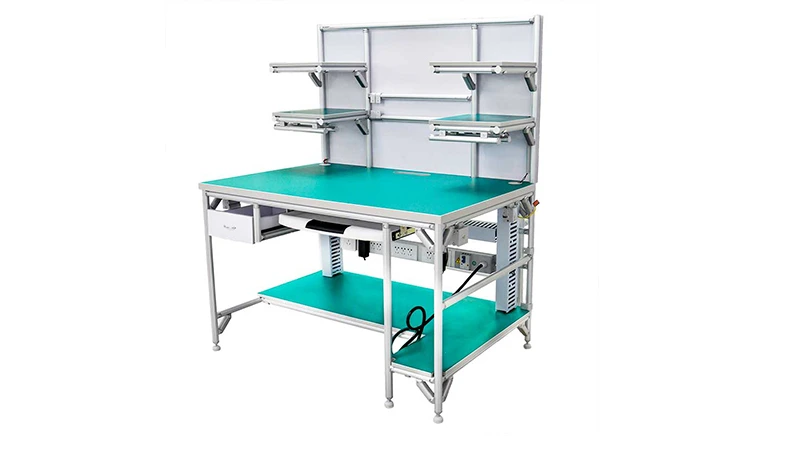
Aluminum Workbench A
Aluminum tube workbench is more flexible and durable, compared with traditional PE/ABS coated steel tube. It is easy to assemble, anti corrosion, rust protection, and recycle use after disassemble.
The Pressure of Just-In-Time: Why Your Workstation Matters More Than You Think
Walk into any modern manufacturing facility, and you'll feel it—the quiet hum of urgency. Every second counts. Every movement matters. In the world of just-in-time (JIT) production, where waste is the enemy and efficiency is king, the tools on the factory floor aren't just equipment—they're the unsung heroes (or silent villains) of your bottom line. And at the heart of it all? The workstation.
Ask any production line worker, and they'll tell you: a clunky, immovable workbench isn't just an annoyance. It's a bottleneck. Picture this: Maria, a line operator at a mid-sized electronics plant, spends 15 minutes every shift wrestling with a steel workbench that weighs a ton. When a new order comes in and the production layout needs to shift, two coworkers have to drop their tasks to help her drag it into place. By the time they're done, the line is backed up, and that "quick changeover" the schedule promised? It's now a 45-minute delay. Sound familiar?
Or consider Raj, a supervisor at an automotive parts facility. His team's workbench is a hodgepodge of mismatched shelves and rusted hooks. Tools are scattered, materials are stacked haphazardly, and the surface is so worn it's become a safety hazard. "We're supposed to be lean," he sighs, "but half the time, my team is just searching for what they need." That's motion waste. That's waiting. That's the opposite of JIT.
Enter Aluminum Workbench A —not just a table, but a rethink of what a workstation can be. Built with the principles of lean manufacturing in mind, this workbench isn't here to just hold tools. It's here to eliminate waste, adapt to your needs, and make your team's day-to-day a little easier. Let's dive in.
Aluminum Profile: The Secret Sauce Behind Durability and Flexibility
First things first: what makes Aluminum Workbench A different? Let's start with the bones— aluminum profile . If you're used to steel workbenches that rust, warp, or require a forklift to move, aluminum might sound "flimsy." But that's a myth. Aluminum extrusion profiles—those sleek, T-slotted beams you see in modern factories—are engineered to be both lightweight and incredibly strong. They're the reason why your laptop is light enough to carry but tough enough to survive a drop (don't test that, though).
Aluminum Workbench A is built using high-grade aluminum extrusion profiles, which means two game-changing benefits: durability and customization. Unlike steel, aluminum resists corrosion, so even in dusty or humid environments, it won't rust or degrade. And those T-slots? They're like built-in puzzle pieces. Need a tool hook? Screw it into the slot. Want a shelf for bins? Slide on an aluminum profile accessory and lock it in. No drilling, no welding, no hassle.
"We used to have to call maintenance every time we wanted to add a holder for our torque wrenches," says Lisa, a production lead at a medical device plant. "Now, with Aluminum Workbench A, I can grab an aluminum profile bracket from the supply closet, snap it into the T-slot, and boom—done in 30 seconds. My team laughs and says I'm 'MacGyver with a workbench,' but honestly, it just makes sense."
And let's talk weight. A standard steel workbench of similar size might weigh 200 pounds. Aluminum Workbench A? Closer to 80. That difference isn't just about muscle—it's about mobility. Which brings us to our next star feature: caster wheels .

Caster Wheels: Because Your Workbench Should Move When Your Production Line Does
Here's a radical idea: your workbench shouldn't be a permanent fixture. In JIT production, flexibility is everything. One day, you're assembling small components; the next, you're scaling up to larger parts. Your workstation should keep up.
Aluminum Workbench A comes standard with heavy-duty, lockable caster wheels. These aren't the wobbly plastic wheels you find on office chairs—we're talking industrial-grade, 3-inch diameter wheels with precision bearings. Lock them in place, and the workbench stays rock-solid during use. Unlock them, and even a single worker can glide it across the floor with one hand.
"Last month, we had a rush order for a new sensor model," recalls Mike, a floor manager at a robotics company. "Our old steel workbench took three people to move, and we scratched the floor in the process. With Aluminum Workbench A? I had two operators reposition four workstations in 20 minutes. No sweat, no scratches, no delays. The line was up and running before the first batch of parts even arrived."
But mobility isn't just about rearranging. It's about adaptability. Need to bring the workbench to the material storage area instead of hauling materials to the bench? Done. Want to position it next to a flow rack for easy access to components? Just roll it over. Caster wheels turn your workstation from a static obstacle into a dynamic tool that bends to your production's needs—not the other way around.

Integrating with Lean Systems: Flow Racks, Aluminum Profiles, and the Art of "Less Waste, More Work"
JIT isn't just a buzzword—it's a philosophy. It's about producing only what's needed, when it's needed, and in the amount needed. To do that, your tools need to work together seamlessly. Aluminum Workbench A isn't a standalone product; it's a linchpin in a lean system that turns chaos into order.
Real Talk: How One Factory Cut Waste by 30% with Aluminum Workbench A
At Precision Parts Co., a small manufacturer of aerospace components, the team was drowning in waste. Their old workbenches were fixed in place, so materials had to be carted across the floor (transport waste). Tools were stored on separate racks (motion waste). And when orders changed, setup times dragged on for hours (waiting waste).
Then they switched to Aluminum Workbench A. Here's what happened:
- They paired each workbench with a flow rack —a gravity-fed rack that keeps materials rolling right to the operator's fingertips. No more walking to fetch parts.
- Using aluminum profile accessories, they added custom tool holders, bin dividers, and even small shelves for documentation—all within arm's reach.
- Thanks to caster wheels, reconfiguring the line for new orders went from 2 hours to 20 minutes.
Result? A 30% reduction in non-value-added time, according to their quarterly report. "It's not just the workbench," says plant manager Sarah. "It's how it connects everything else. The flow rack, the tools, the people—it's like the bench is the conductor, and the line is the orchestra."
Let's break down that integration. Flow racks are a cornerstone of lean material handling—they ensure materials are always where they're needed, when they're needed, with minimal effort. But a flow rack is only as good as its proximity to the workstation. With Aluminum Workbench A's caster wheels, you can position the bench inches from the flow rack, turning "reach and grab" into "grab and assemble." No more wasted steps. No more stretching. Just smooth, continuous workflow.
And because the workbench is built with aluminum extrusion profiles, it plays well with other lean tools. Need to add a light bar for better visibility? Screw it into the T-slot. Want to attach a whiteboard for daily task lists? Use an aluminum profile bracket. The possibilities are endless—and that's intentional. Lean systems thrive on customization, and Aluminum Workbench A was born to adapt.
Aluminum Workbench A vs. Traditional Workbenches: The Numbers Don't Lie
Still on the fence? Let's put it all side by side. Below is a comparison of Aluminum Workbench A with a typical steel workbench—the kind you might already have in your facility. The differences might surprise you.
| Feature | Aluminum Workbench A | Traditional Steel Workbench |
|---|---|---|
| Material | Aluminum extrusion profile (lightweight, corrosion-resistant) | Carbon steel (heavy, prone to rust in humid environments) |
| Weight (Standard Size) | ~80 lbs (easy for 1 person to move with caster wheels) | ~200 lbs (requires 2+ people to reposition) |
| Mobility | Lockable caster wheels for easy, on-demand repositioning | Fixed legs (permanent or requires disassembly to move) |
| Customization | Unlimited: T-slots accept aluminum profile accessories (hooks, shelves, bins, etc.)—no drilling needed | Limited: Pre-drilled holes; adding features requires welding or drilling (often by maintenance) |
| Integration with Lean Systems | Seamless: Pairs with flow racks, roller tracks, and modular storage via aluminum profile accessories | Clunky: Requires separate, fixed storage; hard to align with changing flow rack positions |
| Durability | Scratch-resistant, corrosion-proof; built to last 10+ years in industrial environments | Prone to dents, rust, and wear; typically needs replacement every 5–7 years |
| Maintenance | Minimal: Wipe clean with a damp cloth; caster wheels need occasional lubrication | High: Requires regular painting to prevent rust; bolts loosen frequently |
The verdict? Aluminum Workbench A isn't just "better"—it's a paradigm shift. It's designed to solve the specific pain points of JIT production: waste, inflexibility, and inefficiency.
Beyond the Bench: How Aluminum Profile Accessories Turn Good into Great
Let's get granular. What really makes Aluminum Workbench A shine isn't just the bench itself—it's the ecosystem of aluminum profile accessories that let you tailor it to your exact needs. Think of it as a base camp; you bring the gear that matters most to your journey.
Take, for example, the aluminum guide rail. These sleek, anodized rails attach directly to the workbench's T-slots, creating a smooth surface for sliding bins or small parts. Pair them with roller track connectors, and suddenly you've got a mini conveyor right on your bench—perfect for moving components from one end to the other without bending or stretching.
Or consider the internal rotatary aluminum joint. This tiny but mighty accessory lets you add adjustable shelves that can swing up or down with a flick of the wrist. Need extra surface space for a large assembly? Swing the shelf out. Done? Fold it back. No more cluttered, permanent shelves taking up valuable real estate.
And let's not forget the basics: tool hooks, bin holders, and cable management clips. All of these snap into the T-slots, turning your workbench into a personalized command center. "I used to have tools hanging off nails and zip ties," says Carlos, an assembler at a furniture factory. "Now, everything has a place. My 5S audit score went from a 3 to a 5 in two months. My supervisor couldn't believe it."
The best part? These accessories are universal. If you already use aluminum profiles elsewhere in your facility—say, for flow racks or material carts—you can reuse the same accessories on your Aluminum Workbench A. No need to buy a whole new set of parts. That's cost-effective. That's lean.
The Human Side: Why Happy Workers Mean Better Production
At the end of the day, lean manufacturing isn't just about numbers—it's about people. A workstation that reduces fatigue, frustration, and physical strain doesn't just boost productivity; it boosts morale. And happy workers? They're more engaged, more careful, and less likely to leave.
Aluminum Workbench A is ergonomically designed with this in mind. The height is adjustable (another perk of those aluminum profiles), so workers of all statures can find their perfect fit. The surface is smooth and non-porous, making it easy to clean and resistant to spills. Even the caster wheels are designed to roll quietly, reducing noise pollution on the floor.
"I used to go home with a backache every night," says Jamie, who works on an assembly line for small appliances. "Our old workbench was too low, and I was hunched over all day. Now, with Aluminum Workbench A, I adjusted the height to my waist, and the pain is gone. I actually look forward to coming to work—I know my body won't pay for it later."
That's the human touch of lean. It's not just about cutting costs; it's about creating a workplace where people feel valued. And when people feel valued, they perform better. It's a win-win.
Final Thoughts: Aluminum Workbench A—Your Lean Journey Starts Here
Just-in-time production isn't a trend. It's the future of manufacturing. To thrive, you need tools that don't just keep up but lead the way. Aluminum Workbench A isn't just a workbench—it's a statement. It says, "We care about efficiency. We care about our team. We're ready to compete."
From its lightweight aluminum extrusion profile to its smooth-rolling caster wheels, from its seamless integration with flow racks to its endless customization options, this workbench is built for the realities of modern manufacturing. It's built to eliminate waste. It's built to adapt. It's built to make your job easier.
So, what are you waiting for? The next time you walk your production floor, take a hard look at your workstations. Are they holding you back, or propelling you forward? If it's the former, it's time for an upgrade. Your team deserves it. Your bottom line deserves it.
Aluminum Workbench A isn't just the ultimate tool for JIT production. It's the start of a leaner, smarter, more human way of making things. And in today's fast-paced world, that's not just an advantage—it's a necessity.