- Company Articles
- Products and Technology
- Product knowledge
- Aluminum Workbench A vs. Plastic Workbenches: Which Offers Better Chemical Resistance?

Aluminum Workbench A vs. Plastic Workbenches: Which Offers Better Chemical Resistance?
Related Product
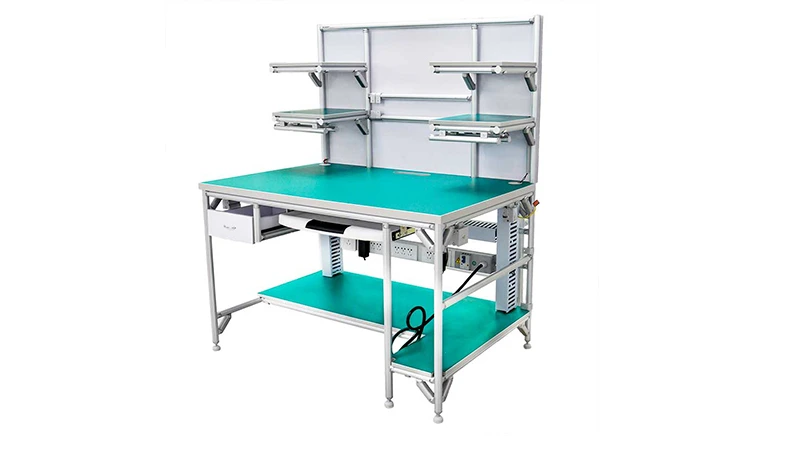
Aluminum Workbench A
Aluminum tube workbench is more flexible and durable, compared with traditional PE/ABS coated steel tube. It is easy to assemble, anti corrosion, rust protection, and recycle use after disassemble.
Walk into any busy factory, lab, or workshop, and you'll spot it immediately: the workbench. It's the silent backbone of daily operations—where tools are laid out, parts are assembled, and experiments are conducted. But not all workbenches are created equal, especially when chemicals enter the mix. Imagine a technician in a automotive repair shop spilling brake cleaner on the bench, or a lab researcher accidentally knocking over a beaker of acetic acid. In those moments, the workbench doesn't just hold items—it protects the workspace, the workers, and the bottom line. Today, we're diving into a common dilemma: Aluminum Workbench A versus plastic workbenches. Which one truly stands up to the harsh realities of chemical exposure? Let's break it down, step by step.
What Does "Chemical Resistance" Even Mean for a Workbench?
Before we pick sides, let's get clear on what we're measuring. Chemical resistance in workbenches isn't just about "not melting"—it's about maintaining structural integrity, safety, and functionality after repeated exposure to the substances that flow through your workspace. Think about the chemicals your team interacts with daily: maybe it's the isopropyl alcohol used to clean electronics, the motor oil that drips from engine parts, the citrus-based degreasers in food processing, or even the strong alkalis in industrial cleaning solutions. A "resistant" workbench should shrug off these substances without:
- Corroding (pitting, rusting, or developing holes)
- Discoloring (yellowing, darkening, or fading)
- Warping (bending, bowing, or losing shape)
- Leaching (releasing harmful particles into the environment)
- Becoming slippery or unsafe (due to chemical reactions)
Why does this matter? A workbench that fails chemically isn't just an eyesore—it's a liability. A corroded surface can harbor bacteria, contaminate products, or even weaken to the point of collapse. A warped bench might throw off assembly precision, leading to faulty products. And replacing a workbench every few months? That's a hidden cost that adds up fast. So, when we compare Aluminum Workbench A and plastic workbenches, we're not just comparing materials—we're comparing long-term reliability.
Aluminum Workbench A: The Metal Contender
Aluminum has been a staple in industrial settings for decades, and for good reason. Let's start with the basics of Aluminum Workbench A. Unlike flimsy particleboard benches or generic metal tables, this workbench is built using aluminum extrusion profile —a process where aluminum is forced through a die to create uniform, strong shapes. These profiles are then joined with aluminum profile accessories like brackets and screws, creating a sturdy frame that's both lightweight and rigid. But what makes it stand up to chemicals?
The Science Behind Aluminum's Resistance
Aluminum's secret weapon is its natural defense mechanism: a thin, invisible layer of aluminum oxide (Al₂O₃) that forms the moment it's exposed to air. This layer is incredibly stable and acts as a barrier, preventing further oxidation (rust, in the case of iron) and blocking many chemicals from penetrating the metal. Think of it as a built-in shield—no extra coatings needed, though some workbenches add anodization (a thicker oxide layer) for extra protection.
So, which chemicals does this shield fend off? Aluminum Workbench A shines with:
- Water-based solutions: Detergents, coolants, and most aqueous cleaners slide right off without leaving a mark.
- Mild acids: Vinegar (acetic acid), citric acid, and weak sulfuric acid solutions rarely cause damage, even with prolonged exposure.
- Oils and lubricants: Motor oil, hydraulic fluid, and machine grease might stain temporarily, but they won't eat through the metal or weaken the structure.
- Alcohols: Isopropyl alcohol, ethanol—common in cleaning and sanitizing—evaporate without reacting with aluminum.
Of course, no material is invincible. Aluminum does struggle with strong alkalis (like concentrated sodium hydroxide) and certain acids (hydrofluoric acid, for example), which can dissolve the oxide layer. But in most industrial, lab, or workshop settings, these extreme chemicals are either handled with specialized equipment or used sparingly—making Aluminum Workbench A a solid all-rounder.
Durability Beyond Chemicals
What really sets Aluminum Workbench A apart is its structural resilience. Unlike plastic, which can crack or warp under heavy loads, aluminum extrusion profiles are designed to handle weight. Even if a chemical does cause minor discoloration, the bench's strength remains intact. And because aluminum is non-porous, spills don't seep in—just wipe them up with a cloth, and you're good to go. No stains, no lingering odors, no hidden damage.
Take, for example, a manufacturing plant that uses Aluminum Workbench A for assembling circuit boards. Technicians regularly use flux remover (a solvent-based cleaner) and isopropyl alcohol. After two years of daily use, the bench still looks new—no pitting, no warping, just a slight sheen from regular cleaning. Compare that to a plastic bench in the same area, which started cracking after six months of solvent exposure. The aluminum bench didn't just resist chemicals; it outlasted the competition.

Plastic Workbenches: The Synthetic Alternative
Plastic workbenches have their fans, too—especially in settings where cost or specific chemical resistance is a priority. Made from materials like polyethylene (PE), polypropylene (PP), or phenolic resin, these benches are often lightweight, affordable, and easy to clean. Some even come with features like plastic roller track guide rail yellow inserts for sliding parts, adding convenience to the workspace. But how do they hold up when chemicals come into play?
The Pros of Plastic: Resistance in Niche Cases
Plastic's biggest advantage is its resistance to certain harsh chemicals that aluminum struggles with. For example, polypropylene is famously resistant to strong acids (like sulfuric and hydrochloric acid) and many organic solvents. Phenolic resin, a hard, dense plastic, can stand up to boiling water, oils, and even some alkalis. This makes plastic workbenches popular in labs handling concentrated reagents or in industries where acidic spills are common.
Plastic is also non-conductive, which can be a plus in electronics work (though esd workstation models, which are designed to dissipate static, often use specialized materials regardless of base material). And let's not forget cost: a basic plastic workbench can cost half as much as Aluminum Workbench A upfront, which is tempting for small businesses or temporary setups.
The Cons: When Plastic Falls Short
But plastic has Achilles' heels, and they become glaring in daily use. First, heat sensitivity: most plastics soften or warp when exposed to temperatures over 100°C (212°F). Leave a hot soldering iron on a plastic bench, and you'll end up with a permanent indent. Even prolonged sunlight can cause discoloration and brittleness over time.
Then there's chemical compatibility—plastic is not a one-size-fits-all solution. A polyethylene bench that resists acid might dissolve when exposed to ketones (like acetone), while a PVC bench could react with oils, leaving a sticky, melted mess. Unlike aluminum's broad resistance, plastic's strengths are narrow—you need to know exactly which chemicals you're dealing with, or you'll end up replacing the bench sooner than expected.
Worst of all, plastic is prone to physical damage. A dropped tool, a heavy part, or even repeated scrubbing with a abrasive sponge can scratch or crack the surface. Once the surface is compromised, chemicals can seep into the cracks, causing hidden degradation. A lab technician I spoke to once described a plastic bench that looked fine on the outside but had developed a network of tiny cracks underneath, where spilled solvents had weakened the material. When they placed a heavy beaker on it, the bench top snapped clean in half.

Head-to-Head: Aluminum Workbench A vs. Plastic Workbenches
Enough theory—let's put them to the test. Below is a comparison of how Aluminum Workbench A and plastic workbenches perform with common workplace chemicals. We'll rate resistance on a scale of 1 (severe damage) to 5 (no visible effect), and note real-world implications.
| Chemical | Aluminum Workbench A | Plastic Workbench (Polypropylene) | Real-World Impact |
|---|---|---|---|
| Acetic Acid (5% solution, e.g., vinegar) | 5/5 – No damage, oxide layer intact | 5/5 – Resistant, no discoloration | Both perform well; common in food processing and cleaning. |
| Sodium Hydroxide (10% solution, e.g., drain cleaner) | 2/5 – Slow corrosion, pitting over time | 4/5 – Minor surface roughening, no structural damage | Plastic wins here, but strong alkalis are rare in most workplaces. |
| Acetone (solvent, e.g., nail polish remover) | 5/5 – Evaporates, no reaction | 1/5 – Dissolves surface, causes cracking | Aluminum is safer for solvent-heavy environments like electronics repair. |
| Motor Oil (petroleum-based lubricant) | 5/5 – Stains temporarily, wipes clean | 3/5 – Oil can seep into pores, causing long-term weakening | Aluminum resists staining and structural damage; better for automotive settings. |
| Isopropyl Alcohol (70% solution, disinfectant) | 5/5 – No effect, evaporates cleanly | 4/5 – Slight dulling with prolonged use | Both work, but aluminum maintains appearance longer. |
| Hydrochloric Acid (10% solution, e.g., concrete cleaner) | 1/5 – Rapid corrosion, oxide layer dissolves | 5/5 – No damage, ideal for acid handling | Plastic is better for labs with frequent acid use, but specialized acid-resistant tables are often used instead. |
The takeaway? Aluminum Workbench A is the more versatile choice for most workplaces, with broad resistance to daily chemicals. Plastic workbenches excel in niche cases (like strong acids) but fail miserably with solvents and oils—common in industries like manufacturing, automotive, and electronics.
Beyond Chemicals: Other Factors That Matter
Chemical resistance isn't the only game in town. Let's look at other key factors that make or break a workbench's usability.
Durability and Impact Resistance
Dropping a wrench, slamming down a toolbox, or accidentally bumping a heavy part—these are daily occurrences in any busy workspace. Aluminum Workbench A, with its aluminum extrusion profile frame, laughs off impacts. The metal bends slightly but rarely cracks, and dents can often be hammered out. Plastic workbenches? A hard enough impact can shatter the surface or snap legs, turning a minor accident into a costly replacement.
ESD Protection: A Side Note
In electronics manufacturing, static electricity is a killer—literally, for sensitive components. ESD workstations are designed to dissipate static, but the base material matters. Aluminum, being conductive, can be grounded to prevent static buildup. Plastic, being insulating, often requires adding conductive additives or coatings, which can wear off over time. If ESD is a concern, aluminum has a built-in advantage.
Maintenance and Longevity
Aluminum Workbench A is low-maintenance: wipe spills, occasionally treat scratches with a clear sealant, and it'll last 10+ years. Plastic workbenches? They need careful cleaning with compatible chemicals (no harsh scrubbers!), and even then, they typically last 2–3 years in heavy use. When you factor in replacement costs, aluminum becomes the cheaper option over time.
Customization
Workspaces evolve, and your bench should too. Aluminum extrusion profiles and aluminum profile accessories make it easy to add shelves, hooks, or tool holders to Aluminum Workbench A. Want to mount a monitor arm or a lighting strip? Just drill a hole—aluminum is easy to modify. Plastic workbenches, on the other hand, are often one-piece molded, leaving little room for customization. What you see is what you get.
Real-World Stories: When Chemical Resistance Mattered Most
Still on the fence? Let's hear from real users who've lived the aluminum vs. plastic debate.
Case Study 1: Automotive Repair Shop
Joe, a shop foreman in Detroit, switched to Aluminum Workbench A after his plastic benches kept failing. "We use a lot of brake cleaner—strong stuff," he explains. "The plastic benches would get sticky, then start cracking after a few months. The aluminum bench? We've had it three years, and it still looks new. Spills wipe right off, and it doesn't warp when we set hot parts on it. Best upgrade we ever made."
Case Study 2: University Chemistry Lab
Dr. Patel runs a lab where students handle acids and bases. "For our strong acid stations, we use phenolic resin plastic benches—they're the only ones that stand up to hydrochloric acid," she says. "But for general chemistry, we switched to Aluminum Workbench A. The plastic ones were too expensive to replace every year, and the aluminum handles most reagents just fine. Plus, it's easier to sterilize for biology experiments."
Case Study 3: Electronics Assembly Plant
Maria manages a circuit board assembly line in Texas. "We tried plastic benches first because they were cheap," she recalls. "But the flux remover and alcohol we use started eating through them. Now we have Aluminum Workbench A with aluminum profile shelves. They're grounded for ESD, easy to clean, and the techs love that they can mount their tools right on the bench. We haven't replaced one in five years."
The Verdict: Aluminum Workbench A Takes the Lead
At the end of the day, the choice between Aluminum Workbench A and plastic workbenches comes down to your workspace's unique needs. If you're dealing with concentrated acids or alkalis daily, a specialized plastic bench might be necessary. But for 90% of workplaces—manufacturing, automotive, labs, workshops, and beyond—Aluminum Workbench A is the smarter investment.
Why? Because it offers broad chemical resistance, unmatched durability, easy maintenance, and long-term value. It doesn't just resist chemicals—it resists the test of time. The aluminum extrusion profile construction, paired with aluminum profile accessories, creates a workbench that grows with your business, adapts to new challenges, and keeps your team safe and productive.
So, the next time you're shopping for a workbench, think beyond the price tag. Think about the brake cleaner spills, the oil stains, the daily wear and tear. Think about the technician who doesn't have to worry if their bench will hold up. That's the peace of mind Aluminum Workbench A delivers—and that's priceless.