- Company Articles
- Products and Technology
- Product knowledge
- Aluminum Workbench A vs. Steel Workbenches: Which Offers Better Value?

Aluminum Workbench A vs. Steel Workbenches: Which Offers Better Value?
Related Product
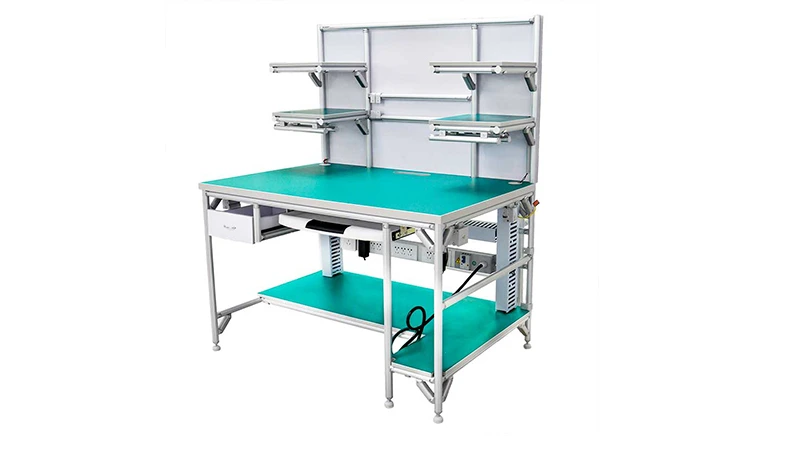
Aluminum Workbench A
Aluminum tube workbench is more flexible and durable, compared with traditional PE/ABS coated steel tube. It is easy to assemble, anti corrosion, rust protection, and recycle use after disassemble.
Navigating the workbench dilemma for modern manufacturing floors
Walk into any manufacturing plant, warehouse, or assembly line, and you'll notice a silent workhorse keeping operations running smoothly: the workbench. It's where components are assembled, tools are organized, and ideas take physical shape. For decades, steel workbenches have been the default choice—sturdy, reliable, and seemingly built to last. But in recent years, a new contender has emerged: aluminum workbenches, with models like Aluminum Workbench A gaining traction among lean system enthusiasts and forward-thinking facility managers.
The question isn't just "Which is stronger?" or "Which is cheaper?" It's about value—balancing upfront costs with long-term benefits, rigidity with flexibility, and tradition with innovation. In this article, we'll dive deep into the world of Aluminum Workbench A and traditional steel workbenches, exploring their pros, cons, and real-world performance to help you decide which truly delivers better value for your operation.
Meet the Contenders: Aluminum Workbench A
Aluminum Workbench A isn't just a workbench—it's a product of modern manufacturing philosophy. Designed with lean system principles in mind, it prioritizes adaptability, efficiency, and user-centric design. At its core is aluminum profile —specifically, high-grade aluminum extrusion profile, a material celebrated for its unique blend of strength and lightness. Unlike traditional steel, aluminum extrusion profile is created by forcing heated aluminum through a die, resulting in consistent, precise shapes that lock together seamlessly with minimal hardware.
Let's break down its key features:
- Modular Construction: Aluminum Workbench A is built like a set of advanced building blocks. Its aluminum profile components—tubes, brackets, and panels—connect via T-slot grooves, allowing for tool-free adjustments. Need to add a shelf? Slide in a bracket. Want to reposition the light bar? Loosen a knob, move it, and tighten. No welding, no drilling, no waiting for maintenance crews.
- Lightweight Yet Sturdy: Aluminum is about 30% the weight of steel, but don't let that fool you. The 6061-T6 aluminum alloy used in the profile offers a tensile strength of 45,000 psi—more than enough to handle daily tasks like assembly, packaging, or quality inspection. A 5-foot Aluminum Workbench A weighs in at 45-60 lbs, compared to 120-180 lbs for a steel counterpart of the same size.
- Corrosion Resistance: Aluminum naturally forms a protective oxide layer, making it resistant to rust and corrosion. This is a game-changer for environments with humidity, spills, or exposure to chemicals—think food processing plants, electronics assembly (where moisture control is critical), or outdoor loading docks.
- Clean Aesthetics: With its smooth, anodized finish, Aluminum Workbench A avoids the industrial "clunkiness" of steel. It fits seamlessly into modern, clean-room settings or tech-focused facilities where appearance and hygiene matter as much as functionality.
But perhaps its most compelling trait is how it aligns with the needs of today's dynamic production floors. In a world where product lines change quarterly and customization is king, a workbench that can evolve with your operations isn't just a nice-to-have—it's a competitive advantage.
The Traditional Heavyweight: Steel Workbenches
Steel workbenches are the grizzled veterans of the manufacturing world. For generations, they've been the go-to for tasks requiring raw strength—think heavy machinery repair, metalworking, or handling bulky components. Built from thick steel sheets, angle irons, and welded frames, they exude a "built to last" aura that's hard to ignore.
What makes steel workbenches enduringly popular?
- Unmatched Load Capacity: A standard steel workbench can easily support 1,000-2,000 lbs of evenly distributed weight. This makes them ideal for tasks like engine rebuilding, where parts can weigh hundreds of pounds, or for storing heavy tool chests and equipment.
- Impact Resistance: Steel laughs off accidental drops, bumps, and bangs. A wrench slipped from a mechanic's hand? A steel bench top might scratch, but it won't dent or crack. This durability is why steel remains a staple in high-impact environments like auto repair shops.
- Initial Cost Appeal: On paper, steel workbenches often come with a lower upfront price tag. For small businesses or facilities with tight budgets, this can be tempting—why pay more for aluminum when steel "does the job" for less?
- Familiarity: Many facility managers grew up with steel workbenches. They're comfortable specifying them, and workers know how to use them. Change can be intimidating, especially in industries where "if it ain't broke, don't fix it" is a common mantra.
But steel isn't without its flaws. Its greatest strength—weight—can also be its downfall. A fully loaded steel workbench is nearly impossible to move without heavy equipment, limiting floor plan flexibility. And while it's tough, steel is prone to rust if not regularly painted or treated, a costly and time-consuming maintenance chore in humid or damp environments.

The Value Showdown: Key Factors Compared
To determine which workbench offers better value, we need to look beyond specs on a page. Let's compare Aluminum Workbench A and steel workbenches across six critical areas that impact your bottom line and daily operations.
1. Initial Cost vs. Long-Term Investment
Steel workbenches often win the initial cost battle. A basic 6-foot steel workbench might run $300-$500, while Aluminum Workbench A could start at $600-$800 for a similar size. But value isn't just about what you pay today—it's about what you pay over the workbench's lifespan.
Consider maintenance: Steel requires regular rust treatment (sandblasting, repainting) every 2-3 years, costing $100-$200 per bench. Aluminum? A quick wipe with a damp cloth is usually enough. Over 10 years, that's $500-$1,000 in maintenance for steel, erasing the upfront savings. Then there's downtime: A steel bench being repainted means lost productivity, while aluminum stays in service.
Worst-case scenario: A steel bench in a humid warehouse rusts through a leg after 7 years, forcing a replacement. Aluminum Workbench A, with its corrosion resistance, could easily hit 15 years with minimal upkeep. Suddenly, that "cheaper" steel bench becomes the costlier option.
2. Weight and Mobility
Imagine reconfiguring your assembly line to accommodate a new product launch. With steel workbenches, this means renting a forklift, shutting down the line for hours, and risking damage to floors or equipment. Aluminum Workbench A, at 45-60 lbs, can be moved by two workers in minutes—no special tools, no downtime.
One electronics manufacturer in Texas shared a story: They switched to Aluminum Workbench A and reduced line reconfiguration time from 8 hours (with steel) to 2 hours. Over a year with 12 product launches, that's 72 hours of saved production time—equating to thousands of dollars in recovered revenue.
Mobility also impacts ergonomics. Workers can adjust the bench's position to avoid awkward reaching or bending, reducing strain injuries. Steel's immobility often locks workers into suboptimal setups, leading to higher workers' comp claims and lower morale.
3. Durability and Maintenance
Steel is tough, but aluminum is resilient. Let's test them in real-world conditions:
- Humidity Test: A Florida-based food packaging plant compared steel and aluminum workbenches in their refrigerated warehouse. After 18 months, the steel benches showed visible rust on legs and joints, even with anti-rust paint. The aluminum benches? Still corrosion-free.
- Chemical Exposure: A pharmaceutical lab uses harsh sanitizers daily. Their steel workbench tops developed pitted surfaces within a year; Aluminum Workbench A's anodized aluminum resisted the chemicals, maintaining a smooth, sterile surface.
- Daily Wear: In an auto parts assembly line, both benches saw daily use—tools dropped, parts slid across surfaces. The steel bench had deeper scratches, but the aluminum bench's top (reinforced with a honeycomb panel) showed less visible wear, thanks to aluminum's natural scratch resistance.
Maintenance-wise, aluminum is a hands-off champion. Steel? A mid-sized factory with 50 steel workbenches spends ~$8,000 annually on rust treatment and repainting. With aluminum, that cost drops to under $500 (mostly for occasional cleaning supplies).
4. Flexibility and Customization
Lean system principles demand adaptability—production lines that can pivot, tools that stay within reach, and space that's used efficiently. Here, Aluminum Workbench A shines. Its T-slot aluminum profile allows for endless customizations: add tool hooks, monitor mounts, bin organizers, or even a built-in ESD mat (critical for electronics manufacturing) in minutes.
Steel workbenches, by contrast, are fixed in design. Want to add a shelf? You'll need to drill holes and bolt it on—permanently. Need to remove it later? You're left with unsightly holes. One manufacturer joked, "Our steel workbenches are like concrete—great if you never want to change anything, but terrible if you do."
Customization isn't just about convenience; it's about efficiency. A study by the Manufacturing Extension Partnership found that customized workstations (like those possible with aluminum) reduce tool retrieval time by 35%, cutting production cycles by 12% on average.
5. Ergonomics and Worker Experience
Happy workers are productive workers. Aluminum Workbench A's lightweight design makes height adjustments easy—no cranks or hydraulics needed. Workers can tweak the bench to their ideal height, reducing back and shoulder strain. Steel workbenches, often fixed at a single height, force workers to adapt to the bench, not the other way around.
Noise is another factor. Steel benches amplify clanging tools and dropped parts, creating a louder, more stressful environment. Aluminum, with its natural sound-dampening properties, reduces noise levels by 10-15%—a small difference that adds up over an 8-hour shift.
A warehouse in Ohio reported a 22% drop in worker complaints after switching to aluminum workbenches, along with a 5% increase in daily output. "Workers aren't wasting energy fighting with heavy benches or straining to reach tools," their operations manager noted. "They're focused on the job."
6. Environmental Impact
Sustainability isn't just a buzzword—it's a business imperative. Aluminum is 100% recyclable, and recycling it uses 95% less energy than producing new aluminum. Steel is also recyclable, but its recycling process is more energy-intensive.
Aluminum Workbench A's lightweight design also reduces transportation emissions. Shipping 50 aluminum benches generates 60% fewer emissions than shipping 50 steel benches of the same size—a win for companies aiming to shrink their carbon footprint.
One European automotive supplier even qualified for green manufacturing grants after switching to aluminum workbenches, offsetting their initial investment and enhancing their brand reputation as an eco-conscious partner.

By the Numbers: A 5-Year Value Comparison
To put value into concrete terms, let's crunch the numbers for a single workbench over 5 years. We'll assume a 6-foot bench used in a general manufacturing setting, with moderate humidity and quarterly line reconfigurations.
| Cost Factor | Aluminum Workbench A | Steel Workbench |
|---|---|---|
| Initial Purchase Price | $750 | $400 |
| Maintenance (5 years) | $250 (cleaning supplies, minor part replacements) | $800 (rust treatment, repainting, joint replacements) |
| Reconfiguration Costs (4x/year) | $200 (worker labor: 2 hrs/setup x $25/hr x 20 setups) | $1,200 (forklift rental, labor: 8 hrs/setup x $25/hr x 20 setups) |
| Productivity Loss (due to downtime) | $0 (no shutdowns for moves/maintenance) | $3,000 (8 hrs/year x $75/hr production rate x 5 years) |
| Replacement Cost (if needed) | $0 (still functional after 5 years) | $400 (potential early replacement due to rust/damage) |
| Total 5-Year Cost | $1,200 | $5,800 |
The numbers tell a clear story: While steel starts cheaper, its long-term costs—maintenance, downtime, reconfiguration—balloon over time. Aluminum Workbench A, despite a higher upfront price, delivers nearly $4,600 in savings over 5 years. For a facility with 20 workbenches, that's $92,000 in recovered value—enough to fund new equipment, worker training, or expansion.
Real-World Wins: When Aluminum Workbench A Shines
Case studies bring value to life. Here are three industries where Aluminum Workbench A has proven its worth:
Electronics Manufacturing
A California-based circuit board assembler was struggling with static electricity and corrosion on steel workbenches. They switched to Aluminum Workbench A with ESD (electrostatic discharge) mats and aluminum profile components that dissipate static. The result? A 40% reduction in defective boards due to static damage, and zero rust-related downtime. "We used to lose $10,000/month in scrapped boards," their production manager said. "Aluminum paid for itself in 3 months."
Medical Device Assembly
A medical device company needed sterile, easy-to-clean workbenches for their ISO 7 clean room. Steel's porous surface trapped bacteria, requiring harsh chemical cleaning that damaged the finish. Aluminum Workbench A's smooth, non-porous aluminum profile and anodized finish allowed for quick, effective sanitization with mild cleaners. They passed their next FDA inspection with zero observations—a first in company history.
Small-Batch Automotive Parts
A family-owned auto parts shop with 10 employees was tired of struggling with heavy steel benches. They invested in 5 Aluminum Workbench A units and immediately noticed a difference. "We used to dread reconfiguring for custom orders," said the owner. "Now, two guys move a bench in 10 minutes, and we're back to work. Our on-time delivery rate jumped from 85% to 98%."
Is Aluminum Workbench A Right for You?
Aluminum Workbench A isn't a one-size-fits-all solution. It excels in environments where:
- Flexibility and frequent reconfiguration are needed
- Corrosion resistance is critical (humidity, chemicals, clean rooms)
- Worker ergonomics and mobility matter
- Long-term cost savings and sustainability are priorities
Steel still reigns in ultra-heavy-duty applications: think foundries, where molten metal is handled, or industrial machine shops with constant heavy impacts. But for 80% of manufacturing, warehousing, and assembly tasks, aluminum offers better value.
As one facility manager put it: "Steel workbenches are like flip phones—they work, but they're stuck in the past. Aluminum Workbench A is the smartphone of workbenches—smarter, more adaptable, and worth every penny in the long run."
Conclusion: The Value Verdict
When it comes to workbenches, value isn't about choosing the cheapest or the strongest—it's about choosing the one that grows with your business, minimizes hidden costs, and empowers your team. Aluminum Workbench A, with its aluminum profile construction, lean system alignment, and user-centric design, isn't just a workbench; it's an investment in efficiency, flexibility, and long-term savings.
Steel workbenches have their place, but for most modern operations, they're a relic of a less dynamic era. Aluminum Workbench A doesn't just keep up with today's manufacturing demands—it anticipates tomorrow's, offering better value in every measurable way, from dollars saved to morale boosted.
So, which offers better value? For the forward-thinking facility, the answer is clear: Aluminum Workbench A isn't just better—it's the future of workbenches.