- Company Articles
- Products and Technology
- Product knowledge
- Aluminum Workbench A vs. Traditional Workbenches: 5 Critical Differences

Aluminum Workbench A vs. Traditional Workbenches: 5 Critical Differences
Related Product
Aluminum Workbench A
Aluminum tube workbench is more flexible and durable, compared with traditional PE/ABS coated steel tube. It is easy to assemble, anti corrosion, rust protection, and recycle use after disassemble.
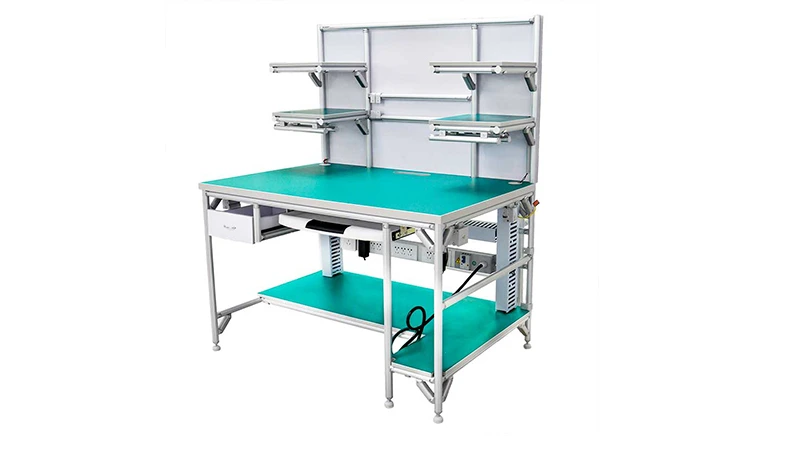
Walk into any workshop, factory floor, or lab, and you'll notice one thing that ties them all together: the workbench. It's more than just a table—it's the silent backbone of productivity, where ideas turn into products, repairs fix what's broken, and teams collaborate to hit deadlines. But not all workbenches are created equal. For decades, workshops have relied on "traditional" options—heavy wooden tables, clunky steel frames, or one-size-fits-all designs that barely adapt to changing needs. Today, there's a new player in town: the Aluminum Workbench A . Built with modern materials like aluminum extrusion profile and designed for flexibility, it's challenging everything we thought we knew about what a workbench should be. Let's dive into the five critical differences that make Aluminum Workbench A a game-changer for anyone serious about efficiency, durability, and adaptability.
1. Material Matters: Aluminum Extrusion Profile vs. The Old Guard
Let's start with the basics: what your workbench is made of. Traditional workbenches typically fall into two camps: wood or steel. Wooden workbenches have a nostalgic charm—think of the classic carpenter's bench with a worn wooden top, dented from years of hammering. But nostalgia fades fast when you're dealing with warped surfaces from humidity, stains that won't come out, or the sheer weight of moving it even a few feet. Steel workbenches, on the other hand, are tough—no arguing there. But toughness comes with a price: they rust if not constantly painted, scratch easily, and feel like moving a boulder if you need to reconfigure your workspace.
Aluminum Workbench A, by contrast, is built around aluminum extrusion profile —a material that's lightweight, strong, and surprisingly versatile. So, what exactly is aluminum extrusion profile? Imagine heating aluminum billets until they're malleable, then forcing them through a die to create long, uniform shapes with precision grooves (called T-slots) along their length. These T-slots aren't just for show—they're the secret to the bench's flexibility, letting you attach accessories without drilling or welding. It's like building with a set of adult Legos, but sturdier and designed for real work.
Why does this matter? Wood swells with moisture, shrinks in dry air, and dents at the first drop of a heavy tool. Steel, while strong, is prone to corrosion—especially in humid workshops or labs where chemicals are used. Aluminum extrusion profile? It's naturally resistant to rust and corrosion, even in damp environments. It's also lightweight (about 1/3 the weight of steel), so moving your workbench to a new spot or reconfiguring your layout is a one-person job, not a team lift. And here's a bonus: aluminum is 100% recyclable, making it a greener choice than wood (which often comes from unsustainable sources) or steel (which requires heavy energy to produce). When you invest in an aluminum workbench, you're not just investing in a tool—you're investing in a material that lasts, adapts, and leaves a smaller footprint.
2. Flexibility & Customization: Workbenches That Grow With Your Needs
Traditional workbenches are like that old couch in your parents' basement: once it's in place, it's there forever. You buy it, set it up, and if your workflow changes—say, you need an extra shelf for tools, or a taller surface for standing work—you're out of luck. You either live with the inconvenience or shell out for a whole new bench. That's a problem because modern workshops don't stand still. Projects change, team sizes fluctuate, and new tools or technologies (like 3D printers or testing equipment) need a home. Rigid workbenches slow you down.
Aluminum Workbench A flips the script with aluminum profile accessories and modular design. Remember those T-slots in the aluminum extrusion profile? They're the key. Need a tool rack? Slide a bracket into the T-slot and bolt it on. Want a LED light bar overhead? Clip it in place. Need to raise the height by 6 inches? Swap out the legs for longer ones using internal rotary aluminum joints —no welding or power tools required. It's customization on the fly, and it's a game-changer for lean system enthusiasts.
Lean systems thrive on eliminating waste—including wasted space and inefficient workflows. Aluminum Workbench A fits right in because it adapts to your process, not the other way around. For example, if you're running a small electronics assembly line, you can add ESD-safe shelves (more on that later) and cable management clips to keep wires tidy. If next month you switch to packaging, you can remove the shelves and add a roller track for boxes to slide through. Traditional workbenches? They'd require you to buy a new bench or hack together a solution with duct tape and plywood. With aluminum, it's as simple as unclipping one accessory and adding another. It's not just a workbench—it's a blank canvas for your workflow.
And let's talk about size. Traditional workbenches often come in fixed lengths (5 feet, 6 feet, etc.). Aluminum Workbench A? You can build it to fit your space, whether that's a compact 3-foot bench for a home workshop or a 10-foot behemoth for a factory line. The aluminum extrusion profiles come in standard lengths, but they're easy to cut to size with a basic saw, so you're never stuck with "close enough." It's customization without the custom price tag.

3. Durability: Built to Outlast the Projects (and the Years)
Here's a scenario we've all seen: a wooden workbench after five years. The top is stained with oil, dented from dropped tools, and warped so badly it rocks when you lean on it. A steel workbench might look sturdier, but check the corners—rust is creeping in, and the paint is chipping off where tools hit it. Traditional workbenches are built to function , not to last . They're disposable, meant to be replaced every few years when they wear out. But what if your workbench could keep up with you —not the other way around?
Aluminum Workbench A is built for the long haul. Aluminum extrusion profile is surprisingly strong—strong enough to support heavy machinery, stacks of materials, or even a person standing on it (though we don't recommend that!). Unlike wood, it doesn't dent or scratch easily; even a dropped wrench will leave little more than a minor mark. And because it's corrosion-resistant, it won't rust in humid environments or when exposed to chemicals (a must for labs or auto shops). The secret is in the aluminum itself: it forms a thin oxide layer when exposed to air, which acts as a natural barrier against wear and tear. It's like having a built-in shield that keeps your bench looking and working like new for years.
This durability is especially critical for esd workstation setups. In electronics manufacturing, static electricity can fry sensitive components, so ESD-safe workbenches are non-negotiable. Traditional workbenches might use ESD mats or coatings, but those wear off over time, leaving your components vulnerable. Aluminum Workbench A, though? Aluminum is naturally conductive, so it can be treated to dissipate static safely—no need for flimsy mats that peel or crack. And because the aluminum itself is the ESD solution, it lasts as long as the bench does. No more replacing mats every six months; no more worrying about static damage. It's durability and safety, rolled into one.
Let's put this in perspective: A wooden workbench might last 3–5 years before needing replacement. A steel one? Maybe 5–7, if you're lucky and keep it painted. Aluminum Workbench A? With basic care (a quick wipe-down with a damp cloth now and then), it can last 15–20 years. That's not just a longer lifespan—it's fewer disruptions, less money spent on replacements, and a workbench that grows with your skills and projects.

4. Ergonomics: Your Body Will Thank You
Here's a statistic that might surprise you: The average worker spends 6–8 hours a day at their workbench. That's more time than they spend in bed! Yet traditional workbenches rarely prioritize ergonomics. They're either too low (causing back strain from hunching), too high (leading to shoulder pain), or fixed at a height that works for no one in particular. Over time, this leads to fatigue, discomfort, and even chronic injuries—all of which kill productivity.
Aluminum Workbench A is designed with people in mind. Remember those internal rotary aluminum joints we mentioned earlier? They're not just for customization—they're for adjustability. Many models let you raise or lower the work surface with a simple crank or lever, so you can switch between sitting and standing throughout the day. Studies show that alternating positions reduces fatigue and boosts focus, and with an aluminum workbench, it's effortless. No more propping up the bench with blocks of wood or suffering through a day of back pain because the height is "off."
But ergonomics isn't just about height. It's about how tools and materials are arranged. With aluminum profile accessories, you can position everything you need within arm's reach: tool holders at waist height, parts bins under the bench, even a monitor mount for digital work instructions. Traditional workbenches force you to stretch, bend, or twist to grab what you need—all of which add up to strain over time. Aluminum Workbench A puts your workflow around you , not against you.
Let's hear from a real user: "I used to have a steel workbench that was too low. After a day of assembling circuit boards, my lower back would ache so bad I could barely stand up," says Mia, an electronics technician. "Now I have an Aluminum Workbench A, and I adjust the height to stand when I'm soldering and sit when I'm testing. My back pain is gone, and I'm way more productive—I don't need to take breaks just to stretch." That's the power of ergonomics: it's not a luxury; it's an investment in your team's health and your bottom line.
5. Total Cost of Ownership: Pay Now, Save Later (a Lot Later)
Let's talk money. At first glance, Aluminum Workbench A might seem pricier than a basic wooden or steel workbench. A traditional wooden bench from a hardware store might cost $200–$300, while a steel one could run $400–$600. Aluminum Workbench A? You're looking at $600–$1,000 upfront. That sticker shock can make you pause—but here's the thing: "cheap" upfront often means "expensive" in the long run. Let's break it down with a simple comparison.
| Factor | Traditional Wooden Workbench | Traditional Steel Workbench | Aluminum Workbench A |
|---|---|---|---|
| Initial Cost | $200–$300 | $400–$600 | $600–$1,000 |
| Expected Lifespan | 3–5 years | 5–7 years | 15–20 years |
| Maintenance Costs | High (sanding, staining, replacing warped parts) | Medium (repainting, rust treatment) | Low (occasional cleaning) |
| Replacement Frequency | Every 3–5 years | Every 5–7 years | Once every 15–20 years |
| Total Cost Over 15 Years | $900–$1,500 (3–5 replacements + maintenance) | $1,200–$1,800 (2–3 replacements + maintenance) | $600–$1,000 (1 bench + minimal maintenance) |
When you look at the total cost over 15 years, Aluminum Workbench A is actually the cheapest option. Wooden workbenches need replacing 3–5 times, and steel ones 2–3 times, while aluminum? It's still going strong. Add in maintenance costs—sanding and staining wood, repainting steel—and the gap widens even more. But the savings don't stop there. Aluminum Workbench A's flexibility means you won't need to buy new benches when your workflow changes. That $200 wooden bench might seem like a steal today, but in five years, you'll be buying another one. Aluminum Workbench A is an investment that pays for itself—and then some.
There's also the hidden cost of downtime. If your wooden workbench warps and needs replacing, you're stuck without a workspace for a day (or more) while you shop for a new one and set it up. With aluminum, you're not replacing the whole bench—just swapping out a part if needed. And because it's lightweight and easy to move, reconfiguring your layout takes hours, not days. Downtime is productivity lost, and Aluminum Workbench A minimizes it.
The Verdict: Aluminum Workbench A Isn't Just a Bench—It's a Upgrade
Traditional workbenches have their place—if you're looking for a temporary solution, or if you never plan to change how you work. But for anyone serious about productivity, durability, and adaptability, Aluminum Workbench A is the clear choice. It's built with aluminum extrusion profile that resists corrosion and wear, customized with aluminum profile accessories that grow with your workflow, and designed to support lean system principles that eliminate waste. It's ergonomic, so your team stays comfortable and productive. And over time, it's cheaper than the "budget" options that wear out and need replacing.
At the end of the day, a workbench isn't just a piece of furniture. It's where you build your business, fix what matters, and create something new. Shouldn't it be as hardworking as you are? Aluminum Workbench A doesn't just hold your tools—it holds your potential. And that's a difference worth investing in.