- Company Articles
- Products and Technology
- Product knowledge
- Aluminum Workbench A vs. Wooden Workbenches: Durability Showdown

Aluminum Workbench A vs. Wooden Workbenches: Durability Showdown
Related Product
Aluminum Workbench A
Aluminum tube workbench is more flexible and durable, compared with traditional PE/ABS coated steel tube. It is easy to assemble, anti corrosion, rust protection, and recycle use after disassemble.
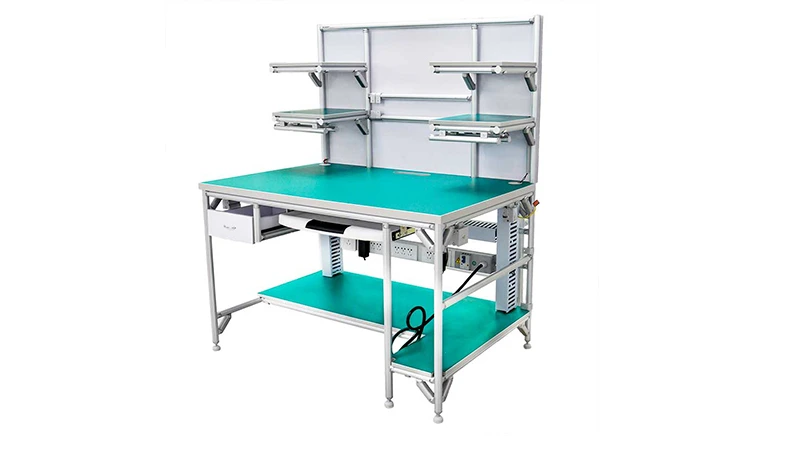
Walk into any workshop—whether it's a bustling factory floor, a home garage where weekend projects come to life, or a small woodworking studio—and you'll notice one thing immediately: the workbench is the unsung hero. It's where ideas take shape, where tools find their home, and where the chaos of creation meets the order of productivity. But not all workbenches are built to keep up with the demands of daily use. Today, we're putting two popular options head-to-head: the modern, sleek Aluminum Workbench A and the classic, time-honored wooden workbench. Which one truly delivers when it comes to durability? Let's break it down, no jargon, just real talk about what matters most: how well they stand up to scratches, spills, heavy loads, and the test of time.
First Things First: What Are We Actually Comparing?
Before we dive into the nitty-gritty, let's get clear on our contenders. Aluminum Workbench A is a product of modern engineering, built with aluminum extrusion profile —a material known for its strength, lightness, and resistance to the elements. It's designed with modularity in mind, often featuring a single deck (no casters, in this case) and a frame built from sturdy aluminum profile components. Think clean lines, industrial functionality, and a focus on low maintenance.
On the other side, wooden workbenches are the old reliables. Crafted from hardwoods like oak, maple, or pine, they've been the backbone of workshops for centuries. Their appeal lies in their natural warmth, their ability to absorb vibrations (handy for detailed work), and the way they develop character—scratches, dents, and all—over time. But here's the question: does that character come at the cost of durability?
The Material Showdown: Aluminum Extrusion Profile vs. Wood
Aluminum Workbench A: Built to Resist
At the heart of Aluminum Workbench A is aluminum extrusion profile —a manufacturing process where aluminum billets are heated and forced through a die to create uniform, strong shapes. This isn't just any aluminum, though. The extrusion process aligns the metal's grains, making the profile stronger and more resistant to bending or warping than cast aluminum. Add to that a protective anodized coating (a layer of oxide that forms on the surface when exposed to electricity and chemicals), and you've got a material that laughs off rust, corrosion, and even minor scratches.
But it's not just the metal itself. The aluminum profile frame of Aluminum Workbench A is designed with precision. Joints are often reinforced with brackets or welded, creating a rigid structure that doesn't loosen over time. Even the work surface—typically a solid aluminum sheet or a composite panel—is engineered to handle heavy loads without flexing. Ever set a 50-pound toolbox on a flimsy table and watched it sag? That's not a problem here.
Wooden Workbenches: Beauty with Vulnerabilities
Wooden workbenches, on the other hand, rely on the natural strength of hardwoods. Oak, for example, is dense and tough, with a tight grain that resists dents. Maple is even harder, making it a favorite for tasks that involve pounding or clamping. But wood is a organic material, and that means it's at the mercy of its environment. It absorbs moisture like a sponge, swells in humid weather, and shrinks when it's dry—all of which can lead to warping, cracking, or splitting over time.
Take pine, a common (and cheaper) wood for workbenches. While it's soft and easy to shape, it dents if you so much as look at it wrong. A dropped wrench? Instant divot. Spill some oil or paint? It soaks in, leaving stains that are nearly impossible to remove. Even high-end hardwoods aren't immune. Leave an oak workbench in a garage with poor ventilation, and you'll start to see mold or mildew creep in around the edges. Over time, those small issues add up, turning a once-sturdy surface into a wobbly, uneven mess.
| Durability Factor | Aluminum Workbench A | Wooden Workbenches |
|---|---|---|
| Resistance to Moisture | Excellent—anodized aluminum repels water; no warping or rot | Poor—absorbs moisture, leading to swelling, cracking, or mold |
| Scratch & Dent Resistance | High—hard anodized surface resists minor impacts; no permanent marks | Low—softwoods (pine) dent easily; hardwoods (oak) scratch with tools |
| Weight Capacity | 600+ lbs (evenly distributed) due to rigid aluminum profile frame | 300–500 lbs (varies by wood type; joints weaken over time) |
| Maintenance Needs | Minimal—wipe with a damp cloth; no refinishing or sealing | High—regular oiling/waxing; sanding to fix scratches; pest control |
| Average Lifespan | 15–25 years (with proper care; frame rarely fails) | 7–12 years (shorter in humid/damp environments) |

Daily Grind: How They Hold Up to Real-World Use
The Battle of Spills, Scratches, and Heavy Lifting
Let's get real: workshops are messy places. Oil drips from tools, paint splatters, sawdust piles up, and every now and then, something heavy gets dropped. How do our two contenders handle these everyday challenges?
Take spills, for example. Accidentally knock over a can of mineral spirits on Aluminum Workbench A ? No problem. The smooth, non-porous surface lets you wipe it up with a rag, leaving zero stains. The anodized coating ensures the chemicals don't eat away at the metal. Now do the same on a wooden workbench. The liquid seeps into the grain, darkening the wood and creating a permanent spot. If you're lucky, you can sand it down and refinish, but that's hours of work—time you could be spending on your project, not fixing your workbench.
Then there's the issue of weight. A workbench isn't just for light tasks. Think about clamping a 200-pound slab of wood, or setting a commercial-grade drill press on top. Aluminum Workbench A 's extruded aluminum frame is designed to distribute weight evenly, so even with heavy tools, the surface stays flat and stable. Wooden workbenches? Their strength depends on the joints. Over time, screws loosen, glue dries out, and the legs start to wobble. I've seen oak workbenches that started to sag in the middle after just a few years of holding a vice and a tool chest—hardly ideal for precision work.
Scratches are another story. A metal file dragged across Aluminum Workbench A might leave a faint mark, but it won't dig in. On a wooden bench? That same file would carve a groove deep enough to catch your tools. And while some woodworkers love the "patina" of a scratched workbench, that patina can turn into a hazard. A deep scratch is the perfect spot for dirt, bacteria, or rust to hide—especially if you work with food-safe materials or in a medical setting.

Environmental Extremes: When the Workshop Gets Tough
Not all workshops are climate-controlled palaces. Some are garages that bake in the summer and freeze in the winter. Others are sheds with leaky roofs or basements that flood during rainstorms. How do aluminum and wood hold up when Mother Nature throws a curveball?
Humidity and Moisture: Aluminum's Best Friend, Wood's Worst Enemy
Humidity is wooden workbenches' kryptonite. In coastal areas or rainy seasons, the air is thick with moisture, and wood soaks it up like a sponge. I once visited a friend's garage workshop in Florida—he had a beautiful maple workbench that he'd built himself. After just two years in that humid environment, the edges had warped so badly that his clamps wouldn't sit straight. The surface, once smooth, was now covered in tiny cracks where the wood had expanded and contracted.
Aluminum Workbench A , on the other hand, doesn't care about humidity. Aluminum doesn't absorb water, so it won't warp, crack, or grow mold. Even if your workshop floods (knock on wood), you can hose down the aluminum surface, dry it off, and it'll be as good as new. No sanding, no refinishing, no stress.
Temperature Swings: Aluminum Stays Cool (and Stable)
Extreme temperatures are another test. In a garage in Arizona, summer temperatures can hit 120°F; in a Minnesota winter, they can drop to -20°F. Wood expands when it's hot and contracts when it's cold, and over time, that constant movement weakens the structure. Joints loosen, boards split, and the once-flat surface becomes a rollercoaster of bumps and dips.
Aluminum does expand and contract too, but at a much slower rate than wood. The aluminum extrusion profile used in Aluminum Workbench A is designed to handle these changes without warping. Even in the hottest or coldest workshops, the surface stays level, and the frame remains rigid. No more adjusting your projects to fit a wonky workbench—just consistent, reliable performance, year after year.
The Long Game: Cost vs. Value Over Time
Let's talk money. Wooden workbenches often have a lower upfront cost—you can pick up a basic pine model for a few hundred dollars, or even build one yourself for cheaper. Aluminum Workbench A , with its precision-engineered aluminum profile and durable construction, tends to cost more initially. But durability isn't just about how long something lasts—it's about how much you'll spend to keep it going.
Consider maintenance costs. A wooden workbench needs regular care: tung oil or beeswax every 3–6 months to protect the wood, sandpaper and stain to fix scratches, and maybe even new hardware when joints fail. Over 10 years, that adds up to hundreds of dollars in supplies and hours of labor. Aluminum Workbench A? The only "maintenance" it needs is an occasional wipe-down with soap and water. No expensive oils, no sanding, no replacement parts. What you pay upfront is pretty much all you'll ever pay.
Then there's lifespan. If you buy a cheap wooden workbench, you'll be replacing it in 5–7 years. A high-end oak bench might last 10–12 years with perfect care. Aluminum Workbench A ? It's built to last 15–25 years. Do the math: a $500 wooden bench replaced every 7 years costs $1,750 over 25 years. An $800 Aluminum Workbench A? Just $800. Suddenly, that higher upfront cost doesn't seem so steep.
And let's not forget resale value. A well-maintained aluminum workbench still looks modern and functional after a decade, so you can sell it for a decent chunk of what you paid. A wooden workbench with dents, stains, and warped legs? Good luck getting more than a few bucks for it at a garage sale.
The Verdict: Which Workbench Wins the Durability Battle?
When it comes to raw durability, Aluminum Workbench A is the clear winner. Its aluminum extrusion profile frame, anodized surface, and resistance to moisture, scratches, and weight make it a workhorse that can handle even the toughest workshop environments. It requires minimal maintenance, lasts decades, and offers better long-term value than wooden workbenches.
That's not to say wooden workbenches don't have their place. They're warm, classic, and great for tasks that need a little give, like hand planing or chiseling. But if durability is your top priority—if you want a workbench that won't let you down, no matter how messy, heavy, or chaotic your projects get—Aluminum Workbench A is the way to go.
At the end of the day, a workbench should make your life easier, not add more work. With Aluminum Workbench A, you can focus on what matters: creating, building, and getting the job done—without worrying if your workbench will survive the process.