- Company Articles
- Products and Technology
- Product knowledge
- Aluminum Workbench Aesthetics: Does It Matter in Industrial Settings?

Aluminum Workbench Aesthetics: Does It Matter in Industrial Settings?
Related Product
Aluminum Workbench A
Aluminum tube workbench is more flexible and durable, compared with traditional PE/ABS coated steel tube. It is easy to assemble, anti corrosion, rust protection, and recycle use after disassemble.
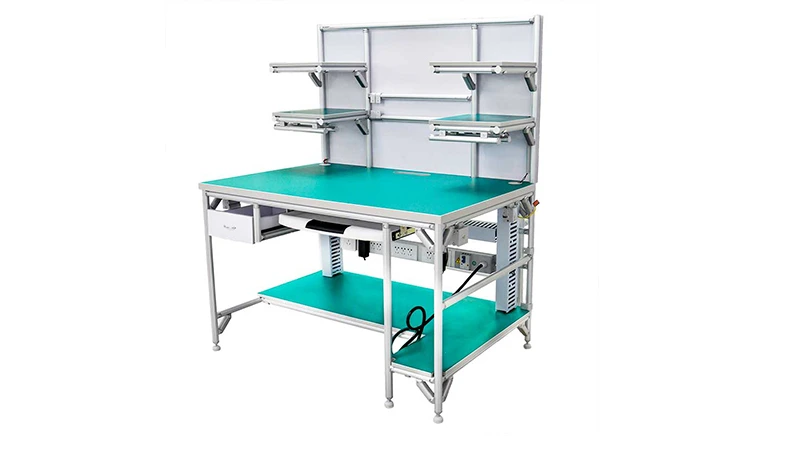
Walk into most factories or workshops, and you'll probably notice the same scene: workbenches covered in tools, conveyor belts chugging along with little regard for color coordination, and storage racks that look like they've been cobbled together from whatever parts were lying around. For decades, the industrial world has lived by a simple mantra: "If it works, it doesn't need to look good." But what if that mantra is costing businesses more than they realize? Today, we're diving into a question that's quietly reshaping industrial design: Does the aesthetics of aluminum workbenches and lean systems actually matter in industrial settings? Spoiler alert: It's not just about looking pretty—and the answer might surprise you.
The "Ugly but Functional" Myth in Industrial Design
Let's start with the elephant in the workshop: the belief that industrial equipment exists purely for function. We've all heard it: "Why spend money on making a workbench look nice when it's just going to get scratched by tools?" Or "Conveyors move parts—who cares if they're gray or green?" This mindset treats aesthetics as a luxury, something reserved for consumer products or office spaces, not the gritty reality of manufacturing floors. But here's the problem: that mindset is stuck in the past.
Modern manufacturing isn't just about churning out products anymore. It's about efficiency, employee satisfaction, and even brand perception. When a client tours your factory, do you want them to see a chaotic jumble of mismatched equipment, or a space that feels intentional, organized, and forward-thinking? When your employees clock in each morning, do they walk into a space that feels like an afterthought, or one that signals "we care about how you work"? The truth is, aesthetics and function aren't enemies—they're partners. And nowhere is this more evident than in aluminum workbenches and lean systems.
The Hidden Value of Aluminum Workbench Aesthetics
So, what happens when you prioritize aesthetics in industrial design—specifically with aluminum workbenches, flow racks, and conveyors? Let's break it down into three unexpected benefits that go far beyond "looking good."
1. Aesthetics = Efficiency (Yes, Really)
Imagine two workbenches. One is a rusted steel table with a cluttered surface, mismatched drawers, and no clear organization. The other is an aluminum workbench with clean lines, a smooth, light-colored top, integrated tool holders, and cable management that keeps wires out of sight. Which one do you think an employee will work faster at? If you guessed the second, you're right—and it's not just because it's "prettier."
Aesthetic design in industrial settings often goes hand-in-hand with lean principles . When you design a workbench to look clean, you're forced to think about workflow: Where should tools go for easy reach? How can we reduce clutter? How do we make the space intuitive? Aluminum, with its sleek finish and modular nature, is perfect for this. Unlike heavy steel, aluminum profiles let you build workbenches that are both lightweight and sturdy, with customizable layouts that fit the task at hand. The result? Less time searching for tools, fewer mistakes from disorganization, and a workspace that feels intentional—all of which add up to measurable efficiency gains.
| Traditional Workbench | Modern Aluminum Lean Workbench |
|---|---|
| Cluttered surface with no designated tool zones | Modular design with built-in tool holders and cable management |
| Heavy, fixed structure (hard to reconfigure) | Lightweight aluminum profile frame (easy to adjust for new tasks) |
| Dull, dark finish (hard on eyes during long shifts) | Bright, reflective aluminum surface (reduces eye strain) |
| Mismatched components (looks unprofessional) | Coordinated color scheme (e.g., gray frame with yellow tool rails for visibility) |
2. Happy Employees = Better Results
Let's talk about people. Manufacturing jobs are physically demanding enough without adding the mental toll of working in a disorganized, visually chaotic environment. Studies have shown that workplace aesthetics directly impact employee satisfaction and productivity . When employees feel their workspace is cared for, they're more engaged, take more pride in their work, and even stay with the company longer. It's a simple human truth: we all want to work in spaces that respect us.
Aluminum workbenches excel here. Their clean, modern look feels less like "industrial equipment" and more like a tool designed for people, not just processes. Add in thoughtful touches—like anti-fatigue mats, adjustable heights, or even subtle color accents—and you've transformed a workbench from a utilitarian object into a statement: "Your comfort matters." And when employees feel that, they don't just work harder—they work smarter.
3. Aesthetics as a Brand differentiator
In industries like 3C assembly or medical device manufacturing, precision is everything. Clients don't just want to know your products are well-made—they want to see that your process is rigorous, too. A factory filled with sleek aluminum workbenches, color-coordinated flow racks, and streamlined conveyors sends a powerful message: "We pay attention to details." It's a silent sales pitch that builds trust. If you care about how your workspace looks, the thinking goes, you probably care about how your products are built.
Take medical device manufacturing, for example. When a hospital or clinic is choosing a supplier, they're not just evaluating specs—they're evaluating reliability. Walking into a facility with clean, white aluminum workbenches (designed to resist bacteria growth) and organized flow racks that prevent cross-contamination isn't just aesthetically pleasing; it's proof of your commitment to quality. In this case, aesthetics aren't just about looks—they're about credibility.

Balancing Aesthetics and Function: How Aluminum Makes It Possible
Of course, none of this matters if aesthetics come at the cost of function. A workbench that looks great but can't withstand heavy tools is useless. A flow rack that's visually stunning but jams constantly is a liability. The magic of aluminum, though, is that it lets you have both. Here's how:
Aluminum Profile: The "Industrial Lego" of Design
At the heart of most modern aluminum workbenches and lean systems is aluminum profile —those modular, T-slot extrusions that look like oversized building blocks. Aluminum profiles are a designer's dream because they're infinitely customizable. Need a workbench with a specific height? Cut the profiles to size. Want to add a shelf or a tool rail? Slide in a bracket. Need to reconfigure the entire setup next month? Take it apart and rebuild it. It's like industrial Lego, but for grown-ups—and it looks great doing it.
Unlike steel, aluminum has a natural, clean finish that doesn't require heavy painting or coating (though you can anodize it for color if you want). It's lightweight but strong, resistant to rust, and easy to clean—perfect for messy manufacturing environments. And because the profiles are standardized, everything from the workbench legs to the flow rack sides to the conveyor frames can match, creating a cohesive look across your factory floor.
Color Psychology: It's Not Just for Marketers
Aesthetics in industrial design isn't just about shape—it's about color, too. And no, we're not talking about painting everything neon pink. We're talking about strategic color choices that enhance function. For example, yellow is often used on flow rack edges or tool holders because it's highly visible, reducing the risk of accidental collisions. Gray or white aluminum profiles reflect light, brightening up dim workspaces and reducing eye strain. Even something as simple as color-coding different zones (blue for assembly, green for quality control) can make a workspace more intuitive—and yes, more attractive.
Take ESD workbenches, used in electronics manufacturing to prevent static damage. Traditional ESD benches often look clunky, with dark, matte surfaces. But modern versions, built with aluminum profiles, can have sleek, light-colored tops with subtle ESD symbols in a contrasting color—proving that even specialized equipment can be both functional and easy on the eyes.

Real-World Examples: When Aesthetics Drove Results
Still skeptical? Let's look at a few real-world scenarios where prioritizing aesthetics in aluminum workbenches and lean systems led to tangible benefits.
Case Study 1: 3C Assembly Line Transformation
A major electronics manufacturer was struggling with high turnover and low productivity on their smartphone assembly line. The workspace was dim, with old steel workbenches that were dented and mismatched, and tools were scattered across surfaces. Employees complained of eye strain and frustration from searching for small components.
The solution? A complete overhaul using lean pipe workbenches and aluminum profiles. The new workbenches featured light gray aluminum frames, white ESD-safe tops, and built-in LED lighting. Tool holders were color-coded by function (red for screwdrivers, blue for pliers), and flow racks were integrated to feed components directly to each station. The result? Productivity increased by 18% in the first month, and turnover dropped by 22% over six months. Employees reported feeling "valued" and "more focused," while clients who toured the line commented on how "impressive" the space looked—leading to two new contract wins.
Case Study 2: Medical Device Storage Upgrade
A medical device company needed to comply with new FDA regulations that required stricter organization and traceability of components. Their existing storage system was a hodgepodge of wooden shelves and plastic bins, making it hard to track inventory and even harder to maintain cleanliness.
They opted for a lean solution centered on aluminum flow racks and modular aluminum shelving. The racks featured clear, labeled bins on roller tracks (for easy access), aluminum frames with antimicrobial coating, and a neutral color scheme that made it easy to spot dirt or debris. Not only did the new system meet FDA requirements, but it also reduced inventory errors by 35% and cut down on cleaning time by 40%. During an audit, the FDA inspector noted that the "thoughtful design" of the storage area was a "strong indicator of quality control."
The Future of Industrial Aesthetics: Where Function Meets Beauty
As manufacturing continues to evolve, so too will our understanding of industrial design. The factories of tomorrow won't just be efficient—they'll be inspiring. They'll use materials like aluminum not just for their strength or flexibility, but for their ability to create spaces that feel human-centered. And they'll recognize that aesthetics isn't a "nice-to-have"—it's a strategic advantage.
So, does aluminum workbench aesthetics matter in industrial settings? Absolutely. But not because we're all suddenly design snobs. Because it makes employees happier, workflows smoother, and businesses more successful. It's time to retire the "ugly but functional" myth and embrace a new mantra: "Why not have both?"
After all, your factory floor isn't just where products are made—it's where your company's values are on display. Make sure it's sending the right message.