- Company Articles
- Products and Technology
- Product knowledge
- Aluminum Workbench B Explained: Key Components and Structural Design

Aluminum Workbench B Explained: Key Components and Structural Design
Related Product
Aluminum Workbench B
Aluminum tube workbench is more flexible and durable, compared with traditional PE/ABS coated steel tube. It is easy to assemble, anti corrosion, rust protection, and recycle use after disassemble.
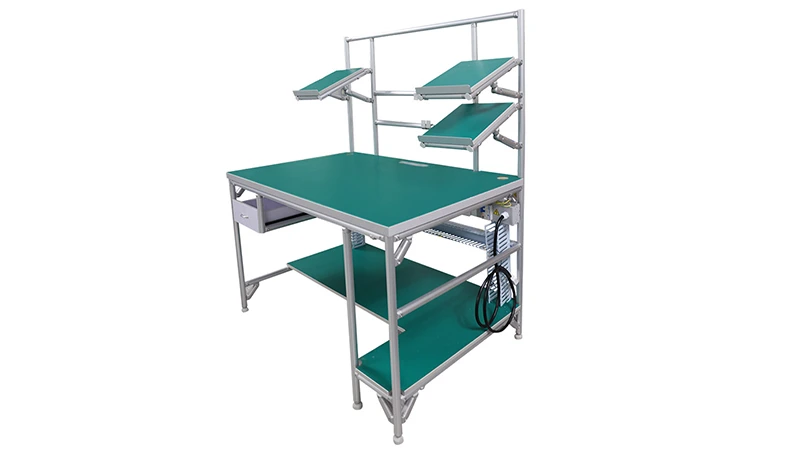
In the bustling world of manufacturing and assembly, where every minute counts and precision is non-negotiable, the tools and equipment that form the backbone of daily operations often go unnoticed—until they make or break efficiency. Among these unsung heroes is the workbench: a silent partner that supports everything from intricate electronics assembly to heavy-duty material handling. But not all workbenches are created equal. Today, we're shining a spotlight on a game-changer in the industry: Aluminum Workbench B. More than just a flat surface, this workbench is a masterclass in thoughtful engineering, blending durability, flexibility, and functionality into a single, adaptable solution. Let's dive into what makes Aluminum Workbench B stand out, exploring its key components, structural design, and why it's become a go-to choice for modern production lines.
What is Aluminum Workbench B?
Before we dissect its components, let's start with the basics: What exactly is Aluminum Workbench B? At its core, it's a modular workbench designed for versatility, built using high-grade aluminum extrusion profiles and (aluminum profile accessories) to create a sturdy, lightweight, and customizable workspace. Unlike traditional wooden or steel workbenches that are often heavy, fixed, or prone to wear, Aluminum Workbench B is engineered for adaptability. Whether you're setting up a small workshop, a large-scale assembly line, or a lab requiring strict cleanliness standards, this workbench can be tailored to fit your needs—no welding or complex tools required. Its design prioritizes ease of assembly, reconfiguration, and long-term durability, making it a favorite among manufacturers, engineers, and facility managers alike.
Key Components: The Building Blocks of Durability and Flexibility
What sets Aluminum Workbench B apart is its carefully selected components, each chosen for a specific role in enhancing performance. Let's break down the critical parts that make this workbench tick:
1. Aluminum Extrusion Profile: The Skeleton of Strength
At the heart of Aluminum Workbench B lies the aluminum extrusion profile—a material that's revolutionized industrial design. Aluminum extrusion is created by forcing heated aluminum through a die, shaping it into uniform, precision-engineered profiles with consistent cross-sections. For Workbench B, these profiles serve as the main frame, providing structural integrity while keeping the overall weight surprisingly low. Why aluminum? Unlike steel, aluminum offers an unbeatable strength-to-weight ratio, meaning the workbench can support heavy loads (think toolboxes, machinery, or batches of products) without being cumbersome to move or reposition. It's also naturally resistant to corrosion, a must in environments where spills, humidity, or chemicals are common. The profiles used in Workbench B typically feature a T-slot design—a series of grooves along their length that allow for easy attachment of accessories, from shelves and brackets to lighting and tool holders. This T-slot system is what gives the workbench its modular superpower: no drilling or cutting needed to add or remove components; simply slide in a bolt or bracket and tighten.
2. Aluminum Profile Accessories: The Glue That Holds It All Together
A strong frame is nothing without the right connections, and that's where aluminum profile accessories come into play. These small but mighty parts turn individual aluminum extrusion profiles into a cohesive, functional workbench. For Workbench B, key accessories include internal rotatary aluminum joints, brackets, and end caps. Internal rotatary joints, for example, allow the frame to be adjusted at various angles, making it easy to create L-shaped or U-shaped workstations without compromising stability. Brackets reinforce connections between profiles, ensuring the frame can withstand vibrations and heavy use over time. End caps, on the other hand, add a finishing touch by covering sharp edges (a safety win) and preventing dust or debris from collecting in the T-slots. What's impressive about these accessories is their standardization: most are compatible with a range of aluminum profile sizes, so if you need to expand or modify your workbench later, you won't be stuck hunting for custom parts. This compatibility also speeds up assembly—even someone with minimal technical experience can put together a basic Workbench B in under an hour using just a hex key.
3. Workbench Surface: Where the Work Happens
Of course, a workbench is only as good as its working surface, and Aluminum Workbench B doesn't skimp here. The surface (often referred to as the "deck") is typically made from aluminum honeycomb panel—a material that's both lightweight and incredibly strong. Honeycomb panels consist of a core of hexagonal aluminum cells sandwiched between two thin aluminum sheets, creating a structure that resists bending and warping even under heavy loads. This design also offers excellent vibration dampening, which is crucial for tasks requiring precision, like assembling delicate electronics. The surface is often treated with a non-slip, scratch-resistant coating to prevent tools or parts from sliding during use and to withstand daily wear and tear. Some versions even include integrated roller track systems—narrow tracks with small wheels that allow materials, bins, or products to glide smoothly across the workbench, reducing the need for manual lifting and speeding up workflow. Imagine sliding a bin of components from one end of the bench to another with a gentle push, instead of lifting and carrying it—small changes that add up to big time savings over a shift.
4. Optional Add-Ons: Tailoring to Your Needs
While the core components are what make Aluminum Workbench B reliable, its true flexibility shines through optional add-ons. These include everything from adjustable height legs (for ergonomic comfort, ensuring workers of different heights can use the bench without strain) to built-in power strips, tool hooks, and storage shelves. One popular add-on is the roller track—a simple but effective system of wheels or ball bearings integrated into the workbench's edges or surface. Roller tracks turn the workbench into a mini conveyor, allowing materials to flow seamlessly from one workstation to the next, or from the bench to a nearby storage rack. For example, in an electronics assembly line, a roller track might be used to slide circuit boards from the soldering station to the testing station, reducing manual handling and minimizing the risk of damage. Other add-ons, like drawers or cabinets, keep tools and parts organized, turning the workbench into a self-contained workstation that reduces time wasted searching for supplies.
| Component | Material Composition | Primary Function | Key Benefit |
|---|---|---|---|
| Aluminum Extrusion Profile | High-grade aluminum alloy (6061-T6 or similar) | Main frame structure | Lightweight yet strong; corrosion-resistant; T-slot design for easy accessory attachment |
| Aluminum Profile Accessories (Joints, Brackets) | Aluminum alloy with steel fasteners | Connect and reinforce frame components | Modular assembly; no welding required; adjustable angles for customization |
| Workbench Surface (Aluminum Honeycomb Panel) | Aluminum sheets with hexagonal aluminum core | Provides stable, durable working area | Vibration-dampening; scratch-resistant; non-slip coating for safety |
| Roller Track (Optional) | Aluminum or steel frame with plastic/steel wheels | Facilitates smooth material movement | Reduces manual lifting; speeds up workflow; integrates with production lines |

Structural Design: Engineering for Functionality and Adaptability
Now that we've covered the components, let's zoom out to look at the bigger picture: the structural design of Aluminum Workbench B. This isn't just a haphazard collection of parts; every aspect of its design is intentional, aimed at solving common pain points in industrial and workshop settings. Here are the key design principles that make it stand out:
Modularity: Build, Rebuild, Repeat
In today's fast-paced manufacturing world, flexibility is king. Production lines change, workflows evolve, and space requirements shift—often overnight. Aluminum Workbench B is designed to keep up. Thanks to its aluminum extrusion profiles and modular aluminum profile accessories, the workbench can be disassembled, reconfigured, or expanded in minutes. Need to add a shelf? Slide a bracket into the T-slot and secure it. Want to extend the bench by a foot? Attach a new profile section with a joint. Moving to a smaller space? Take it apart and reassemble it in a new layout. This modularity also makes it easy to repair: if a component gets damaged (say, a bracket bends), you can simply replace that single part instead of buying an entirely new workbench. For businesses, this translates to lower long-term costs and less downtime.
Ergonomics: Putting People First
A workbench isn't just a tool for products—it's a tool for people. Poor ergonomics can lead to worker fatigue, injuries, and reduced productivity, which is why Aluminum Workbench B prioritizes human-centered design. Many models feature adjustable height legs, allowing workers to set the bench at a comfortable level (typically 30–36 inches, but customizable) to reduce strain on the back, shoulders, and wrists. The surface is also designed to be smooth and non-reflective, reducing eye strain during long shifts. Even the optional roller track plays a role in ergonomics: by allowing materials to glide across the bench, it minimizes the need for bending, lifting, or reaching, lowering the risk of musculoskeletal injuries. In short, Aluminum Workbench B is built not just to hold things, but to support the people who use it every day.
Durability: Built to Last (and Last)
Industrial environments are tough: spills, impacts, and constant use can take a toll on equipment. Aluminum Workbench B is engineered to withstand these challenges. The aluminum extrusion profiles are made from high-strength alloys (like 6061-T6, known for its excellent mechanical properties) that resist bending or warping under heavy loads. The surface, often an aluminum honeycomb panel, is scratch-resistant and easy to clean—simply wipe it down with a damp cloth to remove oil, grease, or debris. Even the smallest components, like the aluminum profile accessories, are built to last: joints are made from hardened aluminum or steel, ensuring they won't strip or break with repeated use. Unlike wooden workbenches that can splinter or steel ones that rust, aluminum holds up in humid, wet, or chemical-exposed environments, making it a low-maintenance option that retains its functionality and appearance for years.
Space Efficiency: Maximizing Every Inch
In crowded workshops or factories, space is a precious commodity. Aluminum Workbench B's compact, modular design helps maximize usable area. Its lightweight construction means it can be placed in tight spots without requiring heavy machinery to move it, and its customizable layout (think L-shapes, U-shapes, or standalone units) allows it to fit into awkward corners or along walls. Optional add-ons like overhead shelves or wall-mounted brackets free up surface space, keeping tools and materials within reach but out of the way. Even the roller track contributes to space efficiency by integrating material handling directly into the workbench, eliminating the need for separate conveyors or carts that take up extra floor space. For small businesses or facilities with limited square footage, this space-saving design can be a game-changer, allowing more workstations to fit into the same area.

Applications: Where Aluminum Workbench B Shines
Aluminum Workbench B isn't a one-trick pony; its versatility makes it suitable for a wide range of industries and tasks. Let's explore some of its most common applications:
Manufacturing and Assembly Lines
In manufacturing, efficiency is everything, and Aluminum Workbench B delivers. Its modular design allows for easy integration into assembly lines, where each bench can be customized for a specific task—soldering, testing, packaging, etc. The roller track, for example, can be used to pass products from one bench to the next, creating a seamless workflow. The T-slot profiles make it easy to mount tools like drills, screwdrivers, or magnifying lamps directly to the bench, reducing clutter and keeping workers focused. In automotive parts manufacturing, for instance, a Workbench B might be used to assemble brake components, with shelves holding different sizes of bolts and a roller track sending finished parts to a quality control station.
Electronics and Precision Assembly
Electronics assembly requires a clean, stable, and precise workspace—all qualities of Aluminum Workbench B. The non-conductive aluminum surface reduces the risk of electrostatic discharge (ESD), protecting sensitive components like circuit boards or microchips. The vibration-dampening honeycomb panel ensures that delicate tasks, like soldering tiny wires, are performed with steady hands. Optional ESD-safe accessories, like wrist straps or grounding mats, can be added to meet strict industry standards. For example, in a smartphone assembly plant, Workbench B might be used to attach screens to device bodies, with a roller track moving completed units to the next station for software installation.
Laboratories and Clean Rooms
Laboratories and clean rooms demand surfaces that are sterile, corrosion-resistant, and easy to sanitize. Aluminum Workbench B fits the bill perfectly. Its smooth, non-porous surface can be disinfected with harsh chemicals without damage, and its aluminum construction won't harbor bacteria or contaminants. The modular design also allows for easy reconfiguration as research needs change—adding a new shelf for lab equipment or a roller track to move samples between testing stations. In a pharmaceutical lab, for example, Workbench B might be used to prepare drug formulations, with integrated storage for vials and a roller track to send samples to an analysis machine.
Workshops and Hobby Spaces
It's not just industrial settings that benefit from Aluminum Workbench B. Small workshops, garages, or hobby spaces can also take advantage of its versatility. Whether you're a woodworker, a jewelry maker, or a DIY enthusiast, the workbench's adjustable height, durable surface, and customizable storage make it a practical choice. Add a roller track to slide materials across the bench, or mount a pegboard on the T-slot profiles to keep tools organized. Unlike heavy steel workbenches, Aluminum Workbench B is easy to move around the garage as projects change, and its lightweight design means it won't damage floors or require structural reinforcement.
Why Choose Aluminum Workbench B Over Alternatives?
With so many workbench options on the market, why should you opt for Aluminum Workbench B? Let's compare it to common alternatives:
vs. Wooden Workbenches
Wooden workbenches have a classic appeal, but they come with downsides: they're heavy, prone to warping or splitting with humidity, and difficult to clean. Spills can stain or rot the wood, and they offer little flexibility for reconfiguration. Aluminum Workbench B, by contrast, is lightweight, moisture-resistant, and easy to wipe clean. Its modular design also means you can add or remove components as needed, something a wooden bench can't match.
vs. Steel Workbenches
Steel workbenches are strong, but they're also extremely heavy—making them hard to move or reposition. They're prone to rust if not regularly painted or coated, and their solid construction leaves little room for customization. Aluminum Workbench B offers comparable strength at a fraction of the weight, resists corrosion naturally, and its T-slot profiles allow for endless accessory combinations.
vs. Plastic Workbenches
Plastic workbenches are lightweight and affordable, but they lack the strength to support heavy loads. They can warp under heat and are easily scratched or dented. Aluminum Workbench B, while slightly more expensive upfront, offers far greater durability and load capacity, making it a better long-term investment for industrial or heavy-use settings.
Maintenance Tips: Keeping Your Workbench in Top Shape
Like any piece of equipment, Aluminum Workbench B performs best when properly maintained. Here are some simple tips to keep it functioning smoothly for years:
- Clean regularly: Wipe down the surface and frame with a mild detergent and water to remove oil, grease, or debris. Avoid abrasive cleaners that could scratch the surface coating.
- Tighten joints: Over time, aluminum profile accessories like joints or brackets may loosen with vibration. Periodically check and tighten fasteners to ensure stability.
- Lubricate moving parts: If your workbench has a roller track or caster wheels, apply a small amount of lubricant (like silicone spray) to keep them rolling smoothly.
- Inspect for damage: Check profiles and accessories for dents, cracks, or bent components. replace damaged parts promptly to prevent further issues.
- Protect from extreme heat: While aluminum is heat-resistant, avoid placing hot objects directly on the surface for extended periods, as this can damage the coating.
Conclusion: More Than a Workbench—A Productivity Partner
Aluminum Workbench B is more than just a place to work; it's a reflection of how modern industrial design prioritizes adaptability, durability, and user-centricity. By combining high-quality aluminum extrusion profiles, versatile aluminum profile accessories, and thoughtful structural design, it transforms from a simple workstation into a productivity booster that grows with your business. Whether you're assembling electronics, managing a lab, or running a small workshop, this workbench offers the flexibility to adapt to changing needs, the strength to handle heavy loads, and the durability to withstand the rigors of daily use. In a world where efficiency and innovation are key, Aluminum Workbench B isn't just keeping up—it's leading the way.