- Company Articles
- Products and Technology
- Application Cases
- Aluminum Workbench B in 3C Assembly Lines: Practical Applications and Case Studies

Aluminum Workbench B in 3C Assembly Lines: Practical Applications and Case Studies
Related Product
Aluminum Workbench B
Aluminum tube workbench is more flexible and durable, compared with traditional PE/ABS coated steel tube. It is easy to assemble, anti corrosion, rust protection, and recycle use after disassemble.
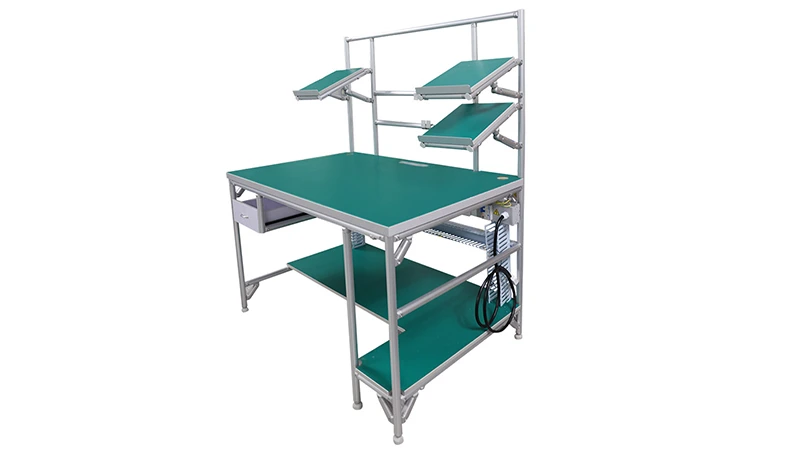
How modular, ESD-safe workstations are transforming precision manufacturing in consumer electronics
The Evolving Demands of 3C Assembly Lines
In the fast-paced world of consumer electronics—where smartphones, laptops, and smart devices are constantly evolving—assembly lines face relentless pressure to deliver speed, precision, and flexibility. The 3C industry (Computers, Communications, and Consumer electronics) thrives on innovation, but this comes with unique challenges: shorter product lifecycles, smaller and more delicate components, and strict quality standards. Traditional workbenches, often rigid and one-size-fits-all, struggle to keep up. They're heavy, hard to reconfigure, and frequently lack critical features like static control or seamless material flow—all of which are non-negotiable in modern 3C manufacturing.
Enter the Aluminum Workbench B: a modular, lightweight solution designed to address these pain points head-on. Built with high-grade aluminum profile and compatible with a range of accessories, this workstation isn't just a table—it's a cornerstone of lean system integration, ESD protection, and adaptive workflow design. In this article, we'll explore how Aluminum Workbench B is reshaping 3C assembly lines, from its core design principles to real-world success stories.
Understanding Aluminum Workbench B: Design and Core Features
At first glance, Aluminum Workbench B might look like any other workstation, but its magic lies in the details. Let's break down what makes it stand out in 3C environments:
1. Aluminum Profile: The Backbone of Durability and Flexibility
Unlike traditional steel workbenches, Aluminum Workbench B is constructed using extruded aluminum profile—a material prized for its unique balance of strength and lightness. Aluminum profile is corrosion-resistant, which matters in factories where humidity or cleaning agents can take a toll. More importantly, its modular design allows for easy customization. The T-slot structure of the aluminum profile means accessories like tool holders, shelves, or cable management clips can be added or repositioned without welding or drilling. For 3C manufacturers, this translates to workstations that grow with product lines: today's smartphone assembly bench can become tomorrow's smartwatch testing station with minimal effort.
2. ESD Workstation Compliance: Protecting Sensitive Electronics
Static electricity is the silent enemy of 3C assembly. A single electrostatic discharge (ESD) can damage microchips, circuit boards, or sensors, leading to costly defects or product failures. Aluminum Workbench B addresses this with built-in ESD features: conductive surfaces, grounding points, and compatibility with ESD-safe mats and wristbands. Unlike plastic workbenches that can generate static, aluminum's conductive properties ensure charges are safely dissipated, keeping sensitive components protected from the moment they hit the bench to the final product assembly.
3. Integration with Roller Track: Streamlining Material Flow
Efficiency in 3C assembly hinges on minimizing waste—whether it's time, motion, or materials. Aluminum Workbench B excels here by integrating seamlessly with roller track systems. Roller track, a series of small wheels mounted on a rail, allows parts, PCBs, or toolkits to glide smoothly across the workstation or between stations. For example, a workbench dedicated to soldering can have a roller track feeding components from a nearby storage rack, reducing the need for operators to reach or walk for supplies. This not only speeds up assembly but also cuts down on human error caused by fatigue or distraction.
4. Ergonomic Design: Prioritizing Operator Wellbeing
3C assembly lines often involve repetitive tasks—inserting tiny screws, soldering micro-connections, or testing touchscreens. Over time, poorly designed workstations can lead to operator strain or injuries, hurting productivity and morale. Aluminum Workbench B mitigates this with adjustable height settings, ergonomic work surfaces, and customizable layouts. Operators can raise or lower the bench to match their posture, while accessories like tilting worktops reduce neck strain during detailed tasks. Some models even include under-bench storage for tools, keeping the workspace clutter-free and reducing bending or reaching.

Practical Applications: How Aluminum Workbench B Fits into 3C Workflows
Aluminum Workbench B isn't a one-trick pony. Its versatility makes it suitable for nearly every stage of 3C assembly, from component inspection to final testing. Let's dive into specific use cases:
Component Sorting and Kitting
Before assembly begins, components like resistors, capacitors, or camera modules need to be sorted, counted, and kitted into batches. Aluminum Workbench B, equipped with dividers and small bins (attached via aluminum profile accessories), keeps these parts organized. The ESD-safe surface ensures components remain unharmed, while the lightweight design allows the bench to be positioned close to the main assembly line, reducing the distance parts travel.
PCB Assembly and Soldering
Printed circuit boards (PCBs) are the brains of 3C devices, and their assembly requires precision. Aluminum Workbench B's stable, flat surface provides a steady base for soldering irons, pick-and-place tools, or automated screwdrivers. The ESD features protect PCBs from static damage during soldering, while integrated roller track can feed PCBs from a pre-assembly station to the soldering bench, and then onward to inspection—creating a continuous, efficient flow.
Quality Control and Testing
After assembly, devices undergo rigorous testing: screen calibration, battery life checks, software updates. Aluminum Workbench B adapts here too, with optional add-ons like monitor mounts for test software, power strips with surge protection, or anti-fatigue mats for operators standing during long testing sessions. The roller track can even be used to move tested devices to packaging stations, ensuring a smooth handoff between quality control and shipping.
Repair and Rework Stations
Not every device passes inspection on the first try. Repair stations need to be flexible enough to handle a range of issues—from replacing a cracked screen to reflowing a faulty solder joint. Aluminum Workbench B's modularity shines here: extra shelves can hold replacement parts, while tool hooks keep specialized repair kits within arm's reach. The ESD surface remains critical, as repaired components are often just as sensitive as new ones.

Traditional vs. Aluminum Workbench B: A Comparative Look
To truly grasp the impact of Aluminum Workbench B, it helps to compare it with traditional workbench options. Below is a breakdown of key factors that matter most to 3C manufacturers:
| Feature | Traditional Steel Workbench | Plastic Workbench | Aluminum Workbench B |
|---|---|---|---|
| Material | Heavy steel; prone to rust | Light plastic; low durability | Lightweight aluminum profile; corrosion-resistant |
| ESD Protection | Requires add-on mats (inconsistent) | Non-conductive (risk of static buildup) | Built-in conductive properties; grounding points |
| Customization | Fixed design; modifications require welding | Limited; accessories often glued or clipped | T-slot aluminum profile; easy add/remove accessories |
| Integration with Roller Track | Difficult (heavy, no mounting points) | Possible but unstable (plastic rails bend under weight) | Seamless; pre-drilled holes for roller track connectors |
| Ergonomics | Fixed height; heavy to adjust | Light but flimsy; height often non-adjustable | Adjustable height; tilting worktops; under-bench storage |
| Long-Term Cost | High (replacement due to rust; limited lifespan) | Low upfront, high over time (frequent replacement) | Moderate upfront, low over time (durable; reconfigurable) |
Case Studies: Aluminum Workbench B in Action
The true test of any manufacturing tool is how it performs on the factory floor. Let's explore two real-world examples of 3C manufacturers that implemented Aluminum Workbench B and the results they saw.
Case Study 1: Mid-Sized Smartphone Manufacturer Eliminates ESD Defects
Company Profile: A Chinese manufacturer producing mid-range smartphones, with ~200 employees and 3 assembly lines. Prior to 2023, they struggled with a 5% defect rate in final product testing, primarily due to ESD damage to camera modules.
Challenge: The factory used wooden workbenches with basic ESD mats, but static-related defects persisted. Operators often had to walk 10–15 feet to retrieve components from storage racks, leading to delays and fatigue. The workbenches were also fixed-height, causing strain among taller operators.
Solution: The manufacturer replaced 12 wooden workbenches with Aluminum Workbench B units, each equipped with ESD grounding points, integrated roller track, and adjustable height legs. They paired the workbenches with aluminum profile shelves and roller track-connected storage racks to feed components directly to the assembly line.
Results: Within three months, ESD-related defects dropped from 5% to 0.8%. The roller track system reduced operator movement by 40%, cutting assembly time per unit by 12 seconds (a 15% improvement for a 50-second cycle). Adjustable height settings also led to a 30% decrease in reported operator strain, boosting overall line productivity by 8%.
Case Study 2: Large Laptop Brand Scales Production with Modular Workstations
Company Profile: A global laptop and tablet manufacturer with a flagship factory in Southeast Asia, producing over 500,000 units monthly. They needed to ramp up production for a new ultra-thin laptop model, requiring a flexible assembly line that could handle both the new model and existing products.
Challenge: The factory's existing steel workbenches were heavy and difficult to reconfigure. Setting up a new line for the ultra-thin laptop would take 4 weeks, disrupting existing production. Additionally, the new model required specialized testing equipment that didn't fit on standard benches.
Solution: The manufacturer invested in 40 Aluminum Workbench B units, leveraging their modular aluminum profile design. Using T-slot accessories, they added custom mounts for the new testing equipment, including thermal cameras and pressure sensors. The lightweight benches were reconfigured overnight to create a dedicated line for the ultra-thin model, with roller track connecting soldering, testing, and packaging stations.
Results: The new line was operational in just 5 days—87% faster than the projected 4 weeks. The modular design allowed the same workbenches to switch between the new laptop and existing tablet production on alternating shifts, maximizing factory floor space. Over six months, the flexibility of Aluminum Workbench B reduced changeover time between product runs by 65%, enabling the factory to meet its increased production target of 600,000 units monthly without expanding the facility.
Why Lean System Integration Makes Aluminum Workbench B a Smart Investment
3C manufacturers worldwide are adopting lean system principles to eliminate waste and maximize value. Aluminum Workbench B isn't just a workstation—it's a lean tool that aligns with core lean goals:
- Reduce Setup Time: Modular aluminum profile accessories mean workstations can be reconfigured in hours, not days, supporting quick changeovers between product models.
- Minimize Motion Waste: Roller track integration and customizable layouts cut down on operator movement, keeping hands and eyes focused on value-adding tasks.
- Improve Quality: ESD protection and stable work surfaces reduce defects, lowering the need for rework or scrap.
- Optimize Space: Lightweight, stackable (when not in use) design helps factories make the most of limited floor space, a common constraint in high-density 3C facilities.
Over time, these benefits translate to significant cost savings. A lean system supported by Aluminum Workbench B doesn't just improve efficiency—it creates a culture of continuous improvement, where operators and managers can easily tweak workflows to adapt to new challenges or opportunities.
Choosing the Right Aluminum Workbench B: Key Considerations for 3C Manufacturers
Not all Aluminum Workbench B models are created equal. To maximize ROI, 3C manufacturers should keep these factors in mind when selecting a supplier or configuration:
1. Aluminum Profile Quality
Look for workbenches made with high-grade aluminum extrusion profile (typically 6063-T5 or similar alloy), which offers the best strength-to-weight ratio. Avoid thin-walled or low-quality aluminum, which can bend under heavy equipment or repeated use.
2. ESD Certification
Ensure the workbench meets industry ESD standards (e.g., ANSI/ESD S20.20) and includes features like grounding cables, conductive tabletop materials, and ESD-safe paint or finishes.
3. Roller Track Compatibility
Check that the workbench has pre-drilled mounting points or T-slots that fit standard roller track connectors. Suppliers should offer roller track accessories (like guide rails or stops) designed to work seamlessly with the bench.
4. Load Capacity
3C assembly often involves heavy equipment—soldering stations, testing machines, or tool cabinets. Verify the workbench's load capacity (typically 200–500 kg) to ensure it can handle your specific tools and materials.
5. Supplier Support
Choose a supplier with experience in 3C manufacturing. They should offer design support, custom accessory options, and quick delivery for replacement parts or additional benches as your needs grow.
Conclusion: Aluminum Workbench B—The Future of 3C Assembly
In an industry where change is constant, Aluminum Workbench B stands out as a stable, adaptable foundation for 3C assembly lines. Its blend of aluminum profile durability, ESD protection, roller track integration, and lean system compatibility addresses the unique challenges of consumer electronics manufacturing—from static-sensitive components to rapid product cycles. As the case studies show, the right workstation doesn't just improve efficiency; it empowers teams to innovate, scale, and deliver high-quality products that keep pace with consumer demand.
For 3C manufacturers looking to stay competitive, Aluminum Workbench B isn't just an expense—it's an investment in the future of their assembly lines. By prioritizing flexibility, safety, and operator wellbeing, it's a tool that pays dividends in reduced defects, faster production, and a workforce ready to tackle whatever the next generation of consumer electronics brings.