- Company Articles
- Products and Technology
- Application Cases
- Aluminum Workbench B in Action: A Day in the Life of a 3C Electronics Workshop

Aluminum Workbench B in Action: A Day in the Life of a 3C Electronics Workshop
Related Product
Aluminum Workbench B
Aluminum tube workbench is more flexible and durable, compared with traditional PE/ABS coated steel tube. It is easy to assemble, anti corrosion, rust protection, and recycle use after disassemble.
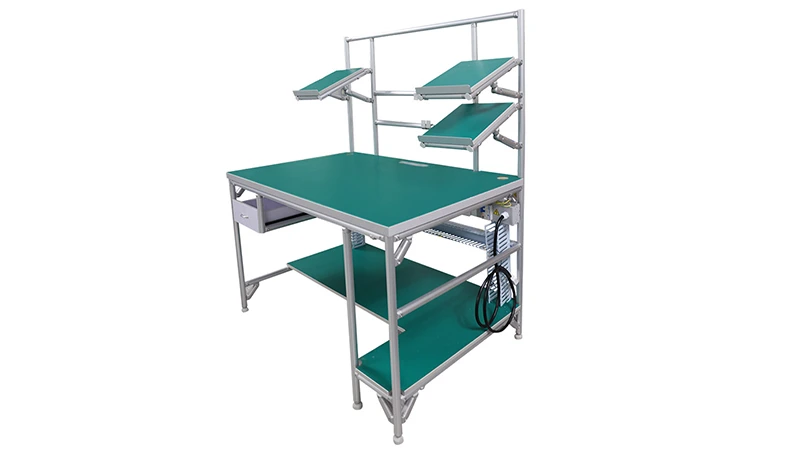
How a single workbench becomes the heartbeat of efficiency, teamwork, and precision
6:30 AM: The Workshop Wakes Up
The first light of dawn seeps through the workshop's skylights, casting a soft glow over rows of silent workstations. By 6:30, the hum of the ventilation system is joined by the clatter of metal lockers and the murmur of early risers. Maria Gonzalez, a lead technician with 12 years under her belt, pushes open the side door, coffee in hand, and pauses for a second to smile at the sight before her.
"There she is," she mutters, nodding toward her station. At the center stands her most trusted ally: an Aluminum Workbench B , its silver frame catching the light, surface wiped clean from the night shift. "Took me three years to convince management to switch from the old wooden ones," she says, running a hand along the edge. "This thing's a tank—but light enough to reposition when we need to. Aluminum profile, right? Sturdy as hell, but the joints let us add shelves or tool hooks in five minutes."
workbench-details" style="background: #e8f4f8; padding: 20px; border-radius: 8px; margin: 30px 0;">
Why Maria Loves Her Aluminum Workbench B
- Weight vs. Strength: "Wooden benches felt like they weighed a ton—if you needed to shift the line for a new product, you'd need two people. This aluminum frame? I can move it solo, even with the tool chest bolted on."
- Customization: "See these T-slot aluminum profile accessories?" She points to a row of small, square notches along the frame. "Last month, we added a parts bin holder on the side. Just slid the brackets into the slots and tightened the screws. No drilling, no hassle."
- Cleanliness: "Electronics hate dust. The smooth aluminum top wipes down with a damp cloth—no grooves for dirt to hide. And unlike wood, it doesn't warp when the AC kicks on. Perfect for precision work."
By 7:00, the workshop is buzzing. Juan, the night shift supervisor, stops by to hand off the daily log. "We had a minor jam on the roller track by Station 5," he says, gesturing to a conveyor-like setup snaking between workstations. "Leo fixed it, but check the connectors—might need tightening." Maria nods. The roller track is the workshop's circulatory system, carrying circuit boards, screens, and batteries between stations. Its plastic guide rails (yellow, to match the safety markings) glide smoothly when maintained—another piece of the lean system that keeps production flowing.
10:30 AM: The Assembly Dance
The morning rush has settled into a steady rhythm. At Station 3, Leo—new to the team but quick to learn—sits at his ESD workstation , a sleek, black-topped bench adjacent to Maria's. His task: installing microchips onto motherboards, components so small they look like grains of sand. "ESD" stands for electrostatic discharge, and in 3C electronics, static is the enemy. A single spark could fry a $200 chip.
"See the mat?" Leo says, tapping his wrist against the surface. "And the wristband? Both grounded. The workstation's built into the lean system—if I stand up without disconnecting, the alarm beeps. Saved my skin last week when I forgot to put it on." He grins. "Maria said the old workbenches didn't have that. People used to carry static from walking across the floor and zapping parts without even knowing."
Across the aisle, the roller track comes to life, a tray of circuit boards gliding toward Maria's station. She leans over, plucking one up and placing it on her Aluminum Workbench B. "This is where the magic happens," she says, lining up a screen assembly. The workbench's surface is slightly tilted—"Ergonomics," she explains. "No more hunching over. My back used to ache by lunch; now I barely notice the time."
| Feature | Aluminum Workbench B | Old Wooden Bench |
|---|---|---|
| Weight (empty) | 85 lbs | 140 lbs |
| Customization Time | 5–10 minutes (with T-slot accessories) | 2+ hours (drilling required) |
| ESD Compatibility | Yes (with optional ESD mat) | No |
| Surface Durability | Scratch-resistant aluminum | Prone to dents and warping |
By 11:00, the workshop's break room smells of microwaved burritos and fresh coffee. Maria and Leo sit together, discussing the morning's progress. "We're 15 units ahead," Leo says, checking his tablet. "The new roller track connectors helped—no jams since Juan mentioned it." Maria nods. "Suppliers matter, right? The guy we get our aluminum profile accessories from—they send replacement parts overnight. Last quarter, a joint broke, and we had a new one by 9 AM the next day. No downtime."

2:15 PM: When the Line Hits a Snag
Afternoon slumps are real, but in electronics assembly, complacency is risky. At 2:15, the roller track by Station 7 grinds to a halt. A chorus of "uh-ohs" echoes as workers notice the backup. Maria grabs her tool belt and heads over, Leo trailing behind.
"Looks like a roller wheel came loose," she says, kneeling. The track uses swivel roller balls 1 inch —small, plastic spheres that let trays glide. One has popped out of its housing. "No biggie. Hand me the placon mount bracket from the parts bin?" Leo fetches it: a small, L-shaped aluminum piece. "These brackets hold the rollers in place. The old ones were plastic; we switched to aluminum last year. Less breakage." She pops the roller back in, tightens the bracket with a hex key, and gives the track a gentle push. A tray glides past, smooth as butter. "There we go. Back in business."
The incident sparks a quick huddle. "Maybe we should add a weekly check for roller track connectors," suggests Priya, who runs quality control. "Preventive maintenance—lean system 101." Maria agrees. "Good call. Let's put it on the schedule. These aluminum parts last longer, but they're not invincible. A little TLC goes a long way."
Lean System in Action: Turning Snags into Smarts
The beauty of a lean system isn't just about speed—it's about adaptability. When the roller track jammed, the team didn't panic; they solved it, then asked, "How do we stop this from happening again?" That's the mindset the aluminum workbench and accessories support. Unlike rigid, one-size-fits-all equipment, they're designed to evolve with the team's needs. As Maria puts it: "You don't build a line and leave it. You build it, tweak it, and make it better—every day."
By 3:00, production is back on track. Leo, feeling proud of his role in fixing the jam, turns to his ESD workstation and resumes assembling. "You know," he says, "I never thought a workbench could make such a difference. But this setup? It's like the tools are working with me, not against me." Maria smiles. "That's the point. The best equipment fades into the background—you forget it's there because it just works."

5:45 PM: Wrapping Up the Day
The sun dips low, painting the workshop in golden light. The day's production goal—300 smartphones—has been met, with 12 to spare. Workers start cleaning their stations, wiping down surfaces, organizing tools. Maria stands back, looking at her Aluminum Workbench B. It's not just a piece of equipment; it's a partner.
"I remember my first day here," she says, voice softening. "The old bench wobbled, the tools were disorganized, and I felt like I was fighting the setup just to get work done. Now? This station fits me. The height, the tool placement, the way the roller track delivers parts right when I need them—it's like it's been tailored to how I work."
Leo, packing up his ESD wristband, nods. "My cousin works in a factory with those heavy steel benches. He says his back hurts every night. I don't have that problem here. Aluminum's the way to go."
As the last light fades, the workshop quiets down. The Aluminum Workbench B, now empty, stands ready for tomorrow. It's a simple thing, really—aluminum tubes, joints, a flat surface—but in the hands of a team that cares, it becomes something more: a tool that turns hard work into pride, chaos into order, and a day's labor into something meaningful.
"The best workbenches don't just hold tools—they hold stories. Of the hands that built on them, the problems they solved, and the teams that grew stronger because of them." — Maria Gonzalez, Lead Technician