- Company Articles
- Products and Technology
- Product knowledge
- Aluminum Workbench B in Telecommunications Equipment Assembly: A Hands-On Review

Aluminum Workbench B in Telecommunications Equipment Assembly: A Hands-On Review
Related Product
Aluminum Workbench B
Aluminum tube workbench is more flexible and durable, compared with traditional PE/ABS coated steel tube. It is easy to assemble, anti corrosion, rust protection, and recycle use after disassemble.
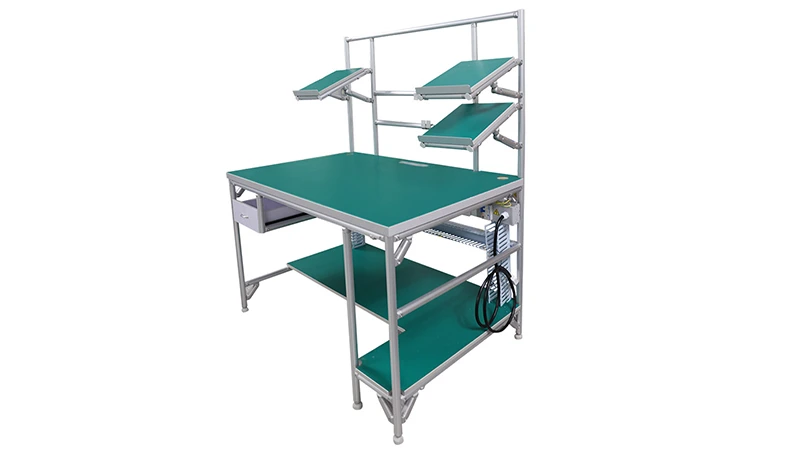
Walk into any telecommunications equipment assembly floor, and you'll quickly realize that the backbone of productivity isn't just the advanced machinery or skilled technicians—it's the unsung hero standing quietly at the center of every workstation: the workbench. After spending over a decade managing assembly lines for routers, switches, and fiber-optic modules, I've tested my fair share of workbenches. From clunky wooden tables that wobbled under the weight of test equipment to heavy steel setups that left our team straining to reposition, finding a balance between durability, flexibility, and ergonomics has always felt like chasing a moving target. That is, until we started using the Aluminum Workbench B earlier this year. Designed specifically for high-precision industries like telecom, this workbench promised to address the pain points we'd grown used to. Over the past six months, it's become more than just a surface to work on—it's transformed how our team collaborates, organizes, and delivers. Let's dive into the details.
Unboxing & Setup: Simplicity Meets Modularity
First impressions matter, and the Aluminum Workbench B didn't disappoint from the moment it arrived. Shipped in flat, clearly labeled boxes, the components felt lightweight yet sturdy—a telltale sign of high-quality aluminum extrusion profile , the material that forms the core of this workbench. Inside, we found pre-cut aluminum profiles (think sleek, silver beams with precise T-slots), an aluminum honeycomb panel for the work surface, a set of aluminum profile accessories (including corner brackets, end caps, and screws), and a surprisingly slim instruction manual. No heavy lifting, no confusing jargon—just straightforward parts that looked like they belonged together.
Setup took our team of two about 90 minutes, and that included pausing to admire how intuitive the assembly process was. Unlike steel workbenches that require welding or specialized tools, the Aluminum Workbench B relies on friction-fit joints and simple Allen wrenches. The T-slots in the aluminum profiles made it easy to slide accessories into place—no measuring, no drilling, no hassle. Even our newest technician, who'd never assembled industrial furniture before, commented, "It's like building with adult Legos." By the end, we had a sturdy, single-deck workbench (we opted for the model without casters, similar to the "Workbench E" we'd used previously) that stood 36 inches tall, 60 inches wide, and 30 inches deep—perfectly sized for our telecom assembly tasks, which often involve spreading out circuit boards, toolkits, and testing gear.
What struck us most during setup was the modularity. The T-slots meant we could add or remove accessories later—say, a roller track for feeding small parts or a side shelf for tools—without dismantling the entire bench. In telecom, where assembly workflows evolve as new equipment models launch, this flexibility is a game-changer. We no longer have to replace the entire workbench when we need to reconfigure; we just tweak the accessories. That's the beauty of aluminum extrusion profiles—they're built for adaptability.
Design Deep Dive: Built for Telecom's Unique Needs
Let's get technical—but not in a boring way. The Aluminum Workbench B's design is a masterclass in solving telecom assembly challenges. Let's break down the key features:
Material: Aluminum Extrusion Profile – Lightweight, Strong, and Static-Safe
Telecom equipment is sensitive to static electricity, and aluminum is naturally conductive—meaning it can be grounded to prevent electrostatic discharge (ESD) damage to circuit boards. Unlike wood, which can build up static, or plastic, which isn't conductive, the aluminum frame acts as a Faraday cage of sorts, keeping our components safe. Plus, aluminum is corrosion-resistant, a must in our climate-controlled but occasionally humid assembly area. After six months, there's not a single scratch or spot of rust, even with daily wipe-downs using industrial cleaning agents.
The work surface itself is an aluminum honeycomb panel —a lightweight but incredibly strong material that resists dents and doesn't warp under heat (important when we're testing equipment that runs for hours). It's also non-porous, so spilled solder flux or cleaning alcohol wipes right off, unlike the wooden workbenches that used to stain and harbor bacteria. For telecom, where cleanliness is critical to preventing dust buildup on sensitive ports, this is a lifesaver.
Structure: Stability Without the Bulk
At first glance, we worried the aluminum frame might feel flimsy compared to steel. Those fears vanished the first time we placed a 50-pound fiber-optic testing rig on the surface. The workbench didn't budge. The secret? The aluminum profiles are reinforced with internal ribs, and the honeycomb panel distributes weight evenly across the entire surface. We've since stacked up to 300 pounds of equipment (including a 200-pound power supply unit) on it, and there's been zero sagging or wobbling. For context, our old steel workbench weighed twice as much but had the same weight capacity—meaning we're getting the same strength with half the bulk. That makes rearranging the assembly line (a quarterly task for us) a breeze; two people can lift and move the Aluminum Workbench B without a dolly.
Ergonomics: Built for Humans, Not Just Machines
Telecom assembly is detail-oriented work. Our technicians spend hours hunched over circuit boards, soldering tiny components or tracing wire connections. The Aluminum Workbench B's height (36 inches) hits the sweet spot for most adults, reducing strain on shoulders and backs. The surface is also slightly textured, so tools don't slide around, and the edges are rounded to prevent scrapes—a small touch that our team appreciates after years of nicking hands on sharp steel corners.
We also love that the workbench is open underneath. Unlike our old wooden bench, which had a solid shelf blocking legroom, the Aluminum Workbench B's frame leaves plenty of space for technicians to stretch their legs or tuck in a stool during longer tasks. One technician joked, "It's like upgrading from economy to business class."

In Action: How It Transformed Our Telecom Assembly Line
Talk is cheap—let's get to the real test: daily use. For six months, the Aluminum Workbench B has been the centerpiece of our "Router Assembly Station 3," where we build mid-range enterprise routers. Here's how it's performed in key areas:
Lean System Integration: Cutting Waste, Boosting Flow
We're big on lean system principles at our facility—eliminating waste, streamlining workflows, and keeping the focus on value. The Aluminum Workbench B fits into this philosophy like a puzzle piece. For starters, the T-slots let us mount flow rack bins directly to the side of the bench, holding small parts like screws, connectors, and heat sinks. No more walking to a separate parts cabinet; everything is within arm's reach. We also added a 2-foot section of roller track along the back edge, which feeds partially assembled router chassis from the previous station to ours. Gravity does the work, reducing the need to carry heavy components—another win for lean efficiency.
Tool organization has never been cleaner, either. Using aluminum profile accessories like tool holders and magnetic strips (both slid into the T-slots), we've arranged our soldering irons, wire strippers, and multimeters in a logical order—left to right, matching the assembly sequence. Our lead technician estimates this has cut "search time" by 15 minutes per shift. "I used to spend 10 minutes a day just looking for my torque wrench," he said. "Now it's right where I need it."
Precision Work: No Wobbles, No Distractions
Telecom assembly demands precision—even a misaligned connector can cause signal loss in a router. The Aluminum Workbench B's stability is a revelation here. When we're soldering tiny SMD components onto PCBs, the surface doesn't vibrate, even if someone bumps the bench (which, let's be honest, happens in a busy factory). Compare that to our old wooden bench, which would wobble if you sneezed near it—leading to occasional solder bridges and rework. Since switching to aluminum, our rework rate on PCBs has dropped by 8%, a number that adds up to significant time and cost savings over a year.
Team Feedback: "We Don't Dread Coming to This Station Anymore"
At the end of the day, the best measure of a workbench is how the people using it feel. We surveyed our team after three months, and the feedback was overwhelmingly positive. One technician noted, "It's so much lighter than the steel bench—when we need to shift it for deep cleaning, I don't feel like I'm going to pull a muscle." Another mentioned the surface: "Cleaning up at the end of the shift takes 2 minutes now, instead of 10. The aluminum doesn't stain, and solder balls just wipe off with a cloth." Even our safety officer was impressed: "Grounding the aluminum frame was a cinch, and we haven't had a single ESD-related component failure since we started using it."

Aluminum Workbench B vs. Workbench E: A Side-by-Side Comparison
Before the Aluminum Workbench B, our go-to was the "Workbench E" (single deck, without caster), a steel-framed model we'd used for years. To put the benefits of aluminum into perspective, here's how they stack up:
| Feature | Aluminum Workbench B | Workbench E (Steel) |
|---|---|---|
| Material | Aluminum extrusion profile + aluminum honeycomb panel | Steel frame + plywood top |
| Weight (empty) | 65 lbs | 140 lbs |
| Weight Capacity | 500 lbs | 500 lbs |
| Assembly Time | 90 minutes (2 people) | 3 hours (2 people, requires welding) |
| Modularity | High (T-slots for easy accessory mounting) | Low (fixed frame, requires drilling to modify) |
| ESD Compatibility | Yes (groundable aluminum frame) | No (wood top insulates static; steel frame requires extra grounding kits) |
| Maintenance | Low (wipe clean, no rust risk) | High (plywood stains, steel frame needs regular painting to prevent rust) |
The numbers speak for themselves: the Aluminum Workbench B matches the steel model's weight capacity while being half the weight, faster to assemble, and infinitely more adaptable. For telecom assembly, where flexibility and ESD safety are non-negotiable, it's not even a contest.
Pros & Cons: The Honest Verdict
Pros
- Lightweight yet incredibly sturdy (65 lbs vs. 140 lbs for steel)
- Modular design with T-slots for easy accessory integration
- ESD-safe (groundable aluminum frame) – critical for telecom
- Low maintenance (corrosion-resistant, easy to clean)
- Fast, tool-free assembly (no welding or drilling)
- Ergonomic design (rounded edges, open undercarriage)
Cons
- Higher upfront cost than basic steel workbenches (though ROI is quick)
- Limited color options (only available in silver/gray; steel can be painted)
- Caster compatibility requires separate accessories (our model didn't include them)
- Aluminum profiles can dent if hit with heavy tools (though this hasn't happened yet)
Final Thoughts: Is the Aluminum Workbench B Worth It?
After six months of daily use, the Aluminum Workbench B has earned a permanent spot in our telecom assembly line. It's not just a workbench—it's a productivity tool that aligns with the demands of modern telecom manufacturing: precision, flexibility, and safety. The modularity of the aluminum extrusion profile means it will grow with us as our workflows change, and the ESD compatibility gives us peace of mind when handling sensitive components. Yes, it costs more upfront than a basic steel or wooden bench, but the savings in time (faster setup, less maintenance), reduced rework (stable surface, ESD protection), and improved team morale make it a no-brainer.
For telecom facilities looking to boost efficiency, reduce waste, and invest in a workbench that will last, the Aluminum Workbench B is a standout choice. It's proof that sometimes, the right tools aren't just about getting the job done—they're about making the job better. And in an industry where every second and every component counts, that's invaluable.
So, would we recommend it? Without hesitation. Our team sums it up best: "We didn't know we needed an aluminum workbench until we used this one. Now, we can't imagine going back."