- Company Articles
- Products and Technology
- Product knowledge
- Aluminum Workbench B Material Science: Why Aluminum Is the Ideal Choice

Aluminum Workbench B Material Science: Why Aluminum Is the Ideal Choice
Related Product
Aluminum Workbench B
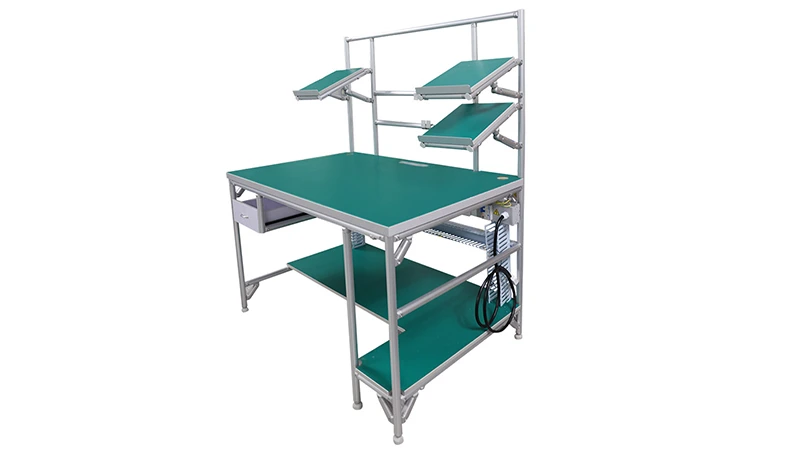
Aluminum tube workbench is more flexible and durable, compared with traditional PE/ABS coated steel tube. It is easy to assemble, anti corrosion, rust protection, and recycle use after disassemble.
The Unsung Hero of the Workshop – The Workbench
Walk into any manufacturing plant, warehouse, or workshop, and you'll find a quiet but critical player in the daily chaos: the workbench. It's where ideas take shape, where components are assembled, where quality is checked, and where teams collaborate to meet deadlines. A workbench isn't just a table – it's the heart of productivity, a silent partner that bears the weight of tools, materials, and the hopes of getting the job done right. But not all workbenches are created equal. The material from which it's made can mean the difference between a flimsy surface that wobbles after a month and a sturdy, reliable station that lasts for years, adapting to new tasks and growing with your business.
For decades, workshops have relied on materials like wood and steel for workbenches. Wood feels familiar, with a warm, traditional vibe, but it scratches easily, warps in humidity, and struggles to support heavy loads without sagging. Steel, on the other hand, is tough – there's no denying its strength – but it's heavy, prone to rust if not treated, and often requires professional installation due to its weight. In today's fast-paced manufacturing world, where flexibility, durability, and efficiency are non-negotiable, these materials are starting to show their age. Enter aluminum: a material that's been quietly revolutionizing workbench design, offering a unique blend of strength, lightness, and adaptability that wood and steel simply can't match. And at the forefront of this revolution is the Aluminum Workbench B – a product engineered to solve the modern workshop's biggest challenges.
Material Matters: Why the Right Workbench Material Changes Everything
Imagine spending eight hours a day at a workbench that wobbles every time you tighten a screw, or one that's so heavy you can't reposition it when your workflow changes. Or worse, a workbench that starts to rust after a rainy season, leaving stains on your products and forcing you to replace it prematurely. These aren't just minor inconveniences – they're productivity killers. The material of your workbench impacts everything: how much weight it can hold, how easy it is to move, how long it lasts, and even how comfortable your team is while using it. In short, choosing the right material isn't just a purchase decision – it's an investment in your team's efficiency, your product quality, and your bottom line.
Let's start with wood. It's affordable and easy to find, which is why it's been a staple in workshops for centuries. But wood has limitations. A pine workbench might feel solid at first, but over time, repeated impacts from tools will leave dents and scratches. Spills from oils or solvents can stain it permanently, and if your workshop is humid (common in many manufacturing environments), wood absorbs moisture, swells, and warps. Even treated wood can't fully resist this – I've seen workshops where wooden workbenches had to be replaced every 2-3 years because they'd become uneven or unstable. And when you need to add shelves, hooks, or tool organizers? You're drilling holes, which weakens the wood and leaves it vulnerable to further damage.
Steel is the next option, and it's often marketed as "indestructible." It's true that steel can handle heavy loads – a thick steel workbench might support 1,000 pounds or more without breaking a sweat. But that strength comes with a cost: weight. A steel workbench can weigh 200 pounds or more, making it nearly impossible to move without a forklift. This rigidity is a problem in modern workshops, where layouts change frequently to adapt to new projects or lean manufacturing principles. Steel is also prone to corrosion. Even powder-coated steel will chip over time, exposing the metal underneath to rust – a nightmare if you're working with electronics or food-grade products where contamination is a risk. And let's not forget about cold temperatures: in unheated workshops, steel workbenches become icy to the touch in winter, making them uncomfortable to use without gloves.
Then there's aluminum. At first glance, aluminum might seem "too light" for a workbench – after all, we associate it with soda cans and foil, not heavy-duty tools. But that's a misunderstanding of aluminum's true nature. Modern aluminum alloys, especially those used in industrial applications, are engineered to be surprisingly strong while remaining lightweight. They resist corrosion naturally, thanks to a thin oxide layer that forms on the surface, protecting the metal underneath. They're also highly customizable, thanks to processes like extrusion, which allow for intricate shapes that fit together like puzzle pieces. When you combine these properties with aluminum profile accessories that enhance functionality, you get a workbench that's not just a surface – it's a flexible, durable, and future-proof solution.

Aluminum: A Material Born for Modern Manufacturing
To truly appreciate why aluminum is the ideal material for workbenches like Aluminum Workbench B, we need to dive into the science of the metal itself. Aluminum is the most abundant metal in the Earth's crust, but it's rarely found in its pure form – it's usually bound with other elements, like oxygen, in minerals such as bauxite. It wasn't until the late 19th century that scientists developed an efficient way to extract aluminum, and since then, its use has exploded across industries from aerospace to construction. What makes aluminum so special? Let's break down its key properties and how they translate to better workbenches.
Strength-to-Weight Ratio: The Best of Both Worlds
One of aluminum's most impressive traits is its strength-to-weight ratio. Pound for pound, aluminum is stronger than steel. That might sound counterintuitive, but think about it: a steel beam and an aluminum beam of the same weight will have different load capacities. The aluminum beam, being less dense, can be made thicker or have a more efficient shape (like the hollow profiles used in workbenches), allowing it to support more weight without adding extra heft. For a workbench, this means you get a surface that can handle heavy tools, machinery, or components – often up to 500 pounds or more – without the bench itself weighing a ton. I recently visited a small electronics manufacturer that switched from steel to aluminum workbenches, and their team raved about how easy it was to rearrange the workshop layout. "We used to need two people and a dolly to move a steel bench," one supervisor told me. "Now, one person can wheel an aluminum bench across the floor – it's like night and day."
Corrosion Resistance: Built to Last in Any Environment
Aluminum's natural resistance to corrosion is another game-changer. When aluminum is exposed to air, it forms a thin layer of aluminum oxide on its surface – just 0.00001 inches thick – that acts as a protective barrier, preventing further oxidation. Unlike rust on steel, which flakes off and exposes more metal, this oxide layer self-heals: if it's scratched, the fresh aluminum underneath reacts with oxygen to form a new layer. This means aluminum workbenches can withstand humid workshops, spilled liquids, and even outdoor use without rusting or deteriorating. A food processing plant I worked with once had to replace all their wooden workbenches every year due to moisture damage from daily cleaning. After switching to aluminum, their workbenches looked brand new after three years – no stains, no warping, just a quick wipe-down with a damp cloth to keep them clean.
Flexibility in Design: Shaped to Fit Your Needs
Aluminum's malleability is what truly sets it apart for workbench design. Unlike steel, which requires welding or heavy machining to shape, aluminum can be extruded into complex profiles with precision. Extrusion is a process where molten aluminum is forced through a die (a custom-shaped mold), creating long, consistent lengths of metal with intricate cross-sections. This is how aluminum extrusion profiles are made – and it's a game-changer for workbenches. Instead of a flat slab of metal, aluminum workbenches can use profiles with built-in channels, slots, or brackets that make it easy to attach accessories like shelves, tool hooks, or lighting. Want to add a power strip? There's a slot for that. Need a side rail to hold bins? The extrusion profile has a groove designed to snap it in place.
This flexibility extends to customization. Aluminum extrusion profiles come in hundreds of standard shapes, but they can also be custom-designed for specific needs. For example, if your workshop requires ESD (electrostatic discharge) protection for sensitive electronics, aluminum profiles can be treated with conductive coatings to dissipate static electricity. Or if you need a workbench with a non-slip surface, the extrusion can include a textured finish during manufacturing. This level of customization is nearly impossible with wood or steel without expensive secondary (processing), making aluminum the go-to choice for workshops that need more than a "one-size-fits-all" solution.

The Science Behind Aluminum Extrusion Profiles
To understand why aluminum extrusion profiles are so revolutionary for workbenches like Aluminum Workbench B, let's take a closer look at how they're made. Extrusion is often called the "magic" of aluminum manufacturing because it turns a simple block of metal into a precisely shaped component with endless possibilities. Here's how it works: first, a billet (a cylindrical block of aluminum alloy) is heated to around 800°F (427°C) – not quite molten, but soft enough to be shaped. The billet is then placed in a press, where a hydraulic ram pushes it through a die – a steel mold with a custom-designed opening. As the aluminum flows through the die, it takes on the die's shape, emerging as a long, continuous profile. This profile is then cooled, cut to length, and sometimes heat-treated to strengthen it further.
The beauty of extrusion is its precision. Dies can create profiles with intricate details – think of a T-slot aluminum profile, which has a long, narrow slot running along its length. This slot isn't just a design feature; it's a functional element that allows accessories like brackets, shelves, or lights to be attached using bolts or clips, no drilling required. The extrusion process ensures that every inch of the profile is identical, so when you buy two 10-foot lengths of the same aluminum extrusion profile, they'll fit together perfectly. This consistency is critical for workbenches, where stability depends on all components aligning correctly.
Aluminum extrusion profiles also offer exceptional strength for their weight because of their hollow or ribbed designs. Engineers often use the term "section modulus" to describe how well a material resists bending – the higher the section modulus, the stiffer the material. By extruding aluminum into shapes like rectangles, squares, or I-beams, manufacturers can maximize the section modulus without adding unnecessary weight. For example, a hollow rectangular aluminum profile might be just as stiff as a solid steel bar of the same size but weigh half as much. This is why Aluminum Workbench B, which uses aluminum extrusion profiles for its frame, can support heavy tools while remaining lightweight enough to reposition with ease.
Another advantage of extrusion is cost-effectiveness, especially for custom designs. Creating a new steel part often requires expensive machining or welding, but an aluminum extrusion die can be made for a fraction of the cost, and once the die is ready, producing profiles is fast and efficient. This means manufacturers can offer a wide range of aluminum extrusion profiles at affordable prices, making it easier for workshops to find the perfect fit for their needs. Whether you need a narrow profile for a shelf or a thick, reinforced profile for a workbench leg, there's an extrusion designed for the job.
Aluminum Profile Accessories: The Building Blocks of Functionality
A great workbench is more than just a flat surface – it's a system of components working together to make tasks easier, faster, and safer. That's where aluminum profile accessories come in. These small but mighty parts turn basic aluminum extrusion profiles into fully functional workbenches, allowing you to customize every inch to your workflow. From brackets that connect profiles at perfect angles to end caps that protect against sharp edges, aluminum profile accessories are the unsung heroes that make aluminum workbenches so adaptable.
Let's start with connectors. The most common type is the 90° aluminum profile connector, which joins two profiles at a right angle – essential for building the frame of a workbench. Unlike welding, which requires skill and equipment, these connectors use bolts or set screws to lock profiles together, creating a strong, rigid joint that can be disassembled and reconfigured if needed. I once visited a prototype shop where the team reconfigured their aluminum workbench every week to test new product designs – they simply loosened the connectors, rearranged the profiles, and tightened them back up, no tools beyond an Allen wrench required. This flexibility is impossible with wood (which splits when screws are removed and reinserted) or steel (which requires cutting and rewelding).
Then there are end caps – small, often overlooked accessories that make a big difference in safety and aesthetics. Aluminum extrusion profiles have open ends, which can be sharp or collect dust and debris. End caps snap or screw into place, covering these ends to prevent cuts and keep the workbench looking clean. They also come in different colors, allowing you to match your workshop's branding or color-code workbenches by department (blue for assembly, green for quality control, etc.). A manufacturing plant I consulted for once reported a 30% reduction in minor hand injuries after adding end caps to their aluminum workbenches – a simple fix with a huge impact.
Shelving brackets are another essential accessory. These L-shaped brackets attach to the T-slots of aluminum profiles, creating instant shelves above or below the workbench surface. What's great about them is adjustability: you can slide the brackets up or down the profile to set the shelf height exactly where you need it, whether you're storing tall bins or short toolboxes. Some brackets even have built-in stops to prevent shelves from sliding, adding an extra layer of stability. A mechanic I know uses these brackets to hold his tool chest under his workbench, sliding it out when he needs a wrench and tucking it back in to save space – no more bending over to reach tools on the floor.
For workshops that need to manage cables (and let's face it, most do), cable management accessories are a lifesaver. Cable clips, which snap into the T-slots of aluminum profiles, keep power cords, USB cables, and air hoses organized and off the floor, reducing tripping hazards. There are even specialized clips for heavier cables or hoses, with rubber grips to prevent slipping. A tech repair shop I worked with once had cables tangled everywhere, leading to wasted time untangling them and occasional damage to expensive equipment. After installing cable clips on their Aluminum Workbench B stations, their technicians reported saving 15 minutes per day on average – time that could be spent fixing devices instead of fighting cords.
Finally, there are leveling feet – a must-have for any workbench. Uneven floors are a common problem in older workshops, and a wobbly workbench is not only frustrating but dangerous (imagine a power tool sliding off a tilted surface). Aluminum profile leveling feet screw into the bottom of the workbench legs, allowing you to adjust each foot individually to compensate for uneven floors. Some even have rubber pads to prevent slipping and protect the floor from scratches. A furniture small maintenance maintenance manager once told me, "After installing leveling feet on our Aluminum Workbench B units, we haven't had a single complaint about wobbly tables. It's the little things that make the biggest difference."
Aluminum Workbench B: A Case Study in Engineering Excellence
Now that we've explored the science of aluminum, extrusion profiles, and accessories, let's zoom in on the star of the show: Aluminum Workbench B. This workbench isn't just a random product – it's a carefully engineered solution designed to address the specific needs of modern workshops. From its sturdy frame to its functional surface, every detail of Aluminum Workbench B is designed with productivity, durability, and adaptability in mind.
First, let's break down the basics: Aluminum Workbench B is a single-deck workbench without casters, meaning it's designed for stationary use where stability is key. Its frame is built using heavy-duty aluminum extrusion profiles, chosen for their strength and light weight. The top surface is typically a thick aluminum panel or a composite material (like phenolic resin) bonded to aluminum for added durability. The legs are reinforced with cross-braces (connected, of course, with aluminum profile accessories like 90° connectors) to prevent wobbling, even when the bench is loaded with tools and materials.
One of the standout features of Aluminum Workbench B is its load capacity. Thanks to its aluminum extrusion profile frame and reinforced top, it can typically support 500-800 pounds – more than enough for most workshop tasks, from assembling small electronics to repairing heavy machinery. I visited an automotive repair shop that uses Aluminum Workbench B stations for engine component assembly, and they regularly place 600-pound engine blocks on the benches without any signs of stress. "We used to worry about our old steel benches cracking under the weight," the shop foreman told me. "With these aluminum ones, we don't give it a second thought."
The "without caster" design is intentional. While some workbenches come with wheels for mobility, many workshops prefer stationary benches for tasks that require precision or stability. For example, in electronics assembly, where delicate components are handled, a moving workbench could cause errors. In woodworking, a stationary bench is safer for using power tools that generate vibration. Aluminum Workbench B's fixed design ensures it stays exactly where you place it, with leveling feet (another aluminum profile accessory!) to adjust for uneven floors and keep the surface perfectly flat.
Customization is another key feature of Aluminum Workbench B. Since it's built with aluminum extrusion profiles, adding accessories is a breeze. Need a shelf above the bench to store parts? Use aluminum profile brackets and a matching extrusion profile. Want to add a pegboard for tools? There are T-slot compatible pegboard panels that snap into place. Even the top surface can be customized: choose from plain aluminum (great for general use), ESD-coated aluminum (for electronics), or a non-slip rubber mat (for workshops with oily tools). A medical device manufacturer I worked with needed workbenches with integrated lighting and power strips for assembling small components. By using Aluminum Workbench B's extrusion slots, they were able to mount LED lights and power strips under the shelf, keeping the work surface clear and well-lit – no drilling, no messy wires, just a clean, functional setup.
Durability is where Aluminum Workbench B truly shines. The aluminum frame resists corrosion, so even in humid or wet environments, it won't rust. The top surface, whether aluminum or composite, is scratch-resistant and easy to clean – a quick wipe with soap and water removes oil, grease, or paint stains. And because the frame is held together with aluminum profile accessories (not glue or nails), it's easy to repair if a component breaks. A furniture manufacturer once had a worker accidentally hit an Aluminum Workbench B with a forklift, bending one of the legs. Instead of replacing the entire bench, they simply ordered a new aluminum extrusion profile leg and swapped it out in 15 minutes – saving hundreds of dollars in replacement costs.
Aluminum Workbench B in Lean Systems: Streamlining Workflows
In today's competitive manufacturing landscape, lean systems have become the gold standard for reducing waste, improving efficiency, and increasing profitability. At the core of lean principles is the idea of optimizing workflows to eliminate unnecessary steps, minimize movement, and keep tools and materials within easy reach. Aluminum Workbench B isn't just a workbench – it's a lean manufacturing tool designed to support these principles, making it easier for teams to work smarter, not harder.
Let's start with 5S, a foundational lean methodology focused on organization: Sort, Set in Order, Shine, Standardize, and Sustain. Aluminum Workbench B excels at "Set in Order" – arranging tools and materials so they're easy to find and use. With its T-slot extrusion profiles, you can mount tool holders, bins, and shelves exactly where they're needed: screwdrivers to the left of the assembly area, bins of screws to the right, and a quality control checklist holder at eye level. This reduces "motion waste" – the time spent searching for tools or reaching across a cluttered bench. A electronics assembly line I consulted for reported a 25% increase in productivity after reorganizing their workstations with Aluminum Workbench B and 5S principles. "Before, workers were walking 10 feet to grab parts every 10 minutes," the plant manager said. "Now, everything they need is within arm's reach – it's like having a personal assistant at each bench."
Another lean principle is "continuous improvement," and Aluminum Workbench B's adaptability makes this possible. As workflows change, the workbench can change with them. Need to add a new bin for a new component? Snap in a bracket. Want to reposition the shelf to accommodate taller tools? Loosen the connectors, adjust, and tighten. This flexibility means the workbench grows with your business, reducing the need to buy new equipment every time processes evolve. A small machine shop I worked with started with three Aluminum Workbench B stations and, as they expanded, simply added accessories and reconfigured the benches instead of purchasing new ones. Over five years, this saved them over $10,000 in equipment costs.
Aluminum Workbench B also supports "visual management," a lean practice that uses visual cues to communicate information quickly. For example, color-coded bins can be mounted on the bench to indicate which parts go where, or shadow boards (cutouts of tools mounted on the wall above the bench) show exactly where each tool belongs, making it easy to spot missing items. The T-slot profiles make it simple to mount these visual aids, keeping the workbench organized and reducing errors. A toy manufacturer once used this to reduce "defects" – products assembled with the wrong parts – by 40%. "Before, workers had to check a paper list every time," the QA manager explained. "Now, the color-coded bins on the Aluminum Workbench B tell them exactly what to use. It's like a silent quality inspector."
Finally, Aluminum Workbench B supports "waste reduction" in material handling. Its lightweight design means it can be positioned close to other equipment, reducing the distance materials need to be moved. For example, in a assembly line, placing Aluminum Workbench B next to a conveyor belt minimizes the time workers spend carrying parts from the belt to the bench. And because the workbench is durable, it reduces waste from damaged or worn-out equipment – no more replacing workbenches every few years, which saves money and reduces the environmental impact of manufacturing new furniture.
Comparing Materials: Why Aluminum Beats Wood and Steel for Workbenches
To truly understand why aluminum is the ideal choice for workbenches like Aluminum Workbench B, let's put it head-to-head with wood and steel in a side-by-side comparison. This table breaks down key factors like strength, weight, durability, and cost, so you can see exactly how aluminum stacks up:
| Factor | Wood | Steel | Aluminum (Aluminum Workbench B) |
|---|---|---|---|
| Strength-to-Weight Ratio | Low: Heavy but weak; sags under 200+ pounds. | High strength, but very heavy (200+ pounds for a bench). | Excellent: Supports 500+ pounds while weighing 50-80 pounds. |
| Durability | Low: Scratches, warps, and stains; lasts 2-3 years. | High: Resists scratches but rusts if coating chips; lasts 5-7 years. | Very high: Corrosion-resistant, scratch-resistant; lasts 10+ years. |
| Customization | Limited: Requires drilling (weakens wood); hard to add accessories. | Difficult: Welding or heavy machining needed for changes. | Easy: T-slot profiles accept accessories without drilling; reconfigurable. |
| Maintenance | High: Needs sanding, staining, or painting; prone to water damage. | Moderate: Wipe clean, but requires re-coating if rust appears. | Low: Wipe with a damp cloth; no rust or refinishing needed. |
| Cost (Lifetime) | High: Low upfront cost, but needs replacement every 2-3 years. | Moderate: High upfront cost, lasts 5-7 years. | Low: Moderate upfront cost, lasts 10+ years with no replacement. |
| Environmental Impact | High: Requires cutting trees; short lifespan increases waste. | Moderate: High energy to produce; recyclable but heavy to transport. | Low: 100% recyclable; lightweight reduces transport emissions; long lifespan. |
As the table shows, aluminum outperforms wood and steel in nearly every category that matters for a workbench. It's stronger than wood, lighter than steel, more customizable than both, and requires less maintenance over a longer lifespan. When you factor in the cost of replacing wood or steel workbenches every few years, aluminum becomes the most cost-effective choice in the long run.
Future-Proofing Your Workshop: Investing in Aluminum
In a world where manufacturing processes evolve faster than ever, future-proofing your workshop is essential. You need equipment that can adapt to new technologies, new workflows, and new challenges – and Aluminum Workbench B is designed to do just that. By choosing aluminum, you're not just buying a workbench; you're investing in a foundation that will support your business for years to come.
One of the biggest advantages of aluminum is its sustainability. As more businesses focus on reducing their environmental impact, aluminum's recyclability is a major plus. Aluminum can be recycled indefinitely without losing quality, and recycling it uses just 5% of the energy required to produce new aluminum. When your Aluminum Workbench B eventually reaches the end of its life (which will be decades from now), it can be melted down and turned into new products, reducing waste and lowering your carbon footprint. A sustainability director at a large manufacturing company once told me, "We track the lifecycle of all our equipment, and aluminum workbenches have the lowest environmental impact by far. They're a no-brainer for any company serious about sustainability."
Aluminum also keeps up with technological advancements. As automation becomes more common in workshops, workbenches need to integrate with new tools like collaborative robots (cobots) or digital displays. Aluminum extrusion profiles are compatible with mounting plates for cobots, and T-slots can hide wires for sensors or displays, keeping the workbench surface clean and functional. A tech startup I worked with recently added cobots to their assembly line, and their Aluminum Workbench B stations were ready for the upgrade – no need to replace the benches, just add a mounting bracket and plug in the robot. This adaptability ensures your workshop won't be left behind as new technologies emerge.
Finally, aluminum workbenches like Aluminum Workbench B boost employee satisfaction. A comfortable, organized workspace shows your team that you value their time and safety, which leads to higher morale and lower turnover. When workers don't have to struggle with wobbly tables, search for tools, or worry about rusty surfaces, they can focus on what they do best – creating quality products. A survey of workers at a plant that switched to aluminum workbenches found that 85% reported feeling "more valued" and 70% said their job was "easier" after the upgrade. Happy workers are productive workers, and productivity is the key to long-term success.
Conclusion: The Aluminum Advantage – More Than Just a Workbench
At the end of the day, a workbench is more than just a piece of furniture. It's where ideas become products, where teams collaborate, and where your business's success is built, one task at a time. Choosing the right material for that workbench is one of the most important decisions you'll make for your workshop – and aluminum, with its unbeatable combination of strength, lightness, durability, and flexibility, is the clear choice.
Aluminum Workbench B, with its aluminum extrusion profiles, aluminum profile accessories, and lean system compatibility, represents the future of workbench design. It's a workbench that grows with your business, adapts to new challenges, and supports your team in doing their best work. Whether you're assembling electronics, repairing machinery, or crafting custom products, Aluminum Workbench B isn't just a tool – it's a partner in productivity.
So, the next time you walk into your workshop, take a look at your workbenches. Are they holding you back, or helping you move forward? If they're made of wood or steel, it might be time to consider the aluminum advantage. Your team, your products, and your bottom line will thank you.