- Company Articles
- Products and Technology
- Procurement Guidelines
- Aluminum Workbench B Selection: Matching Load Capacity to Production Needs

Aluminum Workbench B Selection: Matching Load Capacity to Production Needs
Related Product
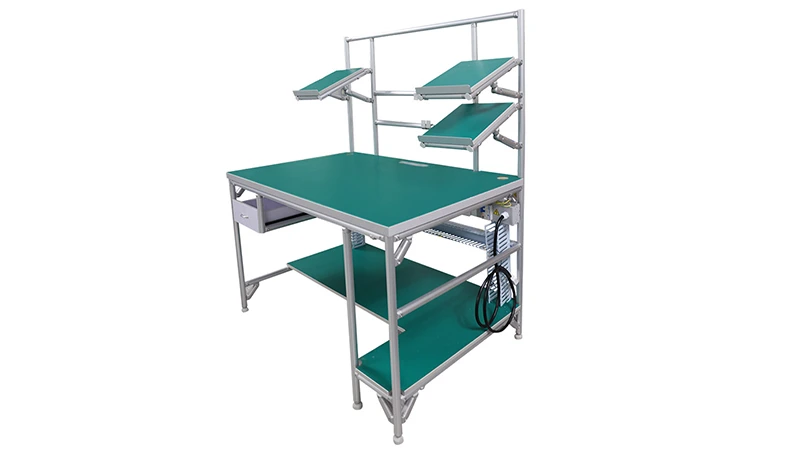
Aluminum Workbench B
Aluminum tube workbench is more flexible and durable, compared with traditional PE/ABS coated steel tube. It is easy to assemble, anti corrosion, rust protection, and recycle use after disassemble.
Introduction: The Backbone of Efficient Production Assemble
Walk into any manufacturing facility, and you'll notice one constant: workbenches are the quiet heroes keeping production lines moving. Whether it's assembling circuit boards, packaging finished goods, or testing machinery, these surfaces are where ideas turn into tangible products. But not all workbenches are created equal—especially when it comes to supporting the unique demands of production assemble. This is where Aluminum Workbench B steps in, a versatile solution designed to balance durability, flexibility, and load capacity. But how do you ensure it's the right fit for your team's daily grind?
Choosing the wrong workbench can lead to more than just inconvenience. Imagine a scenario where a flimsy surface sags under the weight of heavy tools, causing delays as workers stop to readjust. Or worse, a bench that fails under load, risking injury and damaged materials. In production environments, where every minute counts, these issues translate directly to lost revenue and frustrated teams. That's why matching your workbench's load capacity to your production needs isn't just a "nice-to-have"—it's a critical decision that impacts safety, efficiency, and your bottom line.
In this guide, we'll dive deep into Aluminum Workbench B, exploring how its design, materials (like aluminum profile and caster accessories), and load capabilities align with real-world production challenges. Whether you're setting up a new assembly line or upgrading outdated equipment, by the end, you'll have the tools to make a choice that grows with your business and keeps your team working at their best.
Understanding Aluminum Workbench B: More Than Just a Surface
Let's start with the basics: What makes Aluminum Workbench B stand out in a market flooded with workbench options? At its core, this workbench is built around one key material: aluminum profile. Unlike traditional steel workbenches that are heavy and prone to rust, aluminum profile brings a unique set of advantages. It's lightweight enough to reposition (with the right caster accessories, of course) but strong enough to handle the rigors of daily production. Think of it as the Goldilocks of workbench materials—sturdy without being cumbersome, durable without sacrificing adaptability.
The Anatomy of Aluminum Workbench B
Most Aluminum Workbench B models feature a single-deck design (similar to the "Workbench E (single deck-without caster)" variant but optimized for heavier use), constructed with extruded aluminum profile frames. These profiles aren't just generic tubes—they're engineered with precision, often featuring T-slots that allow for easy attachment of tools, shelves, or bins. This modularity is a game-changer for production assemble, where workflows evolve and tool needs shift over time.
The deck itself is typically made from a solid aluminum panel or a reinforced composite, designed to distribute weight evenly across the frame. Unlike wooden workbenches that warp or plastic ones that crack, aluminum resists moisture, chemicals, and scratches—common hazards in busy production environments. And while some workbenches come with built-in casters, Aluminum Workbench B often offers caster accessories as optional add-ons, letting you choose between a stationary setup for heavy, fixed tasks or a mobile one for flexible workflows.
Why Aluminum Profile Matters for Load Capacity
Aluminum profile isn't just about looks—it's the secret to Aluminum Workbench B's impressive load capacity. Extruded aluminum undergoes a process where molten metal is forced through a die, creating consistent, high-strength shapes. This manufacturing method ensures the profile has uniform thickness and structural integrity, so there are no weak points to fail under pressure. When combined with aluminum profile accessories like brackets and connectors, the frame becomes a rigid structure that can support hundreds of pounds without bending or twisting.
Compare this to a cheap particleboard workbench, which might start strong but sag over time as the material absorbs moisture or weakens under repeated stress. Aluminum, by contrast, maintains its shape and strength for years, even in environments where spills, humidity, or temperature fluctuations are common. For production teams that rely on their workbench day in and day out, this longevity translates to fewer replacements and lower long-term costs.

Load Capacity 101: What It Means for Your Production Line
Before we dive into selecting Aluminum Workbench B, let's get clear on a term that will come up again and again: load capacity. Simply put, load capacity is the maximum weight a workbench can safely support without damage or deformation. But it's not a one-size-fits-all number—there are two critical types to understand: static load and dynamic load.
Static vs. Dynamic Load: Know the Difference
Static load refers to the weight the workbench can support when it's stationary and the load is evenly distributed. This is what matters for tasks like storing tools, placing heavy equipment, or assembling large components that stay in one spot for extended periods. For example, if your team spends hours soldering on a circuit board that sits on the bench, you're relying on static load capacity.
Dynamic load , on the other hand, is the weight the workbench can handle when it's in motion—think of a mobile workbench with caster accessories being rolled across the factory floor. Even if the bench is stationary, dynamic load also applies when items are being placed, moved, or removed frequently (like loading and unloading parts bins). Sudden impacts, like dropping a tool, can temporarily increase the dynamic load, so it's crucial to account for these "shock loads" in your selection.
Real-World Example: Static vs. Dynamic in Action
Suppose your Aluminum Workbench B has a static load capacity of 1,000 lbs and a dynamic load capacity of 600 lbs. If you're using it as a stationary station for assembling 500-lb engine parts, you're well within the static limit. But if you add caster accessories and roll it across the floor with those same parts, you'd exceed the dynamic limit, risking caster failure or frame damage. Always prioritize dynamic load if mobility is part of your workflow.
Why Load Capacity Isn't Negotiable
You might be thinking, "Can't I just buy the strongest workbench available to be safe?" While overestimating load capacity won't hurt (aside from cost), underestimating it can have serious consequences:
- Safety Risks: A workbench that collapses can cause injuries to workers or damage to expensive equipment.
- Productivity Loss: Sagging surfaces or wobbly frames force workers to slow down, adjust tools, or stop production entirely.
- Premature Wear: Even if it doesn't collapse, a workbench under constant overloading will wear out faster, leading to frequent repairs or replacements.
- Ergonomic Issues: A warped workbench can throw off worker posture, leading to fatigue or long-term injuries like carpal tunnel syndrome.
Load Capacity Comparison: Aluminum Workbench B vs. Common Alternatives
To put Aluminum Workbench B's capabilities in perspective, let's compare it to other popular workbench types. The table below breaks down typical load capacities, materials, and best-use cases:
| Workbench Type | Material | Static Load Capacity | Dynamic Load Capacity (with casters) | Best For |
|---|---|---|---|---|
| Aluminum Workbench B | Aluminum Profile | 800–1,200 lbs | 500–800 lbs | Medium to heavy production assemble, modular workflows |
| Standard Steel Workbench | Steel Tubing | 1,200–2,000 lbs | 800–1,500 lbs | Heavy industrial use (e.g., automotive manufacturing) |
| Wooden Workbench | Plywood/Maple | 300–600 lbs | Not recommended for mobility | Light assembly, craft work, or low-weight tasks |
| Plastic Workbench | HDPE Plastic | 200–400 lbs | 100–250 lbs | Cleanrooms, labs, or environments needing chemical resistance |
As you can see, Aluminum Workbench B strikes a balance between steel's strength and wood/plastic's lightweight design—making it ideal for production assemble lines that need both durability and adaptability.

Factors That Shape Your Load Capacity Needs
Now that you understand load capacity basics, let's turn to your specific production environment. Your Aluminum Workbench B selection should hinge on a clear assessment of your daily tasks, tools, and materials. Here are the key factors to consider:
1. The Weight of Your Production Assemble Materials
Start by taking inventory of everything that will live on or pass through your workbench. This includes:
- Tools: Drills, saws, torque wrenches, and other power tools can add up quickly. A heavy-duty drill press alone might weigh 150 lbs.
- Raw Materials: Metal sheets, circuit boards, or plastic molds—even small components add up when stacked.
- Finished Products: If your workbench doubles as a staging area, account for the weight of completed items waiting to be moved.
- Consumables: Bins of screws, adhesives, or lubricants might seem light, but full bins can weigh 20–50 lbs each.
Once you have this list, add 20–30% to the total weight to account for "unplanned" items (like a worker placing their lunchbox or a temporary tool) and future growth. This "buffer" ensures you don't outgrow your workbench as production scales.
2. Workflow: Stationary or On-the-Go?
How your workbench is used day-to-day has a huge impact on load needs. If it's a fixed station in an assembly line (static use), you can focus primarily on static load capacity. But if your team needs to move it between work cells—say, from pre-assembly to testing—you'll need to factor in dynamic load and the quality of your caster accessories.
Not all casters are created equal, either. Heavy-duty caster wheels with locking mechanisms will support more dynamic weight than lightweight plastic ones. When adding caster accessories to Aluminum Workbench B, look for models rated for at least your calculated dynamic load, and opt for swivel casters with brakes to ensure stability when stationary.
3. Environmental Conditions
Your production environment can quietly eat away at load capacity over time. For example:
- Humidity or Chemicals: In food processing or pharmaceutical settings, moisture or corrosive cleaners can weaken steel frames. Aluminum Workbench B's corrosion-resistant aluminum profile is a better choice here.
- Temperature Extremes: High heat can soften plastic components (like caster accessories), while cold can make metal brittle. Check that all parts are rated for your facility's temperature range.
- Floor Conditions: Uneven floors or cracks can cause extra stress on casters and frames, reducing effective load capacity. If your floor is less than perfect, opt for a higher dynamic load rating to compensate.
4. Ergonomics and Worker Habits
Even the strongest workbench won't perform well if it's not comfortable for workers. A workbench that's too low forces bending, while one that's too high causes shoulder strain—both leading to rushed, careless placement of tools (and potential overloading). Aluminum Workbench B often offers height-adjustable options, but remember: raising the height can reduce stability, so factor this into your load calculations.
Worker habits matter too. If your team tends to pile tools on one corner of the bench instead of distributing weight evenly, you'll need a higher load capacity in that "hot spot." Training workers to spread weight across the deck can extend the life of your workbench and keep load distribution consistent.
How to Assess Your Production Assemble Needs: A Step-by-Step Guide
Now that you know what factors influence load capacity, let's walk through a practical process to determine exactly what you need from Aluminum Workbench B. This isn't just about crunching numbers—it's about aligning the workbench with your team's unique rhythm and goals.
Step 1: Map Your Current Workflow
Grab a notebook (or a whiteboard) and sketch out your production assemble process from start to finish. Where does the workbench fit in? Is it a single station where one worker completes a task, or a shared space where multiple teams pass through? For example:
- Assembly Line Station: Worker A uses the bench to attach brackets, then passes the part to Worker B. The bench holds tools, brackets, and a bin for completed parts.
- Staging Area: The bench holds finished products until they're moved to packaging. Weight here fluctuates as products are added or removed.
- Repair Station: The bench supports heavy machinery during maintenance, with tools, replacement parts, and cleaning supplies nearby.
The key is to identify all activities that happen on or around the bench. Even occasional tasks (like quarterly equipment audits) should be included—you don't want to overlook a once-a-month task that involves 800 lbs of equipment.
Step 2: Weigh Everything (Yes, Everything)
This might sound tedious, but it's the most critical step. Take a scale and weigh:
- All tools that stay on the bench (drills, grinders, etc.).
- Typical batches of raw materials (e.g., a box of 50 brackets).
- Finished products (if staged on the bench).
- Accessories like bins, tool organizers, or monitors.
Add these weights together, then multiply by 1.3 (the 30% buffer we mentioned earlier). This gives you your "target load capacity." For example:
Sample Load Calculation
Tools: 200 lbs (drill press, wrench set, soldering iron)
Raw Materials: 300 lbs (box of metal sheets, 2 bins of screws)
Finished Products: 150 lbs (staged for shipping)
Accessories: 50 lbs (tool bin, monitor stand)
Total:
200 + 300 + 150 + 50 = 700 lbs
With 30% buffer:
700 x 1.3 = 910 lbs
Target Load Capacity:
~900–1,000 lbs (static). If using casters, aim for 600–700 lbs dynamic.
Step 3: Consult Your Team (They Know Best)
Your production workers are the ones using the workbench daily—they'll have insights you might miss. Ask questions like:
- "What's the heaviest thing you've ever placed on the current bench?"
- "Do you ever wish you could move the bench? Why?"
- "Where do you notice the current bench sagging or wobbling?"
- "What tools or materials do you avoid putting on the bench because it feels unstable?"
Their answers might reveal hidden needs—like a desire for caster accessories to move the bench during deep cleaning or a need for a higher load capacity in a specific corner. This feedback turns a "good" workbench into a "great" one.
Step 4: Plan for the Future
A workbench should last 5–10 years, so think about how your production might change in that time. Are you planning to add new product lines with heavier parts? Will automation require mounting robots or sensors on the bench? Even small changes, like switching to bulk material delivery (heavier bins), can increase load needs.
If growth is on the horizon, consider Aluminum Workbench B models with modular designs. These allow you to add shelves, reinforce frames, or upgrade caster accessories later, extending the workbench's useful life without a full replacement.
Aluminum Workbench B: Features That Support Your Load Needs
Now that you know your target load capacity, let's explore how Aluminum Workbench B is engineered to meet (and exceed) those needs. From its aluminum profile frame to its optional caster accessories, every component is designed with strength and flexibility in mind.
Aluminum Profile: The Foundation of Strength
The star of the show is undoubtedly the aluminum profile frame. Unlike generic aluminum tubes, these profiles are extruded with precision, featuring internal ribs and thick walls that boost rigidity. Most Aluminum Workbench B models use 40mm x 40mm or 40mm x 80mm aluminum profiles—sizes chosen for their perfect balance of weight and strength. These profiles aren't just strong on their own; they're also compatible with a wide range of aluminum profile accessories, like corner brackets and T-slot nuts, which let you reinforce weak points or add custom attachments without drilling.
Another advantage of aluminum profile is its resistance to bending. When you place a heavy load on a steel bench, it might flex temporarily, but aluminum's elasticity means it returns to its original shape, reducing fatigue over time. This "memory" ensures the bench maintains its flatness and stability, even after years of heavy use.
Deck Design: Distributing Weight Like a Pro
The deck of Aluminum Workbench B is more than just a flat surface—it's engineered to distribute weight evenly across the frame. Most models use a solid aluminum plate or a honeycomb-core panel (for lighter weight with similar strength). The edges are often reinforced with aluminum channeling to prevent warping, and the deck is secured to the frame with heavy-duty bolts (not just screws), ensuring it doesn't shift under load.
For extra peace of mind, some Aluminum Workbench B variants come with a "load spreader" option—a thin steel plate under the deck that distributes concentrated weights (like a 300-lb tool) across a larger area of the frame. This is a must-have if your production involves placing heavy, small-footprint items.
Caster Accessories: Mobility Without Compromise
If mobility is part of your workflow, Aluminum Workbench B's caster accessories are worth a close look. Not all casters are created equal, so here's what to prioritize:
- Load Rating: Each caster should be rated for at least 1/4 of your total dynamic load (since there are 4 casters). For a 600-lb dynamic load, choose casters rated for 150 lbs each (or higher, to be safe).
- Wheel Material: Rubber wheels are best for smooth floors and shock absorption, while polyurethane wheels handle rough surfaces better. Avoid plastic wheels for heavy loads—they crack under pressure.
- Locking Mechanisms: Dual-locking casters (which lock both the wheel and the swivel) are essential for stability when the bench is stationary. This prevents "drifting" during assembly tasks that require precision.
When adding caster accessories to Aluminum Workbench B, always follow the manufacturer's guidelines for installation. Improperly mounted casters can create weak points in the frame, reducing overall load capacity.
Joints and Connections: The Hidden Strength
Even the strongest profiles and decks will fail if the joints are weak. Aluminum Workbench B uses high-quality aluminum profile accessories, like 90° corner brackets and T-slot bolts, to secure the frame. These connections aren't just tight—they're adjustable, allowing you to tweak alignment if the bench ever becomes wobbly. Some models even use internal rotary aluminum joints, which add flexibility without sacrificing strength, letting you angle the bench for ergonomic tasks.
Unlike welded steel benches, which can crack at the welds under stress, aluminum joints are designed to flex slightly, absorbing shock loads (like dropping a heavy tool) without permanent damage. This "give" makes Aluminum Workbench B more durable in the long run, especially in high-traffic production environments.
Common Mistakes to Avoid When Selecting Aluminum Workbench B
Even with careful planning, it's easy to fall into common traps when selecting a workbench. Here are the most frequent mistakes we see—and how to steer clear of them:
Mistake #1: Focusing Only on Static Load Capacity
It's tempting to buy a workbench based solely on static load, especially if you don't plan to move it. But even stationary benches experience dynamic loads—like when a worker slams down a tool or drops a part. Ignoring these shock loads can lead to frame fatigue over time. Always check the dynamic load rating, even for fixed stations, and aim for a bench where the static load is at least 1.5x the dynamic load (e.g., 1,000 lbs static / 600 lbs dynamic).
Mistake #2: Overlooking Caster Quality
Caster accessories are often treated as an afterthought, but they're critical to dynamic load capacity. Cheap casters with plastic wheels or weak bearings will fail quickly under heavy loads, even if the bench itself is strong. Invest in heavy-duty casters from reputable brands, and make sure they're compatible with Aluminum Workbench B's frame (some workbenches require specific mounting plates).
Mistake #3: Assuming "Aluminum = Lightweight = Weak"
There's a common misconception that aluminum workbenches can't handle heavy loads because they're lighter than steel. This couldn't be further from the truth. While aluminum is lighter, its strength-to-weight ratio is actually higher than steel in many cases. Aluminum Workbench B's extruded profiles and reinforced joints make it more than capable of handling 800–1,200 lbs static load—plenty for most production assemble tasks. Don't rule it out based on weight alone!
Mistake #4: Neglecting Floor Support
Even the strongest workbench will fail if the floor underneath it isn't stable. Concrete floors with cracks or unevenness can cause the bench to rock, putting extra stress on the frame and casters. If your floor is less than perfect, consider adding leveling feet (another aluminum profile accessory) to distribute weight evenly. For mobile benches, avoid rolling over thresholds or gaps—these can jar the frame and reduce dynamic load capacity.
Mistake #5: Buying Based on Price Alone
It's easy to opt for the cheapest Aluminum Workbench B model, but you'll pay for it in the long run. Lower-priced models often cut corners with thinner aluminum profiles, plastic joints, or unrated casters—all of which reduce load capacity and durability. Instead of focusing on upfront cost, calculate the "total cost of ownership": a $500 bench that lasts 2 years vs. a $800 bench that lasts 10 years. The latter is almost always the better investment.
Conclusion: Your Workbench, Your Production's Foundation
Selecting Aluminum Workbench B isn't just about picking a surface to work on—it's about investing in your team's safety, productivity, and long-term success. By matching load capacity to your production assemble needs, you're ensuring that every tool, every part, and every worker has the stable, reliable foundation they need to thrive.
Remember, the best workbench is one that grows with you. Aluminum Workbench B's modular design, durable aluminum profile, and versatile caster accessories make it more than a purchase—it's a partner in your production journey. Whether you're assembling small electronics or heavy machinery, taking the time to assess your load needs, consult your team, and prioritize quality will pay off in smoother workflows, fewer disruptions, and a workbench that serves you well for years to come.
So, what's next? Grab that notebook, weigh those tools, and start mapping your needs. Your team (and your bottom line) will thank you.