- Company Articles
- Products and Technology
- Procurement Guidelines
- Aluminum Workbench B vs. Custom Steel Workstations: Cost-Effectiveness Review

Aluminum Workbench B vs. Custom Steel Workstations: Cost-Effectiveness Review
Related Product
Aluminum Workbench B
Aluminum tube workbench is more flexible and durable, compared with traditional PE/ABS coated steel tube. It is easy to assemble, anti corrosion, rust protection, and recycle use after disassemble.
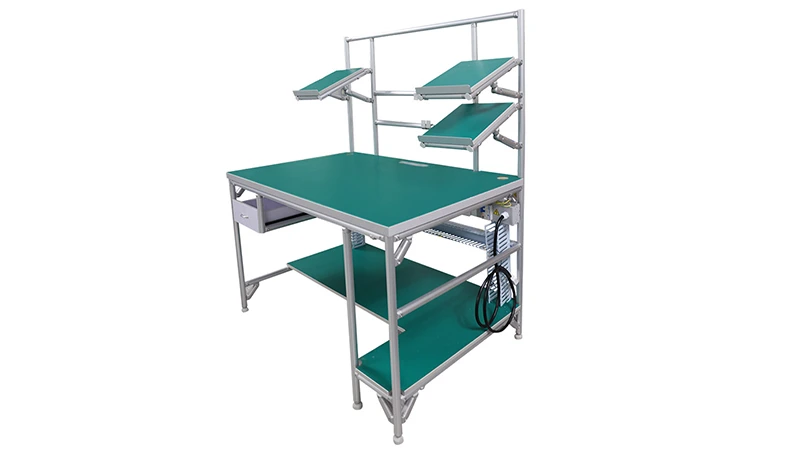
Navigating the trade-offs between upfront investment, long-term value, and workflow efficiency in modern manufacturing
The Workstation Dilemma: Why the Right Choice Matters More Than You Think
Walk into any production facility—whether it's a bustling electronics assembly line, a precision automotive workshop, or a small-batch manufacturing studio—and you'll notice one common thread: the workstation. It's the unsung hero of the operation, the silent backbone that dictates how smoothly workers move, how quickly tasks get done, and ultimately, how profitable the business is. But here's the thing: not all workstations are created equal. And choosing between two popular options—Aluminum Workbench B and custom steel workstations—can feel like standing at a crossroads with a million "what-ifs" swirling in your head.
"Do we splurge on something sturdy but expensive?" "Will a cheaper option end up costing us more in repairs later?" "Can we afford to be locked into a setup if our production needs change next year?" These are the questions keeping plant managers up at night. Because a workstation isn't just a table with a surface; it's a critical part of your lean system —the set of processes that minimizes waste, maximizes efficiency, and keeps your team moving like a well-oiled machine. Get it wrong, and you're looking at bottlenecks, frustrated employees, and cash leaking through cracks you didn't even know existed.
In this deep dive, we're putting two contenders head-to-head: Aluminum Workbench B, a modular, lightweight option built with aluminum profile and designed for flexibility, and custom steel workstations, the heavy-duty, made-to-order workhorses that have long been industry staples. We'll break down their costs, from the initial price tag to hidden expenses like maintenance and downtime. We'll weigh their pros and cons in real-world scenarios. And by the end, you'll have a clear roadmap to decide which one truly delivers the best bang for your buck—today, tomorrow, and five years down the line.
Meet the Contenders: What Makes Aluminum Workbench B and Custom Steel Workstations Tick?
Before we dive into cost breakdowns, let's get to know our two options. They might both be called "workstations," but under the hood, they're built for different priorities—and that difference shapes everything from how they're installed to how they perform over time.
Aluminum Workbench B: The Modular Maverick
Aluminum Workbench B is part of a new breed of workstations designed for adaptability. At its core is aluminum profile —extruded aluminum beams with precision-cut T-slots that act as built-in channels for accessories. Think of it as a grown-up version of building blocks: the frame is assembled using internal rotary aluminum joints, and the surface (a single deck, in this case) sits atop legs that can be paired with optional caster wheels for mobility. No welding, no heavy machinery—just hand tools and a few hours to put it all together.
What really sets it apart is its modularity. Need to add a shelf for tools? Screw in an aluminum bracket. Want to mount a lamp or a small conveyor? Slide a connector into the T-slot. Even better, if your production line shifts, you can disassemble the entire workbench and rebuild it in a new configuration without cutting or drilling. It's lightweight too—aluminum weighs roughly a third of steel—so moving it (with those caster wheels) from one corner of the shop to another is a one-person job, not a forklift mission.
Custom Steel Workstations: The Heavy-Duty Traditionalist
Custom steel workstations, on the other hand, are the old reliables. Built from thick steel tubing or sheets, they're fabricated to your exact specs: height, width, load capacity, even built-in drawers or tool racks. If you need a workstation that can support 500kg of machinery without so much as a wobble, steel is the go-to. They're often welded on-site or pre-assembled in a factory, then bolted to the floor to ensure stability.
Steel's appeal lies in its brute strength. It doesn't bend, flex, or dent easily, making it ideal for environments with heavy impacts or constant vibration. And because they're custom-made, they fit your space like a glove—no gaps, no compromises. But that customization comes with a catch: once it's built, it's built. Want to reposition it? You'll need to cut the bolts, hire a crew to lift it, and re-anchor it. Need to add a shelf later? You're looking at welding or drilling into solid steel, which risks weakening the structure.

Cost Breakdown: Beyond the Price Tag
When plant managers compare workstations, the first number they look at is the upfront cost. But anyone who's run a production line for more than a year will tell you: the sticker price is just the start. Let's unpack the real costs—from day one to year five—for both options.
1. Initial Investment: Sticker Shock vs. Hidden Fees
At first glance, custom steel workstations often seem cheaper. A basic steel frame with a plywood top might run $800–$1,200, while Aluminum Workbench B, with its specialized aluminum profile and joints, can start at $1,000–$1,500. But here's where steel's "cheap" reputation starts to crack: customization .
Steel workstations are "custom" for a reason. If you need adjustable height, integrated tool storage, or a non-slip surface, each add-on hikes the price. A steel workstation with a stainless steel top, locking drawers, and a built-in power strip? Suddenly you're looking at $2,500–$3,000. Aluminum Workbench B, by contrast, includes modularity in its base design. Most accessories—like caster wheels, extra shelves, or cable management clips—are off-the-shelf and snap into the T-slots without extra fabrication fees. A fully kitted Aluminum Workbench B with caster wheels, a tool rail, and a power strip? Typically $1,800–$2,200—still less than a tricked-out steel setup.
Real Numbers: A Small Electronics Shop's Dilemma
A 50-person electronics manufacturer in Ohio needed 10 workstations for a new phone assembly line. They quoted a local steel fabricator for custom steel workstations with adjustable shelves and ESD (electrostatic discharge) surfaces: $28,000 total. Then they priced Aluminum Workbench B with ESD tops, caster wheels, and matching flow rack attachments for material storage: $22,000 total. The aluminum option saved them $6,000 upfront—enough to invest in a new testing station.
2. Installation: Time = Money (and Steel Takes More of Both)
Steel workstations are heavy. A single 6-foot steel workstation can weigh 300–400 pounds, so you'll need a crew of 2–3 people and a pallet jack to move it into place. Then there's anchoring: to prevent tipping, steel workstations often need to be bolted to the floor, which means drilling into concrete and hiring a contractor if you don't have in-house expertise. Total installation time per workstation? 4–6 hours.
Aluminum Workbench B? A single person can carry the frame pieces to the assembly area. The internal rotary joints twist-lock into place, and the deck slides on top—no bolts, no drilling. Even with caster wheels added, assembly takes 1–2 hours per workstation. For a team of 10 workstations, that's 40–60 hours of labor for steel vs. 10–20 hours for aluminum. At an average labor rate of $30/hour, steel installation adds $900–$1,500 to the total cost, while aluminum adds just $300–$600.
3. Maintenance: Rust, Repairs, and Replacement Parts
Steel is tough, but it's not invincible—especially in humid or dusty environments. Without regular maintenance, steel frames rust, and welded joints can loosen over time. Repainting a steel workstation every 2–3 years to prevent corrosion costs $100–$150 per unit. If a drawer breaks or a shelf bends, you'll need a fabricator to cut and weld a replacement part, which can take weeks and cost $200–$300 per repair.
Aluminum, by contrast, is naturally corrosion-resistant. It doesn't rust, and the anodized finish on most aluminum profiles holds up to oils, chemicals, and daily wear without repainting. When parts do wear out—like caster wheels or joint connectors—they're standardized and available from suppliers within 2–3 days. A replacement caster wheel for Aluminum Workbench B? $25–$40. A new aluminum joint? $15–$20. Over five years, maintenance costs for steel workstations average $300–$500 per unit, vs. $100–$150 for aluminum.
4. Flexibility: The Cost of Staying Stuck
Here's where aluminum truly shines: adaptability . In manufacturing, change is constant. A product line might shrink, a new machine might require reconfigured workflows, or a lean system audit might call for a U-shaped assembly line instead of a straight one. Steel workstations, bolted to the floor and welded into shape, can't keep up.
A Midwest automotive supplier learned this the hard way. They invested $45,000 in custom steel workstations for a transmission assembly line, only to shift production to a new model six months later. The steel workstations were too short for the new parts, so they had to buy new ones—another $45,000. If they'd chosen Aluminum Workbench B, they could have adjusted the leg height, added extension pieces, and reused 90% of the original parts, saving $35,000.
Aluminum Workbench B's modular design turns reconfiguration into a half-day project, not a capital expense. Need to shorten it? Remove a section of aluminum profile. Need to add a second level? Clip on new brackets. Even better, if you phase out a production line, you can repurpose the workbench for storage, as a packing station, or even as a flow rack for material handling.

Head-to-Head: Key Metrics That Define Cost-Effectiveness
To cut through the noise, let's compare Aluminum Workbench B and custom steel workstations across the metrics that matter most to your bottom line. The table below breaks down costs, durability, and flexibility over a five-year lifespan—the typical timeframe for evaluating workstation ROI.
| Metric | Aluminum Workbench B | Custom Steel Workstation | Cost Difference (5-Year Total) |
|---|---|---|---|
| Initial Investment (per unit) | $1,500 (base) + $500 (accessories) = $2,000 | $1,200 (base) + $1,300 (customization) = $2,500 | Aluminum: -$500 |
| Installation Labor (per unit) | 2 hours x $30/hour = $60 | 5 hours x $30/hour = $150 | Aluminum: -$90 |
| Maintenance (5-year total per unit) | $120 (caster wheels, joints, cleaning supplies) | $400 (rust treatment, welded repairs, repainting) | Aluminum: -$280 |
| Reconfiguration Costs (1 reconfig per 2 years) | $150 (new brackets, extension profiles) | $1,200 (new fabrication + disposal of old unit) | Aluminum: -$1,050 |
| Resale/Reuse Value (after 5 years) | 60% of initial cost = $1,200 | 10% of initial cost = $250 (scrap value) | Aluminum: +$950 |
| Total 5-Year Cost (per unit) | $2,000 + $60 + $120 + $150 - $1,200 = $1,130 | $2,500 + $150 + $400 + $1,200 - $250 = $4,000 | Aluminum: -$2,870 per unit |
Key Takeaway:
Over five years, Aluminum Workbench B costs 69% less per unit than a custom steel workstation. The biggest drivers? Lower reconfiguration costs and higher resale value, thanks to its modular design and durable aluminum profile.
When to Choose Steel (Yes, There Are Still Cases)
Aluminum Workbench B isn't a one-size-fits-all solution. There are scenarios where custom steel workstations still make sense—namely, when extreme load capacity or permanent, high-impact use is non-negotiable.
For example, a foundry that processes molten metal at 1,200°F needs workstations that can withstand radiant heat and heavy slag buildup. Steel, with its higher melting point and resistance to thermal warping, is the safer choice. Similarly, a shipyard workstation that holds 1,000kg marine engines might require the rigidity of steel to prevent flexing during assembly.
But these cases are exceptions, not the rule. Most manufacturing, assembly, and packaging operations—even those with heavy tools or equipment—fall within Aluminum Workbench B's load capacity (typically 300–500kg per deck, depending on configuration). And for those edge cases, hybrid solutions exist: aluminum frames with steel reinforcement plates, or steel workstations for the heaviest tasks paired with aluminum for everything else.
Conclusion: The Lean Choice for Long-Term Value
At the end of the day, cost-effectiveness isn't about picking the cheapest option—it's about picking the one that delivers the most value over time. Custom steel workstations have their place, but for the vast majority of manufacturers, Aluminum Workbench B is the smarter investment.
Its aluminum profile construction cuts down on maintenance and installation costs. Its modular design turns reconfiguration from a capital expense into a routine task. And its compatibility with accessories like caster wheels, flow racks, and lean system tools ensures it grows with your business, not against it.
So, the next time you're in the market for workstations, ask yourself: Am I paying for flexibility, or am I paying to be stuck? For most of us, the answer is clear. Aluminum Workbench B isn't just a workstation—it's a long-term partner in efficiency, adaptability, and bottom-line success.