- Company Articles
- Products and Technology
- Product knowledge
- Aluminum Workbench B vs. Steel Workbench: Which Is Better for Your Workshop?

Aluminum Workbench B vs. Steel Workbench: Which Is Better for Your Workshop?
Related Product
Aluminum Workbench B
Aluminum tube workbench is more flexible and durable, compared with traditional PE/ABS coated steel tube. It is easy to assemble, anti corrosion, rust protection, and recycle use after disassemble.
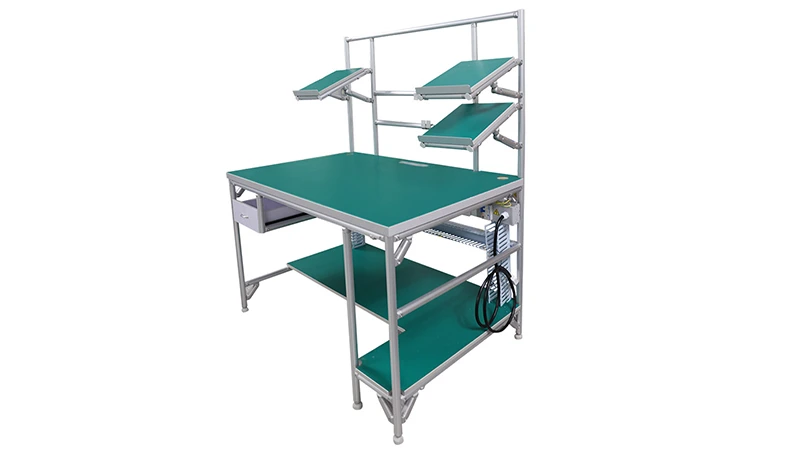
Walk into any workshop, and you'll notice one piece of equipment that ties everything together: the workbench. It's where ideas take shape, parts get assembled, and projects move from concept to completion. But not all workbenches are created equal. If you're in the market for a new one, you've probably come across two heavyweights: the sleek, modern Aluminum Workbench B and the tried-and-true steel workbench. Which one deserves a spot in your space? Let's dive in—no jargon, just real talk about which workbench will make your daily grind smoother, your workflow tighter, and your workshop more efficient.
Understanding Aluminum Workbench B: The Lightweight Powerhouse
First, let's get to know Aluminum Workbench B. At first glance, it's easy to mistake its lightweight frame for fragility—but that's where the magic lies. Built from high-grade aluminum profile (think strong, but not clunky), this workbench is designed for workshops that value flexibility and adaptability. Whether you're assembling electronics, sorting small parts, or setting up a lean system for continuous workflow, Aluminum B brings a lot to the table.
What Makes Aluminum Workbench B Stand Out?
Let's start with the material: aluminum profile. Unlike steel, aluminum is naturally resistant to rust and corrosion, which is a game-changer if your workshop deals with moisture, chemicals, or even just high humidity. Imagine wiping down your workbench after a day of soldering or painting—no need to panic about water spots turning into rust streaks. That's the peace of mind aluminum brings.
Then there's the design. Aluminum Workbench B often comes with a modular setup, thanks to aluminum profile accessories like brackets, connectors, and shelf holders. Need to add a tool rack above? Screw in an aluminum guide rail. Want to attach a small conveyor for part transport? The T-slot aluminum pipe design lets you bolt on accessories without drilling into the bench itself. It's like building with Legos for adults—you can tweak and rearrange as your needs change, which is a big win for lean manufacturing spaces where efficiency is king.
And let's talk weight. A typical Aluminum Workbench B (single deck, without casters, as some models are configured) weighs about half as much as a steel workbench of the same size. That doesn't mean it's flimsy—most can handle 200-300 pounds easily—but it does mean you can move it around if you need to reconfigure your workshop layout. No more recruiting three coworkers to shift a heavy steel behemoth; just grab a friend, and you're good to go.
Steel Workbench: The Classic Workhorse
Now, let's turn to the steel workbench—the grizzled veteran of workshops everywhere. If you've ever walked into a metal shop or an auto repair garage, you've seen these: thick steel frames, solid wooden or steel tops, and a presence that screams "I can take a beating." Steel workbenches have been around for decades, and for good reason—they're built to last, even in the toughest conditions.
The Appeal of Steel: Strength and Simplicity
Steel's biggest claim to fame is raw strength. A standard steel workbench can easily handle 500+ pounds, making it ideal for heavy tools, engine parts, or chunks of metal. If your day involves slamming hammers, clamping large pieces, or dropping heavy machinery components, steel won't flinch. It's the kind of workbench that feels like it could outlive you—and maybe even your workshop.
Cost is another factor. Steel workbenches are often cheaper upfront than their aluminum counterparts. If you're on a tight budget and need something sturdy ASAP, steel is the practical choice. They're also straightforward—no fancy T-slots or modular accessories (though some do come with add-ons). What you see is what you get: a flat surface, four legs, and maybe a shelf or two. For workshops that don't need constant reconfiguration, this simplicity is a plus.
But steel isn't without trade-offs. Its weight is a double-edged sword. Sure, it's stable, but moving it is a nightmare. Once you set it down, it's probably staying there forever. And then there's rust. Unless it's powder-coated or stainless steel (which bumps up the price), a steel workbench will start to corrode if exposed to moisture. That means regular maintenance—sanding, painting, or oiling—to keep it looking and functioning well.

Head-to-Head: Aluminum Workbench B vs. Steel Workbench
To really see which workbench is right for you, let's break down the key factors side by side. This isn't about declaring a winner—it's about finding the best fit for
your
workshop.
| Factor | Aluminum Workbench B | Steel Workbench |
|---|---|---|
| Weight & Portability | Lightweight (50-80 lbs for a standard size); easy to move with 2 people. | Heavy (150-250 lbs for a standard size); difficult to relocate once set up. |
| Load Capacity | 200-300 lbs (suitable for light to medium tools/parts). | 500+ lbs (ideal for heavy machinery, metalworking, or automotive parts). |
| Corrosion Resistance | Excellent—naturally rust-proof; great for humid or damp environments. | Poor (unless powder-coated/stainless steel); prone to rust without maintenance. |
| Customization | Highly customizable with aluminum profile accessories (shelves, rails, tool holders); integrates seamlessly with lean systems. | Limited—most are fixed designs; add-ons require drilling or welding. |
| Maintenance | Low—just wipe clean with soap and water; no rust prevention needed. | High—needs regular painting/oiling to prevent rust; scratches can lead to corrosion. |
| Cost | Higher upfront cost ($300-$600 for a standard model). | Lower upfront cost ($200-$400 for a basic model). |
| Longevity | 10-15 years (no rust, but aluminum can dent under extreme force). | 15-20+ years (if maintained); steel is more dent-resistant but can degrade if rusted. |

Real-World Scenarios: Which Workbench Fits Your Workshop?
Numbers on a table are helpful, but let's put this into context. Here are a few common workshop types and which workbench makes sense for each.
Scenario 1: Electronics Assembly or Light Manufacturing
If your days involve assembling circuit boards, sorting small components, or working with ESD-sensitive parts (hello, ESD workstation vibes), Aluminum Workbench B is your best bet. Its lightweight design means you can set up multiple benches in a line for a lean assembly line, and the corrosion resistance ensures your work surface stays clean—no rust particles messing with delicate electronics. Plus, with aluminum profile accessories, you can add ESD mats or tool organizers without hassle.
Scenario 2: Heavy-Duty Metalworking or Automotive Shops
For workshops where "heavy" is the name of the game—think welding, grinding, or rebuilding engines—a steel workbench is the way to go. It can handle the weight of engine blocks, anvils, or large steel sheets without wobbling. And while you'll need to keep an eye on rust (maybe invest in a powder-coated model), the durability is worth it. When you're slamming a hammer down on a metal part, you want a workbench that feels like it's bolted to the floor—and steel delivers that.
Scenario 3: Cleanrooms or Food Processing Areas
In environments where cleanliness is non-negotiable—like pharmaceutical labs or food packaging facilities—Aluminum Workbench B shines. Its smooth, non-porous surface is easy to sanitize, and since it doesn't rust, you won't have flakes or contaminants falling into products. Steel, on the other hand, can harbor bacteria in scratches, and rust is a major no-go in these settings.
Scenario 4: Lean Manufacturing or Small Batch Production
If you run a lean system—where workflows are constantly optimized and spaces are reconfigured—Aluminum Workbench B is a dream. Its modular design lets you add roller tracks for part flow, attach conveyors, or rearrange benches to match new production lines. Steel workbenches, with their fixed frames, would slow you down. When you need to pivot quickly (like switching from assembling Product A to Product B), aluminum's flexibility saves time and frustration.
Making the Decision: 5 Questions to Ask Yourself
Still on the fence? Let's narrow it down with a few key questions. Your answers will point you straight to the right workbench.
1. What's the heaviest thing I'll put on the workbench?
If it's under 300 lbs (think power tools, small engines, or bins of parts), Aluminum B works. If it's over 500 lbs (engine blocks, steel plates), go steel.
2. Will my workshop ever need to rearrange?
If you're in a small space or run a lean system where layouts change, Aluminum B's portability is a must. If your workshop is set in stone, steel's stability is better.
3. Is moisture or corrosion a concern?
Garages, coastal workshops, or areas with high humidity? Aluminum B. Dry, indoor spaces with little moisture? Steel could work (but still check for rust over time).
4. Do I need to add accessories later?
Want to add shelves, tool racks, or a roller track down the line? Aluminum B's T-slot design makes it easy. If you're happy with a basic flat surface, steel is simpler.
5. What's my long-term budget?
Steel is cheaper upfront, but if you're in a humid area, you might spend more on maintenance (paint, rust treatments). Aluminum costs more initially but saves money on upkeep and lasts longer in harsh environments.
Final Thoughts: It's All About Your Workshop's Personality
At the end of the day, there's no "better" workbench—only the better
fit
for your space. Aluminum Workbench B is the flexible, low-maintenance option for workshops that value adaptability, cleanliness, and lean system integration. It's the choice for creators who need to pivot quickly and keep their workspace light and efficient.
Steel workbench, on the other hand, is the reliable workhorse for heavy-duty tasks. It's for workshops where strength and stability are non-negotiable, and where the workbench is meant to stay put for decades.
So, take a look around your workshop. Think about your daily tasks, your future goals, and even the little annoyances (like struggling to move your old bench or scrubbing rust off steel). The answer will probably feel obvious once you do. And whichever you choose—Aluminum Workbench B or steel—here's to smoother workflows, fewer headaches, and more projects brought to life.