- Company Articles
- Products and Technology
- Solution
- Aluminum Workbench C and Reusability: Aligning with Sustainable Manufacturing Goals

Aluminum Workbench C and Reusability: Aligning with Sustainable Manufacturing Goals
Related Product
Aluminum Workbench C
aluminum-tube-workbench-is-more-flexible-and-durable,-compared-with-traditional-pe/abs-coated-steel-tube.-it-is-easy-to-assemble,-anti-corrosion,-rust-protection,-and-recycle-use-after-disassemble.
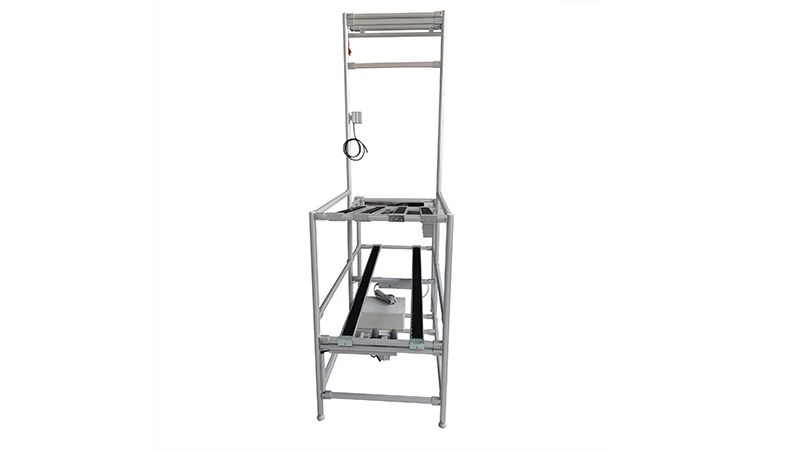
In an era where "sustainability" has shifted from a buzzword to a business imperative, manufacturers worldwide are rethinking every aspect of their operations—from raw material sourcing to end-of-life product disposal. The pressure to reduce waste, lower carbon footprints, and embrace circular economy principles has never been stronger. Yet, for many production facilities, the challenge lies in translating these lofty goals into tangible, day-to-day solutions. Enter the Aluminum Workbench C: a seemingly humble piece of equipment that's quietly revolutionizing how factories approach sustainability, one workstation at a time. More than just a table for assembling parts, this workbench embodies a new philosophy—where reusability isn't an afterthought, but the foundation of its design. Let's dive into how Aluminum Workbench C, paired with smart material choices like aluminum profile and a commitment to lean system principles, is helping manufacturers build greener, more resilient operations.
The Case for Reusability in Modern Manufacturing
Before we explore the specifics of Aluminum Workbench C, it's worth asking: why does reusability matter so much in manufacturing today? The numbers tell a clear story. According to the Ellen MacArthur Foundation, the manufacturing sector is responsible for over 30% of global resource consumption, and a significant portion of that ends up as waste—either during production or when equipment reaches the end of its "useful" life. Traditional workstations, often built from fixed materials like welded steel or particleboard, are prime examples of this problem. When a production line reconfigures, a product design changes, or a facility expands, these workbenches are frequently disassembled and discarded, contributing to landfill waste and requiring new resources to replace them.
Reusability flips this script. By designing equipment that can be adapted, repurposed, or broken down into components that find new life elsewhere, manufacturers not only reduce waste but also cut long-term costs. A 2023 study by the Manufacturing Extension Partnership (MEP) found that companies prioritizing reusable tools and modular equipment saw a 22% average reduction in annual operational expenses, driven by lower replacement costs and decreased waste management fees. For small and medium-sized manufacturers (SMEs), in particular, this isn't just an environmental win—it's a survival strategy in an increasingly competitive market.
Aluminum Workbench C: Built for a Lifetime of Adaptation
At first glance, Aluminum Workbench C might look similar to any other workstation on the factory floor. But a closer inspection reveals the intentional design choices that set it apart. Let's start with its namesake: aluminum. Unlike traditional steel workbenches, which are heavy, prone to rust (without constant maintenance), and difficult to modify, Aluminum Workbench C leverages the unique properties of aluminum profile to deliver both durability and flexibility. Aluminum is inherently lightweight, making the workbench easy to move and reposition as production needs change. It's also naturally resistant to corrosion, ensuring it holds up in harsh factory environments—from dusty warehouses to humid assembly lines—without the need for toxic coatings or frequent replacements.
But the real magic lies in its modularity. Aluminum Workbench C isn't a single, fixed structure; it's a system of components designed to work together seamlessly. The frame is constructed using precision-cut aluminum profile, which connects via aluminum pipe accessories like internal rotary aluminum joints and parallel fixation brackets. These accessories aren't permanent fasteners—they're engineered to be tightened, loosened, and reconfigured by hand, with no welding or specialized tools required. Need to add a shelf for extra storage? Simply slide an aluminum profile into the existing joints. Want to lower the height to accommodate a new operator? Adjust the leg brackets. Moving the workbench to a different line? Disassemble it into manageable pieces, transport them, and rebuild in minutes.
This modularity extends to the workbench's surface, too. The standard "Workbench E (single deck-without caster)" top is made from a durable aluminum honeycomb panel, which is both lightweight and impact-resistant. If the surface becomes scratched or damaged over time, it can be replaced individually—no need to swap out the entire workbench. Even the smallest components, from the caster wheels to the edge guards, are designed for easy replacement, ensuring the workbench evolves with the needs of the factory, rather than becoming obsolete.

Aluminum Profile: The Sustainable Backbone of Reusability
To truly understand Aluminum Workbench C's sustainability credentials, we need to zoom in on its core material: aluminum profile. Aluminum is often hailed as the "green metal," and for good reason. Unlike steel, which requires intensive mining and high-temperature processing, aluminum is 100% recyclable, with no loss in quality during the recycling process. In fact, recycling aluminum uses just 5% of the energy required to produce new aluminum from bauxite ore, according to the Aluminum Association. This means that even if an Aluminum Workbench C eventually reaches the end of its lifecycle (which, given its durability, could be decades), its aluminum components can be melted down and transformed into new profile, accessories, or entirely different products—closing the loop on resource use.
But aluminum profile's sustainability story doesn't end with recyclability. Its durability ensures that the workbench itself has an exceptionally long lifespan. A well-maintained aluminum workbench can last 15–20 years in a busy factory, compared to 5–7 years for a typical wooden or particleboard bench, which warps, cracks, or delaminates under heavy use. This longevity drastically reduces the frequency of replacements, cutting down on both material consumption and the carbon emissions associated with manufacturing and transporting new equipment.
Perhaps most importantly, aluminum profile's compatibility with a wide range of aluminum pipe accessories makes it inherently adaptable. Manufacturers aren't locked into a single configuration; they can mix and match components to create custom workstations that grow with their business. For example, a small electronics manufacturer might start with a basic Aluminum Workbench C for circuit board assembly, then later add roller track guides (using plastic roller track guide rail yellow or grey) to create a mini-conveyor system for moving parts between stations. As the company expands, they can disassemble the original workbench, reuse the aluminum profile and accessories to build larger workstations or material racks, and only purchase new components where absolutely necessary. It's a "build once, use forever" approach that aligns perfectly with circular economy principles.

Lean System Integration: Less Waste, More Value
Sustainability and efficiency have long been intertwined, and Aluminum Workbench C excels at both by aligning with lean system principles. Lean manufacturing, at its core, is about eliminating waste—whether that's wasted time, materials, or energy. Traditional workstations often contribute to waste in subtle ways: a fixed design that doesn't accommodate a new workflow leads to inefficient operator movements; a lack of adjustability results in over-purchasing of specialized benches; and difficulty in disassembly means old workbenches end up in landfills instead of being repurposed.
Aluminum Workbench C directly addresses these pain points. Take, for example, the concept of "muda" (waste) in lean terminology. One common form of muda is "unnecessary inventory," which includes extra equipment purchased "just in case." With Aluminum Workbench C's modular design, manufacturers can avoid this by investing in a base set of aluminum profile and accessories, then reconfiguring them as needed. A single workbench can serve as an assembly station in the morning, a packaging table in the afternoon, and a testing rig by the end of the day—eliminating the need to stockpile multiple specialized workstations.
Another lean principle is "jidoka" (autonomation), or building in quality at every step. Aluminum Workbench C supports this by ensuring consistency and reliability. The precision-engineered aluminum profile and accessories create a stable, wobble-free surface, reducing errors during assembly. The workbench's height and layout can be tailored to ergonomic standards, minimizing operator fatigue and improving focus—leading to fewer mistakes and less scrap. And because the workbench is easy to clean (thanks to its smooth aluminum surfaces), it helps maintain a hygienic workspace, which is critical for industries like food processing or medical device manufacturing.
Perhaps the most powerful synergy between Aluminum Workbench C and lean systems is in "kaizen"—continuous improvement. Lean manufacturing isn't a one-time project; it's a mindset of constant iteration. A factory that adopts kaizen will regularly analyze workflows, identify inefficiencies, and make adjustments. Aluminum Workbench C is built to keep up with this pace of change. Unlike fixed workstations, which can become barriers to improvement, it adapts alongside the process. Did a time-motion study reveal that operators need more space to maneuver? Remove a shelf. Is a new product line requiring heavier tools? Reinforce the frame with additional aluminum pipe accessories. The workbench doesn't resist change—it enables it, turning continuous improvement from a goal into a practical, everyday reality.

Traditional vs. Aluminum Workbench C: A Sustainability Comparison
| Feature | Traditional Workbench (Steel/Wood) | Aluminum Workbench C |
|---|---|---|
| Expected Lifespan | 5–7 years (prone to rust, warping, or surface damage) | 15–20+ years (corrosion-resistant, impact-resistant surface) |
| Reusability | Low: Fixed design; disassembly often damages components, leading to landfill waste | High: Modular components can be reconfigured, repaired, or repurposed indefinitely |
| Recyclability | Partial: Steel is recyclable, but wood/particleboard often ends up in landfills; finishes may contaminate recycling | 100%: Aluminum profile and accessories are fully recyclable with no loss in quality |
| Energy Use (Lifecycle) | Higher: Frequent replacements require more energy for manufacturing and transportation | Lower: Long lifespan and recyclability reduce total energy consumption by up to 70% |
| Cost Over 10 Years | Higher: Requires 1–2 replacements; disposal fees; downtime during replacements | Lower: One initial purchase; minimal maintenance; no disposal fees; adaptability reduces new equipment needs |
Real-World Impact: Stories from the Factory Floor
To put these benefits into context, let's look at how Aluminum Workbench C has made a difference for a mid-sized automotive parts manufacturer in the Midwest. Prior to adopting the workbench, the company relied on steel workstations that were welded in place. When they decided to reconfigure their assembly line to produce a new hybrid vehicle component, they faced a dilemma: the existing workbenches were too low, too narrow, and couldn't accommodate the new tools required. Their options? Either pay to have the steel workbenches modified (costing $300 per bench) or replace them entirely (at $800 per bench). With 20 workstations, this would have cost $6,000–$16,000, not including disposal fees for the old benches.
Instead, they invested in Aluminum Workbench C. Using the modular aluminum profile and accessories, they were able to adjust the height and width of each workbench in-house, with no welding required. They repurposed the existing aluminum honeycomb tops and only purchased additional aluminum pipe accessories (like longer profile pieces and extra joints) for $1,200 total. The entire reconfiguration took two days, with minimal downtime. A year later, when they expanded production, they disassembled three workbenches and rebuilt them into a larger material rack using the same components. Today, those original workbenches are still in use—adapted again for a third product line. The company estimates they've saved over $40,000 in replacement costs and avoided sending 2.5 tons of steel to landfills.
Another example comes from a consumer electronics plant in Southeast Asia, where space is at a premium. The facility produces small batch sizes of custom gadgets, meaning production lines are reconfigured weekly. Traditional wooden workbenches were constantly being moved, scratched, and broken, leading to a cycle of frequent repairs and replacements. After switching to Aluminum Workbench C, the team found they could disassemble and rebuild workstations in under 30 minutes per bench, using just a hex key. The lightweight aluminum frame made moving the workbenches easier, reducing operator strain and workplace injuries. And because the aluminum profile is resistant to scratches, the workbenches still look new after two years of heavy use. The plant manager noted, "We used to order new workbenches every quarter. Now, we haven't bought a single new one in 18 months. The savings on materials and labor have been huge—and our sustainability team is thrilled with the waste reduction."
The Future of Sustainable Manufacturing: Beyond the Workbench
Aluminum Workbench C is more than just a better workstation—it's a glimpse into the future of manufacturing, where sustainability and productivity go hand in hand. As manufacturers continue to face pressure to reduce their environmental impact, we can expect to see more tools and equipment follow this modular, reusable model. Imagine a factory where not just workbenches, but conveyors, shelving, and even production lines are built from aluminum profile and compatible accessories—all designed to be reconfigured, repaired, and recycled. It's a vision of manufacturing where "waste" becomes a thing of the past, and every resource is used to its full potential.
For now, Aluminum Workbench C stands as a testament to what's possible when sustainability is built into design, not added on. It proves that going green doesn't mean sacrificing efficiency or profitability—in fact, it often enhances both. By choosing reusable materials like aluminum profile, embracing modularity through aluminum pipe accessories, and aligning with lean system principles, manufacturers can create workplaces that are not only more sustainable but also more adaptable, cost-effective, and resilient.
Conclusion: Building a Greener Tomorrow, One Workbench at a Time
In the end, sustainability in manufacturing isn't about grand gestures—it's about the thousands of small, intentional choices made every day. Aluminum Workbench C represents one of those choices: a decision to prioritize reusability over disposability, adaptability over rigidity, and long-term value over short-term convenience. It's a tool that doesn't just help manufacturers build better products—it helps them build a better future.
As more companies embrace this mindset, the impact will ripple outward: less waste in landfills, lower carbon emissions from production, and a manufacturing sector that leads the way in the global transition to a circular economy. So the next time you walk through a factory, take a closer look at the workbenches. Are they part of the problem, or part of the solution? With Aluminum Workbench C, the answer is clear: it's not just a workstation—it's a step toward sustainability, one reconfigurable, recyclable, and remarkably resilient component at a time.