- Company Articles
- Products and Technology
- Product knowledge
- Aluminum Workbench C Material Properties: Why It's Ideal for Flexible Production

Aluminum Workbench C Material Properties: Why It's Ideal for Flexible Production
Related Product
Aluminum Workbench C
aluminum-tube-workbench-is-more-flexible-and-durable,-compared-with-traditional-pe/abs-coated-steel-tube.-it-is-easy-to-assemble,-anti-corrosion,-rust-protection,-and-recycle-use-after-disassemble.
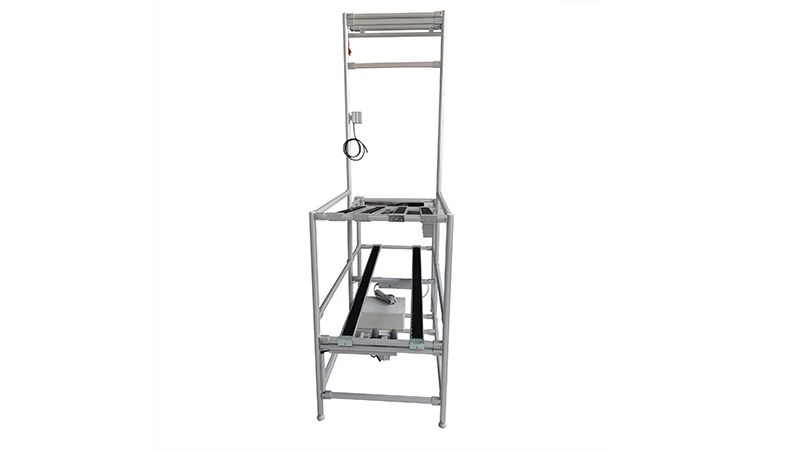
In today's fast-paced manufacturing world, the ability to adapt is everything. Whether you're running a small workshop crafting custom electronics or managing a large-scale assembly line churning out automotive parts, one thing remains constant: your production setup needs to keep up with change. Enter flexible production—an approach built on agility, where workflows shift quickly, batches get smaller, and customization becomes the norm. At the heart of this adaptability? The workbench. Not just any workbench, but one designed to evolve with your needs. That's where Aluminum Workbench C comes in. Its secret? The unique material properties of aluminum extrusion profile, paired with a system of aluminum profile accessories that turn rigidity into flexibility. Let's dive into why this workbench isn't just a piece of furniture, but a cornerstone of modern lean system thinking.
The Rise of Flexible Production: What Manufacturers Really Need
Flexible production isn't a buzzword—it's a survival strategy. Traditional manufacturing setups, with their heavy, fixed workstations and one-size-fits-all layouts, struggle to keep up with today's demands. Think about it: a customer wants a limited run of a new product, or a design tweak requires reconfiguring your assembly line overnight. If your workbench takes a team of technicians and hours of labor to move or modify, you're already falling behind.
So what do manufacturers need from their workbenches? First, adaptability. The ability to add a shelf here, lower the height there, or even wheel the entire setup to a new part of the factory without breaking a sweat. Second, durability. A workbench that can handle the daily grind—scratches, spills, the weight of tools and components—without showing signs of wear. Third, ergonomics. Happy, comfortable workers are productive workers, so adjustability to fit different heights and tasks is non-negotiable. And finally, cost-effectiveness. It's not just about the upfront price tag, but the long-term value: how well the workbench grows with your business, reduces downtime, and minimizes waste.
This is where the lean system philosophy aligns perfectly with flexible production. Lean is all about eliminating waste—whether that's time wasted on reconfiguring rigid setups, money wasted on replacing worn-out equipment, or space wasted on bulky workstations. Aluminum Workbench C, with its aluminum extrusion profile core, checks every box. It's a tool that doesn't just support lean principles; it embodies them.
Aluminum Extrusion Profile: The Backbone of Aluminum Workbench C
Let's start with the basics: what makes aluminum extrusion profile so special? Unlike traditional materials like solid steel or particleboard, aluminum extrusion profile is created through a process that transforms raw aluminum into precise, consistent shapes. Here's how it works: heated aluminum billets are pushed through a die, which shapes the metal into long, uniform profiles with specific cross-sections—think T-slots, grooves, and channels. This process isn't just efficient; it's what gives the material its unique properties.
First, strength without the bulk. Aluminum extrusion profile is surprisingly strong, thanks to its structural design. The T-slots and internal ribs distribute weight evenly, making it capable of supporting heavy tools, components, and even automated machinery. But here's the kicker: it's lightweight. A typical aluminum workbench weighs a fraction of a steel equivalent, which means you can move it, adjust it, or reconfigure it without needing a forklift or a team of. Imagine a scenario where your team needs to shift production to a new layout to accommodate a rush order. With a steel workbench, that might take hours. With Aluminum Workbench C? Two people can have it in place in minutes.
Second, precision. Extrusion allows for incredibly tight tolerances, so every aluminum profile is consistent. That means when you add aluminum profile accessories—like brackets, joints, or shelves—they fit perfectly. No gaps, no wobbles, no "making it work" with duct tape or extra screws. This precision is a game-changer for customization. Need a tool rail along the back? Screw it into the T-slot. Want to add a monitor arm for digital work instructions? It bolts on cleanly. The possibilities are limited only by your needs, not the material's flexibility.
Third, corrosion resistance. Aluminum naturally forms a thin oxide layer when exposed to air, which acts as a barrier against rust and corrosion. That's a big deal if your workspace deals with oils, coolants, or even just high humidity. Unlike steel, which needs constant painting or coating to stay rust-free, an aluminum workbench can handle spills and moisture without degrading. Over time, this translates to less maintenance and a longer lifespan—key for keeping costs down in the long run.

Material Showdown: Why Aluminum Extrusion Profile Beats the Rest
To really understand why Aluminum Workbench C stands out, let's compare it to other common workbench materials. Below is a breakdown of how aluminum extrusion profile stacks up against wood, steel, and plastic—three alternatives you might be considering.
| Property | Wood | Steel | Plastic | Aluminum Extrusion Profile |
|---|---|---|---|---|
| Weight | Moderate to heavy (varies by type) | Very heavy (hard to move) | Lightweight (but flimsy) | Lightweight (easy to reconfigure) |
| Strength | Low to moderate (prone to warping, splitting) | Very high (but overkill for many tasks) | Low (bends under heavy weight) | High (supports tools, machinery, and components) |
| Customization | Limited (requires drilling, sawing; permanent changes) | Limited (welding or heavy hardware needed) | Very limited (molded shapes, hard to modify) | High (T-slots accept aluminum profile accessories; no permanent changes) |
| Durability | Low (scratches, water damage, wear over time) | High (but rusts without coating; dents) | Low (scratches, cracks under stress) | High (corrosion-resistant; minimal wear; 10+ year lifespan) |
| Ergonomics | Poor (fixed height; heavy to adjust) | Poor (fixed height; heavy to move) | Moderate (light but not adjustable) | Excellent (adjustable height; easy to reposition for worker comfort) |
| Cost (Long-Term) | High (needs replacement every 2-3 years) | High (initial cost + maintenance + replacement of rusted parts) | High (short lifespan; frequent replacement) | Low (initial investment pays off with longevity and reusability) |
As the table shows, aluminum extrusion profile isn't just better in one area—it's superior across the board for flexible production. Wood is cheap upfront but falls apart quickly. Steel is strong but rigid and heavy. Plastic is lightweight but flimsy. Aluminum? It balances strength, weight, customization, and durability in a way that no other material can. And when you pair it with aluminum profile accessories—like adjustable feet, swivel casters, or modular shelves—you get a workbench that grows with your business.

Design Flexibility: Aluminum Profile Accessories as the Building Blocks
A workbench is only as flexible as its ability to change. That's where aluminum profile accessories come into play. Aluminum Workbench C isn't a standalone product; it's part of a system. Think of it like a set of building blocks—each accessory adds a new function, and you can mix and match them to create exactly what you need, when you need it.
Let's start with the basics: height adjustment. Many aluminum workbenches come with adjustable feet or casters, but Aluminum Workbench C takes it further. Thanks to the modular design of aluminum extrusion profile, you can swap out the legs for longer or shorter ones in minutes. Need a taller workbench for standing assembly? Swap the 30-inch legs for 40-inch ones. Prefer a seated setup for detailed electronics work? drop it down to 30 inches. No need to buy a whole new bench—just a few new parts.
Then there are the add-ons. Need a place to store tools? Add a pegboard panel using T-slot brackets. Want to organize small components? Mount a set of drawers under the bench with rail accessories. Working with ESD-sensitive electronics? Attach an ESD mat and grounding kit (though ESD workstations are a related product, the flexibility here applies broadly). The beauty is that these accessories are designed to work with the aluminum profile's T-slots, so they attach securely without drilling or welding. When your needs change, you can remove them just as easily and reuse them elsewhere—no waste, no extra cost.
Even the work surface itself can be customized. Aluminum Workbench C often comes with a standard aluminum honeycomb panel top, which is lightweight, durable, and easy to clean. But if you need something different—a wooden top for softer tasks, a stainless steel top for food-grade environments—you can swap it out. The T-slot frame makes it simple to secure new surfaces, so you're never stuck with a one-use bench.
This level of flexibility is a cornerstone of the lean system approach. In lean manufacturing, waste is defined as anything that doesn't add value—and that includes rigid, unchangeable equipment. Aluminum Workbench C, with its modular accessories, eliminates that waste by letting you adapt instead of replace. It's a small change that has a big impact on your bottom line.

Durability That Keeps Up with the Grind
Flexibility means nothing if the workbench can't handle daily use. Let's face it: manufacturing is tough on equipment. Spills, scratches, heavy tools being dropped, constant movement—your workbench takes a beating. Aluminum extrusion profile is built to withstand that.
First, corrosion resistance. As mentioned earlier, aluminum's natural oxide layer protects it from rust and corrosion. That's a huge advantage in environments where oils, coolants, or water are present. Imagine a automotive assembly line where lubricants are constantly dripping, or a food processing plant with daily washdowns. A steel workbench would start rusting within months, even with coatings. An aluminum workbench? It stays looking and performing like new for years.
Second, scratch and impact resistance. Aluminum extrusion profile is harder than you might think. While it can get scratched, the scratches are superficial and don't compromise the structural integrity of the bench. Unlike wood, which can split or chip, or plastic, which can crack, aluminum dents only under extreme force—and even then, it's often repairable. drop a heavy wrench on an aluminum workbench, and you might get a small ding. drop it on a wooden bench, and you're looking at a splintered top that needs replacing.
Third, low maintenance. Unlike steel, which needs painting or powder-coating to stay rust-free, aluminum requires almost no upkeep. A quick wipe with a damp cloth is usually enough to clean it. Even if it gets stained or scuffed, the finish doesn't degrade—no peeling, no fading, no need for touch-ups. Over time, this adds up to significant savings in maintenance costs and downtime.
Let's put this in perspective: a typical wooden workbench might last 2-3 years in a busy shop before needing replacement. A steel workbench could last 5-7 years, but only with regular maintenance. Aluminum Workbench C? With proper care, it can last 10+ years. That's not just durability—that's an investment that pays off over time.
Ergonomics: Putting Workers First
At the end of the day, a workbench is only as good as the person using it. Uncomfortable workers are less productive, more prone to errors, and at higher risk of injury. Aluminum Workbench C prioritizes ergonomics, and it starts with the material properties of aluminum extrusion profile.
Lightweight design makes repositioning easy. If a worker needs to shift the bench a few inches to avoid straining their back, they can do it alone. No need to ask for help or wait for a tool. This might seem small, but it adds up to a more comfortable, autonomous work environment.
Adjustable height is another key feature. As mentioned earlier, swapping out legs or using adjustable feet lets you tailor the bench to individual workers. A 5'2" operator and a 6' tall operator can use the same bench by simply adjusting the height. This reduces the risk of repetitive strain injuries and keeps everyone comfortable—whether they're standing or sitting.
Even the edges of the aluminum profile are designed with ergonomics in mind. Many extrusion profiles have rounded corners, which reduce the risk of cuts or bruises when moving around the bench. The smooth surface of the aluminum top is easy on hands, unlike rough wood or cold steel, which can cause discomfort during long shifts.
When workers are comfortable, they're more focused, more efficient, and less likely to take time off due to injury. In the context of a lean system, this is a win-win: better productivity and lower costs, all from a workbench that puts people first.
Cost-Effectiveness: Investing in Long-Term Value
Let's talk money. Aluminum Workbench C might have a higher upfront cost than a basic wooden or plastic workbench. But anyone who's ever replaced a cheap workbench every few years knows that initial price isn't the whole story. Aluminum extrusion profile and aluminum profile accessories offer long-term value that cheap alternatives can't match.
First, longevity. As we've discussed, aluminum workbenches last 10+ years, compared to 2-3 years for wood or plastic. Let's do the math: a $200 wooden bench that lasts 2 years costs $100 per year. An $800 aluminum bench that lasts 12 years costs just $66 per year. Over time, aluminum is the cheaper option.
Second, reusability. When you need to reconfigure your workspace, you can reuse the aluminum profile and accessories. That drawer unit you added last year? Move it to a new bench. Those tool rails? Repurpose them on a material rack. With traditional workbenches, you'd have to throw away the old one and buy new parts. With aluminum, nothing goes to waste.
Third, low maintenance. No painting, no rust treatment, no replacing warped tops. Aluminum Workbench C requires almost no upkeep, which means less money spent on supplies and labor for maintenance.
Finally, sustainability. Aluminum is 100% recyclable, and the extrusion process uses minimal energy compared to steel production. For companies looking to reduce their environmental footprint, this is a bonus that aligns with modern consumer and regulatory demands. Plus, a sustainable brand image can boost customer loyalty and attract eco-conscious clients.
When you add it all up, Aluminum Workbench C isn't just a purchase—it's an investment in your business's efficiency, flexibility, and future growth.
Real-World Impact: How Aluminum Workbench C Transforms Production
Let's look at a real example to see how Aluminum Workbench C makes a difference. Take a mid-sized electronics manufacturer that produces both large batch orders and small custom runs. Before switching to aluminum workbenches, their setup was a mix of wooden and steel benches. When a custom order came in, they'd spend hours moving heavy steel benches, drilling holes to add new accessories, or even building temporary workstations from plywood. Downtime was high, and workers complained about discomfort and inefficiency.
After switching to Aluminum Workbench C, everything changed. The lightweight benches were easy to reconfigure, so setting up for a custom run took 30 minutes instead of 3 hours. The team used aluminum profile accessories to add tool holders, component bins, and cable management systems—all of which could be rearranged when the next order came in. The adjustable height feature reduced worker fatigue, and the durable aluminum tops stood up to daily use without showing wear. Over six months, they reported a 20% increase in productivity and a 15% reduction in workplace injuries. And because they could reuse accessories across different benches, they saved nearly $5,000 on new equipment costs.
This isn't an isolated case. From automotive assembly plants to small-scale workshops, Aluminum Workbench C is proving itself as a tool that doesn't just keep up with flexible production—it enables it.
Why Aluminum Workbench C is the Future of Flexible Production
Flexible production isn't going anywhere. If anything, the demand for agility and customization will only grow. In this environment, your equipment needs to be a partner, not a limitation. Aluminum Workbench C, with its aluminum extrusion profile core and modular aluminum profile accessories, is that partner. It's lightweight yet strong, customizable yet durable, ergonomic yet cost-effective. It embodies the principles of the lean system by eliminating waste and prioritizing value.
So why choose Aluminum Workbench C over the alternatives? Because it's not just a workbench. It's a promise of adaptability. A commitment to your team's comfort and productivity. A long-term investment in your business's ability to thrive in a changing world.
In the end, the material properties of aluminum extrusion profile tell the story: strength without weight, precision without rigidity, durability without maintenance. Paired with a system of accessories that let you build, modify, and reuse, Aluminum Workbench C isn't just ideal for flexible production—it's the future.