- Company Articles
- Products and Technology
- Product knowledge
- Aluminum Workbench C vs Steel Workbench: Which Suits Lean Manufacturing Better?

Aluminum Workbench C vs Steel Workbench: Which Suits Lean Manufacturing Better?
Related Product
Aluminum Workbench C
aluminum-tube-workbench-is-more-flexible-and-durable,-compared-with-traditional-pe/abs-coated-steel-tube.-it-is-easy-to-assemble,-anti-corrosion,-rust-protection,-and-recycle-use-after-disassemble.
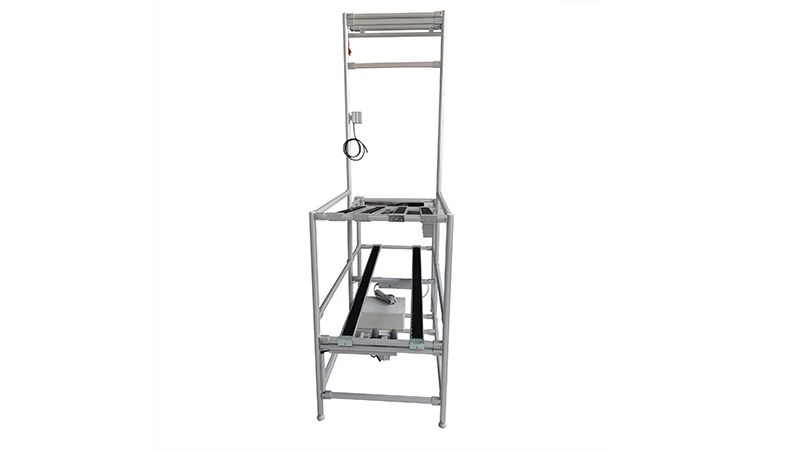
Lean manufacturing isn't just a buzzword—it's a mindset, a commitment to stripping away waste and letting value flow like a well-tuned river. At the heart of this philosophy lies the tools we use, and few tools are as critical as the workbench. It's where parts meet precision, where workers spend hours assembling, testing, and packaging. But not all workbenches are created equal. In the world of lean systems, the choice between materials can make or break your workflow: enter Aluminum Workbench C and the tried-and-true Steel Workbench. Which one aligns better with lean's core principles—flexibility, efficiency, and continuous improvement? Let's dive in.
Lean Manufacturing: Beyond Buzzwords—The Need for the Right Tools
Before we compare metal to metal, let's ground ourselves in what lean manufacturing really demands. At its core, lean is about eliminating waste —those eight deadly "wastes" (muda) that drain productivity: overproduction, waiting, transport, overprocessing, inventory, motion, defects, and unused talent. To fight these, lean systems rely on tools like value stream mapping, 5S (Sort, Set in Order, Shine, Standardize, Sustain), and just-in-time (JIT) production. And none of these work without a workspace designed to support them.
A workbench isn't just a table. In a lean system, it's a command center. It dictates how materials move (transport waste), how easily workers can access tools (motion waste), and how quickly the line can adapt to new products (overprocessing waste). Choose the wrong workbench, and you're building waste into your workflow from day one. So when we ask, "Aluminum or steel?" we're really asking: "Which material empowers our team to do more with less?"
Aluminum Workbench C: The Lightweight Contender
Aluminum Workbench C isn't just a piece of equipment—it's a product of modern manufacturing's love affair with modularity. At its core is aluminum profile , a material that's revolutionized how we build workspaces. Unlike solid steel, aluminum profiles are hollow, lightweight, and engineered with precision T-slots that act as built-in connection points. This design isn't accidental; it's a direct response to lean's demand for flexibility.
What Makes Aluminum Profile Stand Out?
Aluminum profile is the unsung hero here. Typically made from 6063-T5 aluminum alloy, it balances strength and weight better than almost any other material. A 40x40mm aluminum profile weighs roughly 1.5kg per meter—less than half the weight of a comparable steel pipe. This lightness matters in lean systems, where reconfiguring the production line (a key part of continuous improvement) can't require a team of forklifts and welders.
But it's not just about weight. Aluminum profile accessories—think brackets, joints, and panel holders—turn the workbench into a chameleon. Need to add a tool rail? Slide a bracket into the T-slot. Want to mount a monitor arm for digital work instructions? Screw it into a pre-drilled hole. These accessories aren't afterthoughts; they're part of a ecosystem that lets you adapt the workbench to your workflow, not the other way around.
Aluminum Workbench C in Action: A Lean Dream?
Let's paint a picture. Imagine a small electronics manufacturer that produces 20 different circuit board models. One week, they're assembling IoT sensors; the next, they're switching to medical device components. With Aluminum Workbench C, their team doesn't need to wait for a new workbench. Instead, they grab a few aluminum profile accessories—maybe a new shelf for smaller parts, or a tilted tray for better visibility—and reconfigure the bench in 30 minutes. That's 30 minutes of setup time instead of 3 days. In lean terms, that's eliminating "waiting" waste and keeping the value stream moving.
And let's not forget ergonomics. Aluminum's light weight means even a fully loaded workbench can be adjusted for height (with the right casters and leveling feet) to reduce worker fatigue—a direct hit against "motion" waste. A steel workbench, by contrast, might require permanent installation, locking workers into a one-size-fits-all setup that leads to strained backs and slower output.

Steel Workbench: The Heavyweight Champion
If Aluminum Workbench C is the agile gymnast, the Steel Workbench is the powerlifter. Built from steel pipe series —often carbon steel or, for harsh environments, stainless steel pipe series—this workbench is all about brute strength. It's the tool of choice for factories where "heavy duty" isn't a marketing term but a daily requirement.
Steel Pipe Series: Strength in Simplicity
Steel pipe series come in various thicknesses, but even the most basic 2mm wall steel pipe can handle loads that would make aluminum profiles wince. A standard steel workbench might support 500kg or more across its surface—ideal for automotive parts, industrial machinery components, or batches of heavy raw materials. In environments where "lightweight" is a liability (think manufacturing turbine blades or engine blocks), steel's rigidity is a feature, not a flaw.
Steel also has a reputation for durability that's hard to beat. Unlike aluminum, which can dent under extreme force, steel resists deformation. Scratches? They're cosmetic. Dents? Rare, unless you're dropping anvils. For factories with high-volume, repetitive tasks—like assembling washing machines or packaging construction materials—this longevity translates to lower replacement costs over time, even if the initial price tag is higher.
Steel Workbench in Action: When Sturdiness Trumps Flexibility
Consider a manufacturer of agricultural equipment. Their workbenches hold cast-iron plow parts, each weighing 30-40kg. A single workbench might have 10 parts at a time—easily 300kg. Aluminum Workbench C, with its typical 200-300kg load capacity, would buckle under that stress. The steel workbench? It laughs it off. And since the production line rarely changes (they make the same plow models for years), the lack of reconfigurability isn't a problem. In fact, the steel bench's rigidity becomes an advantage: no wobbling, no shifting, just a rock-solid surface that workers can rely on.

Aluminum Workbench C vs. Steel Workbench: The Head-to-Head
To really understand which workbench suits lean manufacturing better, we need to compare them across the metrics that matter most in a lean system. Let's break it down.
| Criteria | Aluminum Workbench C | Steel Workbench |
|---|---|---|
| Material Composition | Aluminum profile (6063-T5 alloy) with aluminum profile accessories | Steel pipe series (carbon steel or stainless steel pipe series) |
| Weight (per 1.5m bench) | 15-20kg (easily movable by 1-2 people) | 40-60kg (often requires equipment to reposition) |
| Assembly & Reconfiguration | Modular; tools-free assembly with lean pipe accessories (clamps, joints). Reconfigurable in 30-60 minutes. | Bolted or welded; requires tools (wrenches, grinders) for changes. Reconfiguration takes 4-8 hours. |
| Load Capacity | 200-300kg (evenly distributed) | 500-1000kg (evenly distributed) |
| Initial Cost | Higher ($300-$600 per bench) | Lower ($200-$400 per bench) |
| Long-Term Maintenance | Minimal; aluminum resists rust. Occasional tightening of accessories. | Moderate; may require repainting to prevent rust. Bolted joints can loosen over time. |
| Ergonomics | Easy to adjust height with casters and leveling feet. Lightweight reduces strain during reconfiguration. | Fixed height (unless custom-built). Heavy weight increases risk of injury during moves. |
| Sustainability | Highly recyclable (95% of aluminum can be reused). Lower energy to produce than steel. | Recyclable but requires more energy to melt and reprocess. |
| Best For | High-mix, low-volume production; frequent line changes; lightweight materials. | Low-mix, high-volume production; static workflows; heavy materials. |
Digging Deeper: The Lean Metrics That Matter
Numbers tell part of the story, but let's connect them to lean principles.
Flexibility: The Cornerstone of Lean Adaptability
Lean systems thrive on adaptability. When customer demand shifts or a process improvement is identified, the production line needs to pivot—fast. Aluminum Workbench C, with its modular aluminum profile and lean pipe accessories, is built for this. For example, a furniture manufacturer using aluminum workbenches recently redesigned their chair assembly line to include a new cushion-stuffing step. Instead of buying new benches, they added extendable arms (using aluminum profile accessories) to existing workstations, saving $10,000 and cutting setup time by 75%.
Steel workbenches, by contrast, are often "set it and forget it." Welded joints or heavy bolted frames mean changing even a shelf height requires cutting and rewelding—wasting time and labor. In lean terms, that's "overprocessing" waste: spending more effort than necessary to adapt to change.
Weight: Reducing Motion Waste, One Bench at a Time
Motion waste—unnecessary bending, lifting, or moving—is a silent productivity killer. A steel workbench, at 50kg, isn't something a worker can reposition alone. So if a team needs to shift the bench 3 feet to align with a new conveyor, they'll need help, or a pallet jack, or both. That's 15 minutes of waiting and coordination—time that could be spent adding value.
Aluminum Workbench C, at 18kg, can be moved by one person. No waiting, no extra labor—just a quick adjustment to keep the workflow smooth. It's a small change, but in a 8-hour shift, those saved minutes add up to real productivity gains.
Cost: Short-Term vs. Long-Term Value
Yes, aluminum workbenches cost more upfront. But lean thinking is about total cost, not just initial price. Let's say a factory buys 10 steel workbenches for $300 each ($3,000 total). A year later, they need to reconfigure the line, requiring $500 in labor and new parts per bench—$5,000 total. Net cost: $8,000.
Compare that to 10 aluminum workbenches at $500 each ($5,000 total). Reconfiguration takes $50 in lean pipe accessories per bench ($500 total). Net cost: $5,500. Over time, aluminum's flexibility saves money—especially in dynamic environments where change is constant.

When to Choose Aluminum Workbench C (and When to Stick with Steel)
There's no one-size-fits-all answer, but these scenarios will guide you.
Choose Aluminum Workbench C If…
- You run high-mix, low-volume production. If your factory makes 10+ product variants (like electronics or custom parts), aluminum's reconfigurability will save you time and money.
- Continuous improvement is part of your culture. If your team regularly suggests workflow tweaks (a core lean practice), aluminum lets you test those ideas quickly without major investment.
- Ergonomics is a priority. Adjustable heights, easy repositioning, and lightweight design reduce worker strain and lower injury risks.
- Sustainability matters. Aluminum is 100% recyclable, and its production uses 95% less energy than steel—aligning with green manufacturing goals.
Choose Steel Workbench If…
- You handle heavy loads daily. If your workbench holds 400kg+ (like engine blocks or industrial tools), steel's strength is non-negotiable.
- Your workflow rarely changes. If you've been making the same product for years (think appliance manufacturing), steel's rigidity won't hold you back.
- You're on a tight initial budget. If upfront cost is the only factor (and you don't anticipate changes), steel will save you money now—just be ready for higher costs later if you need to adapt.
Real-World Wins: How Manufacturers Chose
Case Study 1: Precision Electronics Inc.
Precision Electronics makes custom circuit boards for medical devices—a high-mix, low-volume operation with 25+ product variants. They started with steel workbenches but struggled with changeover times (4 hours per line reconfig). After switching to Aluminum Workbench C and aluminum profile accessories, they cut changeover time to 45 minutes. Workers also reported less fatigue from adjusting the lightweight benches, leading to a 12% increase in daily output. "It's like night and day," said their production manager. "We're not just faster—we're more responsive to customer needs."
Case Study 2: Heavy Duty Motors Ltd.
Heavy Duty Motors builds industrial electric motors, with stators and rotors weighing 50-80kg each. Their steel workbenches (stainless steel pipe series for corrosion resistance) have been in use for 7 years, supporting 600kg loads daily. "We don't need to reconfigure often—our motor designs change slowly," said their plant engineer. "Steel gives us the reliability we need, and we've never had a failure. For us, it's the right tool for the job."
The Future of Workbenches in Lean Systems
As lean systems evolve—with more focus on digitalization, IoT, and sustainability—workbenches will too. Aluminum profile technology is advancing, with stronger alloys and smarter accessories (like integrated cable management for power tools). Steel workbenches are getting lighter, too, with hollow steel pipe designs that reduce weight without sacrificing strength.
But one trend is clear: flexibility will only grow in importance. Customers want customization, markets shift faster, and continuous improvement demands adaptability. In that world, Aluminum Workbench C—with its aluminum profile modularity and lean pipe accessories—looks set to become the default for forward-thinking lean manufacturers.
Final Verdict: Aluminum Workbench C for Lean Systems That Evolve
Steel workbenches have their place—when strength and cost are the only factors. But lean manufacturing isn't about "only" factors; it's about balance: efficiency, adaptability, and respect for people (ergonomics). Aluminum Workbench C, with its aluminum profile design and lean pipe accessories, hits that balance. It's lightweight but strong, flexible but durable, and built for the kind of continuous change that defines lean success.
So, which suits lean manufacturing better? If your goal is to eliminate waste, empower your team, and stay agile in a fast-changing world, the answer is clear: Aluminum Workbench C isn't just a workbench—it's a lean system in action.