- Company Articles
- Products and Technology
- Product knowledge
- Aluminum Workbench D Assembly Without Welding: Benefits of Bolt-Together Design

Aluminum Workbench D Assembly Without Welding: Benefits of Bolt-Together Design
Related Product
Aluminum Workbench D
Aluminum tube workbench is more flexible and durable, compared with traditional PE/ABS coated steel tube. It is easy to assemble, anti corrosion, rust protection, and recycle use after disassemble.
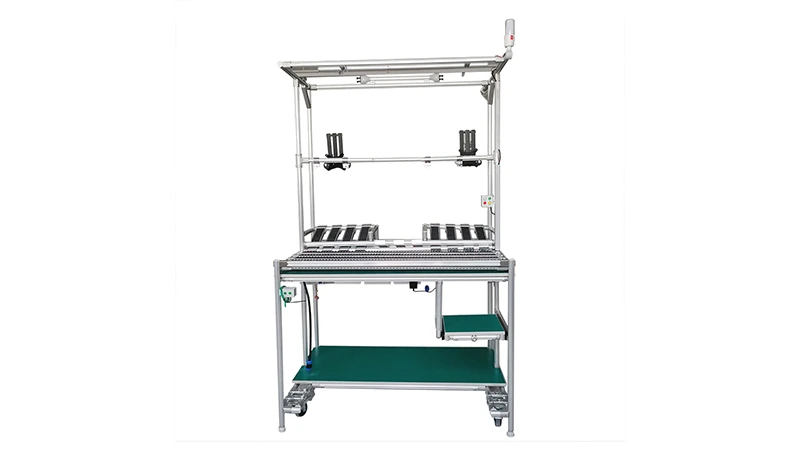
Walk into any manufacturing facility, workshop, or even a garage-based startup, and you'll likely spot a common challenge: workbenches that feel more like permanent fixtures than functional tools. Traditional workbenches, often welded from steel or heavy wood, are sturdy, yes—but they're also rigid, time-consuming to build, and a nightmare to modify when needs change. What if there was a better way? A workbench that's strong enough to handle daily wear, flexible enough to adapt to new tasks, and simple enough to assemble without calling in a professional welder? Enter Aluminum Workbench D—a game-changer in workspace design, built on the power of bolt-together technology.
In this article, we'll dive into why Aluminum Workbench D's no-weld, bolt-together design is revolutionizing how teams set up their workspaces. We'll explore its key benefits, from cost savings to unmatched flexibility, and explain how it fits seamlessly into modern lean system principles. Whether you're running a small electronics assembly line, a large automotive plant, or a hobbyist workshop, this workbench isn't just a piece of furniture—it's a tool that grows with you.
What Makes Aluminum Workbench D Different?
Before we jump into the benefits, let's clarify what Aluminum Workbench D actually is. At its core, it's a modular workbench designed for efficiency, durability, and adaptability. Unlike traditional workbenches that rely on welding or heavy hardware, Aluminum Workbench D is constructed using high-quality aluminum extrusion profile—lightweight yet surprisingly strong—and a system of aluminum profile accessories like connectors, bolts, and brackets. These components lock together securely, creating a stable workspace without a single weld.
The "D" in its name refers to its specific configuration: a single-deck design without casters (though casters can be added later as an accessory). This simplicity is intentional. By focusing on a core structure that's easy to customize, Aluminum Workbench D avoids the bloat of one-size-fits-all solutions. Need extra storage? Add a shelf using compatible aluminum profile. Want to raise the height? Swap out the legs for longer ones. It's workspace design on your terms, no welding torch required.
Real Scenario: A small electronics manufacturer recently expanded its product line, requiring a workbench that could accommodate both manual assembly and small-scale testing equipment. With traditional welded workbenches, they would have needed to order a custom size (expensive) or modify an existing one (time-consuming, risking structural damage). Instead, they opted for Aluminum Workbench D. Using the bolt-together system, their team assembled the base in under an hour, then added a secondary shelf for tools and a rail for cable management—all without hiring a welder. When a new testing device arrived six months later, they simply adjusted the shelf height and added a side bracket. Total time invested: 20 minutes. No downtime, no extra costs, just a workspace that kept up.
Breaking Down the Bolt-Together Design
At the heart of Aluminum Workbench D's appeal is its bolt-together design. Let's break this down: instead of melting metal to join parts (welding), the workbench uses precision-engineered aluminum profile accessories—like brackets, corner connectors, and hex bolts—to secure the aluminum extrusion profile pieces. These accessories are designed to fit seamlessly into the T-slots of the aluminum profile, creating a tight, wobble-free connection that's just as strong as a weld but infinitely more flexible.
Aluminum extrusion profile itself is a marvel of modern manufacturing. Created by forcing heated aluminum through a die, it results in consistent, high-strength shapes with built-in T-slots—longitudinal grooves that act as built-in attachment points. This means you don't need to drill holes or modify the profile to add accessories; simply slide a bolt into the T-slot, tighten, and you're done. It's like building with oversized, industrial-grade Lego bricks, but for grown-ups who need their creations to withstand heavy use.

The Top Benefits of No-Weld, Bolt-Together Assembly
Now, let's get to the good stuff: why should you care about a bolt-together workbench? Here are five key benefits that make Aluminum Workbench D stand out from the crowd.
1. Flexibility: Adapt Without Starting Over
The biggest pain point with welded workbenches is their rigidity. Once the welds cool, that workbench's dimensions, layout, and features are set in stone. If your team starts using larger components, needs more storage, or shifts to a new workflow, you're stuck either living with inefficiency or buying a brand-new workbench. Aluminum Workbench D eliminates this problem entirely.
Thanks to its bolt-together system, every part of the workbench is (detachable) and reconfigurable. Need to add a tool rail along the back? Use T-slot bolts to attach aluminum profile accessories like a rail bracket. Want to lower the height to accommodate seated workers? Swap the 36-inch legs for 30-inch ones. Moving to a new location? Disassemble the workbench into manageable pieces, transport it, and rebuild in minutes. This flexibility isn't just convenient—it's a cost-saver. Instead of replacing a workbench every time your needs change, you're simply upgrading it.
2. Time and Labor Savings: Assemble in Hours, Not Days
Welding a workbench isn't a quick task. It requires skilled labor (a certified welder), specialized equipment (torch, mask, grinder), and time—often a full day or more for a single bench. And that's before you factor in prep work (cleaning metal, measuring, cutting) and finishing (sanding, painting to prevent rust). For small businesses or teams with tight deadlines, this downtime can be crippling.
Aluminum Workbench D flips the script. Since there's no welding involved, assembly is a job for anyone with basic hand tools (a hex key, wrench, and level). Most teams can put together a basic Aluminum Workbench D in under two hours—no prior experience needed. The instructions are straightforward: align the aluminum extrusion profile pieces, insert the connectors, tighten the bolts, and you're ready to go. Even complex setups, like adding shelves or tool hooks, add only 30–60 minutes to the process. This means less time waiting for workbenches to be built and more time focusing on what matters: getting work done.
3. Cost Efficiency: Save on Labor, Materials, and Long-Term Upkeep
At first glance, aluminum might seem pricier than steel, but the total cost of ownership tells a different story. Let's break it down: welded steel workbenches require:
- Expensive raw materials (thick steel tubing or sheets)
- Welder labor (often $50–$100 per hour)
- Finishing costs (paint, anti-rust treatment)
- Replacement costs when modifications are needed
Aluminum Workbench D, by contrast, uses lightweight aluminum extrusion profile, which is cheaper to transport and easier to handle. The bolt-together system eliminates welding labor costs entirely. And because it's modular, you only pay for the accessories you need upfront—adding more later as your budget allows. Over time, these savings add up. One manufacturing plant we worked with reported cutting workspace setup costs by 40% after switching to Aluminum Workbench D, simply by reducing labor and avoiding unnecessary custom welds.
4. Durability Without the Weight
Critics might wonder: Is aluminum strong enough? The answer is a resounding yes. Aluminum extrusion profile is engineered to be both lightweight and rigid, with a strength-to-weight ratio that outperforms many types of steel. Aluminum Workbench D can easily support 500+ pounds of evenly distributed weight—more than enough for most assembly, packaging, or testing tasks. And unlike steel, aluminum doesn't rust, even in humid or damp environments. This makes it ideal for industries like food processing, electronics, or marine manufacturing, where corrosion is a concern.
Another durability bonus: bolt-together connections are less prone to fatigue than welds. Welds can weaken over time due to vibration or temperature changes, leading to cracks or instability. Aluminum Workbench D's connectors, however, distribute stress evenly across the aluminum profile, reducing the risk of failure. And if a connector does wear out? Simply replace it with a new one—no need to rebuild the entire bench.
5. Safety: No Fire Risks, No Sharp Edges
Welding is inherently risky. It involves high heat, sparks, and toxic fumes—hazards that require strict safety protocols, ventilation, and protective gear. In crowded workshops or facilities with flammable materials, welding can even shut down nearby operations temporarily. Aluminum Workbench D removes these risks entirely. There's no open flame, no fumes, and no need for specialized safety equipment during assembly. This not only keeps workers safer but also reduces liability and insurance costs for businesses.
Additionally, aluminum extrusion profile is designed with smooth edges and rounded corners, unlike welded steel, which can have sharp, jagged weld beads. This is a small detail that makes a big difference in day-to-day use—fewer cuts, scrapes, and damaged materials as workers move around the bench.

Aluminum Workbench D and Lean System Principles
If your business follows lean system principles—focused on minimizing waste, maximizing value, and continuous improvement—Aluminum Workbench D is more than a workbench; it's a lean tool. Let's see how it aligns with key lean goals:
- Eliminating Waste (Muda): Traditional workbenches often lead to waste in two ways: overproduction (buying a larger bench than needed because customization is hard) and waiting (delays while welders build or modify benches). Aluminum Workbench D's modular design lets you build only what you need, when you need it, cutting down on excess inventory and downtime.
- Flexibility (Heijunka): Lean systems thrive on balancing workflow and adapting to demand changes. Aluminum Workbench D's reconfigurable design makes it easy to adjust workstations for new products, higher volumes, or different team sizes—no wasteful rework required.
- Respect for People: A comfortable, adaptable workspace shows employees their needs matter. Aluminum Workbench D can be adjusted for height, added storage, or ergonomic accessories (like monitor arms), reducing fatigue and boosting productivity.
In short, Aluminum Workbench D doesn't just support lean systems—it embodies them. It's a workspace solution that grows with your team, reduces waste, and keeps focus on value-adding tasks.
Bolt-Together vs. Welded: A Clear Winner
Still on the fence? Let's put Aluminum Workbench D head-to-head with traditional welded workbenches in a side-by-side comparison:
| Feature | Aluminum Workbench D (Bolt-Together) | Traditional Welded Workbench |
|---|---|---|
| Assembly Time | 1–2 hours (no special skills needed) | 8+ hours (requires certified welder) |
| Customization | Easy: Add/remove shelves, adjust height, reconfigure layout | Hard: Requires cutting and rewelding (often not feasible) |
| Portability | Disassembles into lightweight pieces for transport | Heavy and permanent; often requires professional moving |
| Cost (Total Ownership) | Lower: No welding labor, minimal replacement costs | Higher: Welding fees, frequent replacements due to rigidity |
| Durability | High: Aluminum resists rust; bolt connections reduce fatigue | High, but welds can weaken over time with vibration |
| Safety During Assembly | Very safe: No heat, sparks, or fumes | Risky: Requires protective gear, ventilation, and fire safety measures |
The verdict? While welded workbenches still have a place in some heavy-industry settings, Aluminum Workbench D's bolt-together design offers unbeatable value for most modern workspaces. It's not just a workbench—it's an investment in adaptability, efficiency, and safety.
Who Should Use Aluminum Workbench D?
Aluminum Workbench D isn't a niche product—it's versatile enough to serve a wide range of industries and users:
- Electronics Manufacturers: Need a static-free workspace? Pair Aluminum Workbench D with ESD accessories (like grounding mats) for safe component assembly.
- Automotive Shops: Use it as a parts staging area or for small-scale repairs; add casters later for mobility around the shop floor.
- Startups and Small Businesses: Grow without overspending—start with a basic setup and add shelves, tool rails, or extra work surfaces as your team expands.
- Educational Institutions: Perfect for vocational training labs, where students can practice assembling and modifying workspaces themselves.
- Hobbyists and Makers: Build a workspace that adapts to new projects, from woodworking to 3D printing, without cluttering your garage with multiple fixed benches.
Final Thoughts: Work Smarter, Not Harder
In a world where businesses need to be agile to stay competitive, flexibility isn't a luxury—it's a necessity. Aluminum Workbench D's bolt-together design delivers that flexibility, along with cost savings, time efficiency, and safety, all without sacrificing strength or durability. By using high-quality aluminum extrusion profile and intuitive aluminum profile accessories, it proves that you don't need welding to build a workbench that lasts.
Whether you're upgrading an existing workspace or setting up a new facility, Aluminum Workbench D isn't just a purchase—it's a step toward a more adaptable, efficient, and lean system-driven operation. So why stick with a workbench that holds you back? Choose one that grows with you.