- Company Articles
- Products and Technology
- Product knowledge
- Aluminum Workbench D Corrosion Resistance: Benefits for Humid or Industrial Environments

Aluminum Workbench D Corrosion Resistance: Benefits for Humid or Industrial Environments
Related Product
Aluminum Workbench D
Aluminum tube workbench is more flexible and durable, compared with traditional PE/ABS coated steel tube. It is easy to assemble, anti corrosion, rust protection, and recycle use after disassemble.
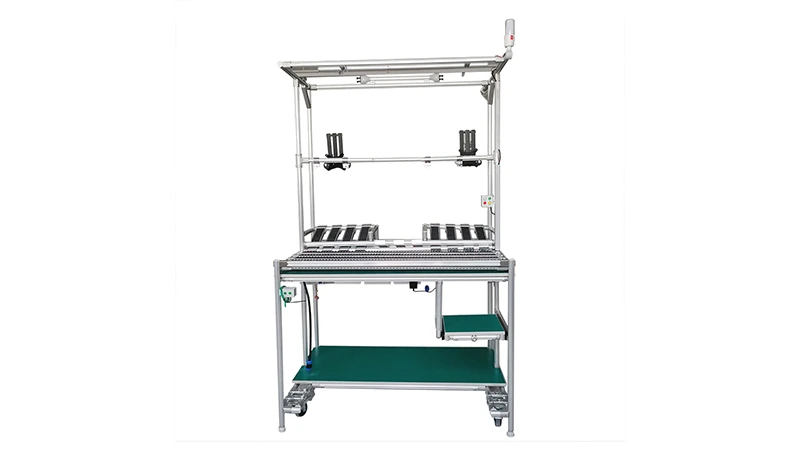
Walk into any manufacturing plant, warehouse, or coastal facility, and you'll likely spot a common challenge: equipment fighting a losing battle against corrosion. Humidity, salt air, chemical fumes, and constant moisture don't just damage tools—they eat away at workbenches, the unsung heroes of daily operations. A rusted workbench isn't just an eyesore; it's a productivity killer. Bolts seize up, surfaces become uneven, and over time, the entire structure weakens, forcing costly replacements and unplanned downtime. But what if there was a workbench built to stand up to these harsh conditions? Enter Aluminum Workbench D, a solution engineered with corrosion resistance at its core, designed to thrive where traditional workbenches fail.
The Hidden Cost of Corrosion in Humid & Industrial Spaces
Corrosion isn't just about rust. In humid environments—like coastal factories, food processing plants, or tropical warehouses—moisture clings to metal surfaces, triggering oxidation. In industrial settings, chemical spills, oils, and cleaning agents this process, turning sturdy steel workbenches into flaky, unstable hazards. The consequences? A factory in Miami, for example, might replace steel workbenches every 3–5 years due to saltwater corrosion. A pharmaceutical plant in Singapore could see rust particles contaminating sensitive products, leading to compliance issues. Even in milder climates, a workshop with poor ventilation can face mold growth on wooden workbenches, creating health risks for workers.
The costs add up fast: new workbench purchases, labor hours lost to repairs, and the hidden expense of disrupted workflows. For small businesses, this can mean choosing between replacing a workbench and investing in new tools. For large facilities, it's a recurring budget line that never seems to shrink. But what if we could flip the script? What if a workbench could not only resist corrosion but actually last decades, even in the toughest conditions? That's where Aluminum Workbench D comes in.
Why Aluminum? The Science Behind Corrosion Resistance
Aluminum isn't just lightweight—it's a natural warrior against corrosion. Unlike steel, which rusts when exposed to oxygen and moisture, aluminum forms a thin, invisible layer of aluminum oxide the moment it touches air. This layer acts as a shield, preventing further oxidation. Even if scratched, the metal quickly regenerates this protective film, self-healing in a way steel never can. For Aluminum Workbench D, this natural defense is supercharged by its construction: it's built using high-grade aluminum extrusion profile —a manufacturing process that shapes aluminum into strong, uniform structures while preserving its corrosion-resistant properties.
But why does the extrusion process matter? When aluminum is extruded, it's pushed through a die under high pressure, creating consistent, seamless shapes. This eliminates weak points where moisture might seep in, unlike welded steel workbenches with gaps in the joints. The result? A workbench with a smooth, non-porous surface that's far harder for water, salt, or chemicals to penetrate. Pair that with aluminum profile accessories —like precision-engineered joints, end caps, and clamps—and you've got a system designed to lock out corrosion from every angle.
Aluminum Workbench D: Built to Outlast the Elements
Aluminum Workbench D isn't just a slab of aluminum on legs. It's a thoughtfully designed system where every component works together to resist corrosion. Let's break down its key features:
- Aluminum Profile Construction: The workbench's frame and are made from aluminum profile —durable, lightweight, and naturally corrosion-resistant. Unlike steel, it won't chip, flake, or require painting to stay protected.
- Seamless Joints: Using aluminum profile accessories like internal rotary aluminum joints and 90° aluminum pipe joints, the workbench is assembled with tight, gap-free connections. These joints prevent moisture from seeping into crevices, a common weak spot in traditional workbenches.
- Protective End Caps: Every exposed edge of the aluminum profile is capped with accessories like 4040 aluminum profile end caps. These plastic or rubber covers seal off the ends of the extrusion, stopping water from pooling inside the hollow sections.
- Non-Porous Surface: The workbench's top (often an aluminum honeycomb panel or solid aluminum sheet) is smooth and easy to clean. Spills wipe away with a cloth, and there's no risk of water soaking in or chemicals causing discoloration.
Take a food processing plant, for example. Daily washdowns with high-pressure hoses and sanitizing agents would warp a wooden workbench and rust a steel one. But Aluminum Workbench D? A quick wipe with a damp cloth is all it needs. The aluminum surface resists the harsh chemicals, and the sealed joints prevent water from getting trapped. In a coastal warehouse, where salt air hangs thick, the workbench's oxide layer stands firm, never developing the red rust that plagues steel. Over time, it doesn't just survive—it thrives.

Beyond Corrosion: The Added Benefits of Aluminum Workbench D
Corrosion resistance is just the start. Aluminum Workbench D brings a host of advantages that make it a smart investment for any environment, humid or not:
1. Longevity That Saves Money
Steel workbenches might cost less upfront, but they rarely last more than 5 years in harsh conditions. Aluminum Workbench D, by contrast, can easily hit the 15–20 year mark with minimal maintenance. Let's crunch the numbers: A steel workbench costs $300 and needs replacement every 4 years. Over 20 years, that's 5 replacements, totaling $1,500. Aluminum Workbench D might start at $600, but with no replacements needed, it's a $900 saving over two decades. For businesses, that's money better spent on tools, training, or growth.
2. Low Maintenance, High Reward
Steel workbenches demand constant care: sanding rust, repainting, tightening corroded bolts. Aluminum Workbench D? A quick wipe with a damp cloth is usually enough. No paint, no primer, no special cleaners. Even in messy environments—like auto repair shops with oil spills or labs with chemical splashes—the aluminum surface resists staining and damage. This means less time spent on upkeep and more time focused on actual work.
3. Safety First, Always
Rusted workbenches aren't just ugly—they're dangerous. A corroded leg could collapse under heavy equipment, and rust flakes can contaminate products (a nightmare for food,, or electronics industries). Aluminum Workbench D eliminates these risks. Its stable, corrosion-free frame supports heavy loads without weakening, and its smooth surface won't shed particles. For workers, that means peace of mind; for managers, it means fewer accidents and compliance headaches.
4. Lightweight, But Strong
Aluminum is about 1/3 the weight of steel, making Aluminum Workbench D easy to move (if needed) without sacrificing strength. A 6-foot model might weigh 50–60 pounds, compared to 150+ pounds for a steel equivalent. This is a game-changer for facilities that reconfigure layouts often—like warehouses or event spaces. Need to shift the workbench to a new station? Two people can lift it, no forklift required.

Aluminum Workbench D vs. Traditional Workbenches: A Head-to-Head Comparison
| Feature | Aluminum Workbench D | Steel Workbench | Wooden Workbench |
|---|---|---|---|
| Corrosion Resistance | Excellent (natural oxide layer + sealed joints) | Poor (rusts without regular painting) | Very Poor (swells, rots, or molds in moisture) |
| Maintenance | Minimal (wipe clean only) | High (repaint, sand rust, replace bolts) | High (seal, sand, replace warped boards) |
| Expected Lifespan | 15–20+ years | 3–5 years (humid/industrial) | 5–8 years (dry environments only) |
| Weight | Light (50–60 lbs for 6-foot model) | Heavy (150+ lbs for 6-foot model) | Medium (80–100 lbs for 6-foot model) |
| Cost (20-Year Total) | $600 (one-time purchase) | $1,500 (5 replacements) | $800–$1,200 (3–4 replacements) |
| Safety | High (stable, no rust flakes) | Low (risk of collapse, rust contamination) | Medium (risk of splinters, mold) |
Real-World Results: How Businesses Are Winning with Aluminum Workbench D
Don't just take our word for it—businesses across industries are seeing the difference. Take Coastal Electronics, a circuit board manufacturer in Charleston, South Carolina. Located 5 miles from the coast, their old steel workbenches rusted within 2 years, leaving rust spots on circuit boards and forcing replacements every 3 years. After switching to Aluminum Workbench D five years ago, they've had zero corrosion issues. "We used to spend $2,000 a year on new workbenches," says plant manager Maria Gonzalez. "Now, those costs are gone. The aluminum benches look brand-new, and we haven't had a single product contamination issue since the switch."
Or consider Fresh Harvest, a food processing plant in Seattle. With daily washdowns and high humidity, wooden workbenches warped and grew mold, violating FDA standards. Aluminum Workbench D solved that. "The smooth aluminum surface is easy to sanitize, and there's no mold or rot," says operations director James Lee. "Our audits are now a breeze, and we've cut cleaning time by 30%."
Is Aluminum Workbench D Right for You?
If your workspace faces any of these challenges, Aluminum Workbench D is worth considering:
- Humid environments (coastal areas, tropical climates, or facilities with poor ventilation)
- Industrial settings with chemicals, oils, or corrosive agents
- Food,, or electronics industries (where cleanliness and contamination control are critical)
- Facilities that need lightweight, movable workbenches
- Businesses tired of frequent workbench replacements
Final Thoughts: Invest in a Workbench That Works as Hard as You Do
Corrosion is a silent budget-drainer, but it doesn't have to be. Aluminum Workbench D isn't just a tool—it's a long-term investment in your business's efficiency, safety, and bottom line. By leveraging aluminum's natural corrosion resistance, precision aluminum extrusion profile , and high-quality aluminum profile accessories , it's built to outlast the elements and keep up with your team's demands.
Imagine walking into your facility 10 years from now and seeing the same workbenches, still sturdy, still clean, still working as hard as day one. That's the promise of Aluminum Workbench D: a solution that doesn't just resist corrosion, but redefines what a workbench can be. So why keep fighting rust when you can build a workspace that thrives?