- Company Articles
- Products and Technology
- Product knowledge
- Aluminum Workbench D Custom Colors and Finishes: Aesthetic and Functional Options

Aluminum Workbench D Custom Colors and Finishes: Aesthetic and Functional Options
Related Product
Aluminum Workbench D
Aluminum tube workbench is more flexible and durable, compared with traditional PE/ABS coated steel tube. It is easy to assemble, anti corrosion, rust protection, and recycle use after disassemble.
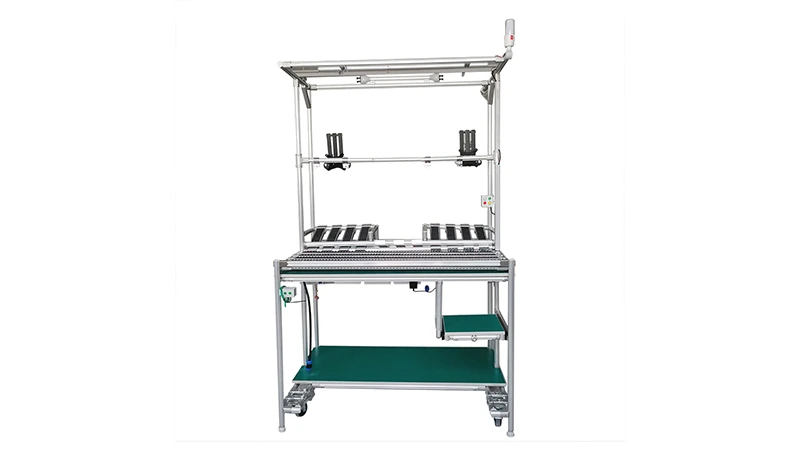
Walk into any modern production facility, and you'll quickly notice that the workbench isn't just a table—it's the heartbeat of the operation. It's where ideas turn into products, where teams collaborate, and where efficiency either thrives or stumbles. That's why choosing the right workbench matters—and when it comes to balancing functionality, durability, and visual appeal, Aluminum Workbench D stands out as a game-changer. What truly sets it apart, though, is its ability to blend custom colors and finishes, turning a utilitarian tool into a personalized asset that aligns with both your workflow needs and your workspace's aesthetic. Let's dive into how this workbench, built on the strength of aluminum extrusion profile and enhanced by aluminum profile accessories , can transform your production line into a space that's as efficient as it is visually cohesive.
The Backbone: Aluminum Profile and Extrusion in Workbench Design
Before we explore colors and finishes, it's essential to understand what makes Aluminum Workbench D tick. At its core lies aluminum extrusion profile —a material celebrated in manufacturing for its unique blend of strength, lightweight design, and modularity. Unlike traditional steel workbenches that are heavy and hard to reconfigure, aluminum extrusion profiles are created by pushing molten aluminum through a die, resulting in consistent, precision-engineered shapes. This process allows for intricate designs, including the T-slots that make the workbench infinitely customizable. These slots aren't just for show; they're the reason you can easily attach shelves, tool holders, or lighting—all thanks to compatible aluminum profile accessories that snap into place without welding or drilling.
But why aluminum? For starters, it's resistant to corrosion, making it ideal for environments where moisture or chemicals are present. It's also non-magnetic and non-sparking, adding an extra layer of safety in sensitive industries like electronics or aerospace. And because it's lightweight, repositioning the workbench (even with accessories attached) is a breeze—no need for heavy machinery or a team of workers. This flexibility is key in today's dynamic production settings, where lean principles (think lean system optimization) demand adaptability. Aluminum extrusion profile isn't just a material here; it's the foundation that makes customization possible, from the workbench's structure down to its color and finish.
Why Custom Colors and Finishes Matter: More Than Just a Pretty Bench
You might be thinking, "Why bother with custom colors? A workbench's job is to hold tools, not win design awards." But here's the thing: the modern workspace is a holistic environment, where employee well-being, brand identity, and operational efficiency are deeply interconnected. A workbench that looks generic and feels cold can dampen morale, while one that reflects your company's colors or aligns with your facility's design can boost pride and focus. On the functional side, colors and finishes play a critical role in durability, safety, and even compliance. For example, a high-visibility color might reduce the risk of accidents by marking hazardous zones, while a specialized finish could protect sensitive electronics from static damage. In short, custom colors and finishes turn Aluminum Workbench D from a "one-size-fits-all" tool into a tailored solution that works with your team, not against them.

Exploring Aluminum Workbench D's Color Palette: From Neutral to Bold
Gone are the days when workbenches came in only "industrial gray" or "boring beige." Aluminum Workbench D offers a spectrum of color options, designed to meet both aesthetic preferences and functional needs. Let's break down the most popular choices and how they can integrate into your workspace:
| Color Option | Common Applications | Functional Benefit | Aesthetic Impact |
|---|---|---|---|
| Silver/Metallic (Standard Aluminum) | General manufacturing, labs, cleanrooms | Natural corrosion resistance; reflects light to brighten work areas | Clean, professional look; blends with any environment |
| Black | Electronics assembly, ESD-sensitive zones | Often paired with ESD coatings; hides minor scratches | Sleek, modern; creates a high-tech vibe |
| White | Medical facilities, food processing, offices | Reflective; easy to clean and sanitize | Bright, open feel; minimizes eye strain in long shifts |
| Yellow/High-Visibility | Warehouses, assembly lines with moving parts | Enhances safety by marking work zones or equipment edges | Energetic, attention-grabbing; promotes alertness |
| Custom RAL Colors | Brand-aligned spaces, department-specific zones | Tailored to your needs (e.g., color-coding for workflow stages) | Reinforces brand identity; creates visual cohesion |
What's impressive about these color options is that they're not just surface-level. The pigments are integrated into the finish (whether powder-coated or anodized), ensuring they won't chip or fade easily—even in high-traffic areas. For example, if you run a medical device manufacturing plant, white might be your go-to for its sanitization benefits, while a tech startup might opt for custom brand colors to foster team pride. The key is that the color works for your workflow, not against it.

Finish Options: More Than Just Looks—Durability Meets Function
If color is the "what" of Aluminum Workbench D's appearance, the finish is the "how" it performs. The right finish can extend the workbench's lifespan, protect against wear and tear, and even add functional properties like static dissipation or chemical resistance. Let's explore the most common finishes and their real-world applications:
Anodized Finish
Anodizing is a electrochemical process that creates a protective oxide layer on the aluminum's surface. This layer is porous, allowing it to absorb dyes—making it perfect for achieving vibrant, long-lasting colors. Beyond aesthetics, anodized finishes are scratch-resistant and corrosion-proof, making them ideal for workbenches in humid environments or those exposed to oils and coolants. They also have a matte, slightly textured feel, which reduces glare—great for workstations with overhead lighting.
Powder-Coated Finish
Powder coating involves applying a dry powder (typically polyester) to the aluminum profile and curing it in an oven, creating a hard, durable shell. This finish offers the widest range of color options, including custom shades, and is known for its toughness—resistant to chipping, fading, and abrasion. It's a top choice for workbenches in high-impact areas, like automotive assembly lines, where tools might be dropped or parts slid across the surface. Powder-coated finishes also come in different textures, from glossy to matte, allowing you to fine-tune the look.
Brushed Finish
For a more industrial, tactile look, brushed finishes are created by rubbing the aluminum surface with abrasive materials, leaving fine, parallel lines. While not as color-rich as anodized or powder-coated options, brushed finishes excel at hiding fingerprints and minor scratches, making them low-maintenance for busy workspaces. They pair well with metallic or silver color bases, adding depth without overwhelming the environment.
ESD-Compliant Finishes
In electronics manufacturing, static electricity can destroy sensitive components. That's where ESD-compliant finishes come in. These are often black or dark gray, infused with conductive additives that dissipate static charges safely. While ESD workbenches are a separate category, Aluminum Workbench D can be upgraded with these finishes, making it suitable for PCB assembly, semiconductor production, or any environment where static control is critical.
Aluminum Profile Accessories: The Icing on the Customization Cake
A workbench is only as good as its ability to adapt to your tools and tasks—and that's where aluminum profile accessories shine. These accessories, designed to fit seamlessly with the T-slots of the aluminum extrusion profile, not only enhance functionality but can also be color-matched to your workbench, creating a unified look. Here are some of the most popular options:
- Shelves and Drawers: Add vertical storage with powder-coated shelves that match the workbench's color, keeping tools within arm's reach without cluttering the surface.
- Tool Rails and Holders: Magnetic or clamp-on rails in coordinating colors keep screwdrivers, pliers, and other hand tools organized and visible.
- LED Light Bars: Mount under-shelf lighting in white or warm tones to brighten the workspace—critical for detailed tasks like soldering or inspection.
- Casters: Lockable casters with colored wheel covers (think black or gray) let you move the workbench easily, then lock it in place for stability. Perfect for lean systems that require flexible layouts.
- Back Panels: Pegboards or solid panels in custom colors create a backdrop for tools or company logos, turning the workbench into a brand statement.
The beauty of these accessories is their modularity. As your needs change—say, you add a new machine or shift to a new production line—you can reconfigure the accessories without replacing the entire workbench. This aligns perfectly with lean system principles, where waste reduction and adaptability are key. And because they're designed for the aluminum extrusion profile, installation is tool-free (in most cases), saving your team time and frustration.
The Customization Process: Bringing Your Vision to Life
So, how do you turn a standard Aluminum Workbench D into a customized solution? The process is surprisingly straightforward, thanks to suppliers who specialize in aluminum profile systems. Here's a step-by-step overview:
1. Assess Your Needs
Start by defining your priorities: Is ESD protection critical? Do you need to color-code by department? Will the workbench be exposed to chemicals or heavy use? Answering these questions will narrow down your finish and color options.
2. Choose Your Base Workbench
Aluminum Workbench D comes in standard sizes, but dimensions can be adjusted. Decide on the length, width, and height (consider ergonomics here—standing vs. sitting workstations) before moving to aesthetics.
3. select Color and Finish
Work with your supplier to pick a color (RAL codes are universal, so you can match existing equipment) and finish type. Most suppliers offer color swatches or digital renderings to help you visualize the result.
4. Add Accessories
Pick aluminum profile accessories that enhance functionality—shelves, casters, lighting—and ensure they're color-coordinated with the workbench. This is where the "custom" feel really comes to life.
5. Quality Control and Delivery
Reputable suppliers will test the finish for adhesion, durability, and (if applicable) ESD properties before shipping. Once delivered, the workbench arrives ready to assemble—no painting or finishing required on your end.
Aesthetic Harmony in the Workplace: Why It Matters More Than You Think
We've talked a lot about function, but let's not overlook the power of aesthetics. A workspace that looks intentional and cohesive can have a measurable impact on employee satisfaction and productivity. Studies show that environments with thoughtful design—including color—reduce stress, boost focus, and even lower turnover rates. Aluminum Workbench D, with its custom colors and finishes, lets you create this harmony in several ways:
- Brand Alignment: Using your company's colors on workbenches reinforces identity and pride. Employees feel more connected to their workplace when it reflects the brand they represent.
- Departmental Color-Coding: In large facilities, assigning colors by department (e.g., blue for assembly, green for packaging) reduces confusion and streamlines workflow. New employees can quickly orient themselves, and cross-departmental collaboration becomes smoother.
- Visual Calm: Clashing colors or mismatched equipment can create visual noise, which is mentally draining. A unified palette—say, white workbenches with black accessories—creates a sense of order that helps teams stay focused.
Conclusion: More Than a Workbench—A Workspace Investment
Aluminum Workbench D isn't just another piece of equipment. It's a reflection of how you value your team, your processes, and your brand. By leveraging the strength of aluminum extrusion profile , the versatility of aluminum profile accessories , and the personalization of custom colors and finishes, you're not just buying a workbench—you're investing in a workspace that works with you. Whether you're optimizing a lean system, enhancing safety, or simply creating a space your team is proud to work in, this workbench proves that function and beauty don't have to be mutually exclusive. So, why settle for generic when you can have a workbench that's as unique as your production process? The answer is clear: in today's competitive manufacturing landscape, the details—like color and finish—are what set great workspaces apart.