- Company Articles
- Products and Technology
- Product knowledge
- Aluminum Workbench D Explained: Key Features That Boost Industrial Workstation Efficiency

Aluminum Workbench D Explained: Key Features That Boost Industrial Workstation Efficiency
Related Product
Aluminum Workbench D
Aluminum tube workbench is more flexible and durable, compared with traditional PE/ABS coated steel tube. It is easy to assemble, anti corrosion, rust protection, and recycle use after disassemble.
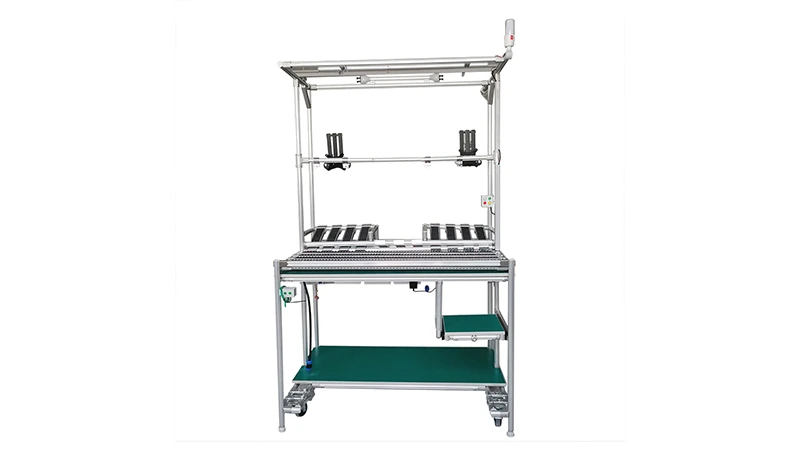
Walk into any busy manufacturing plant, electronics workshop, or assembly facility, and you'll quickly spot the unsung hero of daily operations: the workstation. It's where technicians assemble circuit boards, where warehouse staff sort components, and where quality inspectors meticulously check products. For workers spending 8+ hours a day at these benches, the difference between a clunky, outdated setup and a streamlined, purpose-built one isn't just comfort—it's productivity. Missed deadlines, fatigued employees, and costly errors often trace back to workstations that fail to keep up with the demands of modern industry. Enter Aluminum Workbench D: a thoughtfully engineered solution designed to transform how teams work, one efficient, adaptable, and durable workstation at a time.
What Is Aluminum Workbench D?
Aluminum Workbench D isn't just another table in a catalog. It's a modular, lean system-aligned workstation built from high-grade aluminum extrusion profiles, engineered to meet the rigorous demands of industrial environments. As a single-deck workbench (without casters, making it ideal for fixed, high-stability tasks), it's part of a broader lineup of lean pipe and aluminum profile solutions that prioritize flexibility, durability, and workflow optimization. Whether you're running a small-scale electronics assembly line or a large automotive parts facility, Workbench D is designed to grow with your needs—no expensive overhauls required.
At its core, this workbench embodies the principles of lean manufacturing: eliminating waste, reducing unnecessary movement, and empowering teams to work smarter. It's not just about holding tools and materials; it's about creating a workspace that adapts to your processes, not the other way around. Let's dive into the key features that make Aluminum Workbench D a game-changer for industrial efficiency.
Key Feature 1: Aluminum Extrusion Profile—The Backbone of Durability and Flexibility
Lightweight, Strong, and Built to Last
The first thing you'll notice about Aluminum Workbench D is its construction: it's built using premium aluminum extrusion profiles. Unlike traditional steel workbenches that are heavy, prone to rust, and difficult to modify, aluminum extrusion profiles offer a winning combination of strength and versatility. These profiles are created by forcing heated aluminum through a die, resulting in consistent, precision-engineered shapes with built-in T-slots—those handy grooves that run along the length of the profile, allowing for easy attachment of accessories without welding, drilling, or specialized tools.
Why does this matter? For starters, aluminum is significantly lighter than steel, making Workbench D easier to install and reconfigure (even without casters, a small team can reposition it if your layout changes). Yet it's surprisingly strong: high-grade aluminum extrusion profiles can support hundreds of pounds of tools, equipment, or materials—think heavy power tools, stacks of component boxes, or even small machinery. This strength-to-weight ratio is a game-changer for facilities where floor space is precious and adaptability is key.
Durability is another standout. Aluminum naturally resists corrosion, so Workbench D holds up in environments with moisture, oils, or chemicals—common in manufacturing or automotive settings. Unlike wood, it won't warp, splinter, or absorb spills, and unlike painted steel, it won't chip or rust when exposed to daily wear and tear. This means less time spent on repairs, repainting, or replacements, and more time focused on production.

Key Feature 2: Modular Design with Aluminum Profile Accessories—Customize Without Compromise
Build the Workstation Your Team Actually Needs
One of the biggest frustrations with traditional workbenches is their "one-size-fits-all" mentality. A workstation that works for a mechanic might be useless for an electronics assembler, and vice versa. Aluminum Workbench D solves this with a modular design that lets you customize every inch using compatible aluminum profile accessories—no custom fabrication required.
The T-slots in the aluminum extrusion profiles are the secret here. They act as a universal mounting system for a wide range of accessories: tool hooks, adjustable shelves, bin holders, monitor arms, and even small material racks. Need extra storage for screws and washers? Add a set of stackable bins using aluminum profile brackets. Assembling tall components? Attach a side-mounted shelf at eye level to keep parts within arm's reach. Working with ESD-sensitive electronics? Swap out the standard work surface for an ESD-safe panel (compatible with ESD workstation accessories from the same supplier lineup).
This modularity isn't just about adding bells and whistles—it's about reducing waste. In lean manufacturing, "waste" includes time spent searching for tools or walking to a distant storage area. With Workbench D, everything your team needs stays right at the bench. For example, a pharmaceutical packaging line might add a 3-row, 3-floor material rack (similar to Material Rack B in the product lineup) to keep different bottle sizes organized, cutting down on trips to the stockroom. A repair shop could mount a pegboard above the bench using aluminum guide rails, ensuring wrenches and screwdrivers are always visible and accessible.
And when your processes change? No need to buy a new workbench. Simply reconfigure the accessories. Upgrading to a new assembly step that requires more surface area? Add a fold-down extension using aluminum hinges. Scaling back? Remove excess shelves to free up space. This adaptability ensures Workbench D grows with your business, delivering value for years—not just months.

Key Feature 3: Adjustable Leveling Feet—Stability That Eliminates Errors
Precision Work Demands a Stable Base
Even the most well-designed workstation falls flat if it wobbles. A slight tilt might seem minor, but for a technician soldering tiny components or a quality inspector measuring parts to the millimeter, it's a recipe for mistakes. Aluminum Workbench D addresses this with heavy-duty adjustable leveling feet—small but critical components that ensure the bench stays perfectly stable, even on uneven factory floors.
These feet aren't your average table adjusters. Made from robust plastic or metal with rubberized bases (to prevent slipping), they screw into the bottom of the workbench's aluminum legs, allowing you to tweak each corner by fractions of an inch. Stuck with a floor that slopes near the loading dock? Crank up the feet on the low side. Dealing with a cracked tile under one leg? Adjust that foot to compensate. The result? A rock-solid work surface that eliminates annoying wobbles, reduces eye strain (from constantly refocusing on moving parts), and ensures measurements and assemblies are accurate the first time.
Stability also translates to safety. A wobbly bench increases the risk of tools or materials sliding off, leading to spills, broken parts, or even injuries. With Workbench D's leveling feet, you can trust that heavy equipment—like a 50-pound testing machine or a stack of metal components—stays put, even during busy shifts. It's a small feature that delivers big peace of mind.
Key Feature 4: Lean System Integration—Work Smarter, Not Harder
Designed for the Lean Manufacturing Mindset
Aluminum Workbench D isn't just a standalone product—it's part of a lean system, engineered to support the waste-reduction goals that drive modern manufacturing. Lean principles focus on five key areas: reducing motion, minimizing inventory, cutting down on defects, eliminating overproduction, and streamlining processing. Workbench D addresses each of these, turning your workstation from a static piece of furniture into an active participant in your efficiency strategy.
Take "reducing motion," for example. The average worker spends 15-20% of their shift walking to retrieve tools, parts, or documents—time that could be spent on value-adding tasks. Workbench D's modular design lets you arrange tools and materials in a "golden zone" (within arm's reach), so workers rarely have to stretch, bend, or walk away. Add a flow rack nearby (using compatible roller track and accessories) to feed parts directly to the bench, and suddenly that 20% waste drops to near zero.
Then there's "minimizing inventory." Traditional workbenches often become cluttered with excess parts, leading to confusion and wasted space. Workbench D's customizable storage—via bins, shelves, and hooks—encourages "5S" organization (Sort, Set in Order, Shine, Standardize, Sustain). Only essential items stay on the bench, reducing visual clutter and making it easy to spot missing parts or overstock. This not only speeds up tasks but also reduces the risk of using outdated or incorrect components.
Even "cutting down on defects" gets a boost. With a stable, ergonomic work surface and tools at hand, workers can focus on precision, not frustration. A level bench reduces errors in assembly; an uncluttered space reduces mix-ups between parts. The result? Fewer defective products, less rework, and happier customers.
Key Feature 5: Low Maintenance, High Longevity—Built for the Long Haul
Durability That Saves Time and Money
In industrial settings, "out of sight, out of mind" often applies to maintenance—until a workstation breaks down, halting production. Aluminum Workbench D is designed to be virtually maintenance-free, so your team can focus on work, not repairs. Aluminum extrusion profiles are naturally resistant to corrosion, dents, and scratches, even in environments with oils, coolants, or humidity. Unlike wood, they won't warp or rot if spills are left unattended. Unlike steel, they don't require repainting to prevent rust. A quick wipe with a damp cloth is all it takes to keep the bench looking and functioning like new.
The materials matter, too. The aluminum used in Workbench D is sourced from high-quality suppliers, ensuring consistent strength and finish. Even the accessories—from aluminum profile connectors to leveling feet—are built to withstand daily use. This durability translates to a longer lifespan: while a typical wooden workbench might last 2-3 years and a steel one 5-7, Workbench D can easily serve your facility for a decade or more. When you factor in reduced replacement costs and minimal upkeep, the ROI becomes clear.
How Aluminum Workbench D Stacks Up Against Traditional Workstations
| Feature | Aluminum Workbench D | Traditional Steel Workbench | Wooden Workbench |
|---|---|---|---|
| Weight | Lightweight (easy to reposition with team effort) | Heavy (difficult to move; requires equipment) | Moderate (prone to warping, increasing weight unevenly) |
| Customization | High (modular aluminum profile accessories; T-slot mounting) | Low (fixed design; welding/drilling needed for changes) | Very low (nails/screws damage wood; limited accessory options) |
| Durability | Excellent (corrosion-resistant; scratch/dent-proof) | Good (prone to rust without regular painting) | Poor (warps, rots, or splinters with moisture/use) |
| Maintenance | Minimal (wipe clean; no repainting or rust treatment) | High (regular painting; rust removal) | High (sanding, staining, or replacing warped boards) |
| Lean Compatibility | Yes (integrates with flow racks, roller tracks, and lean systems) | Limited (fixed design resists workflow changes) | No (static; not designed for waste reduction) |
Real-World Impact: How a Electronics Manufacturer Boosted Productivity by 25%
A mid-sized electronics assembler in the Midwest was struggling with outdated wooden workbenches. Their main pain points? Constant wobbling on uneven factory floors (leading to soldering errors), limited storage (forcing workers to walk 50+ feet to retrieve parts), and frequent repairs (splintered wood surfaces needed monthly sanding). After switching to 12 Aluminum Workbench D units, here's what happened:
- Error rates dropped by 30%: Stable, level work surfaces eliminated shaky soldering and misaligned components.
- Production time per unit fell by 25%: Modular bins and tool hooks kept parts and tools at the bench, cutting down on walking time.
- Maintenance costs plummeted: No more monthly sanding or replacement of warped boards—just occasional wipe-downs.
"We used to think workbenches were just tables—until we tried Workbench D," said the plant manager. "Now, it's the first thing new hires comment on: 'This makes my job so much easier.' And when your team is happy and efficient, everything else follows."
Conclusion: Invest in Efficiency—Your Team (and Bottom Line) Will Thank You
In the fast-paced world of industrial manufacturing, every second counts. Aluminum Workbench D isn't just about buying a better table—it's about investing in a more efficient, adaptable, and sustainable way of working. With its aluminum extrusion profile construction, modular design, adjustable stability, lean system integration, and low-maintenance durability, it's a workstation that grows with your team, reduces waste, and turns daily tasks from a chore into a streamlined process.
Whether you're upgrading a single bench or outfitting an entire facility, Aluminum Workbench D proves that the right tools don't just support your team—they empower them to do their best work. And in today's competitive market, that's the difference between keeping up and leading the pack.