- Company Articles
- Products and Technology
- Product knowledge
- Aluminum Workbench D Fire Resistance: Safety Features for Industrial Settings

Aluminum Workbench D Fire Resistance: Safety Features for Industrial Settings
Related Product
Aluminum Workbench D
Aluminum tube workbench is more flexible and durable, compared with traditional PE/ABS coated steel tube. It is easy to assemble, anti corrosion, rust protection, and recycle use after disassemble.
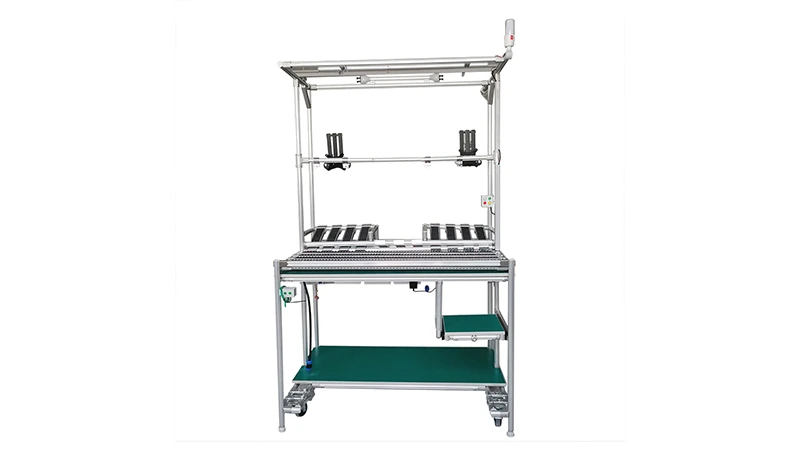
In the fast-paced world of manufacturing, warehousing, and assembly lines, safety isn't just a buzzword—it's the backbone of a productive, sustainable operation. Every tool, every piece of equipment, and every workspace design choice plays a role in protecting workers, minimizing downtime, and safeguarding valuable assets. Among these critical tools, the workbench stands out as a central hub: it's where tasks are executed, materials are staged, and precision meets productivity. But not all workbenches are created equal. Today, we're diving into a game-changer for industrial safety: the Aluminum Workbench D, a solution engineered to prioritize fire resistance without compromising on functionality. Let's explore why this workbench is becoming a staple in factories, workshops, and warehouses worldwide.
Why Fire Resistance Matters in Industrial Workspaces
Industrial environments are hotbeds of activity—and potential fire risks. Think about it: electrical equipment runs around the clock, chemicals and flammable materials are stored nearby, and friction from moving parts can spark heat. According to the National Fire Protection Association (NFPA), industrial fires cause an average of $1 billion in property damage annually, not to mention the human cost of injuries or lost lives. A single spark from a faulty wire, a misplaced heat source, or even static electricity can escalate into a disaster if the workspace isn't equipped to contain it.
Workbenches, being central to daily operations, are often ground zero for such risks. Traditional workbenches made of wood or plastic might be cheap, but they're tinder for flames. Wood ignites at around 233°C (451°F), and plastic melts even lower—some types start deforming at just 100°C (212°F). Once a fire starts on a workbench, it can spread quickly to nearby materials, tools, or inventory, turning a small incident into a catastrophic loss. That's where fire-resistant materials like aluminum come in. Aluminum doesn't burn, and its high melting point (660°C/1220°F) gives workers precious time to react, contain the fire, and prevent it from spreading.
Aluminum Workbench D: Built for Fire Safety, Engineered for Performance
At first glance, the Aluminum Workbench D might look like any other sturdy workbench—but its true strength lies in the details. Constructed from high-grade aluminum extrusion profile, this workbench isn't just durable; it's a fortress against fire risks. Let's break down what makes it stand out.
The Science Behind Aluminum's Fire Resistance
Aluminum extrusion profile is created by forcing molten aluminum through a die to form specific shapes—think of it like squeezing toothpaste through a tube, but with industrial precision. This process results in a material that's lightweight yet incredibly strong, and crucially, non-combustible. Unlike wood or plastic, aluminum doesn't catch fire when exposed to heat. Instead, it absorbs heat until it reaches its melting point, which is over three times higher than the ignition temperature of wood. In practical terms, if a small fire breaks out near the workbench—say, a hot soldering iron tips over or a chemical-soaked rag ignites—the aluminum surface won't fuel the flames. It might get hot, but it won't burn, giving your team time to grab a fire extinguisher or shut down nearby equipment.
But fire resistance isn't the only trick up its sleeve. The Aluminum Workbench D's aluminum profile structure also resists warping or deforming under heat. Traditional wooden workbenches can char, crack, or collapse when exposed to high temperatures, even if they don't catch fire. Steel workbenches, while fire-resistant, conduct heat rapidly—meaning a hot surface could still burn workers or damage heat-sensitive materials. Aluminum, however, balances heat resistance with moderate thermal conductivity, staying cooler to the touch longer and maintaining structural integrity even in high-heat scenarios.
Beyond Fire: A Safety-First Design
The Aluminum Workbench D doesn't stop at fire resistance. It's designed to address other common industrial safety hazards, making it a holistic solution for busy workspaces. For example, many models come with an ESD workstation top—ESD stands for electrostatic discharge, a silent threat in electronics manufacturing. Static electricity can build up on surfaces and damage sensitive components like circuit boards or microchips. The ESD-safe surface of the Aluminum Workbench D dissipates static charges, protecting your products and reducing costly defects. It's a small detail, but in industries like aerospace or medical device manufacturing, where precision is everything, it's a game-changer.
Another key feature is its structural stability. The workbench's frame is built using interlocking aluminum profile accessories, creating a rigid, wobble-free surface. No more tools sliding off or materials toppling over during use. The legs are reinforced with heavy-duty aluminum foot bases, and optional casters (like the 360° swivel expanding stem casters wheel with brake) let you move the workbench easily—then lock it in place to prevent accidental sliding. This stability isn't just about convenience; it reduces trips, falls, and equipment damage, making the workspace safer overall.

Material Matters: Why Aluminum Extrusion Profile Beats the Competition
To truly appreciate the Aluminum Workbench D, let's compare it to other common workbench materials. After all, safety isn't the only factor—you need durability, functionality, and value for money too.
As the table shows, aluminum extrusion profile strikes the perfect balance. It's lighter than steel, so you can move it around the factory floor (with the right casters) to adapt to changing workflows. It's more durable than wood or plastic, resisting corrosion, dents, and scratches even in humid or messy environments—ideal for automotive shops or food processing plants. And unlike steel, it doesn't rust, so you won't have to worry about flaky paint or rust stains on your products. Best of all, it requires almost no maintenance: a quick wipe with a damp cloth is all it takes to keep it clean. No sanding, no painting, no sealing—just focus on your work, not your workbench.

Beyond Fire Safety: Features That Make Work Easier (and Safer)
The Aluminum Workbench D isn't just about avoiding disasters—it's about creating a workspace that makes your team more efficient, comfortable, and safe every day. Let's explore some of its standout features.
ESD Workstation Capabilities for Sensitive Work
If you work with electronics—think circuit boards, semiconductors, or medical devices—static electricity is enemy number one. A single electrostatic discharge can fry a $100 component or ruin a batch of products. That's why many Aluminum Workbench D models come with an ESD workstation top, a specialized surface that dissipates static charges instead of letting them build up. The top is coated with a material that has a surface resistance between 10^6 and 10^9 ohms, meeting industry standards for ESD protection. This means when a worker places a circuit board on the bench, static won't jump from their hand to the component, saving you from costly defects and rework.
Seamless Integration with Roller Track for Smooth Material Flow
In busy factories, time is money—and nothing kills productivity like constantly bending down to pick up parts or walking back and forth to fetch materials. The Aluminum Workbench D solves this by pairing perfectly with roller track systems. Roller track is a series of small wheels mounted on a rail, designed to let materials glide smoothly from one workstation to the next. Imagine this: you're assembling car parts on the Aluminum Workbench D. Instead of having a pile of bolts and brackets cluttering the surface, they're stored on a roller track shelf above or beside the bench. When you need a part, you just slide it down the roller track—no bending, no reaching, no wasted time.
But it's not just about convenience. Roller track also reduces the risk of strains and injuries. Workers don't have to lift heavy boxes or reach across cluttered surfaces, lowering the chance of back pain or repetitive stress injuries. Plus, the aluminum profile of the workbench is compatible with roller track accessories like plastic roller track guide rails (available in yellow or grey) and roller track placon mounts, making it easy to customize your setup. Whether you need a simple roller track shelf or a full material flow system, the Aluminum Workbench D integrates seamlessly, turning your workspace into a well-oiled machine.
Ergonomic Design for All-Day Comfort
Safety isn't just about fires or falls—it's also about preventing long-term injuries like carpal tunnel syndrome or back strain. The Aluminum Workbench D is designed with ergonomics in mind, with adjustable height options (some models let you raise or lower the surface by a few inches) to fit workers of different heights. The edges are rounded to prevent cuts or scrapes, and the surface is smooth but not slippery, so tools and materials stay put. Even the optional caster wheels are designed to roll smoothly over factory floors, so moving the bench to a new position doesn't require straining or heaving.
Real-World Impact: How Factories Are Using the Aluminum Workbench D
Still not convinced? Let's look at how real businesses are benefiting from the Aluminum Workbench D. These aren't just hypothetical scenarios—they're stories of safer, more efficient workplaces.
"We switched to Aluminum Workbench D in our electronics assembly line six months ago, and the difference is night and day. Before, we used wooden benches that always felt cluttered and risky—we had a close call when a soldering iron left a burn mark on the wood. Now, the aluminum surface stays cool, and the ESD top has cut our static-related defects by 70%. Plus, we added roller track shelves above the benches, so parts flow right to the workers. Productivity is up, and our safety audits have never looked better." – Maria, Production Manager at a Consumer Electronics Plant
"In our automotive shop, we deal with oils, greases, and heavy tools daily. Our old steel workbenches were always rusting, and the paint chipped everywhere. The Aluminum Workbench D doesn't rust, and cleanup is a breeze—just wipe it down with degreaser, and it looks like new. We also love that it's lightweight enough to move with casters when we reconfigure the shop floor. Fire safety was the initial draw, but the durability and flexibility have made it a game-changer for us." – James, Shop Foreman at a Mid-Size Auto Repair Garage
"As a pharmaceutical manufacturer, we have strict fire safety and cleanliness standards. The Aluminum Workbench D checks both boxes. It doesn't absorb chemicals, so we can sanitize it easily, and the non-combustible surface gives our safety team peace of mind. We paired it with aluminum guide rails to create a material flow system, and now our packaging line runs 20% faster. Worth every penny." – Raj, Operations Director at a Pharmaceutical Packaging Facility
Technical Specifications at a Glance
Curious about the details? Here's a quick breakdown of the Aluminum Workbench D's key specs (varies by model—check with your supplier for custom options):
Choosing the Right Workbench: Why Aluminum Workbench D Stands Out
With so many workbenches on the market, why choose the Aluminum Workbench D? It comes down to three things: safety, versatility, and value. Safety, because its aluminum extrusion profile and fire-resistant design protect your team and assets. Versatility, because it works in electronics labs, automotive shops, warehouses, and beyond—paired with roller track, ESD tops, or custom accessories. And value, because it lasts for decades with minimal maintenance, saving you money on replacements and repairs.
Industrial workspaces are tough environments. They demand tools that can keep up with heat, mess, heavy use, and the ever-present risk of fire. The Aluminum Workbench D doesn't just keep up—it thrives. It's a workbench that doesn't just hold your tools; it protects your team, streamlines your workflow, and gives you peace of mind knowing you've invested in safety.
Final Thoughts: Safety Isn't Optional—It's Essential
At the end of the day, every industrial accident, every fire, every injury is preventable with the right tools and mindset. The Aluminum Workbench D is more than just a piece of equipment; it's a commitment to your team's safety and your business's success. Its fire-resistant aluminum extrusion profile, ESD workstation capabilities, and seamless integration with roller track systems make it a smart choice for any workspace where safety, efficiency, and durability matter.
So, if you're still using wooden or plastic workbenches, or if your current setup feels like a fire risk waiting to happen, it's time to upgrade. The Aluminum Workbench D isn't just an investment in a workbench—it's an investment in a safer, more productive future. Your team deserves it, your bottom line deserves it, and your peace of mind deserves it.