- Company Articles
- Products and Technology
- Application Cases
- Aluminum Workbench D for Educational Institutions: Teaching Lean Manufacturing Principles

Aluminum Workbench D for Educational Institutions: Teaching Lean Manufacturing Principles
Related Product
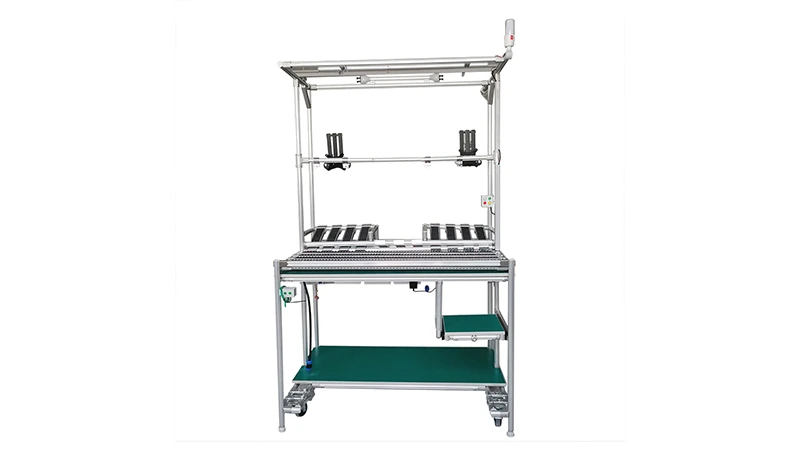
Aluminum Workbench D
Aluminum tube workbench is more flexible and durable, compared with traditional PE/ABS coated steel tube. It is easy to assemble, anti corrosion, rust protection, and recycle use after disassemble.
Walk into any modern manufacturing facility today, and you'll likely hear terms like "5S," "continuous improvement," or "waste reduction" thrown around. These aren't just buzzwords—they're the backbone of lean manufacturing, a methodology that has revolutionized how products are made, from smartphones to automobiles. But here's the thing: lean manufacturing isn't something you learn from a textbook. It's a hands-on practice, one that requires students to roll up their sleeves, experiment, and experience the consequences of inefficiency firsthand. That's where tools like the Aluminum Workbench D come in. Designed with education in mind, this workbench isn't just a piece of lab equipment; it's a bridge between classroom theory and real-world application, helping educators turn abstract lean principles into tangible, memorable lessons.
Why Lean Manufacturing Matters in Today's Classrooms
Manufacturing has come a long way from the assembly lines of the 20th century. Today's factories are agile, data-driven, and obsessed with efficiency—and at the heart of that evolution is lean manufacturing. Developed from Toyota's Production System in the 1950s, lean is all about maximizing value while minimizing waste. It's a mindset, a set of tools, and a culture that prioritizes continuous improvement. For students entering the workforce, understanding lean isn't just a resume booster; it's a survival skill. Employers across industries—from aerospace to consumer goods—actively seek candidates who can identify bottlenecks, optimize workflows, and collaborate to make processes better.
Yet, teaching lean in a traditional classroom setting is challenging. How do you make concepts like "muda" (waste) or "kaizen" (continuous improvement) feel real to a student who's never stood at a production line? You can't. That's why forward-thinking educational institutions are investing in hands-on learning tools. And among those tools, the Aluminum Workbench D stands out. Its modular design, durable materials, and adaptability make it the perfect canvas for students to experiment with lean principles, make mistakes, and ultimately master the skills they'll need on the job.
Aluminum Workbench D: More Than Just a Table
At first glance, the Aluminum Workbench D might look like any other workbench. But take a closer look, and you'll see why it's become a favorite in technical schools, community colleges, and university engineering programs. Let's start with the material: aluminum profile. Unlike clunky wooden workbenches or rigid steel ones, aluminum profile is lightweight yet surprisingly strong. It's resistant to scratches, corrosion, and the wear and tear of daily student use—important in a lab where spills, dropped tools, and constant reconfiguration are par for the course. But the real magic lies in its modularity, made possible by aluminum profile accessories like joints, clamps, and end caps. These components let students assemble, disassemble, and reconfigure the workbench in minutes, turning it into whatever they need: a mock assembly line, a testing station, or a storage area. It's a blank slate for lean experimentation.
Consider the design of the Aluminum Workbench D itself. Unlike fixed workbenches, it's built to evolve. The single-deck, caster-free design (a deliberate choice to keep it stable during hands-on activities) provides a spacious, flat surface for projects, while pre-drilled T-slots along the aluminum profile allow for easy attachment of accessories. Want to add a tool rack? Screw in an aluminum profile bracket. Need a storage shelf for raw materials? Slide in a crossbar using internal rotary aluminum joints. The possibilities are limited only by students' imaginations—and that's exactly the point. Lean manufacturing thrives on creativity and problem-solving, and the workbench's flexibility encourages both.

Teaching Lean Principles Through Hands-On Practice
Let's dive into how the Aluminum Workbench D brings key lean principles to life. We'll focus on two foundational concepts: 5S (a system for workplace organization) and continuous improvement (kaizen). These are often the first lean tools students learn, and they're perfect for demonstrating the workbench's educational value.
5S: From Chaos to Order
5S—Sort, Set in Order, Shine, Standardize, Sustain—is the cornerstone of a lean workplace. The goal? Create an environment where waste (in the form of time, motion, or frustration) is eliminated. But explaining 5S with slides and diagrams is one thing; watching students struggle through a disorganized workbench, then experience the relief of a well-organized one? That's when the lesson sticks.
Here's how it might play out in a classroom: On day one, the instructor sets up the Aluminum Workbench D in a state of "controlled chaos." Tools are scattered across the surface, raw materials (like aluminum pipe or plastic roller track guide rails) are piled haphazardly, and there's no clear labeling. Students are tasked with assembling a simple product—a small wooden puzzle, say—using the materials provided. Inevitably, they waste time searching for tools, knock over piles of parts, and grow frustrated. After 20 minutes, most haven't finished. Then, the instructor introduces 5S and challenges the class to apply it to the workbench.
First, Sort : Students go through the clutter, keeping only what's needed for the puzzle (tools, wood pieces, glue) and removing the rest (extra screws, broken parts). The Aluminum Workbench D's T-slots come in handy here—they can attach temporary bins using aluminum pipe clamps to separate "keep" and "discard" items.
Next, Set in Order : Now, students need to arrange the remaining items so they're easy to find and use. Using aluminum profile accessories like tool holders and side brackets, they mount frequently used tools (hammers, screwdrivers) within arm's reach of the workbench. Raw materials are stored on a small shelf attached to the side, labeled clearly with masking tape. Even the glue bottle gets a designated spot, secured with a simple plastic clamp. Suddenly, the workbench isn't just a surface—it's an organized system.
Shine follows naturally: Students clean the workbench surface, wiping away glue drips and sawdust, and inspect the aluminum profile for any damage (a quick lesson in maintenance). Standardize involves creating visual cues—like outlines of tools drawn on the workbench top or color-coded bins for different materials—to ensure everyone follows the new system. Finally, Sustain is practiced over the next few weeks, with students taking turns auditing the workbench and making adjustments. By the end of the unit, when they're asked to reassemble the puzzle, most finish in half the time. The difference? Order. And they've experienced it, not just read about it.
Continuous Improvement: The Power of "What If?"
If 5S is about creating order, continuous improvement (kaizen) is about making that order better—constantly. It's the idea that even a well-run process can be optimized, and everyone, from the intern to the CEO, has a role to play. For students, this can feel abstract until they're given the chance to redesign a process themselves. Enter the Aluminum Workbench D.
Imagine a class project where students are tasked with simulating a small-scale production line: assembling "widgets" (simple plastic parts) and packaging them for shipment. The initial setup uses the workbench as a single station, with one student assembling, another packaging, and a third transporting finished widgets to a "shipping area" (a box in the corner). After running the line for 30 minutes, they track metrics: how many widgets were made, how many had defects, and how much time was spent waiting for materials or moving between stations. Unsurprisingly, they notice bottlenecks: the assembler can't keep up with the packager, and the transporter is always rushing back and forth.
Now, the instructor challenges them to use the Aluminum Workbench D to improve the process. Working in groups, students brainstorm ideas. One group suggests splitting the assembly task into two stations, using the workbench's modularity to create a mini assembly line: Station 1 (on one end of the workbench) attaches the widget's base and top; Station 2 (on the other end) adds the final screw. They use aluminum guide rails to create a "conveyor" of sorts, sliding parts between stations using plastic roller track guide rails (yellow, for visibility). Another group proposes adding a small storage rack above the workbench using aluminum profile accessories, so raw materials are always within reach, eliminating trips to the supply closet. A third group suggests rearranging the workbench to form a U-shape, reducing the distance the transporter has to walk.
Over the next hour, each group reconfigures their Aluminum Workbench D using the tools at hand—aluminum joints, clamps, and rails. They test their new layouts, collect data, and compare results. The U-shape group, for example, cuts transporter time by 40%, while the assembly line group increases output by 25%. The best part? There's no "right" answer. Each group learns that continuous improvement is about experimentation, data, and adapting to the unique needs of a process. And because the workbench is so easy to reconfigure, they can test multiple ideas in a single class period—turning failure into a learning opportunity, not a setback.

Why Educators Love Aluminum Workbench D
It's not just students who benefit from the Aluminum Workbench D—educators appreciate its practicality, durability, and versatility. Let's break down the top reasons technical instructors and program directors are choosing this workbench for their labs:
- Low Maintenance: Aluminum profile is resistant to rust, stains, and dents, meaning less time spent repairing or replacing workbenches. A quick wipe with a damp cloth is usually all it takes to clean up spills or dust.
- Safety First: Unlike steel workbenches with sharp edges, aluminum profile edges are rounded, and aluminum profile accessories like end caps prevent snags or cuts. The caster-free design also reduces tripping hazards in busy labs.
- Cost-Effective: While aluminum workbenches may have a higher initial cost than wooden ones, their durability and adaptability make them a better long-term investment. Schools don't have to replace them every few years, and they can be repurposed for different courses (from manufacturing to robotics) without buying new equipment.
- Alignment with Industry: Many manufacturing facilities use aluminum profile workbenches and lean systems, so students gain familiarity with tools they'll actually use on the job. This gives them a leg up when applying for internships or entry-level positions.
Real-World Impact: A Case Study
To see the Aluminum Workbench D in action, let's look at a hypothetical but realistic example: Central Tech Community College, a mid-sized school with a popular manufacturing program. A few years ago, their lab was filled with old, wooden workbenches—sturdy, but fixed in place and hard to clean. Instructors struggled to teach 5S because there was no easy way to organize tools or materials, and continuous improvement projects were limited to paper-based simulations. Student engagement was low, and employers complained that graduates lacked practical lean skills.
Then, the program director discovered the Aluminum Workbench D. They started small, replacing two wooden workbenches with the aluminum models. The difference was immediate. In a 5S unit, students transformed the cluttered lab into an organized space, using the workbenches' T-slots to mount tool racks and storage bins. "For the first time, my students weren't just talking about 'Set in Order'—they were doing it," said one instructor. "They argued over the best way to arrange tools, measured how much time they saved, and even created a maintenance schedule. It was like night and day."
Encouraged by the results, Central Tech replaced all 12 lab workbenches with Aluminum Workbench D units. Today, their lean manufacturing course is one of the most popular in the program. Students work in teams to design and optimize production lines, using the workbenches to test ideas and present results to local manufacturers who serve as guest judges. Graduates now regularly mention their experience with the workbench in job interviews, and employers report that Central Tech alumni require less on-the-job training for lean-related tasks.
Traditional Workbenches vs. Aluminum Workbench D: A Comparison
| Feature | Traditional Wooden/Steel Workbench | Aluminum Workbench D |
|---|---|---|
| Material | Wood (prone to warping, scratches) or steel (heavy, rust-prone) | Lightweight aluminum profile (durable, corrosion-resistant, scratch-resistant) |
| Assembly & Reconfiguration | Fixed design; requires tools (screwdrivers, drills) to modify; often permanent | Tool-free assembly with aluminum profile accessories (joints, clamps); reconfigurable in minutes |
| Educational Value | Limited to static projects; not designed for lean practice | Supports hands-on learning of 5S, continuous improvement, and process design |
| Cost (Long-Term) | Lower initial cost, but needs replacement every 3–5 years | Higher initial cost, but lasts 10+ years with minimal maintenance |
| Safety | Sharp edges (steel), splinters (wood), heavy to move (risk of injury) | Rounded edges, lightweight components, stable design (caster-free) |
Preparing Students for the Future of Manufacturing
The manufacturing industry is changing faster than ever. Automation, AI, and sustainability are reshaping workflows, but one thing remains constant: the need for workers who understand how to optimize processes and eliminate waste. Lean manufacturing isn't going anywhere—in fact, it's becoming more critical as companies strive to do more with less. For educational institutions, the challenge is to prepare students not just for today's factories, but for tomorrow's.
The Aluminum Workbench D is more than a tool for teaching lean; it's a tool for adaptable, creative problem-solvers. When students use it to design, test, and improve processes, they're not just learning about 5S or kaizen—they're building the confidence to tackle real-world challenges. They're learning to collaborate, communicate, and think critically—skills that will serve them in any career, manufacturing or otherwise.
In the end, education is about transformation. It's about turning curious students into capable professionals, and abstract ideas into actionable skills. The Aluminum Workbench D helps make that transformation possible. It's a reminder that the best way to learn lean manufacturing isn't to read about it—it's to live it, one reconfigured workbench at a time.