- Company Articles
- Products and Technology
- Product knowledge
- Aluminum Workbench D for Heavy Machinery Maintenance: Durability for Repair Tasks

Aluminum Workbench D for Heavy Machinery Maintenance: Durability for Repair Tasks
Related Product
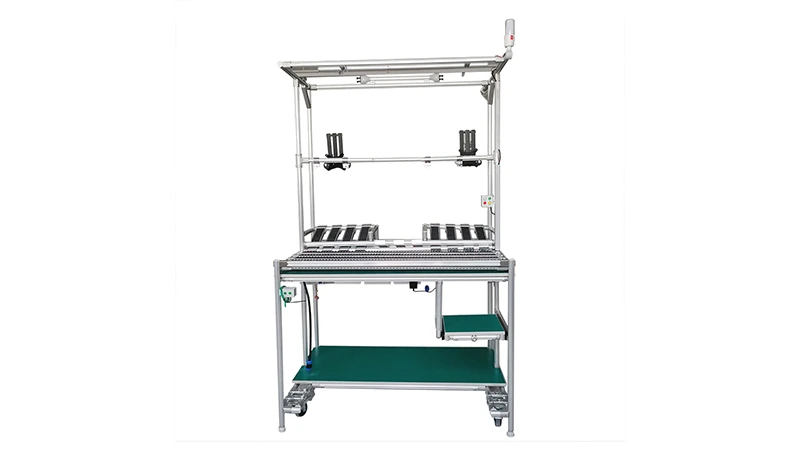
Aluminum Workbench D
Aluminum tube workbench is more flexible and durable, compared with traditional PE/ABS coated steel tube. It is easy to assemble, anti corrosion, rust protection, and recycle use after disassemble.
The Frustration of Unreliable Workbenches in Heavy Machinery Shops
Let's set the scene: It's Monday morning at a mid-sized manufacturing plant. The air smells of machine oil and fresh metal, and the floor vibrates gently from the hum of lathes and presses. Over in the maintenance bay, Carlos, a veteran mechanic with 15 years under his belt, is tasked with overhauling a hydraulic pump from one of the facility's largest presses. The pump weighs close to 300 pounds, and Carlos needs a stable surface to disassemble it, lay out parts, and reassemble with precision.
He wheels the pump over to his workbench—a steel table he inherited when he started at the plant. As he lowers the pump onto the surface, the table creaks. Not a good sound. He ignores it, focusing on unbolting the first flange. But when he leans into a wrench, the table shifts. Just an inch, but enough to misalign the bolt he's loosening. The wrench slips, grazing his knuckle. "Great," he mutters, wiping blood on his sleeve. Later, when he sets down a precision gauge to measure a valve, he notices the table isn't level—one leg, worn from years of heavy use, has started to bend. The gauge reads off by half a millimeter. He'll have to double-check every measurement now, costing him precious time.
Sound familiar? For mechanics, maintenance technicians, and shop supervisors, a wobbly, worn-out workbench isn't just an annoyance—it's a productivity killer, a safety hazard, and a silent drain on profits. Heavy machinery repair demands surfaces that can handle extreme weight, resist vibration, and stay stable through hours of intense work. Yet so many shops make do with outdated steel tables, particleboard workbenches that sag under load, or makeshift setups that were never designed for the job.
This is where the Aluminum Workbench D comes in. Designed specifically for the rigors of heavy machinery maintenance, it's not just a table—it's a tool that transforms how teams work. In this article, we'll dive into why this workbench has become a game-changer for shops across industries, from automotive repair to industrial manufacturing. We'll explore its construction from high-grade aluminum extrusion profiles, the versatility of its aluminum profile accessories, and how it solves the everyday problems mechanics like Carlos face. By the end, you'll understand why investing in a durable, purpose-built workbench isn't just about upgrading equipment—it's about respecting your team's expertise and empowering them to do their best work.
Why Aluminum? The Material Science Behind Aluminum Workbench D's Durability
To understand what makes the Aluminum Workbench D special, we first need to talk about the star of the show: aluminum extrusion profile. Unlike steel, which is heavy and prone to rust, or wood, which warps and absorbs moisture, aluminum brings a unique set of properties that make it ideal for industrial workbenches. Let's break it down.
Aluminum extrusion profile is created by forcing heated aluminum alloy through a die, shaping it into consistent, complex cross-sections. For workbenches, manufacturers often use 6063-T5 aluminum alloy—a material prized for its strength, corrosion resistance, and machinability. The "T5" designation means it's been artificially aged to enhance hardness, giving it a tensile strength of around 18,000 psi. That's not as strong as steel, but here's the kicker: aluminum has a strength-to-weight ratio that outperforms most steels. A 2-inch aluminum extrusion profile can support nearly as much weight as a steel beam of the same size but weighs 60% less. For a workbench, that translates to a surface that can handle 1,000+ pounds without the back-breaking weight of a steel table.
Corrosion resistance is another non-negotiable in heavy machinery shops. Oils, coolants, solvents, and even water from pressure washing can turn a steel workbench into a rusted mess in months. Aluminum, on the other hand, forms a natural oxide layer when exposed to air—a thin, protective barrier that prevents further corrosion. Even if you spill hydraulic fluid or leave a damp rag on the Aluminum Workbench D overnight, you won't wake up to unsightly rust stains. This longevity means the workbench won't need replacement every 3-5 years like a steel table; with basic care, it could last decades.
But what about flexibility? Heavy machinery repair isn't one-size-fits-all. One day, you might be working on a small gearbox; the next, a massive engine block. Aluminum extrusion profiles excel here because they're inherently modular. The T-slot design—longitudinal grooves running along the length of the profile—lets you attach accessories without welding or drilling. Need a shelf for tools? Slide a bracket into the T-slot and tighten a bolt. Want to add a roller track for moving parts? Snap in a guide rail. This modularity is why aluminum has become the gold standard for industrial workspaces that need to adapt quickly.

Aluminum Workbench D: A Closer Look at Design and Construction
The Aluminum Workbench D isn't just a slab of aluminum on legs—it's a thoughtfully engineered system built to address the unique challenges of heavy machinery maintenance. Let's start with the frame. The main supports are constructed from 40mm x 40mm aluminum extrusion profiles, chosen for their perfect balance of strength and weight. Each profile has a wall thickness of 2.5mm, thicker than the 1.5mm used in lighter-duty workbenches, ensuring the frame can withstand the lateral stress of heavy loads being shifted or dropped (we've all accidentally let a part slip—no judgment). The legs are reinforced with diagonal cross-braces, also made from aluminum extrusion profiles, which eliminate wobble even when the bench is loaded to its 1,200kg (2,645 lbs) weight capacity. That's enough to support a small car engine, a transmission, or multiple hydraulic components at once.
The work surface itself is a 19mm-thick aluminum honeycomb panel, sandwiched between two sheets of aluminum alloy. Honeycomb panels are a marvel of engineering: the hexagonal core distributes weight evenly across the surface, so even if you place a 500-pound part in one corner, the entire bench supports it, not just that spot. This prevents sagging—a common issue with solid wood or steel tops that can warp over time under uneven loads. The top is also treated with a clear anodized finish, which adds a scratch-resistant layer. Carlos, from our earlier story, would appreciate this: no more worrying about dropping a wrench and leaving a permanent gouge, or chemical spills eating away at the surface.
But what really sets the Aluminum Workbench D apart is the attention to detail in its ergonomics. The standard height is 900mm (35.4 inches), which aligns with the average elbow height of a standing adult—reducing strain on the back and shoulders during long repair sessions. For shops with taller or shorter technicians, the legs can be adjusted by up to 50mm using aluminum pipe adjustable leveling feet, ensuring everyone can work comfortably. The feet themselves are another smart feature: each has a rubber pad with a suction cup design, which grips the floor to prevent slipping, even on smooth concrete. No more chasing a workbench that slides when you push against it.
Let's not forget mobility. While the Aluminum Workbench D is designed to stay put during heavy work, there are days when you need to reconfigure the shop floor. Optional heavy-duty casters (rated for 200kg each) can be added to the legs, turning the bench into a mobile workstation. The casters lock both swivel and wheel movement, so once you position the bench, it stays locked in place—no rolling mid-repair. When not in use, the casters can be removed, and the leveling feet reinstalled, giving you the best of both worlds: stability and flexibility.

Aluminum Profile Accessories: Customizing the Workbench to Your Needs
A workbench is only as good as its ability to adapt to the tasks at hand. That's where aluminum profile accessories shine—turning the Aluminum Workbench D from a static surface into a fully customizable workspace. Let's explore some of the most popular accessories and how they enhance functionality in heavy machinery maintenance.
First up: roller tracks. If your shop moves heavy parts regularly—think gearboxes, pumps, or engine blocks—a roller track system can save your team from back injuries. The Aluminum Workbench D is compatible with 38mm aluminum roller tracks (like the 38 aluminum roller track yellow with side guide from the accessories list), which can be mounted along the edge of the work surface using T-slot brackets. The rollers glide smoothly, even under 200kg loads, letting you slide parts onto the bench without lifting. Maria, a maintenance supervisor at a trucking company, told us, "We added roller tracks to two of our D workbenches last year. Before, two guys had to lift transmissions onto the bench; now, one person can do it alone. We've cut down on lifting injuries by 70%—that's a game-changer for our team's health."
Next, adjustable shelves. Heavy machinery repair requires tools—lots of them. Wrenches, sockets, gauges, torque tools, lubricants… the list goes on. The Aluminum Workbench D can be fitted with under-shelf brackets (using aluminum profile accessories like the parallel rotatory aluminum joint) to add one or two shelves, each supporting up to 150kg. What's great is that the shelves are height-adjustable: if you need more space for a tall part, simply loosen the bolts, slide the shelf up or down, and retighten. No drilling new holes, no welding—just quick, tool-free adjustment.
For shops that deal with small parts (think bolts, washers, O-rings), pegboards and tool hooks are a must. The T-slot profiles on the back of the workbench frame make it easy to mount a pegboard panel using aluminum pipe clamps. Hooks, bins, and tool holders can then be rearranged as needed, so your most-used tools are always within arm's reach. One mechanic we spoke to, Raj, even added a magnetic strip for holding steel parts—"No more hunting for that tiny cotter pin that rolled off the bench. It sticks right to the strip, and I can focus on the repair, not searching the floor."
Power management is another overlooked aspect of workbench design. Heavy machinery repair often requires electric tools—grinders, drills, impact wrenches—and extension cords draped across the floor are a tripping hazard. The Aluminum Workbench D solves this with integrated cable management: T-slot channels can hide power strips, and aluminum guide rail a can be used to route cords neatly along the back of the bench. Some shops even install USB charging ports in the T-slots, so technicians can charge their tablets (for accessing repair manuals) without cluttering the surface.
Finally, let's talk about end caps and edge protectors. Aluminum extrusion profiles have sharp edges, which can scratch parts or cut gloves. The Aluminum Workbench D comes with plastic end caps for all exposed profile ends, and optional rubber edge trim that fits into the T-slots along the work surface. This small detail prevents damage to delicate components (like painted hydraulic cylinders) and adds a layer of safety for technicians working long hours.
Real-World Performance: How Shops Are Using Aluminum Workbench D
Numbers and specs tell part of the story, but nothing beats hearing from teams that use the Aluminum Workbench D every day. Let's meet three shops that made the switch and never looked back.
"We run a fleet of 50 delivery trucks, and our maintenance bay was a disaster. Our old steel workbenches were rusted, wobbly, and took up too much space. We replaced them with four Aluminum Workbench D units last year, and it's like night and day. The roller tracks let us slide transmissions on and off without straining, and the adjustable shelves mean each technician can organize their tools how they want. We've cut repair time by 20% because we're not wasting time searching for tools or fighting with unstable surfaces. Plus, they look professional—clients who visit the shop always comment on how clean and organized everything is now."
Mike's experience highlights a key benefit: productivity. When your workspace works with you, not against you, every task becomes faster and more efficient. For his team, the 20% time savings translated to an extra 2-3 repairs per day—critical in an industry where truck downtime costs money.
"I own a small machine shop with five employees, and we do a lot of custom metal fabrication for industrial clients. Space is tight, so we need equipment that can multitask. The Aluminum Workbench D has been a lifesaver. One day, we'll use it as a welding table (the aluminum top doesn't conduct electricity, so no ground issues); the next, we'll add a vice and use it for milling prep. The T-slot accessories let us reconfigure the bench in minutes. Last month, we had a rush order for 20 gearboxes—we added extra shelves and a roller track, and the team banged out the order a day early. I've had steel workbenches before, but they were always a hassle to modify. This one grows with my business."
Sarah's shop demonstrates the workbench's versatility. Small businesses can't afford specialized equipment for every task, so a workbench that adapts to welding, assembly, and inspection is invaluable. The non-conductive aluminum top is a safety bonus for welding, preventing accidental grounding that could damage equipment or injure workers.
"I'm a supervisor at a steel mill, and our maintenance team works in harsh conditions—high heat, moisture, and constant exposure to chemicals. Our old workbenches were steel, and they'd rust through in three years, even with painting. We switched to Aluminum Workbench D six years ago, and they still look brand new. The anodized finish resists corrosion from the water and cleaning solutions we use, and the aluminum doesn't warp in the summer heat like our wooden workbenches did. The guys love that they're lightweight, too—we can move them with a hand truck when we need to work on equipment in different areas of the mill. No more building temporary work surfaces or hauling parts back to the shop. It's saved us at least $10,000 in replacement costs alone."
James' story underscores durability in extreme environments. Steel and wood simply can't stand up to the conditions in heavy industry, but aluminum thrives. For facilities with high moisture, heat, or chemical exposure, the long-term cost savings of aluminum are hard to overstate.
Aluminum Workbench D vs. the Competition: How It Stacks Up
You might be thinking, "There are plenty of workbenches out there—why choose the Aluminum Workbench D?" To help you decide, we've compared it to three common alternatives: traditional steel workbenches, particleboard workbenches with steel frames, and lightweight aluminum workbenches designed for hobbyists.
| Feature | Aluminum Workbench D | Traditional Steel Workbench | Particleboard/Steel Frame Workbench | Hobbyist Aluminum Workbench |
|---|---|---|---|---|
| Weight Capacity | 1,200kg (2,645 lbs) | 800-1,000kg (1,760-2,200 lbs) | 200-300kg (440-660 lbs) | 100-150kg (220-330 lbs) |
| Material | Aluminum extrusion profiles, honeycomb top | Steel frame, steel top | Steel frame, particleboard top | Thin aluminum profiles, MDF top |
| Corrosion Resistance | Excellent (anodized finish, aluminum frame) | Poor (rusts without regular painting) | Poor (particleboard swells with moisture) | Fair (thin aluminum prone to dents/scratches) |
| Customization | High (T-slot accessories, modular design) | Low (requires welding/drilling to modify) | Very low (fixed shelves, no T-slots) | Limited (basic accessories only) |
| Weight (Empty) | 85kg (187 lbs) | 150-200kg (330-440 lbs) | 60-80kg (132-176 lbs) | 30-40kg (66-88 lbs) |
| Expected Lifespan | 20+ years | 3-5 years (with rust) | 2-3 years (particleboard warps/sags) | 3-5 years (light-duty use only) |
| Price Range | $800-$1,200 | $500-$800 | $200-$400 | $150-$300 |
As the table shows, the Aluminum Workbench D outperforms traditional options in key areas: weight capacity, corrosion resistance, customization, and lifespan. While it has a higher upfront cost than particleboard or hobbyist benches, the long-term savings—fewer replacements, less downtime, lower maintenance—make it a smarter investment for serious shops. Compared to steel workbenches, it offers greater capacity, easier customization, and no rust, justifying the slightly higher price tag.
Technical Specifications: The Details That Matter
For those who love the nitty-gritty, here's a deep dive into the technical specs of the Aluminum Workbench D:
- Dimensions: Standard size is 1800mm (length) x 800mm (width) x 900mm (height). Custom sizes available from 1200mm to 2400mm in length, and 600mm to 1200mm in width.
- Frame Material: 40mm x 40mm aluminum extrusion profile, 2.5mm wall thickness, 6063-T5 aluminum alloy.
- Work Surface: 19mm aluminum honeycomb panel with 0.8mm aluminum face sheets, anodized finish (clear or black options).
- Weight Capacity: 1,200kg evenly distributed; 800kg concentrated load in one area.
- Legs: Adjustable height from 850mm to 950mm via aluminum pipe adjustable leveling feet with rubber suction pads.
- Optional Casters: 4 x heavy-duty swivel casters (2 with brakes), each rated for 200kg. Total mobile capacity: 800kg.
- Accessory Compatibility: All standard 40mm T-slot aluminum profile accessories, including brackets, shelves, roller tracks, pegboards, and tool holders.
- Assembly: Requires basic tools (Allen wrench, socket set). Two people can assemble in 60-90 minutes.
- Warranty: 5-year manufacturer's warranty on frame and top; 2-year warranty on accessories.
These specs aren't just numbers—they're a promise of performance. The 1,200kg weight capacity means you'll never have to second-guess whether the bench can handle a load. The adjustable height ensures every technician can work comfortably, reducing fatigue and injury risk. And the compatibility with standard aluminum profile accessories means you won't be locked into proprietary parts down the line—you can source brackets, shelves, or tracks from any supplier, keeping costs low.
Why Aluminum Workbench D Is More Than a Tool—It's an Investment in Your Team
At the end of the day, a workbench is more than a piece of equipment. It's where your team spends hours of their day, solving problems, fixing machines, and keeping your business running. A cheap, unreliable workbench sends a message: "We don't value your time or safety." The Aluminum Workbench D, on the other hand, says: "We want you to work efficiently, comfortably, and safely."
Think about the hidden costs of a bad workbench: the time wasted fixing measurements because the table wobbles, the money spent on replacing damaged parts that slipped off a unstable surface, the workers' compensation claims from back injuries caused by lifting heavy parts onto a high or uneven table. These costs add up—far more than the price of a quality workbench. By investing in the Aluminum Workbench D, you're not just buying a table; you're investing in productivity, safety, and employee morale.
Carlos, from our opening story, finally convinced his supervisor to replace the old steel workbench with an Aluminum Workbench D six months ago. "It's like night and day," he told us. "I don't worry about the table moving when I'm torquing bolts. The honeycomb top doesn't scratch, so I can lay out precision parts without worrying about damage. And the roller track? I can slide that hydraulic pump on by myself now. No more asking for help, no more strained muscles. I get more done in a day, and I go home less tired. That's priceless."
Whether you're running a large manufacturing plant, a small repair shop, or a fleet maintenance yard, the Aluminum Workbench D is built to grow with your business. Its durability ensures it will be there for the long haul, adapting to new tasks, new tools, and new challenges. It's not just a workbench—it's a partner in keeping your heavy machinery running, your team productive, and your shop profitable.
Final Thoughts: Making the Switch to Aluminum Workbench D
Heavy machinery maintenance is tough work. It demands precision, strength, and focus. The last thing your team needs is a workbench that fights them every step of the way. The Aluminum Workbench D is designed to be the opposite—a tool that supports, adapts, and endures, so your technicians can focus on what they do best: keeping the machines running.
If you're tired of wobbly tables, rusted surfaces, and workbenches that can't keep up with your needs, it's time to consider the switch. The initial investment might seem steep, but when you factor in the years of reliable service, the reduced downtime, and the boost in productivity, it's clear: the Aluminum Workbench D isn't just a purchase—it's a long-term investment in your business's success.
So, what are you waiting for? Give your team the workbench they deserve. Your back (and your bottom line) will thank you.