- Company Articles
- Products and Technology
- Application Cases
- Aluminum Workbench D for Home Appliance Manufacturing: Streamlining Assembly Processes

Aluminum Workbench D for Home Appliance Manufacturing: Streamlining Assembly Processes
Related Product
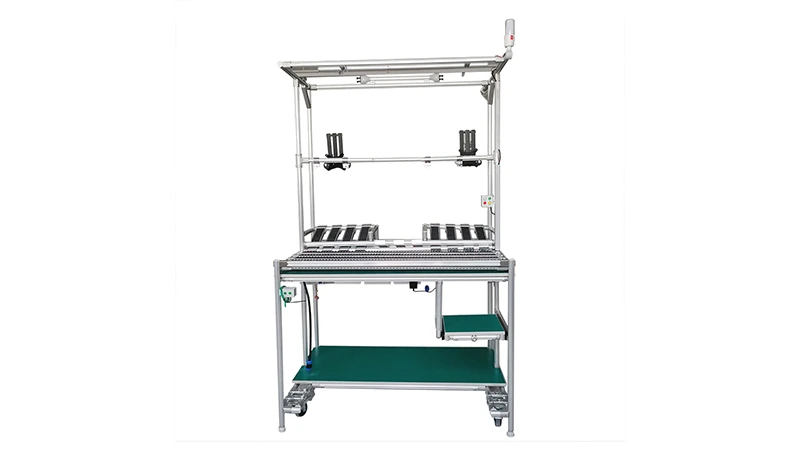
Aluminum Workbench D
Aluminum tube workbench is more flexible and durable, compared with traditional PE/ABS coated steel tube. It is easy to assemble, anti corrosion, rust protection, and recycle use after disassemble.
The Pulse of Home Appliance Manufacturing: Where Efficiency Meets Precision
Walk into any home appliance manufacturing plant, and you'll feel it immediately—the hum of purpose. Conveyors carry half-assembled refrigerators, workers deftly fit circuit boards into washing machine panels, and robotic arms place screws with millimeter precision. Every second counts here. A single bottleneck in the assembly line can delay shipments, inflate costs, or even compromise product quality. In an industry where consumer demand shifts faster than ever—with new features, sleeker designs, and tighter production timelines—manufacturers can't afford rigid, one-size-fits-all workspaces. This is where the Aluminum Workbench D steps in: not just as a piece of equipment, but as a catalyst for smoother, smarter, and more adaptable assembly processes.
Home appliance assembly is a dance of complexity. Each product—whether a compact blender or a large-capacity dryer—requires unique tools, parts, and workflows. Workers might switch between assembling 10 different models in a single shift, each with its own set of components. Traditional workbenches, often made of heavy steel or particleboard, struggle to keep up. They're fixed in size, hard to reconfigure, and prone to wear from daily use. Tools get lost in cluttered drawers, parts pile up on surfaces, and changeover times (the minutes spent adjusting a station for a new model) stretch into hours. Over time, these inefficiencies erode productivity and morale.
Enter the Aluminum Workbench D, a solution born from the principles of lean system thinking—focused on eliminating waste, maximizing value, and empowering workers. Built with high-grade aluminum extrusion profile and designed for modularity, this workbench isn't just about holding tools. It's about creating a workspace that adapts to your team, not the other way around. Let's dive into how it transforms home appliance assembly lines, one station at a time.
The Problem with Traditional Workbenches: Why "Good Enough" No Longer Cuts It
To understand the impact of Aluminum Workbench D, we first need to unpack the limitations of the workbenches that have long dominated manufacturing floors. Let's take a closer look at the three most common types and their pain points:
1. Steel Workbenches: Strong, but Static
Steel workbenches are prized for their durability—they can withstand heavy loads and resist dents. But that strength comes with a cost: weight. A typical steel bench weighs 200-300 pounds, making it nearly impossible to reposition without heavy machinery. This rigidity is a killer in dynamic environments where production lines need to shift quickly. Worse, customizing a steel bench (adding tool rails, part bins, or monitor mounts) usually requires welding or drilling, which is time-consuming and permanent. If your team needs a new setup next month, you're stuck with a bench that no longer fits.
2. Wooden Workbenches: Cheap, but Short-Lived
Wooden benches are often the go-to for small manufacturers or budget-conscious plants. They're lightweight and easy to modify with a saw or drill. But wood is porous, absorbing oil, grease, and moisture over time. This leads to warping, staining, and bacterial growth—hardly ideal for environments where cleanliness is critical (think: assembling components for food processors or air purifiers). They also lack structural integrity for heavy tools; a dropped wrench can leave a permanent divot, and repeated use wears down surfaces until they're uneven and unsafe.
3. Particleboard or Laminate Workbenches: A False Economy
These benches, often sold as "budget-friendly alternatives," are made from compressed wood chips covered in a thin laminate. They look clean and modern at first, but the laminate scratches easily, and the core swells if exposed to water. For home appliance assembly, where parts may have sharp edges or workers frequently wipe down surfaces, these benches degrade quickly. Within a year, you're replacing them—a hidden cost that adds up over time.
The common thread? All three lack the flexibility and durability needed for modern home appliance manufacturing. They force workers to adapt to the bench, rather than the bench adapting to the worker. This misalignment is where waste creeps in: time spent searching for tools, energy wasted on awkward movements, and frustration from working in a space that doesn't support the task at hand.

Aluminum Workbench D: Redefining the Manufacturing Workspace
Aluminum Workbench D isn't just a "new type" of workbench—it's a reimagining of what a workspace can be. Let's break down its design, materials, and features to see why it's becoming a staple in home appliance plants worldwide.
At the Core: Aluminum Extrusion Profile—Strength Meets Versatility
The star of the show is the aluminum extrusion profile that forms the bench's frame and surface supports. Aluminum extrusion is created by forcing molten aluminum through a die, resulting in long, uniform shapes with built-in features like T-slots (longitudinal grooves running along the profile). These T-slots are game-changers. Unlike steel or wood, which require drilling or welding to add accessories, the T-slots let you slide in brackets, tool holders, or part bins with a simple bolt and nut. No special tools, no permanent modifications—just quick, easy customization.
But aluminum isn't just about flexibility. It's surprisingly strong: 6061-T6 aluminum (the grade used in most manufacturing workbenches) has a tensile strength of 42,000 psi—strong enough to support 500+ pounds on a single shelf. And at just 1/3 the weight of steel, the bench is lightweight enough for two workers to reposition it in minutes, no machinery needed. This combination of strength and portability is a first for workbench design.
Modular by Design: Build the Bench You Need, When You Need It
Aluminum Workbench D comes standard as a single-deck, fixed-height bench (without casters, for stability during precision work). But its true power lies in its modularity. Aluminum profile accessories —like tool hooks, LED light bars, anti-fatigue mats, and adjustable shelves—can be added or removed in seconds. Need a holder for a specific torque wrench? Slide a bracket into the T-slot. Want to mount a tablet to display assembly instructions? Attach an arm to the side rail. Even the surface can be swapped: choose a smooth aluminum top for electronics assembly, a rubberized mat for gripping small parts, or an ESD (electrostatic discharge) surface for sensitive components like circuit boards.
This modularity shines during changeovers. When your line switches from assembling a microwave to a dishwasher, your team can reconfigure the bench in minutes, not hours. No more waiting for maintenance to drill new holes or weld on new rails—just adjust, add, or remove accessories and get back to work.
Durability That Lasts: Built for the Long Haul
Aluminum is naturally resistant to corrosion, so it holds up in humid environments or areas where cleaning agents are used regularly. Unlike wood, it doesn't warp or rot, and unlike steel, it won't rust. The extrusion process also creates a uniform structure, so there are no weak points—no knots like in wood or seams that can crack like in particleboard. Most manufacturers back Aluminum Workbench D with a 10-year warranty, and many plants report using the same benches for 15+ years with minimal wear. When you factor in the cost of replacing wooden or laminate benches every 1-2 years, the aluminum option becomes surprisingly cost-effective over time.

From Chaos to Flow: How Aluminum Workbench D Integrates with Lean Systems
Lean manufacturing isn't just a buzzword—it's a philosophy centered on eliminating waste (muda) and creating value for the customer. Key principles include 5S (Sort, Set in Order, Shine, Standardize, Sustain), continuous improvement (kaizen), and just-in-time production. Aluminum Workbench D isn't just compatible with lean systems; it's designed to make them actionable. Let's see how:
1. 5S: Creating a Workplace That "Flows"
The 5S methodology is all about organizing the workplace to reduce waste and improve efficiency. Aluminum Workbench D excels at every step:
- Sort (Seiri): Remove unnecessary items from the workspace. With dedicated slots for tools and bins for parts (attached via T-slots), workers can easily separate "needed" from "unneeded" items—no more cluttered surfaces.
- Set in Order (Seiton): Arrange tools and parts for easy access. The T-slots let teams position tools at eye level or within arm's reach, following the "golden zone" principle (items used most often are placed between shoulder and knee height).
- Shine (Seiso): Keep the workspace clean. Aluminum surfaces wipe down in seconds with a damp cloth, and the non-porous material resists stains and bacterial growth.
- Standardize (Seiketsu): Maintain consistency across stations. Every Aluminum Workbench D can be configured identically, so workers moving between shifts or stations know exactly where tools and parts belong.
- Sustain (Shitsuke): Make 5S a habit. The bench's modular design makes it easy to maintain organization—if a tool holder breaks, it's replaced in minutes, so the system doesn't fall apart.
2. Reducing Changeover Time: The Lean "Quick Change" Advantage
Changeover time—the minutes (or hours) between stopping production of one product and starting another—is a major source of waste in manufacturing. For home appliance plants producing multiple models, this waste adds up fast. Aluminum Workbench D slashes changeover time by up to 70% thanks to its modular accessories. For example, a team assembling a small toaster oven might need a bench with a magnetic tool strip and small parts bins. When switching to a larger convection oven, they can quickly swap the magnetic strip for a heavier-duty tool rail and add a shelf for larger components. No drilling, no welding—just a few bolts and adjustments.
One plant in Ohio reported cutting changeover time from 45 minutes to 15 minutes after switching to Aluminum Workbench D. Over a year, that translated to 200+ extra production hours—enough to assemble 5,000 additional units.
3. Supporting Just-In-Time (JIT) Production
JIT production relies on delivering parts to the assembly line exactly when they're needed, reducing inventory and storage costs. Aluminum Workbench D integrates seamlessly with flow racks and conveyors, the workhorses of JIT systems. Flow racks, which use gravity to feed parts forward, can be positioned adjacent to the bench, so workers simply reach over to grab the next component. The bench's height (typically 36-40 inches) aligns perfectly with standard flow rack and conveyor heights, eliminating the need for workers to bend or stretch. This not only speeds up production but also reduces the risk of back strain and repetitive motion injuries.
A Side-by-Side Comparison: Aluminum Workbench D vs. Traditional Options
To truly grasp the difference Aluminum Workbench D makes, let's compare it head-to-head with steel, wooden, and laminate workbenches across key metrics for home appliance manufacturing:
| Feature | Aluminum Workbench D | Steel Workbench | Wooden Workbench | Laminate/Particleboard Workbench |
|---|---|---|---|---|
| Material | Aluminum extrusion profile | Carbon steel | Hardwood or plywood | Particleboard + laminate |
| Weight (5ft bench) | 80-100 lbs (easily repositioned) | 200-300 lbs (requires machinery to move) | 100-150 lbs (portable but prone to damage) | 70-90 lbs (light but flimsy) |
| Customization | High (T-slots for quick accessory changes) | Low (requires welding/drilling; permanent) | Medium (drillable but damages surface) | Low (laminate peels; core crumbles when drilled) |
| Durability | 10+ years (corrosion-resistant, no warping) | 15+ years (prone to rust without coating) | 2-3 years (warping, staining, wear) | 1-2 years (laminate scratches, core swells) |
| Lean System Integration | Excellent (supports 5S, JIT, quick changeovers) | Poor (static, hard to reconfigure) | Fair (customizable but short-lived) | Poor (lacks durability for sustained 5S) |
| Ergonomics | High (adjustable accessories, aligns with flow racks/conveyors) | Medium (fixed height, no easy adjustments) | Medium (height fixed, but surface can be modified) | Low (uneven surfaces over time, no adjustability) |
| Total Cost of Ownership (5-year) | $1,200 (initial: $800; minimal replacement costs) | $1,800 (initial: $1,500; rust treatment, welding fees) | $1,500 (initial: $300; 3 replacements) | $2,000 (initial: $200; 5 replacements) |
The data speaks for itself: Aluminum Workbench D outperforms traditional options in flexibility, durability, and long-term cost-effectiveness. It's not just a better workbench—it's a better investment in your team's productivity and well-being.
Real-World Impact: How One Plant Transformed Its Assembly Line
Let's step into the shoes of a mid-sized home appliance manufacturer in Texas that specializes in small kitchen appliances—think blenders, toasters, and coffee makers. Before 2023, their assembly line relied on a mix of steel and wooden workbenches, and they were struggling with two major issues: high changeover times and frequent worker injuries.
The Pre-Aluminum Workbench D Days: Frustration and Delays
The plant produced 12 different appliance models, with changeovers happening 4-5 times per shift. Each changeover required workers to: 1) Remove old tool holders from steel benches (often requiring a wrench to loosen welded bolts), 2) Drag wooden benches into place for lighter tasks (risking back injuries), and 3) Reorganize parts by hand, which often led to errors (e.g., using the wrong screw size for a blender base).
Changeover times averaged 40 minutes, and the plant was falling behind on orders. Worse, worker compensation claims were rising—30% of employees reported wrist or back pain from awkward reaching and heavy lifting.
The Switch to Aluminum Workbench D: A 90-Day Transformation
In January 2023, the plant replaced all 24 workbenches with Aluminum Workbench D. The results were immediate:
- Changeover time dropped to 12 minutes. With T-slot accessories, workers could swap tool holders and part bins in seconds. A "changeover kit" for each model (pre-assembled accessories stored on a nearby shelf) cut setup time even further.
- Worker injuries decreased by 65%. The bench's height aligned with flow racks and conveyors, reducing bending. Adjustable armrests and anti-fatigue mats on the surface eased wrist strain. "I used to go home with a sore back every night," said Maria, an assembly line worker with 8 years of experience. "Now, I barely notice the end of my shift."
- Productivity increased by 18%. With faster changeovers and happier workers, the plant went from assembling 1,200 units per day to 1,416. Over a year, that's an extra 77,760 units—enough to capture a new market segment in the Southeast.
- Quality improved. Customizable part bins (labeled and color-coded) reduced errors by 40%. "We used to have 10-15 defective units per day," said Carlos, the plant manager. "Now, it's 2-3. That's a huge savings in rework and customer returns."
By the end of 2023, the plant had recouped the cost of the new workbenches and then some. "It wasn't just about buying a better bench," Carlos noted. "It was about investing in a system that makes our team's jobs easier. When your workers aren't fighting against their tools, they can focus on building great products."
Looking Ahead: The Future of Manufacturing Workspaces
Home appliance manufacturing is evolving fast. Smart appliances, IoT integration, and sustainability demands are pushing plants to become more agile and efficient than ever. Aluminum Workbench D isn't just keeping up—it's leading the charge. Its modular design makes it future-proof: as new technologies emerge (like collaborative robots or augmented reality assembly guides), the bench can adapt. Add a mounting plate for a robot arm? Slide it into the T-slot. Attach a bracket for an AR headset charger? Done in minutes.
Sustainability is another key trend, and aluminum aligns perfectly. It's 100% recyclable, and the extrusion process uses significantly less energy than steel production. Many manufacturers are now choosing aluminum workbenches as part of their ESG (Environmental, Social, Governance) goals, reducing their carbon footprint while improving working conditions.
At the end of the day, manufacturing is about people. The tools and workspaces we provide directly impact how well they can perform. Aluminum Workbench D isn't just a piece of equipment—it's a statement that your team deserves a workspace that works as hard as they do. It's about turning chaos into flow, frustration into focus, and inefficiency into innovation.
Conclusion: Your Assembly Line Deserves More Than "Good Enough"
Home appliance manufacturing is a high-stakes industry where every detail matters. The workbench at the heart of your assembly line shouldn't be an afterthought—it should be a strategic asset. Aluminum Workbench D, with its aluminum extrusion profile , modular aluminum profile accessories , and seamless integration with lean systems and flow racks , is that asset. It's not just about streamlining processes; it's about empowering your team to do their best work, day in and day out.
So, if you're still using workbenches that slow your team down, cause frustration, or cost more in the long run, it's time to make a change. Aluminum Workbench D isn't just an upgrade—it's a transformation. And in a world where efficiency and adaptability are everything, transformation is the only way to stay ahead.