- Company Articles
- Products and Technology
- Product knowledge
- Aluminum Workbench D for Laboratory Settings: Precision and Cleanliness Combined

Aluminum Workbench D for Laboratory Settings: Precision and Cleanliness Combined
Related Product
Aluminum Workbench D
Aluminum tube workbench is more flexible and durable, compared with traditional PE/ABS coated steel tube. It is easy to assemble, anti corrosion, rust protection, and recycle use after disassemble.
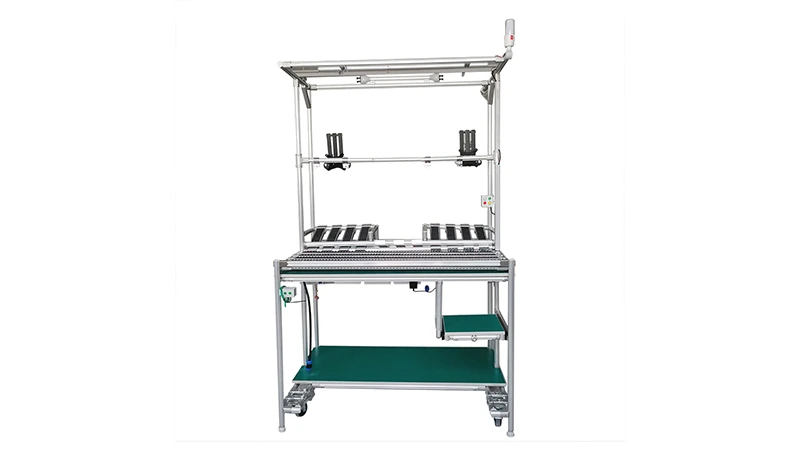
The Heart of Lab Efficiency – Why Workbenches Matter
Walk into any laboratory, and you'll quickly realize that every surface, tool, and piece of equipment has a purpose. From the centrifuges whirring in the corner to the pipettes lined up like soldiers on a shelf, each element contributes to the delicate dance of scientific discovery. But if there's one piece of furniture that acts as the unsung hero—the quiet conductor of this symphony—it's the workbench. It's where samples are prepared, data is recorded, instruments are calibrated, and breakthroughs are born. A subpar workbench isn't just an inconvenience; it can compromise accuracy, introduce contamination, or slow down workflows to a crawl. For labs where precision is measured in microns and cleanliness can mean the difference between a successful experiment and a wasted week, the right workbench isn't a luxury—it's a necessity. Today, we're diving deep into a solution that's redefining lab standards: Aluminum Workbench D. This isn't just a table with a flat top. It's a masterpiece of engineering, designed to marry two critical lab demands—unwavering precision and impeccable cleanliness—while standing up to the rigors of daily scientific work.
Meet Aluminum Workbench D: More Than Just a Surface
At first glance, Aluminum Workbench D might look like any other lab workbench. It has a flat surface, sturdy legs, and a clean, minimalist design. But lean in closer, and you'll start to notice the details that set it apart. The edges are smooth, without a single burr or rough spot. The surface gleams, not with a cheap polish, but with the inherent luster of high-grade aluminum. Run a hand across it, and you'll feel the precision in every inch—no warps, no dips, just a perfectly level plane that seems to defy the laws of material imperfection. But what really makes Aluminum Workbench D special is how it's built to adapt. Labs aren't one-size-fits-all, and neither are their workbenches. Whether you're a small research lab focused on molecular biology, a bustling pharmaceutical facility churning out drug candidates, or an electronics lab testing sensitive semiconductors, this workbench bends to your needs without breaking a sweat. It's the kind of tool that makes lab technicians pause and think, "Why didn't we have this sooner?"

The Science of the Material: Aluminum Extrusion Profile Explained
To understand why Aluminum Workbench D is a game-changer, you first need to understand its backbone: aluminum extrusion profile. This isn't your average aluminum foil or soda can material. Aluminum extrusion is a manufacturing process that transforms raw aluminum into complex, custom shapes with incredible precision. Here's how it works: a billet of aluminum—heated to a malleable state—is forced through a die, a specialized tool with a cross-sectional shape that matches the desired profile. The result? A long, continuous piece of aluminum with a consistent shape, whether it's a simple tube, a T-joint, or the intricate, multi-functional structure that forms the frame of Aluminum Workbench D. What makes this process so powerful for lab equipment? Consistency. Unlike materials that are cut, welded, or bent after fabrication—processes that can introduce slight variations—extruded aluminum profiles are uniform from end to end. That means every Aluminum Workbench D that rolls off the production line has the same dimensions, the same strength, and the same performance characteristics. For labs where reproducibility is key, this kind of consistency is priceless. But it's not just about uniformity. Aluminum extrusion profiles are also incredibly strong for their weight. Aluminum itself is lightweight, making the workbench easy to move (when needed) without sacrificing stability. The extrusion process allows for hollow sections and reinforced edges, creating a structure that can support heavy lab equipment—think centrifuges, spectrometers, or even small incubators—without so much as a creak. And because the profiles are designed with T-slots (those handy grooves running along the length), adding accessories like shelves, tool holders, or cable management systems is a breeze. No drilling, no welding, no permanent modifications—just slide, lock, and go. It's this combination of strength, precision, and adaptability that makes aluminum extrusion profile the perfect foundation for Aluminum Workbench D.

Precision Engineering: How Aluminum Workbench D Delivers Unmatched Accuracy
In a lab, "close enough" is never good enough. When you're measuring the concentration of a drug compound to the nearest nanogram or aligning a microscope slide to capture a single cell, even the tiniest deviation in your workspace can throw off results. That's where Aluminum Workbench D's precision engineering shines. Let's start with the surface. The top of Aluminum Workbench D is milled to a flatness tolerance of ±0.1mm per meter. To put that in perspective, a sheet of paper is about 0.1mm thick—so the entire surface varies by less than the width of a piece of paper across its entire length. For a lab technician using a precision balance or a pipetting robot, this level of flatness ensures that equipment sits perfectly level, eliminating the "rocking" or "tipping" that can skew measurements. But precision goes beyond the surface. The frame, built from those extruded aluminum profiles, is designed to resist torsion and flex. Even when loaded with heavy equipment, the workbench remains stable, with no measurable deflection. Why does that matter? Imagine using a pipette while the workbench subtly sways under the weight of a nearby centrifuge. The tiniest movement could cause you to dispense an extra microliter of reagent, throwing off your assay. Aluminum Workbench D's rigid frame eliminates that risk, creating a stable platform that acts as an extension of the lab's own infrastructure. And let's not forget about vibration dampening. Labs are full of sources of vibration—HVAC systems, refrigerators, even foot traffic in the hallway. These vibrations can interfere with sensitive equipment like atomic force microscopes or laser-based instruments. Aluminum's natural density and the workbench's solid construction help absorb these vibrations, acting as a buffer between the lab's chaos and your critical experiments. It's the kind of precision that doesn't announce itself with fanfare; it just quietly ensures that your data is reliable, your measurements are accurate, and your experiments are repeatable. For any lab professional who's ever had to discard hours of work because of a "mystery error," that kind of reliability is nothing short of revolutionary.
Cleanliness by Design: A Haven for Contamination-Sensitive Work
Contamination is the bane of any lab working with biological samples, pharmaceuticals, or sensitive chemicals. A single speck of dust, a trace of leftover reagent, or a hidden bacterial colony can ruin an experiment, delay a project, or even compromise patient safety. That's why Aluminum Workbench D was designed with cleanliness as a core principle—not an afterthought. Let's start with the surface. Unlike wood, which is porous and can absorb spills, or plastic, which can develop micro-scratches that harbor bacteria, aluminum is non-porous and inherently resistant to staining. A quick wipe with a disinfectant solution is all it takes to remove even the stickiest of spills, from protein solutions to organic solvents. There are no cracks, crevices, or seams where contaminants can hide—just a smooth, seamless surface that's easy to sanitize. In fact, many labs that work with biosafety level 2 or 3 agents have adopted Aluminum Workbench D specifically for this reason: it can withstand the rigorous decontamination protocols required for handling pathogens, from autoclaving (for heat-resistant models) to chemical sterilization. But cleanliness isn't just about the surface. The workbench's design also minimizes areas where dust and debris can accumulate. The frame, made from those extruded aluminum profiles, has clean lines and minimal overhangs, so there's nowhere for dust bunnies to take up residence. Even the feet are designed to be elevated, preventing the buildup of dirt underneath the workbench. And for labs that require ultra-clean environments, like those in semiconductor manufacturing or IVF clinics, Aluminum Workbench D can be equipped with specialized accessories, such as integrated HEPA filters or UV-C light sterilization systems, turning it into a mini cleanroom right at your fingertips. Consider a scenario in a microbiology lab: a technician is preparing agar plates for bacterial culture. A traditional wooden workbench might have tiny cracks where old agar has dried, harboring unwanted microbes that could contaminate the new plates. With Aluminum Workbench D, a quick spray with 70% ethanol and a wipe with a lint-free cloth ensures the surface is sterile, giving the experiment the clean start it needs. It's these small, design-driven details that make Aluminum Workbench D a sanctuary for contamination-sensitive work.
ESD Workstation Capabilities: Protecting Sensitive Electronics
Many labs today aren't just handling chemicals or biological samples—they're working with sensitive electronic components, too. Think about it: PCR machines with delicate circuit boards, DNA sequencers with precision sensors, or even the microchips that power lab automation systems. These devices are vulnerable to electrostatic discharge (ESD), a sudden flow of electricity between two objects caused by static electricity. A single ESD event—something as simple as a technician walking across a carpet and touching a circuit board—can damage or destroy these components, costing thousands of dollars in repairs and delaying critical research. That's where Aluminum Workbench D's ESD workstation capabilities come into play. Aluminum is a conductive material, which might sound like a liability at first—after all, you don't want electricity flowing where it shouldn't. But when properly grounded, aluminum becomes an excellent dissipater of static charge. The workbench's surface is connected to a grounding system, which safely channels any static electricity away from the workspace and into the ground, preventing it from building up and discharging into sensitive equipment. But ESD protection isn't just about the surface. Aluminum Workbench D can be outfitted with ESD-safe accessories, from wrist straps that keep technicians grounded to ESD mats that add an extra layer of protection for individual workstations. Even the casters (on mobile models) are designed to be conductive, ensuring that the entire workbench remains grounded, no matter where it's positioned in the lab. For electronics labs, this isn't just a feature—it's a requirement. Imagine a lab testing prototype sensors for medical devices. These sensors have microscopic components that are easily damaged by ESD. With a standard workbench, the risk of accidental discharge is ever-present, leading to costly failures and missed deadlines. With Aluminum Workbench D's ESD workstation setup, the team can work with confidence, knowing that their sensitive equipment is protected from the invisible threat of static electricity. It's this kind of forward-thinking design that makes Aluminum Workbench D more than just a workbench—it's a complete solution for labs that deal with both traditional lab work and cutting-edge electronics.
Lean System Integration: Streamlining Lab Workflows
In today's fast-paced lab environments, efficiency isn't just about working harder—it's about working smarter. That's the philosophy behind lean systems, a set of principles focused on eliminating waste, optimizing workflows, and maximizing value. Aluminum Workbench D was built with lean thinking in mind, designed to integrate seamlessly into lean lab environments and help teams work more efficiently. Let's break down what "waste" looks like in a lab: time spent searching for tools, unnecessary movement between workstations, cluttered surfaces that slow down tasks, or equipment that isn't positioned for optimal use. Aluminum Workbench D addresses all of these. Thanks to the T-slots in its aluminum extrusion profile frame, the workbench can be customized with a wide range of accessories that keep tools, reagents, and equipment exactly where they're needed. Need a shelf for pipette tips? Slide a shelf bracket into the T-slot and lock it in place. Want a holder for your lab notebook and pen? There's an accessory for that. Cable management? T-slots can route cords and wires neatly, eliminating the "spaghetti mess" that plagues many workbenches. The result? A workspace that's organized, intuitive, and tailored to the specific tasks at hand. But lean integration goes beyond just accessories. The workbench's modular design means it can be reconfigured as lab needs change. If a team shifts from manual pipetting to automated liquid handling, the workbench can be adjusted to accommodate the new equipment. If a project requires collaboration between two technicians, two workbenches can be connected to form a larger workspace. This flexibility ensures that the workbench grows with the lab, reducing the need to replace equipment as workflows evolve—a classic example of eliminating waste in the form of unnecessary capital expenditure. Consider a diagnostic lab processing hundreds of patient samples daily. Every second counts, and any delay can affect patient outcomes. With Aluminum Workbench D, the team has configured their workspace with a built-in rack for sample tubes, a holder for barcode scanners, and a shelf for the centrifuge—all within arm's reach. Technicians no longer have to walk across the lab to grab supplies or reach awkwardly for equipment. The result? Faster sample processing, fewer errors, and a more satisfying work environment for the team. It's lean system integration in action, turning a simple workbench into a catalyst for operational excellence.
Comparing the Contenders: Aluminum vs. Wood, Stainless Steel, and Plastic
To truly appreciate Aluminum Workbench D, it helps to see how it stacks up against other common workbench materials. Let's take a closer look at how aluminum compares to wood, stainless steel, and plastic in the lab environment.
| Feature | Aluminum Workbench D (Aluminum Extrusion Profile) | Wooden Workbench | Stainless Steel Workbench | Plastic Workbench |
|---|---|---|---|---|
| Precision | ±0.1mm flatness tolerance; no warping over time | Prone to warping with humidity/temperature changes | High precision, but heavy and hard to modify | Low precision; can flex under heavy loads |
| Cleanliness | Non-porous; easy to disinfect; no hidden crevices | Porous; absorbs spills; hard to fully sanitize | Non-porous; easy to clean, but scratches can harbor bacteria | Non-porous, but prone to micro-scratches; not heat-resistant |
| ESD Capabilities | Yes, with proper grounding | No; can build up static charge | Yes, but heavier and more expensive | No; insulative, can build up static |
| Weight & Mobility | Lightweight; easy to move (with casters) | Heavy; difficult to move | Very heavy; often permanently fixed | Lightweight, but less stable |
| Customization | High; T-slots allow easy accessory integration | Low; requires drilling/screwing to modify | Low; welding required for modifications | Medium; limited accessory options |
| Durability | High; resistant to corrosion, dents, and wear | Low; susceptible to water damage, scratches | Very high; but prone to fingerprints and smudges | Low; can crack, fade, or warp with chemicals/heat |
| Cost | Mid-range; higher upfront than wood/plastic, but long-term value | Low upfront, but high replacement cost | High upfront and installation cost | Low upfront, but short lifespan |
As the table shows, Aluminum Workbench D strikes a balance that's hard to beat: the precision of stainless steel, the cleanliness of non-porous materials, the mobility of plastic, and the customization of a modular system—all at a mid-range cost that delivers long-term value. For labs that need a workbench that can do it all, aluminum extrusion profile-based solutions like Aluminum Workbench D are increasingly becoming the gold standard.
Conclusion: Investing in the Future of Lab Excellence
At the end of the day, a lab is only as good as its tools. And when it comes to the foundational tool of any lab—the workbench—Aluminum Workbench D stands head and shoulders above the competition. It's a product of thoughtful engineering, designed to address the unique challenges of modern lab work: the need for precision in measurements, the demand for cleanliness in contamination-sensitive environments, the requirement to protect sensitive electronics from ESD, and the push for efficiency through lean system integration. Built from high-quality aluminum extrusion profile, it offers consistency, strength, and customization options that other materials simply can't match. Whether you're running a small academic lab, a large pharmaceutical facility, or a cutting-edge research institute, Aluminum Workbench D isn't just a piece of furniture—it's an investment in the reliability of your data, the efficiency of your team, and the success of your projects. In a world where scientific progress depends on the smallest details, why settle for a workbench that's "good enough"? Choose one that's designed to elevate your work, protect your experiments, and grow with your lab. Choose Aluminum Workbench D. Your team, your data, and your breakthroughs deserve nothing less.