- Company Articles
- Products and Technology
- Product knowledge
- Aluminum Workbench D for Packaging Operations: Streamlining Product Wrapping Processes

Aluminum Workbench D for Packaging Operations: Streamlining Product Wrapping Processes
Related Product
Aluminum Workbench D
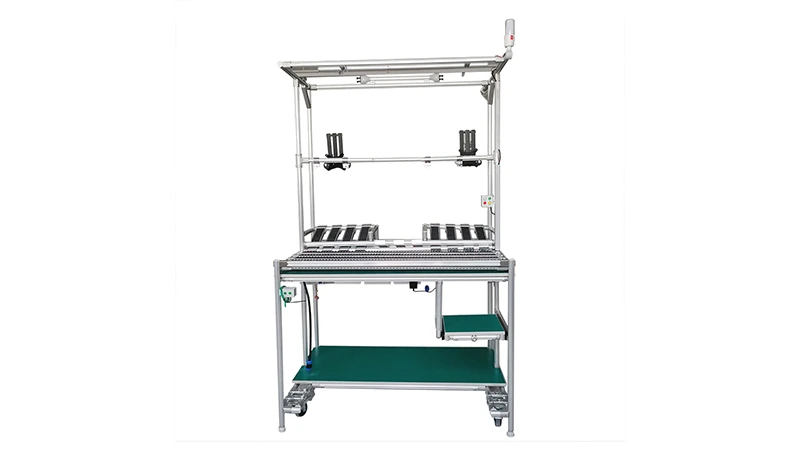
Aluminum tube workbench is more flexible and durable, compared with traditional PE/ABS coated steel tube. It is easy to assemble, anti corrosion, rust protection, and recycle use after disassemble.
Walk into any busy packaging facility, and you'll likely hear the same chorus of frustrations: workers stretching to reach tools, materials piling up in disorganized heaps, and bottlenecks slowing down the line just when deadlines loom largest. Packaging operations thrive on precision and speed—every second wasted hunting for tape, adjusting a misaligned product, or waiting for a colleague to free up a work surface eats into productivity, morale, and ultimately, the bottom line. In a world where customer expectations for fast, error-free deliveries are higher than ever, the right workspace setup isn't just a nice-to-have; it's the backbone of a successful operation. That's where the Aluminum Workbench D comes in—a solution designed not just to hold products, but to transform how packaging teams work, think, and deliver results.
Beyond the Basics: What Makes Aluminum Workbench D Different?
Let's start with the obvious: workbenches are everywhere. But not all workbenches are created equal. Traditional wooden or steel workbenches often feel like afterthoughts—heavy, rigid, and frustratingly one-size-fits-all. They might hold a box or two, but they don't adapt to the chaos of a packaging line, where every hour brings new products, varying box sizes, and shifting priorities. Aluminum Workbench D, with its single-deck design and intentional lack of casters, flips that script. It's built to be a stable, reliable hub in the middle of the action, but what truly sets it apart is how it grows with your team's needs—thanks in large part to its aluminum profile construction and compatibility with aluminum profile accessories.
Aluminum might not be the first material that comes to mind when you think of "industrial strength," but that's part of its hidden advantage. It's lightweight enough that rearranging your workspace (say, to accommodate a new conveyor line or flow rack) doesn't require a team of movers, yet strong enough to support stacks of cardboard, rolls of bubble wrap, and even heavier tools without bending or warping. Unlike wood, it won't splinter or absorb spills—critical in packaging, where stray glue, water, or oil is par for the course. And unlike steel, it resists rust and corrosion, ensuring it stays looking (and functioning) like new for years, even in humid or dusty environments.
But the real magic is in the details. Aluminum Workbench D isn't just a flat surface on legs. Its design is a love letter to the packaging worker: a smooth, non-slip deck that keeps boxes from sliding mid-wrap; pre-drilled holes and slots that let you add accessories like tool hooks, label holders, or small parts bins exactly where you need them; and a height that hits that sweet spot—low enough to avoid straining shoulders, high enough to keep knees from bumping the underside during long shifts. It's the kind of thoughtfulness that turns a "meh" workday into one where you look up and realize you've wrapped 20 more boxes than usual, and your back doesn't ache. That's the difference between a workbench and a workflow partner.
Aligning with Lean Systems: Cutting Waste, Boosting Value
If you've spent any time in manufacturing or packaging, you've probably heard of "lean systems"—the philosophy of eliminating waste to make processes smoother, faster, and more efficient. Lean isn't just a buzzword; it's a mindset that starts with the spaces where work happens. Aluminum Workbench D was built with this mindset front and center, acting as a physical extension of lean principles in action.
Let's break down the "7 Wastes" of lean—transport, inventory, motion, waiting, overproduction, overprocessing, and defects—and see how Workbench D addresses each. Take motion waste, for example: the time workers spend walking to grab scissors, reaching across a cluttered bench, or bending to pick up a fallen roll of tape. With Workbench D, aluminum profile accessories like adjustable tool rails and hanging bins can be mounted directly to the bench's frame, keeping every essential tool within arm's reach. No more taking three steps to the supply closet; your tape gun, box cutter, and label printer are right where you need them, when you need them. That might sound small, but multiply those saved steps by 50 workers and 250 workdays a year, and you're looking at thousands of hours reclaimed for actual packaging.
Then there's waiting waste—the bane of any production line. How often do workers stand idle because the previous station is backed up, or because materials haven't arrived at their bench yet? Aluminum Workbench D integrates seamlessly with flow racks and conveyors, creating a continuous material flow that keeps work moving. Imagine a flow rack positioned to the left of the bench, feeding boxes down a gentle slope directly onto the work surface. As soon as one box is wrapped, the next glides into place—no waiting, no lifting, no delays. It's a small change that turns stop-and-start chaos into a steady rhythm, where workers stay focused and in the zone.
Even defects, the costliest waste of all, get a helping hand from Workbench D. Its stable, level surface reduces the risk of misaligned labels or lopsided tape jobs, while its easy-to-clean aluminum deck means fewer spills or debris that could damage products. When every box looks neat and professional, returns drop, and customer trust grows. That's lean in action—not just cutting waste, but creating value, one wrapped package at a time.

Flow Racks and Conveyors: Building a Material Ecosystem
A workbench is only as good as the company it keeps. In packaging, that means how well it plays with the other stars of the show: flow racks and conveyors. These are the arteries of your operation, moving materials in and finished products out. Aluminum Workbench D isn't just compatible with them—it's designed to make them more effective.
Let's talk flow racks first. These sloped, gravity-fed racks are a staple in lean environments, keeping materials organized and accessible. But without a workbench that connects to them seamlessly, they're just shelves with a tilt. Aluminum Workbench D bridges that gap. Its height can be adjusted (thanks to those aluminum profile accessories) to match the flow rack's output, so boxes slide directly from the rack onto the bench with zero lifting. No more awkward transfers that risk dropping boxes or straining backs. And because the workbench's deck is smooth and even, there's no jostling or tipping as products move from rack to work surface—critical for fragile items or precision packaging.
Conveyors, too, get a boost from Workbench D. Whether you're using a roller conveyor to send finished packages to shipping or a belt conveyor to bring in empty boxes, the workbench acts as a buffer zone where workers can prep, wrap, and send products on their way without interrupting the conveyor's flow. Picture this: a conveyor line feeds empty boxes onto the left side of Workbench D. You wrap the box, seal it, and slide it onto the right side, where another conveyor carries it to the labeling station. It's a loop that never breaks, because the workbench is positioned to keep the momentum going. Even better, if your conveyor needs to change direction or height, the workbench's aluminum frame can be adapted with brackets or extenders (again, those handy aluminum profile accessories) to keep everything in sync. It's like a puzzle where all the pieces just click.

Aluminum Profile Accessories: Customization That Grows With You
If Aluminum Workbench D is the foundation, then aluminum profile accessories are the building blocks that let you turn it into exactly what your team needs. Think of them as the Swiss Army knife of workspace design—versatile, adaptable, and ready to solve whatever problem comes your way. From simple brackets to complex tool organizers, these accessories transform a basic workbench into a custom solution that evolves with your packaging line.
Let's say your team wraps small electronics, which require tiny screws, cable ties, and precision tape. A standard workbench would quickly become a jumble of loose parts, with workers spending more time searching than wrapping. But with aluminum profile accessories like pegboards, magnetic tool strips, and compartmentalized bins, you can mount everything to the workbench's frame. Suddenly, screws are in labeled bins, cable ties hang from a hook, and your precision tape dispenser is clamped to the edge at eye level. It's not just organization—it's empowerment. Workers feel in control of their space, and that confidence translates to faster, more accurate work.
Or maybe your packaging line handles seasonal spikes—holiday rushes where you need to double your output overnight. With traditional workbenches, scaling up means buying new benches or cramming more workers into tight spaces. With Aluminum Workbench D, you can add extension wings using aluminum profile brackets, turning a single bench into a double-wide surface in minutes. When the rush ends, those wings can be removed, and the bench returns to its original size—no storage headaches, no wasted space. It's flexibility that keeps your operation agile, even when demand throws curveballs.
And let's not forget the little things—the accessories that solve the annoyances no one talks about. Like the adjustable LED light bar that clips onto the bench, illuminating dark corners where labels need to be read. Or the cable management clips that keep power cords for heat sealers or label printers from tangling into a tripping hazard. Even the non-slip matting that can be cut to fit the workbench's deck, preventing boxes from sliding during wrapping. These might seem like minor details, but they add up to a workspace that feels intentional—a place where someone thought, "We know wrapping boxes all day can be tough; let's make it a little easier."
A Day in the Life: How Aluminum Workbench D Changes Work for the Better
To really understand the impact of Aluminum Workbench D, let's step into the shoes of Maria, a packaging line worker with five years of experience. Before her facility switched to Workbench D, Maria's day was a series of small battles. Her old wooden workbench was warped, so boxes would slide off the edge if she wasn't careful. Tools were scattered across the surface, and the supply closet was three steps away—three steps that added up when she needed tape, scissors, or a new roll of bubble wrap. By mid-afternoon, her lower back ached from bending to pick up fallen items, and she'd usually fall 10-15 boxes short of her daily goal. "It felt like I was fighting the bench more than working with it," she recalls.
Then came Aluminum Workbench D. The first thing Maria noticed was the stability—no more wobbly boxes, no more chasing rolling tape rolls. The aluminum deck was smooth but not slippery, so even the shiniest plastic-wrapped products stayed put. Her supervisor added aluminum profile accessories: a tool rail above the bench with hooks for her tape gun and cutter, a small parts bin mounted to the side for labels, and a flow rack positioned to the left, feeding boxes directly onto the work surface. "It was like night and day," Maria says. "I didn't have to walk to the closet anymore. I didn't have to bend down to grab tools. I just… worked. And when I looked up at lunch, I'd already wrapped 25 boxes—more than I used to do in a full morning."
By the end of the first week, Maria's daily output was up by 30%. Her back pain? Gone. The frustration of hunting for tools? A distant memory. And she wasn't alone—her entire team saw similar improvements. "We started calling it the 'magic bench,'" she laughs. "But it's not magic. It's just a bench that was built for us —for the way we actually work, not some idealized version of it."
"Aluminum Workbench D didn't just make our packaging line faster—it made it better. Workers are happier, errors are down, and we're hitting deadlines we never thought possible. It's the kind of investment that pays for itself in months, just in saved time and reduced stress." — Raj Patel, Operations Manager, SwiftPack Logistics
Traditional vs. Aluminum Workbench D: The Numbers Speak for Themselves
| Feature | Traditional Wooden/Steel Workbench | Aluminum Workbench D |
|---|---|---|
| Setup Time | 2-3 hours (heavy, requires tools) | 30 minutes (lightweight, tool-free assembly with aluminum profile accessories) |
| Daily Packaging Output (per worker) | ~80 boxes | ~110 boxes (37.5% increase) |
| Motion Waste (steps per hour) | ~45 steps (fetching tools, materials) | ~12 steps (tools/materials at arm's reach) |
| Maintenance Costs (per year) | $150-$200 (repairs, refinishing, replacement parts) | $20-$30 (aluminum resists damage; accessories are replaceable individually) |
| Worker Satisfaction (1-10 scale) | Average score: 5.2 | Average score: 8.7 |
Why Aluminum? The Material That Makes It All Possible
At this point, you might be wondering: Why aluminum? Why not stick with wood, steel, or even plastic? The answer lies in aluminum's unique combination of strength, flexibility, and durability—qualities that make it perfect for the demands of packaging operations. Let's break it down:
Strength-to-Weight Ratio: Aluminum is 1/3 the weight of steel but just as strong, making Workbench D easy to move (when needed) but stable enough to support heavy loads. A 5-foot Aluminum Workbench D weighs around 45 pounds—light enough for two people to reposition—yet can hold up to 500 pounds of boxes, tools, and materials without bending.
Corrosion Resistance: Packaging lines are messy places—spilled water, adhesive residue, and even cleaning chemicals are part of the daily grind. Aluminum naturally forms a protective oxide layer that resists rust and corrosion, so Workbench D stays looking new even after years of use. No more replacing warped wooden benches or repainting rusted steel ones.
Customization: Aluminum profiles are easy to drill, cut, and shape, which is why Aluminum Workbench D works so well with aluminum profile accessories. Unlike steel, which requires welding or heavy tools to modify, aluminum can be adjusted with simple hand tools, letting your team tweak the bench's setup on the fly.
Sustainability: Aluminum is 100% recyclable, and using it reduces your facility's carbon footprint compared to steel (which requires more energy to produce). It's a small choice that adds up to big environmental benefits over time.
Final Thoughts: Investing in Your Team, Investing in Success
Packaging operations are about more than boxes and tape—they're about people. People who show up every day, work hard, and deserve tools that make their jobs easier, safer, and more rewarding. Aluminum Workbench D isn't just a piece of equipment; it's a statement that you value your team's time, effort, and well-being. It's a recognition that when workers have the right tools, they don't just meet expectations—they exceed them.
So if you're tired of watching your packaging line struggle with bottlenecks, disorganization, and frustrated workers, maybe it's time to stop band-aiding the problem with quick fixes and invest in a solution that transforms the root cause. Aluminum Workbench D, with its lean system alignment, flow rack and conveyor integration, and endless customization via aluminum profile accessories, is more than a workbench. It's a partner in your success—a silent teammate that helps your team wrap faster, better, and with less stress.
At the end of the day, packaging is about delivering value—value to your customers, value to your business, and value to the people who make it all happen. Aluminum Workbench D delivers on all three. It's not just a purchase; it's a promise: to make tomorrow's work a little easier than today's. And in the fast-paced world of packaging, that's the best promise you can keep.