- Company Articles
- Products and Technology
- Product knowledge
- Aluminum Workbench D for Small Batch Production: Flexibility to Adapt to Variable Demands

Aluminum Workbench D for Small Batch Production: Flexibility to Adapt to Variable Demands
Related Product
Aluminum Workbench D
Aluminum tube workbench is more flexible and durable, compared with traditional PE/ABS coated steel tube. It is easy to assemble, anti corrosion, rust protection, and recycle use after disassemble.
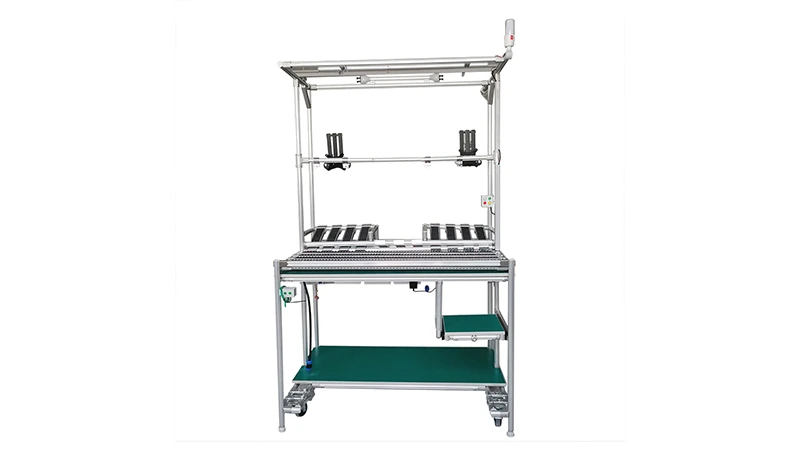
In the world of manufacturing, small batch production is like a high-wire act—you're balancing tight deadlines, custom orders, and ever-shifting priorities, all while trying to keep costs in check and efficiency high. Unlike large-scale production lines that thrive on repetition, small batch work demands agility: the ability to switch between products, reconfigure workflows, and scale up or down at a moment's notice. Yet for many small and medium-sized manufacturers, the biggest obstacle isn't the work itself—it's the workspace. Rigid, one-size-fits-all workbenches that take hours to adjust, heavy wooden tables that can't keep up with modern tools, or flimsy setups that wear out after a few months of use. Sound familiar? If you've ever found yourself staring at a workstation that feels more like a roadblock than a tool, you're not alone. But what if there was a workbench designed specifically for the chaos of small batch production—a solution that bends, adapts, and grows with your needs? Enter the Aluminum Workbench D.
The Hidden Cost of Rigid Workstations: Why "One-Size-Fits-All" Fails Small Batch Teams
Let's start with the basics: small batch production isn't just "less of large batch." It's a different beast entirely. Imagine a team at a custom electronics shop that switches between assembling smart home sensors, Bluetooth speakers, and wearable fitness trackers—sometimes three different product lines in a single week. Each product has unique tools, parts, and workflow needs: the sensor line requires precision tweezers and a static-free surface, the speakers need space for soldering irons and cable management, and the fitness trackers demand small bins for tiny screws and batteries. With a traditional fixed workstation, this team would face a daily uphill battle.
First, there's the time wasted reconfiguring. A wooden workbench bolted to the floor can't be adjusted for height when a new team member joins (forcing them to hunch or strain, leading to fatigue and errors). Adding a shelf for tools means drilling holes or clamping on wobbly attachments that slip mid-task. If a rush order comes in and you need to add a second worker to the station, there's no easy way to expand the surface area—so someone ends up working off a folding table squeezed into the corner, slowing everything down.
Then there's the cost of overcompensation. Many small manufacturers solve the "rigidity problem" by buying multiple workbenches: one for each product line, or even one for each stage of production. But that's a Band-Aid, not a solution. More workbenches mean more floor space eaten up, higher upfront costs, and storage headaches when a product line goes on hiatus. And when a new custom order comes in—say, a one-off prototype for a client—you're back to square one: no workstation that fits the unique specs, so you cobble together a temporary setup that's inefficient at best, unsafe at worst.
Worst of all, rigid workstations kill the very agility that makes small batch production valuable. In a market where customers demand personalized products and fast turnarounds, being stuck with a workstation that can't keep up isn't just frustrating—it's a competitive disadvantage. You lose bids because your lead times are too long. You compromise on quality because your team is working around a clunky setup. And slowly but surely, the "small batch flexibility" you pride yourself on starts to feel more like a liability.
Aluminum Workbench D: Built for the Way You Actually Work
Aluminum Workbench D wasn't designed in a vacuum. It was built by listening to small batch manufacturers—the ones who wake up to a new production schedule every Monday, who juggle custom orders with repeat runs, and who don't have the luxury of wasting time on "good enough" equipment. At its core, this workbench is a celebration of flexibility, rooted in two key principles: modularity and durability. Let's break down why that matters.
1. Aluminum Profile: The Backbone of Adaptability
Walk up to an Aluminum Workbench D, and the first thing you'll notice is its frame: sleek, lightweight, and built from high-grade aluminum profile. Unlike wood or solid steel, aluminum profile is engineered for customization. Its T-slot design—those grooves running along the length of the rails—lets you attach, remove, or reposition accessories in minutes, no drilling or welding required. Need a tool rail for your soldering iron? Slide a bracket into the T-slot and tighten a screw. Want to add a shelf for bins? Clip on aluminum profile accessories like angle brackets and secure them with a hex key. It's like building with advanced Legos, but for grown-ups who mean business.
But aluminum profile isn't just about ease of use—it's about strength, too. The 4040 aluminum extrusion profile (a common size in industrial setups) used in Workbench D can support up to 500kg of weight, even when fully loaded with tools, parts, and equipment. That means you can mount heavy machinery like (small drilling machines) or ultrasonic cleaners directly to the bench without worrying about wobbling or warping. And unlike wood, aluminum won't splinter, rot, or absorb moisture—critical in environments where spills (of oil, coolant, or cleaning solutions) are part of the daily grind. It's also naturally resistant to corrosion, so even in humid workshops or facilities near the coast, your workbench will stay looking and performing like new for years.
2. Modular Accessories: Build It, Rebuild It, Repeat
The true magic of Aluminum Workbench D lies in its ecosystem of aluminum profile accessories. Think of the bench as a blank canvas; the accessories are your paintbrushes. Whether you need to add mobility, storage, or specialized work surfaces, there's an accessory for that—and swapping them out is as easy as rearranging furniture.
- Caster Wheels & Brakes: Need to move the workbench to a new location for a big project? Pop on a set of swivel stem caster wheels (with locking brakes for stability when in use) and roll it into place—no heavy lifting required. When the project's done, remove the casters and bolt the bench to the floor for a permanent setup.
- Adjustable Shelves & Bins: Use aluminum guide rail A or B to create custom shelving at any height. Add plastic roller track guide rails (yellow or grey, depending on your preference) to the shelves, and bins of parts will glide smoothly forward as you empty them—no more reaching to the back of a static shelf.
- Tool Racks & Cable Management: Mount aluminum pipe clamps to the side of the bench to hold screwdrivers, pliers, or even laptops for digital work instructions. Run cables through T-slot rubber seal covers to keep them organized and out of the way, reducing trip hazards and clutter.
- ESD-Safe Surfaces: For electronics manufacturers, static damage is a constant threat. Upgrade to an ESD workstation top (a specialized surface that dissipates static electricity) and pair it with ESD-safe caster wheels to protect sensitive components like circuit boards or microchips.
What's most impressive? These accessories aren't proprietary. They're standard aluminum profile parts available from most industrial suppliers, so you won't get locked into a single brand or overcharged for replacements. If you need a custom bracket, you can even 3D-print one that fits the T-slot—talk about flexibility.
3. Lean System Integration: Work Smarter, Not Harder
Small batch production thrives on lean system principles—eliminating waste, streamlining workflows, and continuous improvement. Aluminum Workbench D isn't just a workstation; it's a lean tool designed to support these goals from day one.
Take "waste of motion," for example. In a traditional setup, a worker might walk 10 steps to grab a tool, 5 steps to retrieve a part bin, and 3 steps to dispose of scrap—adding up to hundreds of unnecessary steps per day. With Workbench D, you can arrange tools, parts, and waste bins in a "golden zone" (within arm's reach) using adjustable shelves and roller track. Parts flow directly to the bench via a flow rack (another key lean tool), so they're always where you need them, when you need them. The result? Less walking, more working, and a 20-30% boost in productivity—numbers that show up directly on your bottom line.
Then there's "waste of inventory." A lean system aims to keep only what you need on hand, but that's hard to do if your storage is fixed. Workbench D's modular shelves let you scale storage up or down based on current orders. Need to stock extra parts for a rush job? Add a second shelf. Slow week? Remove it to free up floor space. It's inventory management without the guesswork.

Aluminum Workbench D vs. Traditional Workstations: A Side-by-Side Comparison
Still on the fence? Let's put Aluminum Workbench D head-to-head with the two most common alternatives: traditional wooden workbenches and fixed metal workbenches. The difference is clear.
| Feature | Aluminum Workbench D | Traditional Wooden Workbench | Fixed Metal Workbench |
|---|---|---|---|
| Setup/Reconfiguration Time | 30-60 minutes (no tools required for basic changes) | 4-8 hours (requires drilling, sawing, or permanent attachments) | 2-4 hours (bolted components, often requires welding for major changes) |
| Customization Options | Unlimited (modular accessories, adjustable height/shelves, mobility add-ons) | Limited (fixed height, basic clamping; permanent modifications damage the bench) | Minimal (fixed design; some have pre-drilled holes for shelves, but no T-slot flexibility) |
| Weight Capacity | Up to 500kg (evenly distributed) | 100-200kg (varies by wood type; prone to warping under heavy loads) | 300-400kg (sturdy but less adaptable to uneven weight distribution) |
| Durability | 10+ years (aluminum resists corrosion, warping, and wear; accessories replaceable) | 3-5 years (wood splinters, absorbs moisture, and weakens at joints over time) | 7-10 years (steel rusts without proper coating; welded joints can crack under stress) |
| Cost Over Time | Lower (one bench replaces multiple; accessories are affordable and reusable) | Higher (need to replace every 3-5 years; multiple benches for different tasks) | Higher (initial cost is high; no adaptability means buying new benches for new needs) |
| Ergonomics | Highly adjustable (height, shelf positions, and mobility reduce strain) | Fixed height (often leads to poor posture and worker fatigue) | Fixed or limited height adjustment (some have adjustable feet, but not full height) |

Real-World Impact: How Small Manufacturers Are Thriving with Workbench D
Numbers and specs tell part of the story, but real-world results speak louder. Let's look at two small businesses that swapped rigid workstations for Aluminum Workbench D—and never looked back.
Case Study 1: A Small Electronics Manufacturer Cuts Changeover Time by 75%
Precision Tech, a family-owned electronics shop in Ohio, specializes in custom circuit boards for medical devices. With 12 employees and orders ranging from 10 to 500 units, they were struggling with three fixed wooden workbenches—one for soldering, one for testing, and one for assembly. When a client requested a rush order for a new prototype (requiring all three processes in one space), the team was forced to work in shifts, tripling lead time and frustrating the client.
After switching to two Aluminum Workbench D units, everything changed. They outfitted one bench with an ESD-safe surface and soldering iron holder for the soldering stage, then added caster wheels so it could roll to the testing area when needed. The second bench, equipped with aluminum guide rails and plastic roller track, became a mobile assembly station—complete with bins of components that glided into place as workers needed them. Changeover between product lines, which used to take 4 hours (dismantling, cleaning, reconfiguring), now takes just 1 hour. The client's rush order was delivered on time, and Precision Tech has since expanded their product offerings—all with the same two workbenches.
Case Study 2: A Bakery Scales Up (and Down) with Seasonal Demand
Artisan Breads Co., a small bakery in Portland, makes custom sourdough loaves and pastries for local cafes. Their busy season (holidays and summer) requires 10-hour days and 6 workers; their slow season (winter) drops to 4-hour days and 2 workers. With fixed metal workbenches, they had two problems: too little space during busy times (workers bumping into each other) and wasted space during slow times (benches gathering dust).
Aluminum Workbench D solved both. During peak season, they added caster wheels to all three benches, arranging them in a U-shape to create a collaborative workflow: one bench for mixing dough, one for shaping, and one for proofing. The U-shape reduced walking time by 60%, letting the team bake 30% more loaves per day. In slow season, they removed the casters, stacked two benches (using aluminum pipe clamps to secure them), and used the third as a multi-purpose station for prep and packaging. Floor space freed up by stacking benches now houses a small retail display, boosting direct sales to customers.
Is Aluminum Workbench D Right for You? 5 Signs It's Time to Upgrade
Still wondering if Aluminum Workbench D is worth the investment? Ask yourself these questions:
- Do you switch between 2+ product lines or tasks per week? If reconfiguring your workstation feels like a full-time job, Workbench D's modular design will save you hours.
- Is "wasted space" a constant complaint? If you're cramming tools, parts, or extra workbenches into corners, the ability to scale up/down with accessories will free up valuable floor area.
- Do workers complain about discomfort or fatigue? Adjustable height, mobility, and ergonomic accessories (like tool rails at eye level) reduce strain and boost morale.
- Are you avoiding custom orders because of setup costs? Workbench D turns "too complicated" orders into profitable opportunities by making customization easy.
- Is your current workbench showing signs of wear (splintering, rust, wobbling)? Replacing it with a durable aluminum model will save you money in the long run—no more buying a new bench every 3-5 years.
If you answered "yes" to even one of these, Aluminum Workbench D isn't just a nice-to-have—it's a tool that will pay for itself in time saved, errors reduced, and customer satisfaction increased.
Final Thoughts: Flexibility Isn't a Luxury—It's a Necessity
Small batch production isn't going anywhere. In fact, as consumers demand more personalized products and faster delivery, it's becoming the backbone of modern manufacturing. But to thrive in this environment, you can't rely on tools designed for a bygone era of mass production. You need workstations that move as fast as your business does—workstations that adapt, grow, and evolve with every new order, every new team member, and every new challenge.
Aluminum Workbench D isn't just a piece of equipment. It's a partner in your success. It's the difference between dreading a rush order and embracing it. Between wasting hours on setup and spending those hours creating value for your customers. Between feeling stuck in a rigid workflow and feeling empowered to innovate.
So if you're ready to stop working around your workstation and start working with it—if you're ready to turn "variable demands" into "variable opportunities"—it's time to invest in flexibility. It's time to invest in Aluminum Workbench D.