- Company Articles
- Products and Technology
- Application Cases
- Aluminum Workbench D in Aerospace Component Manufacturing: High-Standard Performance

Aluminum Workbench D in Aerospace Component Manufacturing: High-Standard Performance
Related Product
Aluminum Workbench D
Aluminum tube workbench is more flexible and durable, compared with traditional PE/ABS coated steel tube. It is easy to assemble, anti corrosion, rust protection, and recycle use after disassemble.
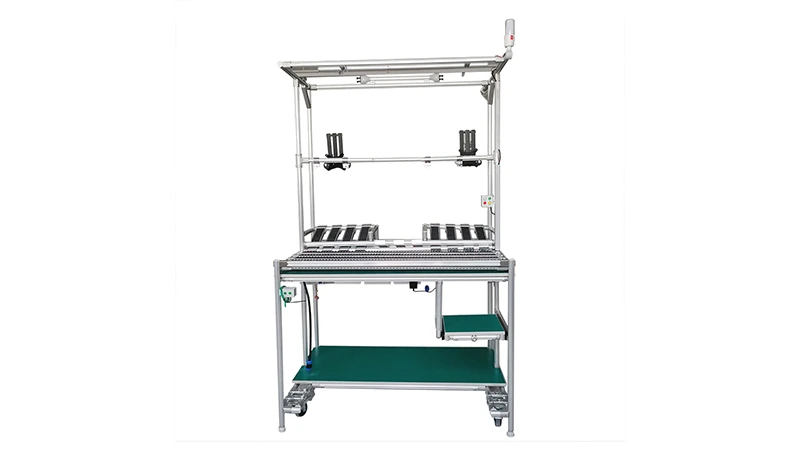
The Heart of Aerospace Manufacturing – Why the Right Workbench Matters
In the world of aerospace manufacturing, where the difference between success and failure can be measured in microns, every tool, every process, and every surface matters. Imagine a technician carefully assembling a sensor array for a commercial airliner, where a single misaligned component could compromise flight safety. Or an engineer testing a satellite's communication module, where static electricity might fry delicate circuitry worth thousands of dollars. In these moments, the workbench beneath their hands isn't just a piece of furniture—it's the foundation of precision, reliability, and safety.
Aerospace components are marvels of human ingenuity, but they're also unforgiving. Turbine blades must withstand extreme temperatures and pressure; avionics systems need to function flawlessly at 35,000 feet; satellite parts must endure the harsh conditions of space. For the teams building these components, the workbench is where the magic happens. It's where parts are sorted, assembled, inspected, and tested. A subpar workbench—one that's wobbly, prone to static, or ill-suited to the task—can slow down workflows, introduce errors, or even put entire projects at risk.
Enter Aluminum Workbench D. More than just a surface to work on, it's a purpose-built solution designed to meet the unique demands of aerospace manufacturing. From its lightweight yet rugged aluminum extrusion profile to its integrated ESD workstation capabilities and alignment with lean system principles, this workbench isn't just keeping up with the industry's high standards—it's setting them.
What Makes Aluminum Workbench D Stand Out? A Closer Look at Its Core Design
At first glance, Aluminum Workbench D might look like any other workbench, but a closer inspection reveals the thoughtful engineering that makes it indispensable in aerospace settings. Let's start with the material that forms its backbone: aluminum extrusion profile. Unlike traditional steel workbenches that are heavy and hard to modify, or wooden ones that warp over time, aluminum extrusion profiles are lightweight yet incredibly strong. They're made by pushing heated aluminum through a die to create uniform, customizable shapes—think of it as building with high-tech tinker toys, but for industrial use. This means the workbench can be tailored to fit specific tasks: longer for assembling large components, shorter for detailed electronics work, or equipped with extra shelves for tool storage. For aerospace technicians who often switch between projects, this flexibility is a game-changer.
Then there's its role as an ESD workstation. Static electricity is a silent enemy in aerospace manufacturing. Even a small static discharge can damage sensitive electronic components like circuit boards or sensors, which are common in everything from flight control systems to satellite communication gear. Aluminum Workbench D addresses this with built-in electrostatic discharge protection. Its surface and frame are designed to dissipate static charges safely, preventing them from building up and jumping to components. For Maria, an avionics technician at a major aerospace firm, this feature was a revelation. "Before we switched to these workbenches, we were constantly worrying about static. We'd use anti-static mats and wristbands, but there was always a risk. Now, I can focus on aligning a connector instead of checking for static sparks. It's one less thing to stress about, and that makes a huge difference in precision," she says.
Perhaps most importantly, Aluminum Workbench D is built with lean system principles in mind. Lean manufacturing is all about eliminating waste—whether it's time wasted searching for tools, space wasted on unnecessary equipment, or effort wasted on inefficient workflows. This workbench integrates seamlessly into lean environments. Its modular design means accessories like tool holders, bin organizers, or monitor mounts can be added exactly where they're needed, reducing clutter. The height is adjustable, so technicians of different sizes can work comfortably without straining. Even the surface is designed to be easy to clean, cutting down on time spent maintaining the workspace. "We used to have workbenches that were one-size-fits-all, and they never quite fit," explains Raj, a manufacturing engineer who helped implement lean practices at his facility. "With Aluminum Workbench D, we can arrange the tools right where the assembly happens. No more walking to a separate shelf for a wrench. It's cut our assembly time by 15% on some parts, just by making the workflow smoother."

The Building Blocks: Aluminum Profile Accessories and Workbench Structure
What makes Aluminum Workbench D so customizable? It's all in the details—specifically, the aluminum profile accessories that turn a basic frame into a tailored workspace. Let's break down the components that make this workbench tick. At its core is the aluminum extrusion profile, which forms the frame. These profiles have T-slots running along their length, which act like built-in tracks for attaching accessories. Need a shelf? Slide in a bracket and secure it with a bolt. Want to add a lamp? Clip a light fixture into the T-slot. This system means the workbench can evolve with changing needs. For example, when a team started assembling smaller satellite components, they added side panels with pegboards for tiny tools—no need to buy a whole new workbench.
Then there are the joints and connectors. Unlike traditional workbenches that are welded or bolted together permanently, Aluminum Workbench D uses lightweight, durable joints that allow for easy reconfiguration. Internal rotatary aluminum joints, for instance, let sections of the bench pivot or fold, making it possible to create L-shaped workstations for collaborative projects. External straight aluminum joints connect profiles at straight angles, ensuring stability without adding unnecessary weight. "We had a project where we needed to assemble a large turbine component that required two people working opposite each other," says Jamie, a production supervisor. "We simply reconfigured two Aluminum Workbench D units into a U-shape using those rotary joints. It took 20 minutes, and we had a custom workspace. When the project ended, we broke it down and reused the parts for another setup. That kind of adaptability is priceless."
The workbench's surface is another critical component. Many models feature an aluminum honeycomb panel top, which is lightweight but rigid enough to support heavy components. The panel is also non-porous, making it easy to wipe clean of grease, oils, or debris—essential in environments where cleanliness is tied to quality control. For tasks that require extra protection, some versions come with a replaceable ESD mat that adds an extra layer of static protection. And because the surface is part of the modular system, it can be swapped out if it gets damaged, extending the workbench's lifespan.
Even the little things matter. Casters (when included) are heavy-duty and lockable, so the workbench can be moved to where it's needed but stays steady during use. Cable management channels in the frame keep power cords and data cables organized, preventing tripping hazards and keeping the workspace neat. For teams that need to label tools or parts, magnetic strips can be attached to the frame, turning the workbench into a mobile organization center. All these accessories work together to create a workspace that's not just functional, but intuitive—designed around the people who use it every day.

Aluminum Workbench D vs. Traditional Workbenches: A Real-World Comparison
To truly appreciate Aluminum Workbench D, it helps to see how it stacks up against the workbenches that came before it. Let's compare it to two common alternatives: traditional steel workbenches and wooden workbenches, using real feedback from aerospace professionals.
| Feature | Aluminum Workbench D | Traditional Steel Workbench | Traditional Wooden Workbench |
|---|---|---|---|
| Weight & Mobility | Lightweight (50-70 lbs) with lockable casters; easy to move between workstations. | Heavy (150+ lbs); difficult to reposition without help. | Moderate weight (80-100 lbs); prone to damage if moved roughly. |
| ESD Protection | Built-in ESD surface and frame; dissipates static charges automatically. | Requires separate anti-static mats; frame can conduct static. | No inherent ESD protection; must use additional mats/wristbands. |
| Customization | Modular aluminum profile accessories; reconfigurable in minutes with basic tools. | Fixed design; modifications require welding or drilling. | Limited customization; drilling/modifying can weaken the wood. |
| Durability | Resistant to rust, dents, and warping; lifespan of 10+ years with minimal maintenance. | Prone to rust if not painted; heavy use causes dents over time. | Warps with humidity; scratches and stains easily; lifespan of 3-5 years in industrial use. |
| Lean System Alignment | Designed for 5S principles (Sort, Set in Order, Shine, Standardize, Sustain); minimizes waste. | Often oversized; difficult to optimize for specific workflows. | Cluttered easily; hard to maintain organization in high-paced environments. |
Mark, a quality control inspector with over 20 years in aerospace, sums up the difference: "I've used steel workbenches that felt like they'd last forever, but moving them was a nightmare. If we needed to rearrange the shop floor, we'd need two people and a dolly. And don't get me started on static—we once had a steel bench that actually caused a static discharge that ruined a $5,000 sensor. Wooden benches were better for some tasks, but they'd get stained with oil or coolant, and after a few years, they'd start to wobble. Aluminum Workbench D? It's light enough that I can move it by myself, the ESD protection just works, and I can add a shelf or a tool holder whenever I need to. It's like the difference between using a flip phone and a smartphone—once you go with the better option, you can't go back."
Safety, Efficiency, and Beyond: The Impact of Aluminum Workbench D on Daily Operations
In aerospace manufacturing, safety and efficiency go hand in hand. A safer workspace reduces accidents and downtime; an efficient workspace reduces stress and errors. Aluminum Workbench D excels in both areas, as seen in how it transforms daily operations for teams on the shop floor.
Safety first: The workbench's stable, adjustable height reduces ergonomic strain. Technicians no longer have to hunch over or reach awkwardly, cutting down on back pain and repetitive stress injuries. "I used to come home with a sore neck after a day of assembling small parts on a too-low workbench," says Lisa, an assembly line worker. "Now, I adjust the height to my waist, and the pain is gone. It sounds small, but it makes me more focused and less tired by the end of the shift." The ESD protection also enhances safety by preventing damage to components, which in turn reduces the risk of costly rework or project delays. In a industry where a single defective part can have catastrophic consequences, this peace of mind is invaluable.
Efficiency gains are equally notable. By integrating lean system principles, Aluminum Workbench D streamlines workflows. Tools and parts are stored within arm's reach, reducing time spent walking or searching. The modular design allows teams to create dedicated zones for specific tasks—one section for assembly, another for testing, another for quality control—without needing separate workbenches. "We used to have three different workbenches for three steps of the process," explains Tom, a production manager. "Now, we have one Aluminum Workbench D with attachments for each step. The component moves from one zone to the next on the same bench, and the technician stays in place. It's cut our cycle time by 20% and made training new hires easier because the workflow is so intuitive."
Durability also plays into efficiency. Unlike wooden workbenches that need to be replaced every few years or steel ones that require regular painting to prevent rust, Aluminum Workbench D is low-maintenance. Its aluminum frame resists corrosion, even in environments with coolants or lubricants. The surface is easy to wipe clean, so there's no downtime spent sanding or refinishing. "We've had our first set of Aluminum Workbench D units for five years now, and they still look almost new," says Sarah, a facility manager. "We've replaced wooden workbenches twice in that time. The initial cost is higher, but the total cost of ownership is way lower when you factor in replacement and maintenance."
Future-Proofing Aerospace Manufacturing: Why Aluminum Workbench D Is Here to Stay
The aerospace industry is constantly evolving. New materials, more complex components, and stricter regulations mean manufacturers need tools that can adapt. Aluminum Workbench D is built with this future in mind, thanks to its focus on flexibility, sustainability, and compatibility with emerging technologies.
Flexibility is key as aerospace projects become more diverse. One month, a team might be assembling components for a commercial jet; the next, they could be working on a small satellite or a drone. Aluminum Workbench D's modular design means it can shift with these needs. Add a 3D printer mount for rapid prototyping, or integrate a digital display for accessing assembly instructions—all without replacing the entire workbench. "Aerospace isn't static, so our tools can't be either," says Mike, a research and development engineer. "We're already experimenting with augmented reality (AR) glasses for assembly guidance. The T-slots on Aluminum Workbench D make it easy to mount the AR camera right where we need it. That adaptability ensures these workbenches will still be useful five or ten years from now."
Sustainability is another growing priority in aerospace, and aluminum is a naturally eco-friendly material. It's 100% recyclable, and recycling aluminum uses 95% less energy than producing new aluminum. This aligns with the industry's push to reduce carbon footprints. Additionally, the workbench's long lifespan means less waste from frequent replacements. "Our company has a goal to be carbon neutral by 2030," notes Emma, a sustainability coordinator at an aerospace firm. "Choosing durable, recyclable equipment like Aluminum Workbench D is a small step, but it adds up. We're not just building better planes—we're building a better process."
Finally, Aluminum Workbench D is compatible with the smart manufacturing tools of tomorrow. As more aerospace facilities adopt Industry 4.0 technologies—like IoT sensors for monitoring workflow or AI-powered quality control systems—the workbench can serve as a hub for these tools. Sensors can be mounted in the T-slots to track usage or collect data on workflow efficiency. The ESD protection can be integrated with smart monitoring systems to alert technicians if static levels rise. "The future of manufacturing is connected," says Kevin, a digital transformation specialist. "Aluminum Workbench D isn't just a physical workspace; it's a platform that can connect to the digital tools that will drive our industry forward."
Conclusion: More Than a Workbench – A Partner in Precision
In the high-stakes world of aerospace manufacturing, every detail matters. Aluminum Workbench D isn't just a piece of equipment—it's a partner in precision, safety, and efficiency. From its aluminum extrusion profile that balances strength and flexibility to its ESD workstation capabilities that protect sensitive components, from its lean system integration that streamlines workflows to its modular design that adapts to changing needs, this workbench is designed to empower the people behind aerospace innovation.
For technicians like Maria, who no longer worries about static damaging components. For engineers like Raj, who's cut assembly time with a more intuitive workspace. For managers like Tom, who's reduced costs and improved training. Aluminum Workbench D isn't just meeting the high standards of aerospace manufacturing—it's raising them. It's a reminder that sometimes, the most impactful innovations aren't the flashy new technologies, but the tools that make the daily work of creating those technologies better, safer, and more efficient.
As aerospace manufacturing continues to push boundaries, one thing is clear: the right workbench isn't just a surface. It's the foundation on which the future of flight is built. And Aluminum Workbench D is proud to be that foundation.