- Company Articles
- Products and Technology
- Application Cases
- Aluminum Workbench D in Battery Production: Safety and Efficiency for Energy Sector

Aluminum Workbench D in Battery Production: Safety and Efficiency for Energy Sector
Related Product
Aluminum Workbench D
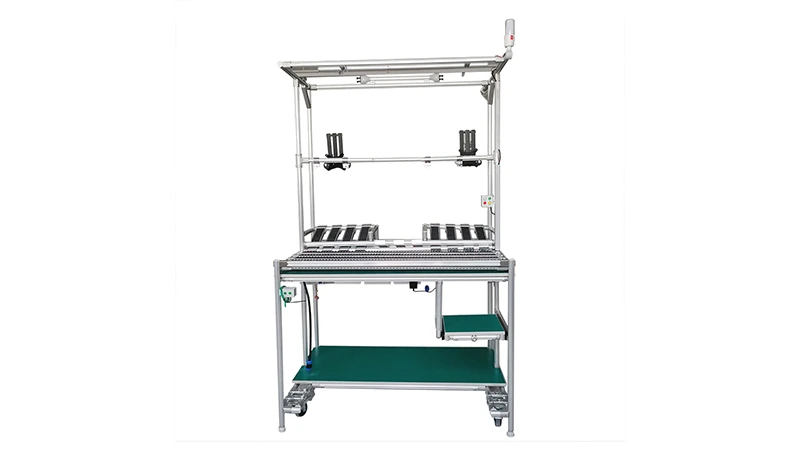
Aluminum tube workbench is more flexible and durable, compared with traditional PE/ABS coated steel tube. It is easy to assemble, anti corrosion, rust protection, and recycle use after disassemble.
The global energy sector is undergoing a revolution, and at the heart of this transformation lies battery production. From electric vehicles to renewable energy storage systems, the demand for high-performance batteries is skyrocketing. But behind every reliable battery is a manufacturing process that balances precision, speed, and—above all—safety. In this fast-paced environment, the tools and workspaces that power production lines matter more than ever. Enter the Aluminum Workbench D: a yet indispensable ally that's redefining how battery manufacturers approach both safety and efficiency.
The Unsung Hero of Battery Manufacturing: Why Workbenches Matter
Walk into any battery production facility, and you'll see workers hunched over tables, carefully assembling cells, testing circuits, or inspecting finished products. These workbenches aren't just pieces of furniture—they're the command centers of the production line. A poorly designed workbench can slow down tasks, increase error rates, and even put workers and products at risk. For batteries, which are sensitive to static electricity, vibration, and contamination, the stakes are even higher.
Traditional workbenches often fall short here. Wooden tables, while cheap, lack the durability to withstand daily wear and tear, and their porous surfaces can harbor dust that damages battery components. Steel workbenches, though sturdy, are heavy and inflexible—reconfiguring them to adapt to new production needs is a hassle, and their conductivity makes them a static risk unless specially treated. Plastic workbenches? They're lightweight but prone to warping under heavy equipment, leaving workers struggling with unstable surfaces.
This is where the Aluminum Workbench D steps in. Built with aluminum profile as its core material, it's engineered to address the unique challenges of battery manufacturing. Let's dive into why this workbench is becoming a staple in modern energy facilities.
Aluminum Workbench D: A Masterclass in Material and Design
At first glance, the Aluminum Workbench D might look like any other workbench, but its magic lies in the details—starting with its choice of material. Aluminum extrusion profile isn't just a trend; it's a deliberate engineering decision. Unlike steel, aluminum is lightweight, making the workbench easy to move (when needed) without sacrificing strength. A single worker can adjust its position or even reconfigure its layout, saving time and reducing the need for heavy machinery during line upgrades.
But aluminum's benefits go beyond weight. It's naturally corrosion-resistant, a critical feature in battery plants where cleanliness is non-negotiable. Spills, humidity, or cleaning agents won't eat away at the surface, ensuring the workbench stays looking—and performing—like new for years. And because aluminum is non-magnetic and non-sparking, it eliminates the risk of interference with sensitive battery testing equipment, a common headache with steel alternatives.
The design of the Aluminum Workbench D (labeled as "single deck-without caster" in technical specs) is another win for practicality. Its single, flat work surface provides ample space for assembling battery modules, laying out tools, or placing testing devices. Without casters, it stays firmly rooted during tasks that require stability—no more chasing a rolling bench while trying to align delicate components. Yet, if mobility is needed later, the modular aluminum profile design makes adding casters (or other accessories) a breeze, thanks to compatible aluminum profile accessories like brackets and clamps.

Safety First: ESD Workstation Integration for Battery Protection
For anyone working with batteries, static electricity is public enemy number one. A single static discharge can damage battery cells, reducing their lifespan or even causing them to fail prematurely. That's why the Aluminum Workbench D isn't just a workbench—it's an integrated ESD workstation .
ESD (Electrostatic Discharge) protection starts with the workbench's surface. The Aluminum Workbench D uses a specialized ESD-safe laminate that dissipates static charges, preventing them from building up and transferring to sensitive components. This isn't an afterthought; the laminate is bonded directly to the aluminum frame, ensuring consistent protection across the entire work surface—no weak spots, no gaps, no "surprise" discharges.
But ESD safety doesn't stop at the surface. The workbench also includes grounding points, allowing workers to connect wrist straps or heel straps directly to the frame. This creates a continuous path for static to flow safely to the ground, keeping both the operator and the battery cells protected. In busy plants where workers might forget to check their grounding, this built-in feature adds an extra layer of security—because even a moment of carelessness can cost thousands in damaged inventory.
Worker safety is equally prioritized. The edges of the Aluminum Workbench D are rounded, reducing the risk of cuts or bruises during long shifts. The height is adjustable (another perk of aluminum profile's modularity), ensuring workers of all statures can stand or sit comfortably, reducing strain on backs and shoulders. Happy, comfortable workers are more focused, and focused workers make fewer mistakes—a win-win for safety and productivity.

Efficiency Unleashed: Workflow Integration with Flow Racks and Conveyors
In battery production, efficiency isn't just about speed—it's about minimizing waste. Time spent walking to retrieve parts, searching for tools, or waiting for materials to arrive at the bench eats into production targets. The Aluminum Workbench D is designed to plug into existing workflows, working seamlessly with other lean system tools like flow racks and conveyors.
Imagine a typical day on the line: A worker at the Aluminum Workbench D is assembling battery packs. To their left, a flow rack holds pre-sorted components—cells, wiring harnesses, adhesives—all within arm's reach. The flow rack's tilted shelves use gravity to feed materials forward, so the next set of parts is always ready, eliminating the need to bend or stretch. To their right, a conveyor belt carries partially assembled modules from the previous station directly to the workbench, and once finished, the worker slides the completed pack onto another conveyor heading to quality control.
This isn't just a hypothetical scenario; it's the reality in plants using the Aluminum Workbench D. Its flat, stable surface aligns perfectly with conveyor heights, ensuring smooth material transfer. The aluminum profile frame also includes T-slots (a signature feature of aluminum extrusion) that let workers attach tool holders, bins, or even small monitors—keeping everything they need within sight and reach. No more fumbling for a screwdriver or losing track of a part; the workbench becomes an organized hub, cutting down on "search time" and boosting focus.
For managers, this integration translates to measurable results. One battery manufacturer in Europe reported a 15% increase in assembly speed after switching to Aluminum Workbench D, thanks to reduced material handling and better tool organization. Another plant noted a 20% drop in errors, as workers spent less time correcting mistakes caused by disorganized workspaces.
Aluminum Workbench D vs. Traditional Workbenches: A Clear Winner
Still on the fence? Let's break down how the Aluminum Workbench D stacks up against common alternatives in a head-to-head comparison:
| Feature | Aluminum Workbench D | Wooden Workbench | Steel Workbench | Plastic Workbench |
|---|---|---|---|---|
| ESD Protection | Built-in ESD-safe surface and grounding | None (requires add-on mats) | Poor (conductive, needs coating) | Limited (static can build up) |
| Durability | Corrosion-resistant, long lifespan (10+ years) | Wears quickly, prone to warping | Sturdy but prone to rust without coating | Weak under heavy loads, prone to cracking |
| Flexibility | Modular; easy to add accessories via T-slots | Fixed design; hard to modify | Heavy; reconfiguration requires tools/team | Limited accessory options |
| Weight | Lightweight (easy to move/adjust) | Moderate weight | Heavy (hard to relocate) | Lightweight but unstable |
| Cost-Effectiveness | Higher upfront cost, lower long-term maintenance | Cheap upfront, high replacement cost | High upfront cost, ongoing coating/maintenance | Low upfront cost, frequent replacements |
The table tells a clear story: while wooden or plastic workbenches might save money initially, they cost more in the long run due to replacements and inefficiencies. Steel workbenches, though durable, lack the flexibility and safety features critical in battery production. The Aluminum Workbench D, with its balance of safety, durability, and adaptability, emerges as the most cost-effective choice for forward-thinking manufacturers.
Real-World Impact: How One Plant Transformed Production
To understand the Aluminum Workbench D's impact, let's look at a real example. A mid-sized battery manufacturer in Asia was struggling with two key issues: high defect rates due to static damage and slow production times caused by disorganized workspaces. Their old steel workbenches were heavy, hard to clean, and required constant re-coating to maintain ESD protection. Workers spent 10-15 minutes per shift just searching for tools or retrieving parts from distant shelves.
After switching to Aluminum Workbench D paired with flow racks and conveyors, the results were striking. Static-related defects dropped by 35% in the first month, thanks to the integrated ESD workstation features. Tool organization improved with T-slot accessories, cutting search time to less than 2 minutes per shift. And because the workbenches were lightweight, the plant reconfigured their production line in a single weekend (instead of the usual week-long shutdown) when launching a new battery model.
The plant manager summed it up: "We used to view workbenches as a necessary expense. Now, we see them as an investment. The Aluminum Workbench D didn't just fix our safety issues—it made our workers happier and our line more agile. We're hitting production targets faster, and our quality scores have never been higher."
Conclusion: Building the Future of Battery Production, One Workbench at a Time
In the race to power the future, battery manufacturers can't afford to overlook the basics—like the workbench where every battery begins. The Aluminum Workbench D isn't just a tool; it's a partner in progress. Its aluminum profile construction, ESD workstation integration, and seamless workflow compatibility with flow racks and conveyors make it a cornerstone of safe, efficient production lines.
As the energy sector continues to grow, the demand for reliable, adaptable workspaces will only increase. The Aluminum Workbench D proves that sometimes, the most impactful innovations aren't the flashy ones—they're the ones that make the daily grind a little easier, a little safer, and a lot more productive. For battery manufacturers ready to take their operations to the next level, this workbench isn't just an option; it's a necessity.